
Slow travel in Lisbon for food lovers
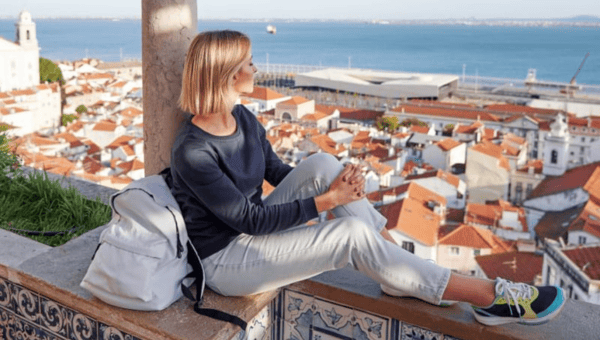
Portugal makes sense as a slow travel destination because it rewards attention to place. It is a relatively small country, but its regions are clearly defined by their own landscape, climate, architecture, history, local traditions and daily habits. The distances may look short on a map, yet the experience changes quickly between the Atlantic coast, the interior villages, the islands, the river towns and the larger cities. Trying to rush through all of it often means missing the details that make one place feel different from the next.
Featured photo by The Broke Backpacker
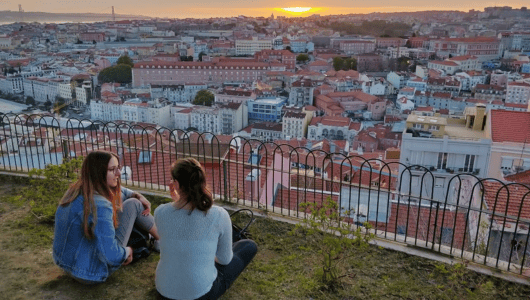
Photo by Meteored Portugal
Portugal’s appeal for slow travelers also comes from the way ordinary life remains visible in so many places. In historic centers, the best way to understand a town is often to walk between its squares, churches, cafés, small shops and residential streets, noticing how local life continues around the monuments rather than stopping at their doors. Along the coast, fishing seasons, weather, seafood restaurants, harbors and local markets still influence how many towns live and work. Further inland, agricultural cycles, religious festivals, weekly markets, family businesses and village cafés give travelers a sense of place that cannot be reduced to a single attraction. Public squares, gardens, riverfronts, markets and neighborhood shops continue to function as social spaces, which means that some of the most interesting travel moments happen when you slow down enough to watch how people use them.
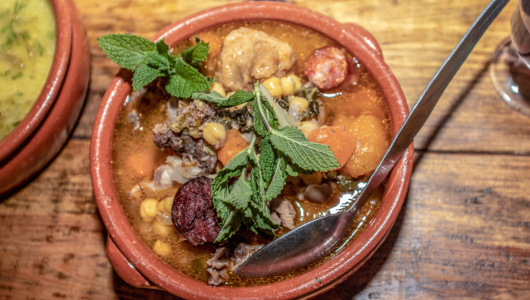
Photo by Turismo do Alentejo
Food is one of the clearest ways to understand that. Portuguese cuisine is not built around one single national dish or one fixed idea of tradition. It changes with geography, climate and access to ingredients. A plate of grilled fish by the coast, a bowl of soup in a neighborhood restaurant, a plate of snails or lupin beans with beer in summer, roasted chestnuts in autumn, or a simple coffee at the counter all say something about how people live. Slow travel in Portugal is not only about spending more time in one place, it is about paying attention to these everyday details.
What slow travel in Lisbon really means
Lisbon fits naturally into this way of traveling, especially for those who use food as a way into local culture. The city is compact enough to explore on foot, but layered enough that rushing through it rarely does it justice. Its neighborhoods have different histories, social habits and food references, which means that a morning in Campo de Ourique does not feel like an evening in Mouraria, and lunch in a traditional tasca tells a different story from a snack in a market, a coffee at a pastelaria or a late-afternoon drink at a kiosk. [inserir link para artigo sobre quiosques]
We would never recommend avoiding Lisbon’s best-known areas, such as Belém, Alfama, Baixa, Chiado, Graça and the riverfront, as all of these rightfully belong to the city’s food and cultural geography too. But there’s no doubt that these areas become far more interesting when the visit leaves room for cafés, markets, side streets, local shops and meals that are part of the area, instead of reducing each place to landmarks, viewpoints and whatever happens to be trending online.
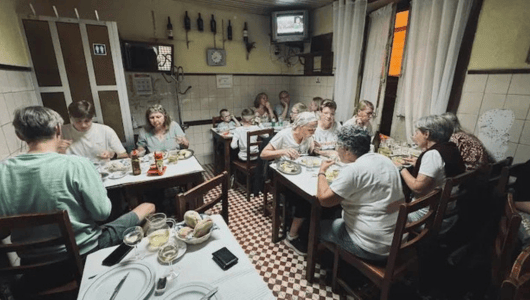
Photo by Common_Series_938 on reddit
Slow travel in Lisbon is closely connected to slow eating, because many of the city’s most characteristic habits still happen around meals, cafés, markets and the informal moments that gather people around a table. Lunch, even with modern work schedules and shorter breaks, is still often treated as a proper pause in the day, while cafés and pastelarias continue to work as part of neighborhood infrastructure, serving breakfast, quick coffees, afternoon snacks and the kind of regular, everyday interaction that makes a place feel lived in. Markets also help visitors understand the city beyond restaurant menus, especially when they are approached as spaces where seasonality, shopping habits, casual eating and social life overlap, whether that means buying fruit in the morning at Mercado 31 de Janeiro (Praça Duque de Saldanha), noticing the fish stalls and then sitting down for a seafood meal at Mercado de Alvalade, or watching how market halls like Mercado da Ribeira change throughout the day from practical shopping spaces into places for a glass of wine and something to eat.
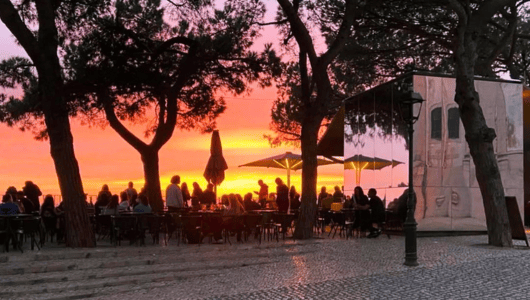
Photo by Esplanada da Graça on Instagram
Towards the end of the day, especially in spring and summer, Lisbon often becomes more social outside, with people drifting towards terraces (esplanadas), gardens, viewpoints (miradouros), riverfront spots and neighborhood counters for the kind of informal pause that does not necessarily need to become a full dinner plan. It might be a glass of white wine near the river, a quick bifana before heading home, an ice cream eaten on a bench, or a drink at one of the city’s kiosks while children run around the square and office workers stretch the day a little longer. Seen this way, Lisbon’s public spaces are not just scenery between meals and monuments, but part of the city’s social infrastructure, where travelers can enjoy eating, drinking, resting and meeting people.
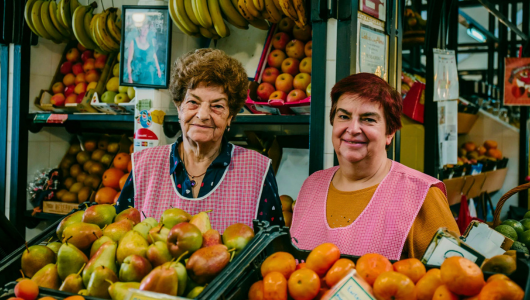
Photo by Técnico ULisboa – Universidade de Lisboa
Lisbon has always been marked by movement, trade, outside influences and social changes, so a slower approach to the city is more nuanced when it accepts that complexity instead of chasing just one version of local life. Everyday Lisbon is visible in old cafés, neighborhood restaurants, traditional grocery stores, markets and bakeries, but also in newer wine bars, immigrant-owned food businesses and family-run shops that continue to serve local communities while adapting to the city around them. Food offers a better way into Lisbon when it is seen in context, such as the lunch place that fills with workers before 1 PM, the bakery where people stop on the way home, the market stall that changes with the season, or the small restaurant that tells you something about who lives in the neighborhood. All of these details show how the city actually works.
A slower trip does not require weeks in Lisbon, although at least four or five nights give the city more room to open up. But even a shorter stay can feel less rushed when each day has one main area, one proper meal and enough space around both. Lisbon is not too large, but crossing it several times a day for disconnected plans quickly eats into the time that could be spent walking, sitting down, shopping, eating well or simply noticing what is around you.
Slow eating in Lisbon: lunches, cafés, markets and local ritualsSlow eating in Lisbon: lunches, cafés, markets and local rituals
Timing matters in Lisbon’s traditional restaurants, where lunch often starts around noon and the room fills between 12:30 PM and 2PM with office workers, construction crews, shop owners, older regulars and people from nearby streets. This is when the room has the right energy, the kitchen is moving properly and the day’s specials are still available, which matters more than many visitors may realize at first.
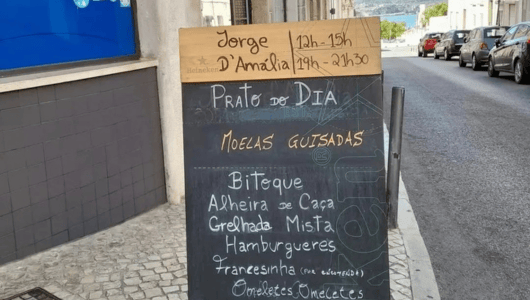
Photo by Jorge d’Amália on Facebook
The dish of the day (prato do dia) is worth paying attention to, even when it looks modest. A daily special may include options like grilled fish with boiled potatoes and vegetables, liver with boiled potatoes (iscas com elas), bean and meats stew (feijoada), oven-baked duck rice (arroz de pato), Portuguese boiled dinner (cozido à portuguesa) on certain days, most usually Wednesdays, fava beans with pork ribs (favas com entrecosto) during colder months, or shredded salt cod with potatoes and eggs (bacalhau à Brás). These are the kinds of dishes many Lisbon restaurants still cook for people who need a proper lunch during the working day, and they are usually at their best when you eat them during the main lunch service, while the room is busy and the kitchen is fully active.
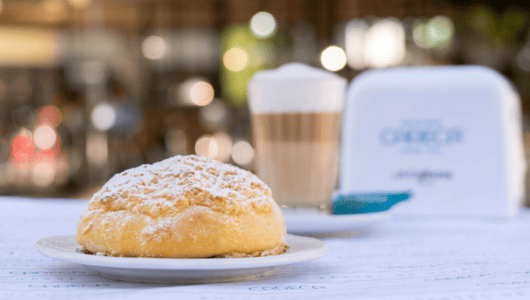
Photo by Pastelaria O Careca
A good slow food day in Lisbon can begin at a pastelaria instead of the hotel breakfast room. The order may be as simple as an espresso or milky coffee (galão) with buttered toast or a bread roll with ham and cheese, a croissant brioche or a brioche bun with coconut and egg yolk topping (pão de deus, pictured here), a pastel de nata, or a typical Portuguese savory snack from the glass counter if the place serves things like rissóis, croquetes or empadas. The value of a pastelaria is not only in what you order, but in how the place functions, with wide counters, pastry cases, regulars who may even already know each other or at least the staff, and sometimes even little curious details like displays of lottery tickets or newspapers for sale.
Cafés interrupt the day in small, repeated ways, giving travelers one of the easiest ways to understand Lisbon beyond the restaurant table. Coffee here is usually quick, practical and social, especially in older cafés where customers pass through several times a day and a bica at the counter can take three minutes without feeling impersonal. Returning to the same café during a trip can be more interesting than chasing a different “best coffee in Lisbon” recommendation every morning, because repetition lets you notice who comes in, when the rush happens, what people order and how a small business fits into the life of its street.
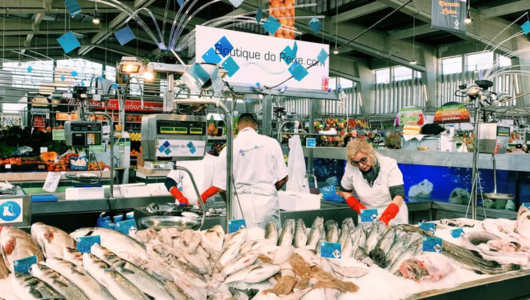
Photo by Boutique do Peixe
Markets deserve the same kind of attention. Mercado de Alvalade (Av. Rio de Janeiro) is still one of the best places in the city to see a working neighborhood market with buzzing fish, meat, fruit and vegetable stalls, especially in the morning, while Mercado de Arroios (Rua Ângela Pinto 40) reflects the area around it, with Portuguese produce sold close to ingredients used by South Asian, African and Brazilian communities. Mercado da Ribeira (Av. 24 de Julho), now widely associated with Time Out Market, still has a traditional market side, and the contrast inside the same building says plenty about contemporary Lisbon, where old food infrastructure, new food consumption, tourists, locals, office workers and curious eaters often cross paths without using the space in the same way.
A market visit is more interesting when the place is more active, especially in the morning, when produce, fish and regular shopping are easier to observe. Lunchtime or late afternoon can make more sense for sitting down to eat, but the earlier hours give a clearer view of what is in season, which stalls are busy, how fish varies from one day to another, and what ingredients are likely to appear later in home kitchens and restaurant specials. Buying something small, even fruit, bread, olives or cheese, also changes the experience from passive looking to actual participation, but even if you don’t feel like purchasing something, just walking around and doing some people-watching can also be interesting in itself.
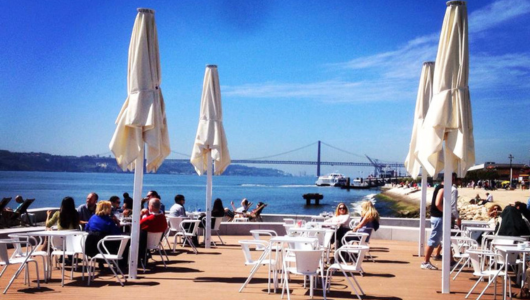
Photo by Lifecooler

In spring and summer, Lisbon’s informal food culture often stretches into the hours before dinner, around kiosks and other outdoor spaces. A late afternoon might involve a cold beer or a cocktail near the river, a meat sandwich eaten at the counter, a cheese and cured meat board ordered with a glass of wine, or a few fried savory snacks, such as codfish fritters (pastéis de bacalhau) or meat croquettes (croquetes), eaten with something cold before deciding whether dinner still needs to happen. These small food and drink habits do not need to become major culinary events to say something about Lisbon, especially in a city where eating, drinking and being outside often overlap.
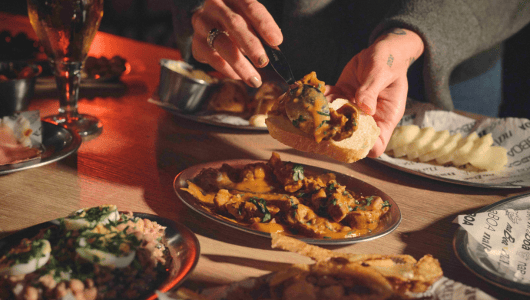
Photo by Time Out Lisboa
Eating according to the season also helps travelers make better choices in Lisbon, especially in traditional restaurants where handwritten specials often follow what regular customers expect at that time of year. Sardines are tied to summer and to the Popular Saints festivities (Santos Populares) in June, even when restaurants stretch the association as far as demand allows, while snails (caracóis) start appearing on café signs in the warmer months and roasted chestnuts mark autumn and winter on the street. In colder months, daily specials are also more likely to lean towards broad beans with pork ribs (favas com entrecosto), cozido à portuguesa, stews and other recipes featuring beans, or other dishes from the repertoire of Portuguese comfort food that make more sense when the weather calls for something heavier. Asking what is good that day, paying attention to the specials and choosing dishes that fit the season will usually lead to a better meal than ordering whatever sounds most familiar.
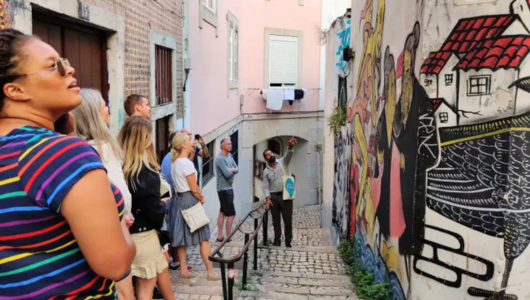
Photo by Taste of Lisboa
A curated food experience can also belong in a slow travel trip when it gives context and connects visitors with local businesses, hosts or cooks. A good Lisbon food and cultural tour helps travelers understand neighborhoods, ingredients, eating habits and the stories behind what appears on the table, while also making it easier to support independent businesses with a real place in the city.
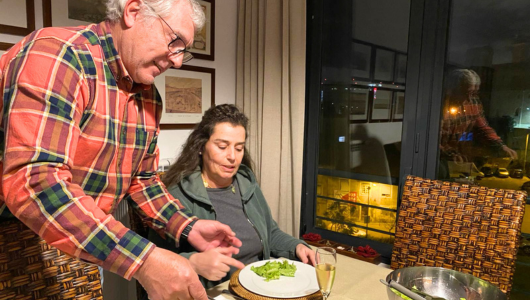
Photo by Taste of Lisboa
The same can apply to a dinner in a Portuguese local home, a cooking class, a market visit with someone who knows what they are looking at, or a small tasting led by a producer or specialist, because these experiences can create the kind of conversation most travelers would struggle to have alone. For those who want help reading Lisbon through food, joining one of Taste of Lisboa’s food and cultural tours can be a practical way to make the rest of the trip more informed and less dependent on random online recommendations.
How to discover Lisbon slowly, one neighborhood at a time
Lisbon is a compact city, but its neighborhoods carry very different histories, food habits and local references, which is why slow travel here often starts with choosing an area and giving it enough time. The map may suggest short distances, especially around the historic center, but the experience of moving through the city is rarely linear. A few streets can take you from a well maintained square to a staircase lined with laundry, from a viewpoint full of cameras to a café serving regulars, from a tourist-heavy route to a grocery store where the same customers pass through every week.
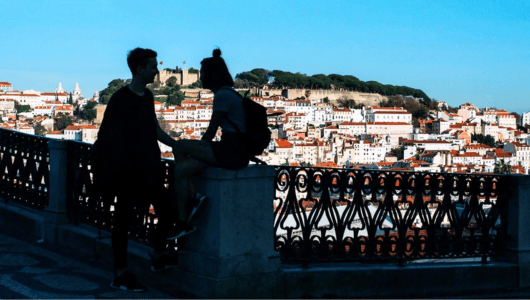
Photo by Guia Repsol
This is one of the reasons we regularly publish Lisbon travel guides for food lovers focused on neighborhoods that do not always appear in first-time itineraries, including Marvila, Lumiar, Benfica, Ajuda and Alcântara, just to name a few. Seen through food, these areas give travelers a wider understanding of Lisbon, connecting local history, habits and family businesses in ways that the usual central circuit often leaves out.
Ajuda is a good example because it sits close to Belém but has a more residential feel, with old cafés, neighborhood restaurants, bakeries, small shops and uphill streets that still follow the logic of everyday life more than visitor movement. A slow visit here can include the Ajuda National Palace (Largo da Ajuda), the botanical garden (Calçada da Ajuda), lunch in a local restaurant, and a walk down towards Belém or the river, giving travelers a fuller sense of Lisbon’s western side beyond the most popular monuments.
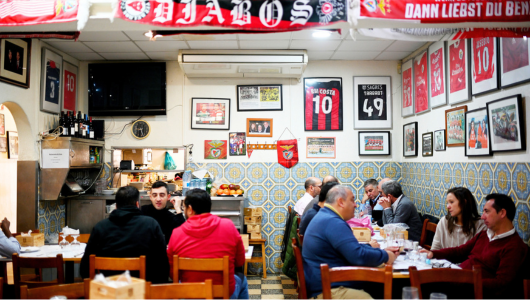
Photo by Time Out Lisboa
Benfica at t opens another part of the city, one linked to residential Lisbon, football culture, local commerce, pastry shops, parks and family restaurants that rarely depend on visitors as their main audience. The neighborhood has a strong everyday food scene, from grilled fish restaurants and old-school cafés to bakeries and places where lunch still follows the habits of people who live or work nearby. It is also a good area for travelers who want to understand how much of Lisbon exists outside the compact historic center.
Lumiar brings together older village traces, larger avenues, gardens, schools, residential life and local commerce in a part of Lisbon that many visitors rarely consider. A slower visit might include a walk through Jardim da Quinta das Conchas (Alameda das Linhas de Torres), coffee in a neighborhood café, lunch nearby and time around the older streets closer to Largo do Lumiar, where the area’s past as a former village outside central Lisbon is still easier to sense.
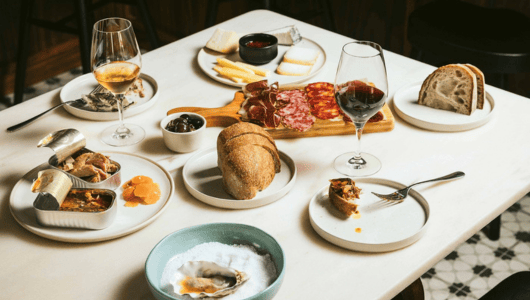
Photo by Joana Freitas on TripAdvisor
Alvalade is especially good for travelers interested in markets, cafés and daily shopping. The neighborhood has wide streets, residential blocks, a strong local commerce scene and Mercado de Alvalade Norte, one of the best markets in Lisbon for seeing fish, meat, fruit, vegetables and regular shopping in action.
Madragoa, Santos and Lapa offer another way into the city, with older residential streets, traces of Lisbon’s working and maritime past, small restaurants, cafés, design shops, embassies, schools and river access sitting close together. This area is particularly good for travelers who enjoy walking around with a certain sense of discovery, without particularly craving visiting a major sight. The food angle here is more subtle but still present, from old tascas and neighborhood cafés to newer restaurants and wine bars that reflect how this part of Lisbon has changed.
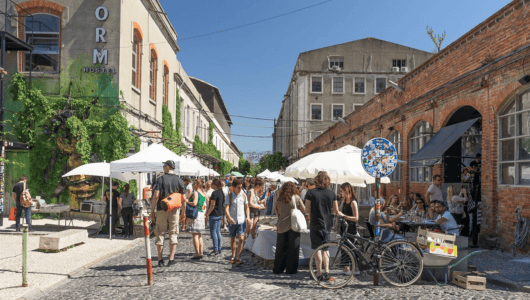
Photo by Folk Travel
Alcântara and Marvila bring in a more industrial and contemporary side of the city. Warehouses, breweries, galleries, creative businesses, restaurants and older residential areas all sit beside signs of rapid change. Food culture in these areas often comes through newer projects, portuguese craft beer, casual restaurants, event spaces and businesses making use of former industrial buildings, while older cafés and neighborhood restaurants keep another layer of the city visible. Spending time in these two distinct neighborhoods, which are on opposite sides of the city, can add a wider urban context to a Lisbon trip.
Walking is one of the best ways to experience these neighborhoods, as long as it is done keeping in mind Lisbon’s hills, distances and the strong summer heat. Moving at street level makes it easier to notice tiled façades, old shop signs, staircases, tiny chapels, laundry lines and sudden changes in architecture are easier to notice, but public transport is also part of everyday Lisbon and should be used without guilt. The metro, buses, trams, elevators and funiculars help connect areas that would otherwise require tiring climbs or unnecessary detours, making it easier to spend time in the neighborhood itself.
Cultural stops also become more interesting when they are connected to the area around them. Lisbon has major museums that are easy to add to an itinerary, but temporary exhibitions, independent cinemas, small galleries, music venues, bookshops, cultural associations and neighborhood festivals can give travelers a stronger reason to spend more time in one part of the city.
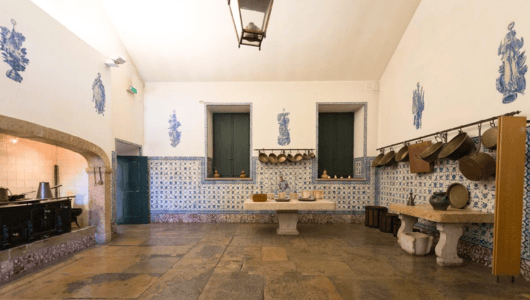
Photo by Lifecooler
For food lovers, cultural planning can also mean looking beyond the obvious museum circuit and checking spaces where Lisbon’s relationship with food, design, architecture and public life comes through in less predictable ways. Open House Lisboa is worth watching because it opens buildings and urban spaces across the city, and its 2026 edition was dedicated to Lisbon’s food landscape, from places of production to places of consumption. The Bordalo Pinheiro Museum (Campo Grande 382) is another good fit for this kind of slow itinerary, especially for those interested in Portuguese ceramics and visual culture around the table, as the museum’s collection includes faience works made at the Fábrica de Faianças das Caldas da Rainha, founded in 1884, and has also explored food, markets, street vendors, shops, packaging and advertising in Bordalo’s work. The Museum of Lisbon (Campo Grande 245) is also worth checking for temporary exhibitions, talks, walks and workshops spread across its different sites, as these programs often help connect the city’s history to specific places rather than treating Lisbon as a single homogenous entity.
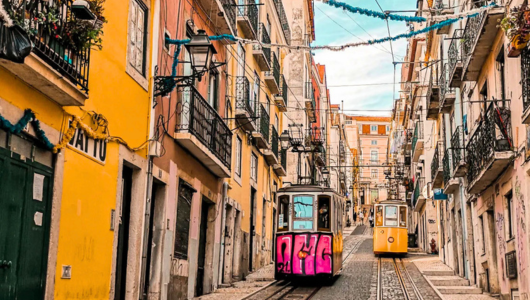
Photo by Kookospalmun Alla
The most practical way to plan slower days in Lisbon is to think in clusters. One main neighborhood, one meal that anchors the day, one walk, one cultural visit and enough open time around them will usually feel more satisfying than crossing the city several times for disconnected stops. Food should be planned as part of the neighborhood experience, not left as a last-minute problem once hunger starts making the decisions.
How slow travel supports local businesses in Lisbon
Spending more time in fewer areas changes the way travelers spend money in Lisbon. A neighborhood visit creates more chances to enter the kinds of businesses that are easy to miss during a rushed itinerary, from old stationery shops and independent bookstores to ceramic studios, textile shops, small design shops and traditional grocery stores. These places may not all become major stops in a travel plan, but they help travelers understand the commercial life of a neighborhood beyond restaurants, monuments and the shops selling the same fridge magnets found in every European capital.
There is also a sustainability angle here, as slower travel usually means covering less ground each day, walking more, using public transport with more intention and putting less pressure on the same few overvisited areas. When those choices are combined with local shops, markets, independent restaurants and neighborhood-based experiences, they become part of a wider approach to sustainable things to do in Lisbon.
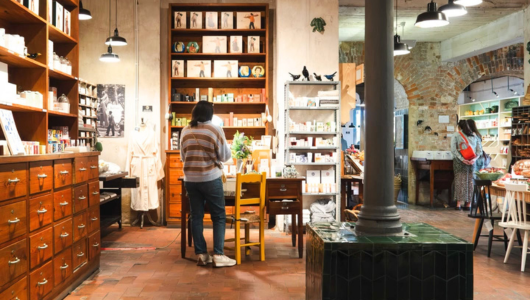
Photo by A Vida Portuguesa on Facebook
The objects travelers take home also say something about how they experienced Lisbon. The city has no shortage of generic souvenirs with trams, sardines and tiles printed on them, many of which have little connection to local production, while a slower visit gives people more time to look for things that actually relate to the city or to Portugal. That could mean handmade ceramics, local wool blankets, canned fish from a specialist store, Portuguese olive oil, salt, honey, jams, traditional biscuits, local wine, soap from a Portuguese brand, or a cookbook that will still be interesting after the trip is over. Edible souvenirs are often a good choice because they connect memory to actual use, especially when they come from shops that care about what they are selling and the people behind the products.
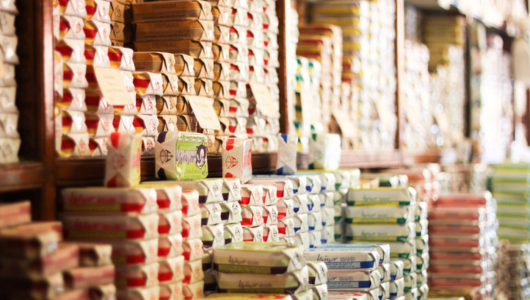
Photo by Lifecooler
Local businesses also give travelers a better sense of how Lisbon works outside the visitor economy. A traditional grocery store may sell canned fish, dried pulses, wine, cheese, olives, biscuits and household staples, while also showing what people in the area still buy for home cooking. A neighborhood bookshop, fabric store, shoe repair place or flower shop may not seem like a travel experience at first, yet these businesses are part of the street-level life that makes one area different from another. Slow travel creates the time to notice them, enter when it makes sense, buy something when there is a real reason to do so, and understand that Lisbon’s commercial identity is made of many small transactions, not only restaurant bookings and museum tickets.
Food businesses deserve special attention because eating is one of the few things every traveler will do several times a day. Choosing where to have breakfast, lunch, coffee, snacks and dinner can send money in very different directions, especially in a city where independent cafés, bakeries, markets, family-run restaurants, wine bars, immigrant-owned food businesses and small shops still play an important role in neighborhood life. A pastelaria can be a breakfast counter, a meeting point for older residents, a place for birthday cakes, coffee and quick snacks. A neighborhood restaurant can be a lunchroom for workers, a weekend family table and one of the few places still serving dishes that rarely make it into mainstream travel guides.
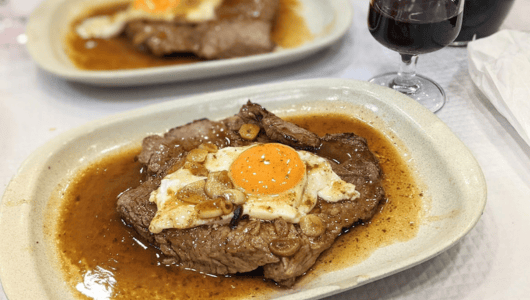
Photo by NIT
Supporting local food culture also means looking beyond the oldest dining rooms and the most obvious traditional restaurants, because Lisbon has businesses working with Portuguese products in ways that feel current while staying connected to local ingredients, regional knowledge and small producers. In Baixa, Manteigaria Silva (Rua D. Antão de Almada) is one of the best examples of a historic food shop focusing on salt cod, cheeses, cured meats, wines and regional products. Conserveira de Lisboa (Rua dos Bacalhoeiros 34), meanwhile, gives canned fish the kind of specialist attention that helps travelers understand why Portuguese conserves are so much more than something you’d purchase at the regular supermarket for a quick inexpensive meal. A Vida Portuguesa (Rua Nova do Almada 72) brings together Portuguese-made soaps, pantry products, ceramics, textiles and other objects with a clearer link to national production, and wine bars such as Black Sheep (Praça das Flores 62) give access to small independent Portuguese producers, including organic, biodynamic, natural and low-intervention wines. Restaurants can also be part of this same conversation, as places like Prado (Tv. das Pedras Negras 2) work with local and seasonal ingredients in a contemporary Portuguese kitchen, while Ciclo (Lg. das Olarias 42) brings farm-to-table cooking, regenerative agriculture and low-waste practices into the Lisbon restaurant scene. For slow travelers, these are just some examples of places that are worth visiting because they show Portuguese food culture as something active, commercial and evolving, supported by people with real links to the country.
How a place is used during the day often tells travelers more than the way it looks from the outside. A restaurant that fills at lunch with people from nearby shops, offices or worksites, a market stall where regular customers stop for fish or fruit, or a café where most people drink coffee at the counter before moving on can all give clues about how a neighborhood works. These simple observations can help visitors choose places with more connection to local life, while helping them to connect more with Portuguese culture while in Lisbon.
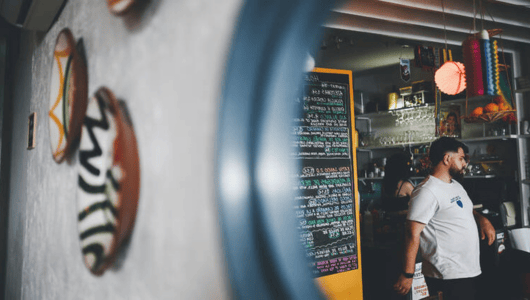
Photo by Time Out Lisboa
Many small businesses in Lisbon operate around practical limits that travelers need to understand before turning up hungry, tired or in a rush. A short menu often means a small kitchen cooking what it can do well, while a café that does not welcome long laptop sessions may depend on quick turnover from regular customers. Traditional shops may close for lunch or during part of the afternoon, and neighborhood restaurants often serve proper meals only during specific hours, especially at lunch, when daily specials can sell out and kitchens begin winding down after the main service. Booking ahead for small restaurants, arriving within normal meal times and respecting the way each place operates usually leads to better meals and fewer disappointments.
Travel money has direction, even when the purchase is small, and a coffee, a simple meal, a tin of sardines, a bottle of wine or booking a curated guided experience can all contribute to the kind of city visitors are choosing to engage with.
Give Lisbon enough time and the city becomes easier to understand through the places people use, the food they return to and the businesses that keep each neighborhood alive. Join one of Taste of Lisboa’s food and cultural tours to start your trip with local context, and follow us on Instagram for more Lisbon tips.
Feed your curiosity on Portuguese food culture:
A guide to Lisbon’s best kiosks
Practical tips and useful information for your trip to Lisbon
How to connect with local culture and people in Lisbon and Portugal
Tipping, couvert and restaurant etiquette in Portugal
Real people, real food. Come with us to where the locals go.
Signup for our natively curated food & cultural experiences.
Follow us for more at Instagram, Twitter e Youtube