
A guide to Lisbon’s best kiosks
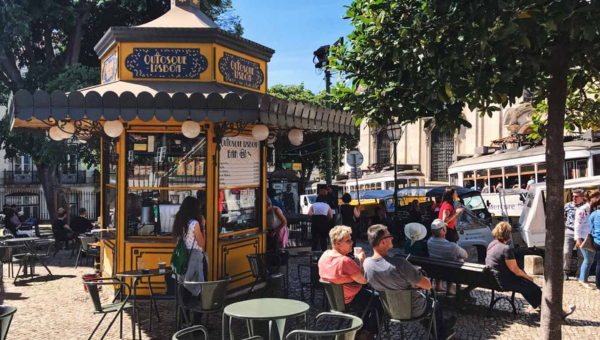
There are few things more Lisbon than sitting at a kiosk with a cold drink in hand, admiring the view or simply the flow of people and the city’s general rhythm. For visitors, kiosks are often associated with scenic views, but way before so many tourists had Portugal on their radar, kiosks were already a relevant part of Lisbon’s public life.
Photo by Digital Hub
Kiosks can be found across Lisbon, not just at popular miradouros, but also in residential neighborhoods. So, depending on which one you visit, you could be sitting nearby a tourist trying their first sour cherry liqueur (ginginha), a young couple on a coffee date, or a group of older regular customers discussing the previous night football match while ordering rounds of draft beer.
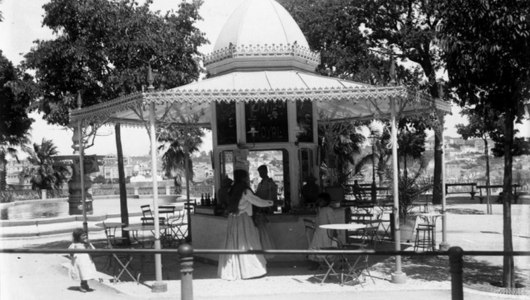
Photo by D de Delta
Kiosks first started appearing in Lisbon during the second half of the 19th century, inspired by the urban transformations taking place across European capitals. For example, Paris had elegant boulevards and newspaper kiosks, while Vienna had a strong café culture. Lisbon, eager to modernize itself and keep up with other large cities across Europe, embraced the idea of small street pavilions where people could socialize, read newspapers, smoke, drink, and momentarily escape the heat of the city. Many of the earliest kiosks were built in cast iron with decorative Art Nouveau influences, some of which were imported from France, while others were produced locally.
Unlike Lisbon’s grand historic cafés, which generally attracted intellectuals, politicians, writers, and businessmen, kiosks were meant more for the everyday folk. With accessible prices and quick service, they catered to workers taking a short break, retirees spending hours outdoors, neighbors meeting casually, or passersby looking for a refreshment. There was no pressure to order a lot and you could literally order a single coffee or a beer and spend an entire afternoon sitting outside.
The food and drinks associated with kiosks were all about simplicity. In the early days, they used to sell coffee, lemonade, vermouth, beer, tobacco, and newspapers. During warmer months, kiosks also became known for sweet syrup-based drinks such as maidenhair syrup drinks (capilé) and redcurrant syrup drinks (groselha), mixed with cold water as refreshing alternatives to alcohol before soft drinks became widespread. Today, these drinks are increasingly difficult to find, but they remain strongly associated with Lisbon’s older kiosk culture. Other classics survived more easily, including draft beer, ginginha, and typical Portuguese savory snacks like croquetes, rissóis, toasted sandwiches, lupin beans in brine (tremoços), as well as meat sandwiches like bifanas and pregos.
Lisbon, perhaps more than most European capitals, has perfected the art of pausing outdoors. Lisbon’s hills create natural viewpoints where people tend to gather, and the mild climate encourages outdoor living during a great part of the year. Kiosks helped transform squares and miradouros into social spaces that are still used today by locals and visitors.
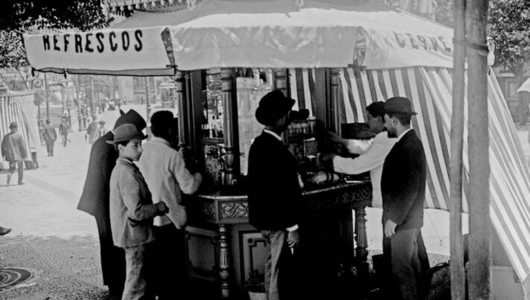
Photo by D de Delta
Like much of Lisbon, kiosk culture also went through decline and reinvention. During parts of the 20th century, many historic kiosks disappeared or fell into neglect. Some were demolished entirely, while others survived as modest neighborhood stalls selling cigarettes and soft drinks. But beginning in the late 2000s, the city embraced kiosks again, restoring old structures and opening new concessions across gardens, viewpoints, and waterfront areas. And, like that, kiosks became fashionable once again.
Of course, the changes modern Lisbon has seen during recent decades have applied to kiosks too. Today, you’ll find some kiosks trying to attract more tourists, with things like cocktail menus in English, but there are still many others that feel very local and welcome a crowd of regulars. If you are looking to slow down during a day exploring Lisbon, we would recommend visiting a kiosk for a drink, take a seat and do some people-watching.
Kiosks with the best views in Lisbon
In a city built across steep hills and natural viewpoints, it was only natural that kiosks were at some point included in Lisbon’s miradouros. Unlike many rooftop bars in Lisbon, kiosks are informal, generally moreaffordable, and still connected to everyday life in the city. You don’t even need to order an expensive cocktail to enjoy some of Lisbon’s best panoramas, as a simple espresso would do.
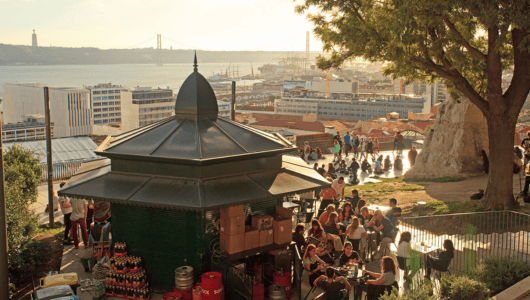
Photo by Wine Enthusiast
One of the most famous examples is the kiosk at Miradouro de Santa Catarina (Tv. de Santa Catarina 5), often still referred to by locals simply as Adamastor, after the mythological statue overlooking the Tagus River. By late afternoon, the area fills with a mix of locals, Erasmus students, tourists, musicians, and groups sharing beers while watching the light change over the river. The kiosk itself is simple, selling the usual mix of draft beer, soft drinks, cocktails, toasts, and snacks, but the atmosphere around it is what turned it into one of Lisbon’s most iconic sunset spots.
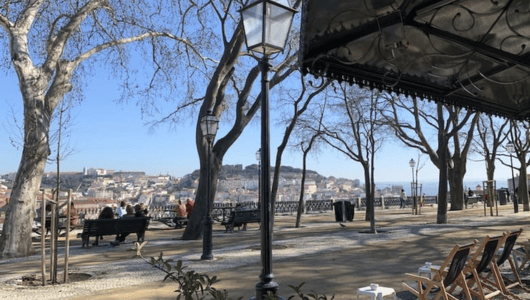
Photo by Lisbon Portugal Tourism Guide
The kiosk at Miradouro de São Pedro de Alcântara (Rua Dom Pedro V 4) offers one of the broadest panoramic views in the city, stretching from downtown Lisbon to the Castelo de São Jorge. Unlike Adamastor, which feels younger and louder, the atmosphere here is more mixed. You will find tourists taking photos, older lisboetas stopping for coffee, couples sharing a pitcher of sangria, and groups resting their feet after walking Bairro Alto’s cobblestone streets. The garden surrounding the kiosk adds much-needed shade on summer days, making this one of the easiest viewpoints in Lisbon to spend part of your day without feeling rushed.
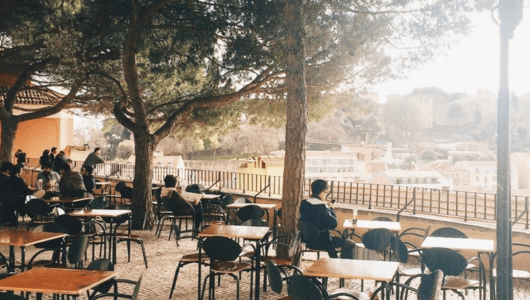
Photo by On The Grid
Miradouro da Graça (Calçada da Graça), officially called Miradouro Sophia de Mello Breyner Andresen, even though almost nobody actually uses the full name, perhaps best captures the old and new sides of Lisbon’s kiosk culture colliding together. The onsite kiosk that goes by the name Esplanada da Graça has a terrace that spreads beneath large pine trees with one of the city’s most cinematic views over Castelo de São Jorge and downtown Lisbon. But unlike Portas do Sol, which often feels heavily touristic throughout the day, Graça still retains traces of neighborhood life around it. Older residents from Graça continue using the space naturally, stopping for coffee or beer while younger crowds arrive later in the afternoon for sunset gatherings. During summer evenings, it is not unusual to find live music nearby or groups lingering long after dark. Food-wise, the kiosk goes beyond the basics, with toasts, burgers, salads, and some snack plates making it easy to stay for hours without having to go elsewhere for dinner.
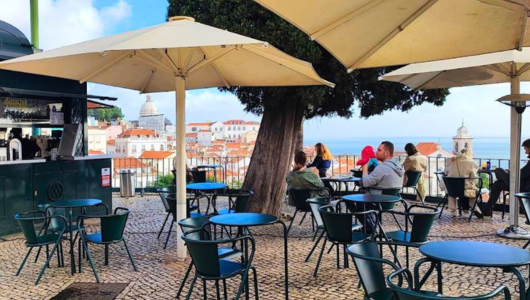
Photo by Restaurant Guru
The kiosk at Miradouro das Portas do Sol easily ranks among Lisbon’s most photographed. The view from view stretches across Alfama’s terracotta rooftops, church domes, and terraces all the way down to the Tagus river. It does get crowded, especially during peak tourist season, but its fame comes from the fact that it indeed offers an impressive view. If you’d like to enjoy this spot before the crowds arrive, come in early and sip your morning coffee as you see the city wake up around you. Because this is a tourist hot spot, the menu here feels more adapted to international visitors as compared to some of Lisbon’s more traditional kiosks, with cocktails, wine, brunch-style options, and lighter meals alongside the usual Portuguese drinks and snacks.
Some of the city’s best scenic kiosks, however, are the ones tourists rarely hear about. For a more local atmosphere, the kiosk at Jardim do Monte Agudo (Rua Heliodoro Salgado), in the neighborhood of Penha de França, offers one of Lisbon’s most underrated viewpoints. Unlike the city’s better-known miradouros, this garden feels genuinely residential, so you are more likely to find neighborhood regulars, families with children, or groups of friends casually sharing beers after work than large tourist crowds. The view stretches across eastern Lisbon and the Tagus River, but the real appeal here is the slower pace.
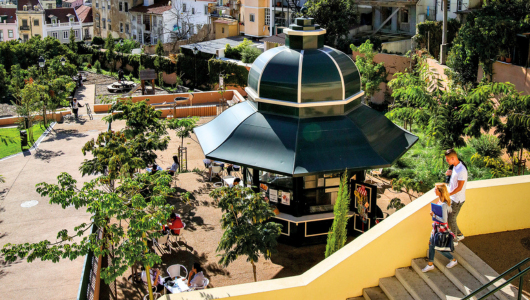
Photo by Time Out Lisboa
Nearby, the kiosk at Jardim da Cerca da Graça (Calçada do Monte 46) is another spot that has become increasingly popular among younger lisboetas. Located inside a beautiful green space, where people often sit down on the grass with drinks or walk their dogs, this kiosk attracts a crowd that mixes locals from Graça with students, remote workers, and groups meeting for drinks before dinner. Food-wise, they also prepare some toasts, salads and sharing boards, which might come in handy if you want to stick around longer, especially during summer, when on selected nights they have DJs playing during sunset. The panoramic view over the city here is impressive, and this park feels like it has such young energy.
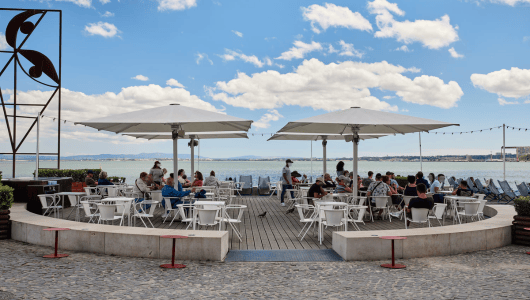
Photo by The Infatuation
Kiosk culture is also present along the riverfront, for example with the kiosk at Ribeira das Naus (Av. Ribeira das Naus 5). This spot attracts people for a drink as the sun goes down, but also folks that stop over for a quick coffee after their morning run, or groups that feel like sitting down and taking in the beautiful view of the river and the southbank any other time of the day. If you come early, you can sit at one of their lounging chairs and watch the ferries cross toward Cacilhas with the 25 de Abril bridge and Christ the Redeemer in the background.
The most traditional kiosks in Lisbon
While some of Lisbon’s kiosks are now strongly associated with sightseeing and drinks during sunset, others still preserve their more traditional nature. Usually, at these kinds of kiosks, the menu is simpler and more Portuguese, and the atmosphere is somewhat less curated, like back in the day, with people visiting more regularly rather than occasionally.
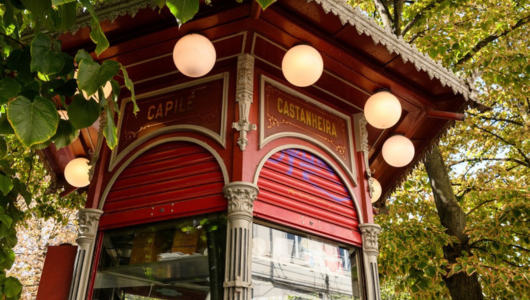
Photo by Lojas Com História
One of the most historically significant examples is the Quiosque de São Paulo (Praça de São Paulo), considered one of the oldest kiosks still operating in Lisbon, being protected under the municipal program Lojas Com História, which aims at preserving businesses that have contributed to the identity and economy of Lisbon. Its structure dates back to the early 20th century and still preserves much of the decorative ironwork associated with Lisbon’s original kiosk architecture. Sitting just a few minutes away from Cais do Sodré, the area around it has changed dramatically over recent decades, but the kiosk itself continues to function as an everyday meeting point. Throughout the day, the crowd shifts constantly between older locals stopping for coffee, tourists exploring nearby streets, and groups gathering for drinks before heading into the city’s nightlife, as this is right next to the popular Lisbon bar area known as Pink Street.

Photo by Quiosque de Refresco on Facebook
Another important name in Lisbon’s kiosk revival is the Quiosque de Refresco at Praça Luís de Camões. Opened in 2009 as part of the city’s effort to restore Lisbon’s historic kiosk tradition, it became one of the first examples of how these structures could once again become central to public life. Located between Chiado and Bairro Alto, it quickly turned into a meeting point for an incredibly mixed crowd, including students, office workers, tourists, musicians, and longtime residents sharing the same terrace throughout the day. Kiosks like this encourage a more spontaneous kind of socializing, where people stop without much planning and often stay longer than they initially thought they would.
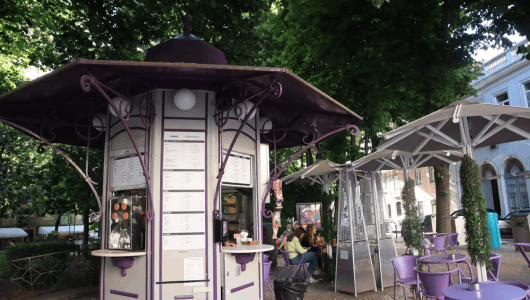
Photo by Quiosque Lisboa
At Praça das Flores, there’s also a kiosk (Praça das Flores 48) in what is arguably one of Lisbon’s prettiest small squares. It is surrounded by old residential buildings and lovely trees, attracting a loyal neighborhood crowd throughout the day. Mornings are usually quieter, with older residents reading newspapers over coffee, while afternoons bring parents with children, freelancers working outside, and locals meeting for beer before dinner. Unlike some of the city’s kiosks in popular viewpoints, here there is less pressure to turn tables quickly.
The kiosk at Jardim do Príncipe Real (Praça do Príncipe Real 19) also shows us how Lisbon’s traditional kiosk culture adapted to a changing city and, despite the area’s growing popularity with visitors and expats, it still manages to maintain traces of its neighborhood character. We recommend visiting this area during Saturday mornings, when the area hosts a farmer’s market that makes the garden and therefore the kiosk even more alive.
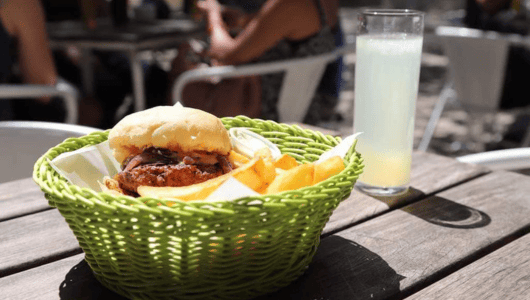
Photo by Lifecooler
In Campo de Ourique, the kiosk at Jardim da Parada (Jardim Teófilo Braga) is an iconic spot in what is one of our favorite neighborhoods in Lisbon. Campo de Ourique is a very residential Lisbon neighborhood and feels quite community-oriented, so having a kiosk in one of the central gardens of the area, as a meeting point for neighbors, makes total sense. Elderly couples stop by after grocery shopping, children play nearby while parents drink coffee, and groups of friends gather for relaxed afternoon beers. They also specialize in burgers, so it’s a great spot to grab lunch outdoors while feeling the vibes of Campo de Ourique. The surrounding garden helps create a feeling of separation from the traffic and movement all around, making this one of the easiest places in Lisbon to understand how kiosks function as a gathering place for locals.
Not far from Campo de Ourique, the kiosk at Jardim da Estrela (Praça da Estrela) also preserves much of that traditional spirit, even if the surrounding area has changed considerably over recent years. On weekends especially, the crowd becomes incredibly mixed, including families, elderly locals, teenagers, dog walkers, couples, and groups of people doing exercise in the shade of the garden’s enormous trees. The menu here sticks mostly to classics, with coffee, beer, soft drinks, toasted sandwiches, some savory snacks, and typical Portuguese pastries.
Kiosks for eating and drinking well in Lisbon
Back in the day, Lisbon’s historic kiosks were mostly associated with coffee, beer, and quick snacks. But, today, some of them have evolved into serious food spots.
Historically, kiosk food was all about practicality, and you would mostly order simple things that went well with outdoor drinking and socializing, like codfish fritters (pastéis de bacalhau), meat croquettes (croquetes), shrimp turnovers (rissóis de camarão), meat sandwiches, grilled ham and cheese sandwiches, and sweet pastries. Drinks were equally straightforward, mostly focusing on draft beer, wine, coffee, vermouth, ginginha, lemonade, and old-fashioned syrup drinks. Today, however, you could be going to a kiosk for any of these, but also for brunch, to enjoy international food options, or more elaborate drinks.
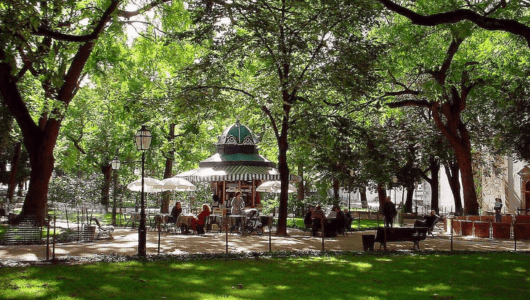
Photo by Revista RUA
If you’d like to visit a kiosk that still sells some of the classics from back in the day, including capilé and groselha, head to Quiosque das Amoreiras (Praça das Amoreiras 14). It is located in a beautiful garden, in a residential area where tourists rarely go, surrounded by the historic Águas Livres Aqueduct. Besides more old-school drink options, the menu also includes wine, cocktails, light meals, and snacks, making it a good spot for a break anytime of the day.
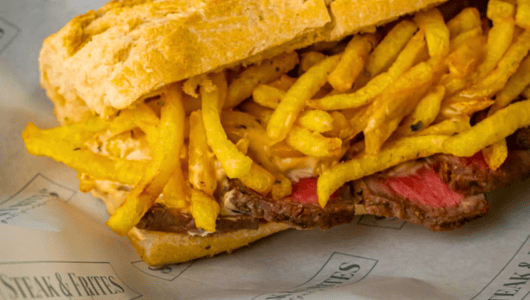
Photo by Steak & Frites
Avenida da Liberdade, Lisbon’s grand boulevard lined with luxury hotels and designer boutiques, has kiosk concepts that go far beyond quick snacks and beer. One of the most recent is Steak & Frites by Olivier(Avenida da Liberdade, Posto 5) which, instead of selling bifanas and toasties like most traditional kiosks would, focuses on steak frites, oysters and cocktails.
For something super lively, head to Quiosque Absurdo (Largo do Leão), near Arroios. In what is one of Lisbon’s most multicultural neighborhoods, you will find a menu that reflects precisely that, including Portuguese snacks like croquettes and chicken pies (empadas), but also smash burgers, Brazilian cheese bread (pão de queijo), loaded fries, craft beer, cocktails, and passion fruit sangria. The kiosk regularly hosts DJ sets, samba gatherings, and evening events, transforming the kiosk almost into an open-air bar.
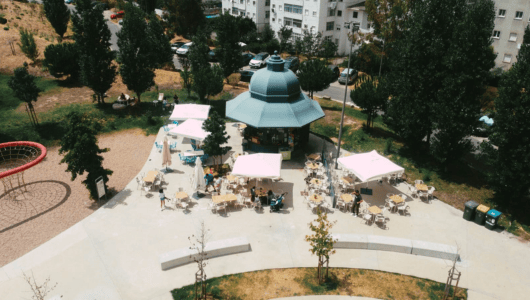
Photo by NIT
Some of Lisbon’s newer kiosks increasingly blur the line between food venue and cultural space, and Quiosque Las Ganas (Parque Urbano do Vale da Montanha) is a good example of that. Beyond cocktails and wine, the menu includes Madeira sweet potato bread with garlic butter (bolo do caco com manteiga de alho), croquettes, cheese boards, Brazilian cheese bread, lunch specials, and sharing plates designed for spending time outdoors with friends. What makes this kiosk stand out is that it pairs all of this with quiz nights, DJ sets, comedy evenings, and board game gatherings, transforming the space into a lively neighborhood hangout.
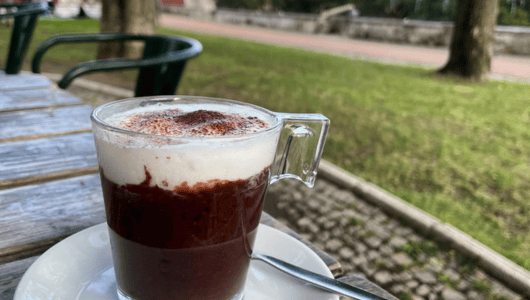
Photo by Clara Clara
Clara Clara Café, inside Jardim Botto Machado near Feira da Ladra, has a menu that usually changes according to season. During colder months, they focus on mulled wine, hot chocolate, scones, and French-style crepes, which can be enjoyed beneath the trees while overlooking the Tagus River. During warmer weather, the menu shifts toward beer, wine, cocktails, and lighter meals. With Lisbon’s flea market nearby, this kiosk gets particularly busy on Tuesdays and Saturdays, both with tourists but also locals coming to enjoy the garden.
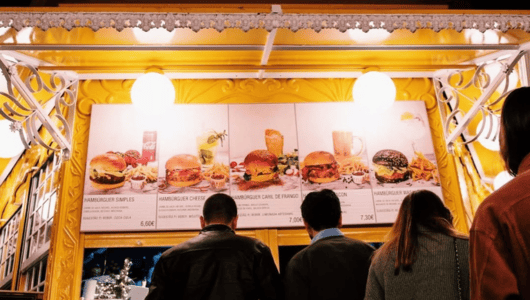
Photo by Mustarda Burgers on Instagram
Places like Mustarda, the kiosk at Jardim Constantino, show how deeply burger culture entered Lisbon’s kiosk scene over recent years. They used to be a simple garden kiosk but have evolved into a great dining spot for proper artisanal burgers, craft beer, cocktails, while also hosting concerts, sports screenings, and occasional outdoor cinema sessions.
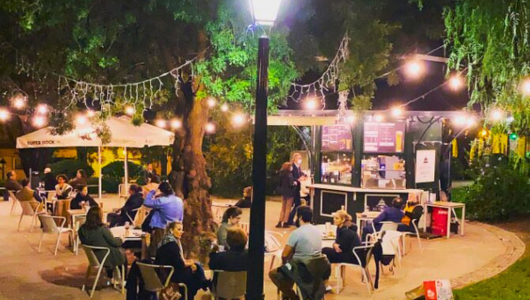
Photo by Quiosque Alto do Santo on TripAdvisor
At Alto de Santo Amaro, in the neighborhood of Alcântara, the kiosk culture still feels strongly Portuguese. Locals still gather here for plates of snails (caracóis) during warmer months, accompanied by cold draft beer and endless conversation stretching into the evening. The menu also includes grilled chouriço, pizzas, toasties, burgers, natural juices, and homemade lemonades. Because this is such a residential area, you will feel like this is one of the kiosks in Lisbon that is still mostly visited by local residents.
The kiosks locals actually visit
To feel Lisbon’s kiosk culture, you don’t necessarily need to visit the city’s most famous viewpoints or central squares. Some of the most genuine Lisbon experiences happen in residential gardens, small neighborhood squares, and parks where kiosks continue functioning exactly as they were originally intended, that is, as everyday meeting places for the people living nearby.
The kiosk at Jardim Fernando Pessa (Rua Teixeira de Pascoais), in Areeiro, is one of the clearest examples of this neighborhood kiosk culture still going strong. The garden is surrounded by apartment buildings, which means almost everyone using the kiosk actually lives nearby and they tend to do so according to their family’s routine. During weekends, for example, you’ll mostly come across families occupying the playground area while parents settle into long coffees nearby.

Photo by Quiosque Verde Lima
Another neighborhood kiosk that locals genuinely use as part of their routine is Verde Lima, in Jardim da Quinta de Santa Clara, near Lumiar. Families occupy the garden during weekends, residents stop for coffee throughout the day, and groups gather at the end of the afternoon. If you want to enjoy a Portuguese style breakfast outdoors, in an area away from downtown Lisbon but easily reachable by public transportation, a quick detour here would be worth it.
In Benfica, several kiosks continue preserving a particularly old-fashioned neighborhood vibe that is becoming increasingly rare in central Lisbon. Here, kiosks like Caricato (Rua Paulo Renato) still function as places where retired residents spend entire afternoons reading newspapers, chatting with familiar staff members, or casually watching football on television while drinking coffee or beer.
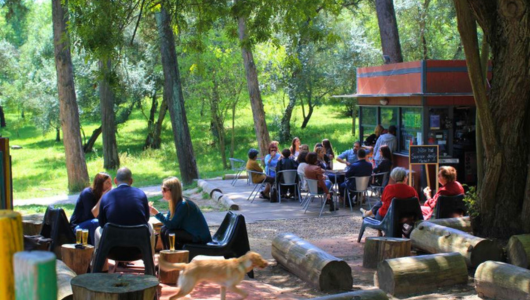
Photo by Lisboa – SoulCity
In Alvalade, the kiosk at Mata de Alvalade shows clearly how these places work outside Lisbon’s sightseeing circuit. This little green escape in the city will immerse you into the day to day life of Lisbon, sharing the area with joggers and folks stopping for coffee after walks, children leaving nearby schools and groups meeting casually after work.
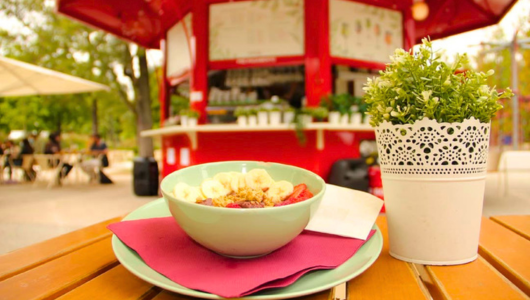
Photo by DejaVu Park on Instagram
The area of Campo Grande also has several kiosks that attract different groups throughout the day. Students from nearby universities, elderly couples, runners, families, remote workers, and groups practicing sports all pass through the park daily. DejaVu Park (Campo Grande 351) welcomes runners who stop for smoothies or fresh juices after exercising, students to munch on wraps and toasties, and anyone who’d be hungry for their more substantial snack options including baked brie and loaded nachos, salads, burgers, and crepes.
At Jardim do Caracol da Penha, in Penha de França, Lisbon’s newer kiosk culture intersects with one of the city’s fastest-changing neighborhoods. The garden itself is relatively recent, created from what used to be abandoned urban land, but it quickly became a gathering point for residents from very different backgrounds. Younger locals may arrive with their own takeaway drinks to enjoy on the grass, while the kiosk fills up with folks enjoying cocktails, natural wine, sharing boards, and lighter meals, it feels like the kiosk ends up being an extension of the actual garden area. The atmosphere here still feels surprisingly local despite growing international attention around nearby areas like Graça and Anjos.
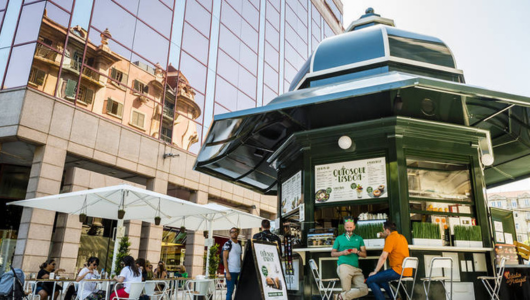
Photo by Francisco Santos on Time Out Lisboa
In central Lisbon, Quiosque do Saldanha (Praça Duque de Saldanha) reflects a completely different kind of local routine. Surrounded by offices, apartment buildings, shopping centers, and constant movement, this kiosk becomes especially busy during lunch breaks and after-work hours. Office workers stop for quick coffees in the morning, beers at the end of the day, or casual lunches outdoors whenever the weather allows it. The menu focuses on practical terrace food including classics like toasties, burgers, salads, lighter lunch dishes, and pastries. Unlike Lisbon’s more scenic kiosks, people here rarely linger, and they are more likely to take a quick break before moving on with their busy schedule.
Space plays a strong social role and, here in Lisbon, kiosks encourage socializing in an uncomplicated way. They are also some of the best spots to sit outdoors and observe people and what the atmosphere of a given neighborhood is like. So, when you travel to Lisbon, visit one of these kiosks for some time, with a coffee or cold beer, and immerse yourself into the rhythm of the Portuguese capital.
If you’d like to discover even more of Lisbon’s food and drink culture beyond the obvious tourist spots, join one of our food and cultural tours, and subscribe to the Taste of Lisboa newsletter to learn more about the local places, flavors and traditions that make Lisbon unique.
Feed your curiosity on Portuguese food culture:
Chiado or Príncipe Real? Where to eat real Lisbon food in the two most charming neighborhoods
How to connect with local culture and people in Lisbon and Portugal
Tipping, couvert and restaurant etiquette in Portugal
Local guide to the best viewpoints in Lisbon
Real people, real food. Come with us to where the locals go.
Signup for our natively curated food & cultural experiences.