
A food lover’s 1 day Lisbon itinerary from a cruise ship
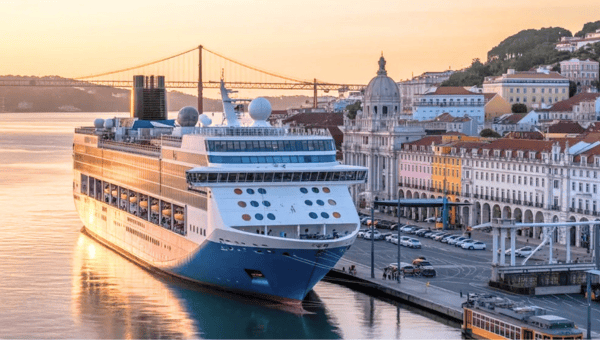
Most cruise ships visiting Lisbon dock beside Alfama, around a ten-minute walk from Baixa. Passengers can leave the Lisbon Cruise Terminal and reach historic neighborhoods, viewpoints, pastry shops and traditional food businesses without needing a transfer into the city center.
Many cruise ships arrive between 7 and 9AM and leave in the late afternoon or early evening, giving passengers seven to ten hours in port. But your usable time ashore will be shorter, as disembarkation may not begin immediately, and you must return by the ship’s all-aboard time, not its departure time.
Featured photo by About2Cruise
This itinerary assumes you leave the terminal at about 8:30AM and need to be back aboard by 5PM. The compact route covers Alfama, Mouraria, Rossio and Baixa, ending near the port. It includes breakfast, a food tour, key historic sights and time to shop for edible souvenirs.
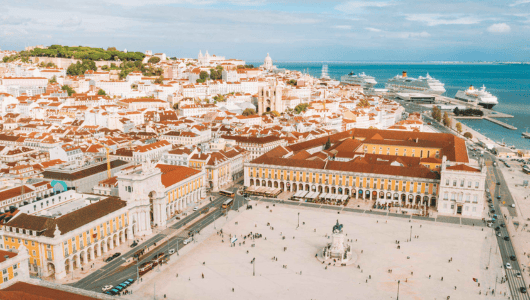
Photo by Pestana Hotel Group
Your Lisbon cruise itinerary at a glance
8:30 AM: Leave the cruise terminal and walk into Alfama
8:45 AM: Visit Miradouro de Santa Luzia
9:05 AM: Walk downhill past Lisbon Cathedral
9:25 AM: Have a small Portuguese breakfast near Praça da Figueira
10 AM – 1:30 PM: Join a Lisbon food and cultural tour
1:30 – 2:30 PM: Explore Rossio and Baixa
2:30 – 3 PM: Visit Praça do Comércio and the riverfront
3 – 3:45 PM: Shop for edible Portuguese souvenirs
4 PM: Walk back toward the cruise terminal
Adjust the schedule to your ship’s all-aboard time. If you must be back by 4:30 PM, shorten the afternoon. If you have longer, stop for another coffee or a glass of Portuguese wine (see our suggestions below).
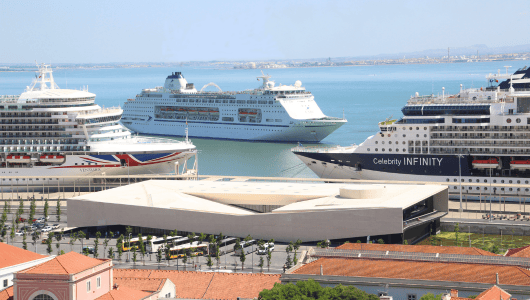
Photo by Porto de Lisboa
Important: Check which Lisbon cruise terminal your ship will use
Most ocean cruises dock at Lisbon’s main cruise terminal complex, which stretches along the waterfront from Jardim do Tabaco to Santa Apolónia, directly below Alfama. This itinerary assumes that your ship docks there.
Check the name of your berth before the day of arrival. The widely quoted “ten-minute walk from Lisbon Cruise Port to the center” applies to the principal terminal area beside Alfama, not to every possible berth along the Tagus.
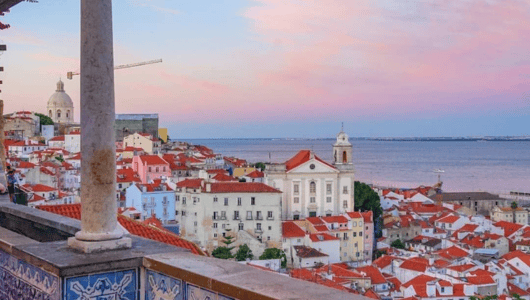
Photo by Erasmus Life Lisboa on Facebook
8:30 AM – Walk from the cruise terminal into Alfama
Cross Avenida Infante Dom Henrique and head uphill toward Miradouro de Santa Luzia (Largo de Santa Luzia). The walk from the main cruise terminal takes approximately 15 minutes, depending on your starting point and pace. The distance is short, but part of the route is steep and paved with cobblestones.
Santa Luzia overlooks Alfama, the Tagus and the dome of the National Pantheon. Look at the blue-and-white tile panels (azulejos) beside the church. One shows the former royal square beside the river before the 1755 earthquake. The other depicts the Christian conquest of Lisbon Castle in 1147. Later in the day, you will visit the rebuilt version of that riverfront square, now called Praça do Comércio. Even though Lisbon has many scenic viewpoints (miradouros), visiting one is enough during a short cruise visit. Miradouro das Portas do Sol (Largo Portas do Sol) is only a minute or two farther, but climbing toward the neighborhood of Graça or São Jorge Castle would take time away from the rest of the itinerary.
Walk downhill from Santa Luzia along Rua do Limoeiro to Lisbon Cathedral (Largo da Sé 1), generally known in Portuguese as the Sé. Construction began in the 12th century, shortly after Lisbon was conquered from the Moors. Earthquakes and several renovations have changed the building considerably, but its heavy Romanesque façade still stands out among the narrower streets around it. If the cathedral is open and there is no line, take a quick look inside. The cloister and other paid areas require more time, so check your watch before buying a ticket.
Lisbon’s traditional limestone pavement can become slippery after rain. Comfortable shoes with grip are more important here than the total walking distance might suggest.
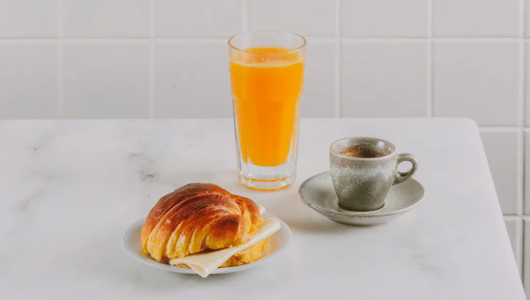
Photo by A Padaria Portuguesa
9:25 AM – Have a small Portuguese breakfast
Continue downhill through Baixa toward Praça da Figueira. This brings you close to Largo de São Domingos, where the morning food tour begins.
Breakfast in a traditional Lisbon pastry shop is usually simple. A typical order might consist of an espresso, known locally as a bica, with toasted bread with butter (torrada) or a pastry. A galão means coffee with milk, similar to a latte, normally served in a tall glass. Portuguese coffee terminology is quite specific, but you can learn how to order coffee in Lisbon here.
Confeitaria Nacional (Praça da Figueira 18B), one of Lisbon’s best pastry shops, is particularly convenient for this itinerary. It was founded in 1829 and it is also one of Lisbon’s oldest pastry shops, selling a broad selection of Portuguese pastries and cakes. It is only a few minutes from the tour meeting point.
If you have booked the food tour, limit breakfast to a drink and one small item. The tour tastings provide the equivalent of a large lunch. You may, of course, begin the day with a custard tart (pastel de nata), although many Lisbon residents are more likely to eat one with a midmorning coffee than as breakfast. But save Belém for a longer visit to Lisbon. Crossing the city just to visit Pastéis de Belém takes time that could be spent exploring Alfama, Mouraria and Baixa.
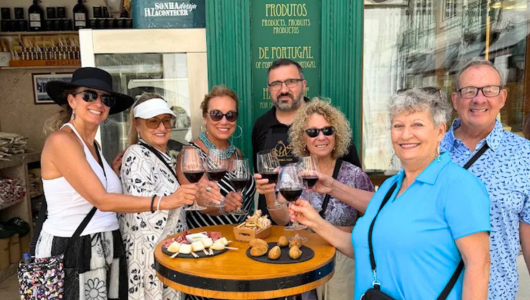
Photo by House on Google
10 AM – Join a guided food and culture walk
Taste of Lisboa’s Lisbon Roots – Food and Cultural Walk begins at Largo de São Domingos, beside Rossio. Guests should arrive by 9:50 AM, as the tour starts promptly at 10 AM.
Over three and a half hours, the tour covers approximately two kilometers and visits five local food businesses. The experience includes 10+ samples of Portuguese food and drinks, while a local guide introduces the history and food culture of Lisbon Downtown and Mouraria. Groups are limited to 12 participants. You can also book it privately if you wish to have a Portuguese guide exclusively dedicated to your group.
For cruise passengers, the tour combines lunch with sightseeing. A single restaurant meal can cover only a small part of Portuguese cooking but, in roughly the same amount of time, the tour includes pastries, savory dishes, wine and traditional drinks at several local businesses.
A guide can also explain ingredients and customs that are not immediately obvious from a translated menu. For example, salt cod has been central to Portuguese cooking for centuries despite not being caught in Portuguese waters. A guide can also explain whether to eat the sour cherries left in a glass of ginjinha and how Portuguese meal customs vary between regions.
The neighborhood of Mouraria is closely associated with the early history of fado and is now one of the most culturally diverse parts of central Lisbon. Traditional Portuguese taverns operate a few streets from Chinese supermarkets, halal butchers and restaurants serving food from South Asia, Africa and the Middle East. Visitors who remain around Praça do Comércio miss this more multicultural side of central Lisbon.
Passengers arriving too late for the regular morning tour can request a private Lisbon food tour. Private experiences offer more starting hours and can be adjusted to the time available.
A scheduled 9 AM arrival may leave too little time for the morning walk through Alfama before a 10 AM tour. In that case, travel directly to Largo de São Domingos and visit Alfama afterward, on the way back to the terminal.
Dietary restrictions should be communicated when booking. Taste of Lisboa can accommodate several restrictions with advance notice, including vegetarian, but the regular tastings are not adapted for vegan diets, as Portuguese cuisine is traditionally centered in animal products. Travelers with reduced mobility should also contact the team beforehand, as the route includes slopes, steps and uneven cobbles.
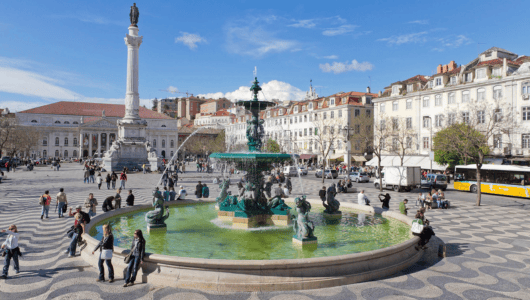
Photo by Portugal.com
1:30 – PM Walk through Rossio and Baixa
After the food tour, skip a separate lunch and walk south through Rossio and Baixa (the Downtown) toward the river. Rossio’s official name is Praça Dom Pedro IV, although almost everyone in Lisbon uses the older name. Its 19th-century wave-patterned pavement is one of Lisbon’s most recognizable examples of Portuguese decorative paving.
From Rossio, enter the grid of streets known as Baixa Pombalina. Much of this area was rebuilt after the earthquake, fires and tsunami of November 1, 1755. Its straight streets and uniformly proportioned buildings contrast with the older layout of Alfama. The Santa Justa Lift is a short distance from the route. You can see its iron structure from Rua de Santa Justa, but lines for the elevator are often long, so skip the ride when you have a fixed time to return to the ship.
To buy Portuguese wine without making a detour, stop at Garrafeira Nacional (Rua de Santa Justa 18). This shop was founded in 1927 and carries table wines from across Portugal, as well as fortified wines including Port, Madeira and Moscatel. Ask the staff for a recommendation based on your budget and the styles you normally drink. Before buying, check whether your cruise line allows alcohol to be brought aboard or holds passengers’ bottles until the end of the cruise.
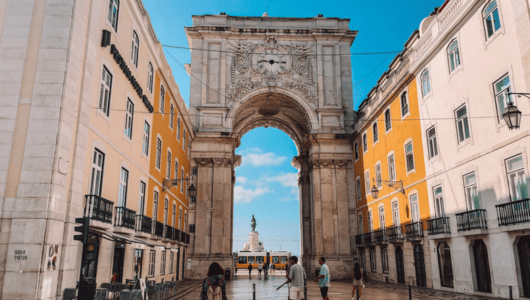
Photo by Rebecca and The World
2:30 PM – Continue down Rua Augusta to Praça do Comércio
Rua Augusta runs through the center of Baixa and ends at the triumphal arch facing the Tagus. It is one of Lisbon’s busiest pedestrian streets, full of stores, restaurant terraces and street performers.
The restaurants here cater mainly to visitors and charge accordingly. Particularly around this area, it can be hard to identify an authentic Portuguese restaurant and avoid the tourist traps. Since the food tour already provided a substantial meal, continue toward Praça do Comércio rather than ordering another lunch.
The square occupies the site of the former royal palace and administrative complex destroyed in 1755. The post-earthquake reconstruction created the large, symmetrical riverfront square seen today. The tile panel you saw at Santa Luzia that morning shows how the waterfront looked before the disaster.
Cross the square to Cais das Colunas, where two stone columns mark the old ceremonial entrance to the city from the Tagus. The steps provide a good view across the river, although the lower section may be wet or inaccessible depending on the tide.
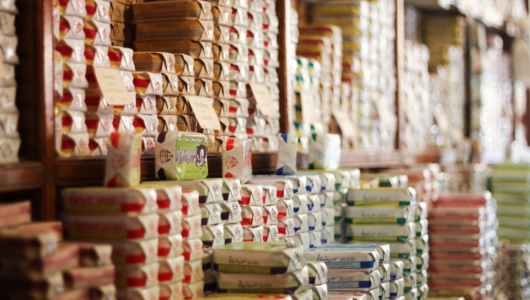
Photo by LifeCooler
3 PM – Buy Portuguese food to take home
Allow about 45 minutes in total for edible-souvenir shopping, spread across the afternoon. This may include wine from Garrafeira Nacional, products you noticed during the tour and canned fish near the terminal. During the tour, note any olive oil, preserves or other products you may want to buy. To keep the group on schedule, wait until the tour ends before shopping. Tell your guide what interests you and ask whether it is easiest to return to that shop or buy a similar product later on the route.
Manteigaria Silva (Rua Dom Antão de Almada 1 C/D), visited at the beginning of our Lisbon Roots – Food & Cultural Walk, is close to Praça da Figueira and Largo de São Domingos. It sells salt cod (bacalhau), Portuguese cheeses, cured meats and sausages (enchidos), wines and other regional products. Salt cod and certain cured products can be vacuum-packed for travel, but ask the staff how they should be stored. Vacuum-packing does not change the customs restrictions applied by your destination country.
If you want to return to Manteigaria Silva, do so immediately after the tour and before walking south through Baixa. Returning after reaching Praça do Comércio would require unnecessary backtracking.
Once you reach Praça do Comércio, walk east toward Rua dos Bacalhoeiros, whose name refers to the cod merchants once based here. This direction also takes you closer to the cruise terminal. Conserveira de Lisboa (Rua dos Bacalhoeiros 34) has specialized in Portuguese canned fish since 1930. Its original wooden furniture and shelves are still part of the shop, alongside colorful tins sold under the Tricana, Minor and Prata do Mar brands. Portuguese canned fish includes much more than tuna and plain sardines. Depending on availability, the selection may include mackerel, horse mackerel, mussels, squid, octopus, eel, fish roe and sardines prepared with olive oil, tomato, lemon or chili. The shop also sells olive oil and a smaller selection of other preserved foods. Tins are compact, do not require refrigeration before opening and generally travel more easily than cheese, cured meat or fresh pastries. Customs regulations vary between countries, particularly for fish, meat and dairy products, so check what you may bring home before purchasing them.
Custard tarts (pastéis de nata) are best eaten on the day they are baked, while the pastry is still crisp, so enjoy another before boarding rather than buying them as a gift for someone several days away. For sweets that travel better, Casa Brasileira (Rua Augusta 267-269) sells Portuguese cheese tarts (queijadas) and several other regional pastries. Queijadas are firmer and easier to carry than custard tarts, although they should still be protected from crushing and eaten within the bakery’s recommended shelf life. Confeitaria Nacional, already included earlier in the itinerary, also sells boxed traditional sweets. Its selection changes, but dry biscuits such as almond cookies, areias, and seasonal broas generally travel better than pastries made with puff pastry, custard or fresh cream.
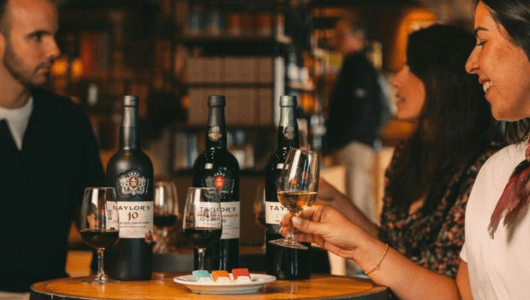
Photo by Taylor’s
3:45 PM – Start returning to the cruise terminal
If you visit Conserveira de Lisboa, that is roughly ten to fifteen minutes on foot from the main cruise terminal area, depending on the location of your ship and the terminal entrance in use. Begin the return journey according to the all-aboard time supplied by the cruise line. Begin your return journey 60 to 90 minutes before all-aboard, following any earlier deadline specified by your cruise line.
Passengers with additional time can stop for an espresso, beer or glass of wine while continuing east toward the terminal. For specialty coffee, Fábrica Coffee Roasters (Rua do Comércio 111) has a small espresso bar serving beans roasted in Lisbon.
On Rua dos Bacalhoeiros itself, Maria Catita Tapas Wine & Bar (Rua dos Bacalhoeiros 28) serves Portuguese wine, Port and craft beer, accompanied by regional cheeses, cured meats and other Portuguese snacks. It opens in the afternoon, making it particularly convenient for the final part of this itinerary. Ask which wines are available by the glass and order a small plate only if the earlier tastings have left room.
Travelers who would rather compare different styles of Port can continue to Taylor’s Lisbon Shop and Tasting Room (Rua do Cais de Santarém 8), which offers several Ports by the glass and introductory tastings. Allow at least 30 minutes for a tasting and check the opening hours, as Taylor’s closes for part of the early afternoon.
Stay between Praça do Comércio, Rua dos Bacalhoeiros, Cais de Santarém and the terminal during the final part of the visit. Confirm how long the walk to your assigned terminal entrance will take, and ask for the bill when ordering if your return time is approaching. From this area, you can return to the terminal on foot without relying on traffic or public transportation.
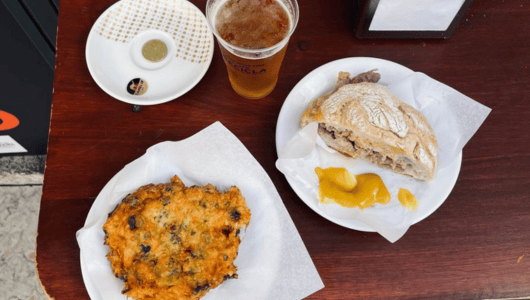
Photo by World of Mouth
What to do if you only have five or six hours in Lisbon
First calculate how much time you will actually have ashore. A five or six hour port call may leave considerably less time for sightseeing once you account for disembarkation and the return to the ship. Work backward from the all-aboard time and spend the final hour close to the terminal. From the main cruise terminal, walk into Alfama for Lisbon Cathedral and the Santa Luzia viewpoint before descending toward Baixa and Praça do Comércio.
Choose one main food experience and add one or two smaller stops according to your appetite. On weekdays, a handwritten board advertising a daily special (prato do dia) usually signals a quick and affordable Portuguese lunch. Ask “Qual é o prato do dia?” and choose from the fish or meat dishes available that day. This kind of proper Portuguese lunch offers a great introduction to everyday food culture. To have lunch near the ship toward the end of the visit, try Maçã Verde (Rua dos Caminhos de Ferro 84-86), a traditional Portuguese tasca opposite Santa Apolónia station.
Shared dishes (petiscos) are another way to taste more than one recipe without ordering a full meal for each person. Two or more travelers can begin with two or three dishes and share them, ordering more only if time and appetite permit. Portuguese petisco portions are not always as small as Spanish tapas. Solo travelers can combine one petisco with soup, a savory pastry or a pork sandwich (bifana).
As Bifanas do Afonso (Rua da Madalena 146) serves thin slices of pork cooked in a seasoned sauce inside a bread roll. Add mustard or chili oil according to taste. Lines can form, so skip it if the wait would take too much time from the visit. Our local insider tip: skip the line and head to Solar da Madalena (Rua da Madalena 288), in the same street.
In Alfama, Miss Can (Largo do Contador-Mor 17) serves petiscos prepared with the company’s own Portuguese canned fish and seafood. This can replace a longer lunch or the later shopping stop at Conserveira de Lisboa if you would rather taste canned fish than take it home.
Feel free to have lunch in one place and move elsewhere for dessert and coffee. At a Portuguese pastry shop, each person can order a custard tart (pastel de nata) and share another traditional Portuguese pastry, such as a small cheese tart (queijada), rice-flour muffin (bolo de arroz) or coconut-topped sweet bun (pão de Deus). Don’t miss Confeitaria Nacional (Praça da Figueira 18B) for classic great Portuguese pastry in on the most iconic and ancient places where we locals go every day, and Nat’elier (Rua de Santa Justa 87), which is directly on the route through Baixa and serves only traditional custard tarts, alongside flavored and vegan versions, which you can indulge into without making the trip to Belém.
Travelers with a particular interest in Portuguese confectionery can make a short uphill detour into Chiado. Pastelaria Alcôa (Rua Garrett 37) and Casa dos Ovos Moles em Lisboa (Calçada do Sacramento 25) specialize in conventual sweets, rich in egg yolks and sugar. Choose one of the two shops and allow 30 to 40 minutes for the uphill walk, purchase and return to Baixa. If time allows, accompany dessert with a small sour-cherry liqueur purchased from a street vendor or a specialized ginjinha counter which you will easily come across.
If Portuguese wine is a priority, the Wines of Portugal Tasting Room is on the western side of Praça do Comércio. Its tasting portions allow you to compare wines from several Portuguese regions without ordering full glasses.
From Praça do Comércio, start walking back toward the terminal. Choose only two or three of these food stops and keep the final hour free for returning to the ship.
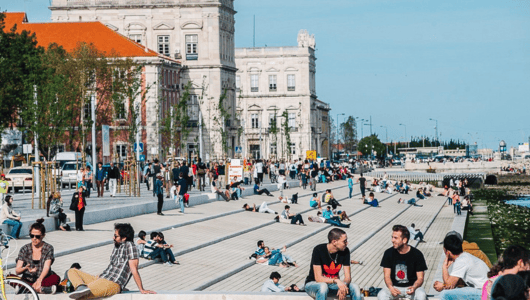
Photo by Lisbon City Council
Can you experience Lisbon during one cruise stop?
A day in Lisbon can cover several historic neighborhoods and a broad introduction to Portuguese food without requiring long transfers. The main cruise terminal’s position beside Alfama makes it possible to begin sightseeing shortly after disembarking and finish the day within walking distance of the ship.
Sintra and other popular day trips from Lisbon should be saved for a longer stay. Even with a full day in port, travel, local transportation, traffic and attraction lines leave too little time for a relaxed visit and a safe return to the ship. Belém is within Lisbon, but its major monuments and museums also deserve several hours, so make it the focus of the day if it is a priority. The interior of São Jorge Castle, Tram 28 and Time Out Market are also better left out of this itinerary because of queues and detours.
A Lisbon food and cultural walk brings many Portuguese foods and drinks into the same itinerary while also covering local history and neighborhood life. This is particularly valuable during a cruise visit, when there are too few meals to explore Lisbon’s food culture one restaurant at a time.
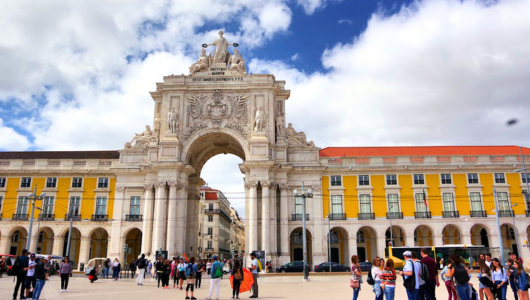
Photo by Audiala
Frequently asked questions about visiting Lisbon from a cruise ship
How far is Lisbon Cruise Port from the city center?
The main Lisbon Cruise Terminal and Santa Apolónia facilities are beside Alfama, approximately a ten-minute walk from the historic center. Ships using Rocha Conde de Óbidos dock farther west and require additional travel time.
Can you walk from Lisbon Cruise Terminal to Alfama?
Alfama begins directly opposite the main terminal complex. Parts of the route are steep and paved with cobblestones, despite the short distance.
Can I join a Lisbon food tour during a cruise stop?
Yes, if the tour times leave a comfortable margin before all-aboard. The regular Lisbon Roots tour lasts three and a half hours. Its 10AM departure operates Monday through Saturday, with Private tours providing more flexibility for other arrival and departure times.
Can cruise passengers visit Belém and central Lisbon on the same day?
It is possible during a long port call, but visiting both areas reduces the time available in each. Passengers who include Belém should remove part of the Alfama and Mouraria itinerary.
If Lisbon is one of your upcoming cruise stops, join Taste of Lisboa on a food and cultural walk through the city’s historic neighborhoods, with Portuguese food, wine and local stories along the way. If our regular departure times do not match your ship’s schedule, contact us about arranging a private food tour tailored to your time ashore.
Feed your curiosity on Portuguese food culture:
Practical tips and useful information for your trip to Lisbon
How to choose the right food tour in Lisbon for your travel style
Tipping, couvert and restaurant etiquette in Portugal
How to connect with local culture and people in Lisbon and Portugal
Real people, real food. Come with us to where the locals go.
Signup for our natively curated food & cultural experiences.
Follow us for more at Instagram, Twitter e Youtube