
How to connect with local culture and people in Lisbon and Portugal

When people imagine connecting with local culture in Lisbon or elsewhere in Portugal, they tend to picture the obvious things first. That could include learning a few words in Portuguese, eating traditional dishes, and maybe wandering into neighborhoods that feel less touristic. All of that matters, but the real connection tends to happen in other more ordinary ways as well, particularly when you’re open to being part of local life and join in as a participant more than as a spectator.
Feat. photo by Property Guides
It’s about introducing yourself with curiosity and respect where local life naturally takes place. We’re talking about simple things such as having a coffee at the counter of a neighborhood pastelaria that might just lead to a chat that you did not expect to have when you walked in. It could also happen over dinner at a Portuguese local home, sitting down for a meal at a typical tasca, or during a community initiative where strangers work side by side. These are things that have nothing to do with sightseeing and everything to do with how people actually live.
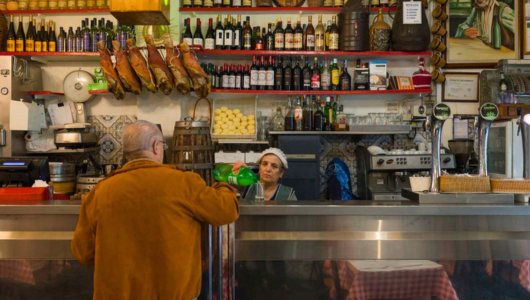
Photo by Lojas com História
In Portugal, people still spend a lot of their social time either at home with friends and family or out in shared public spaces. People often meet in cafés, in neighborhood restaurants, in gardens, at markets, at local festivities, and also during sports events, particularly football matches, whether it is to catch the match live at the stadium or to gather at a bar to watch it on TV together. These routines may seem ordinary, but they tell you a lot about how people relate to one another and how a sense of community is fostered in our towns and cities.
In Lisbon, this side of the city is easy to miss if your travel plans focus only on landmarks and the most heavily visited areas. The city’s character reveals itself the most in places where residents are simply going about their day and we believe that, for visitors, spending time in these kinds of spaces can offer a very useful insight into local life.
In Portugal, particularly in our capital city and other larger cities, you do not need perfect Portuguese, an extrovert personality, or to try too hard. What matters more is being willing to observe, to show up with genuine interest, to return to the same places, and to understand that local culture is not there for you simply to observe, but to actually participate in as well. At Taste of Lisboa, we often say that the best way to understand a place is to go where native locals go. But that does not only mean choosing the right address, it mostly means choosing the right kind of openness. If you are looking to connect more meaningfully with local culture in Lisbon and Portugal, we would recommend getting closer to the places, habits and ways of socializing that give our country much of its personality, and this can lead to a deeper travel experience for you.
How to talk to locals in Lisbon without feeling awkward
For many visitors, this is the part that feels trickiest. Eating in local places is one thing, but starting a conversation with someone you do not know, perhaps even in a language you may not speak well, is another. The good news is that in Lisbon and elsewhere in Portugal, these interactions do not usually need to be deep or especially confident to go well. In fact, they often work best when they are simple.
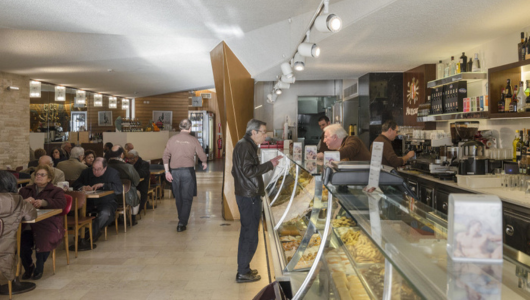
Photo by Lojas com História
A lot of social contact here begins with very small exchanges. Asking if a pastry is house-made, commenting on the results of the previous night’s football match, asking what people usually order, or even just greeting someone properly before getting to the point can already change the tone of an interaction. In Portugal, a simple but warm “good morning” (bom dia) or “good afternoon” (boa tarde) can go a long way, and it’s generally much better than jumping straight into your question if you’re looking for some sort of information.
It also helps to accept that not every interaction needs to turn into a great cross-cultural friendship. Sometimes the win is much smaller than that. Maybe the person at the next table gives you a recommendation, perhaps a waiter tells you which dish he would actually eat himself, or someone at a market might explain the difference between two regional Portuguese cheeses. These are brief moments, but they are often exactly the kinds of exchanges that make a place feel more open, and more human even.
If you want these moments to happen more often, ask open but easy questions. Instead of putting people on the spot with something vague like “What should I do in Lisbon?”, try something more specific and relaxed. Ask where they would go for lunch nearby, or what people usually drink with a particular dish. These kinds of questions are easier to answer, and they tend to lead to more natural conversation.
Humour helps too, as does a little humility. People generally respond well when they sense that you are curious rather than trying to prove how much you already know. If your Portuguese is limited, use what you have without being embarrassed about it. A few words, politely delivered, usually land better than none at all. And if the conversation switches into English, that is fine too. The point was never for you to showcase your linguistic talents, but to simply signal your goodwill and respect for the local language.
It’s important to keep in mind that, just like elsewhere, here in Lisbon not everybody is in the mood to chat all the time. Someone rushing through a morning coffee on their way to work may not be available for much more than a nod. But in slower settings, especially around meals, neighborhood businesses, markets or local events, people are often more open and visitors trying to connect will sense that. But timing always matters, as does tone.
Most importantly, try not to wait for the perfect moment. Local culture is not something that opens up only after a grand gesture. More often, it reveals itself through these small, ordinary exchanges that happen when you are paying attention and not too afraid to begin. In Portugal, a little curiosity, a little politeness and a little courage can take you surprisingly far.
Where to experience local life in Lisbon beyond the tourist areas
One of the easiest ways to feel closer to local culture in Lisbon is to spend less time chasing big sights and more time in the kinds of places people actually use in day-to-day life. You do not need to be especially outgoing, and you definitely do not need to arrive with a grand plan to make local friends by lunchtime. Very often, connection starts with something much smaller, like choosing the kind of place where life is already happening and being open to whatever comes from that.
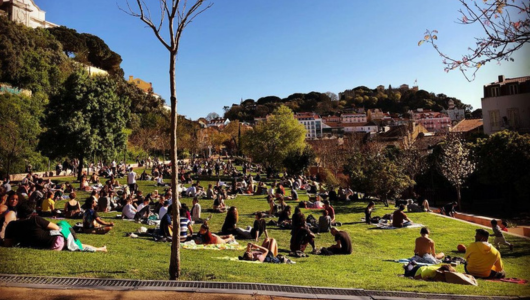
Photo by NIT
A good place to begin is Jardim da Cerca da Graça, where local residents and visitors often linger sitting on the lawn, perhaps enjoying a picnic or sipping a refreshing drink at the kiosk. Because this public garden is located between the neighborhoods of Graça and Mouraria, it gives you a feel for a more layered Lisbon, where residential life, viewpoints and casual socializing all coexist naturally.
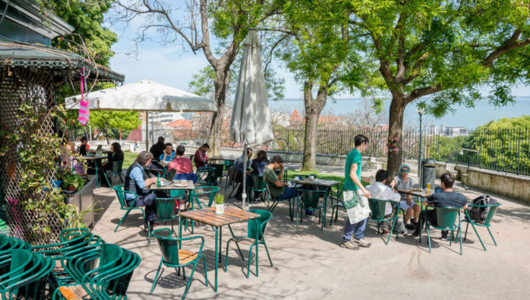
Photo by CM Lisboa
Another good example is Jardim Botto Machado, also known as Jardim de Santa Clara, up by the National Pantheon. Even though it is close to a well-known monument, and right beside the popular flea market (Feira da Ladra) which takes place on Tuesdays and Saturdays, it still functions as a municipal garden. It is the kind of place where locals walk dogs, sit for a bit, pass through on errands, or use the outdoor fitness area, which makes it feel like very much like a part of everyday life, despite being close to well-known neighborhoods.
If you want to understand the quieter and more residential side of Lisbon, Parque José Gomes Ferreira, better known as Mata de Alvalade, is a great place to visit. It is a fairly large green area that people actually use for walks, exercise, children’s outings and time outdoors.
Another good way to get a feel for everyday Lisbon is to spend time in neighborhoods where people not only live, but where there is local commerce by the roadside. One of our favorites is Alvalade, especially around Avenida da Igreja and Avenida de Roma, where shops, cafés and neighborhood services make the area lively and great for people-watching. A nice plan here is to come for lunch, browse the shops, and then continue towards the gardens around Entrecampos. There, you can see another side of the city’s social life, with students from Cidade Universitária gathering outdoors, groups meeting casually, and people making the most of the green spaces, sometimes even taking a rowing boat out on the water, something you could also try to do. The atmosphere around this part of the city, including the ever-busy area near the McDonald’s, can say quite a lot about how Lisbon’s younger crowds actually spend time together.
There are other parts of Lisbon where a similar vibe can be experienced as well, including Benfica, especially along Estrada de Benfica, which also has a practical and local feel. And if you want to see a very different side of Lisbon, Marvila is worth keeping in mind too. It has changed a lot in recent years, particularly around Rua do Açúcar and nearby former industrial areas, but what makes it interesting is precisely that mix of old working-class Lisbon and newer cultural energy. If you do make it to Marvila, do not miss the impressive street art displayed in facades of buildings along the Bairro Chinês.
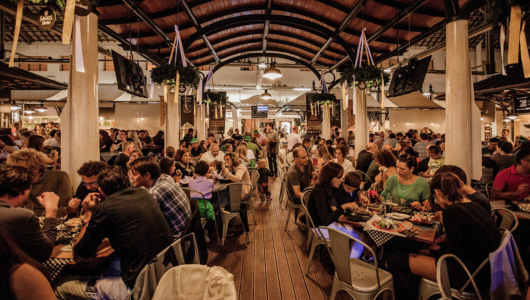
Photo by Distribuição Hoje
Campo de Ourique is another good example of a neighborhood where visitors can easily plug into local life. Instead of heading to the more popular Time Out Market in Cais do Sodré, come here for dinner or a drink at Mercado de Campo de Ourique, which tends to feel much more connected to the surrounding neighborhood. Beyond the food itself, it is also worth paying attention to the kind of programming that happens here, from quiz nights and karaoke to live music and other animated evening events.
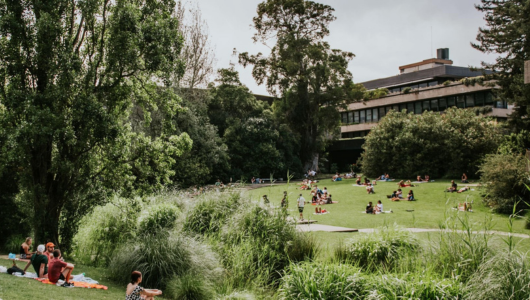
Photo by Fundação Calouste Gulbenkian
You can also do something as simple as spending time in a cultural institution that residents use as part of their normal life. The Gulbenkian Garden, for example, is not exactly a secret, but it is a space people genuinely return to, whether to walk, sit, read or meet someone.
Another very simple way to get closer to everyday life in Lisbon is to spend time at markets where people come to shop for produce, pick up snacks and carry on with ordinary errands. Mercado da Ajuda is one such example, but for a deeper dive into local life, we would recommend Feira do Relógio, which is bustling and gives a very good sense of what Lisbon is like away from the city center. Simply going shopping can be a way of experiencing Lisbon in a more natural register, giving you the opportunity to encounter local culture.
How to connect with Portuguese culture through food and shared meals
If there is one shortcut to understanding Portuguese culture, and one that we’re particularly fond of, this is it. Meals are about sustenance, but they are also about hospitality, conversation, and the way people relate to one another around the table. That is why one of the easiest and most enjoyable ways to connect with local culture in Lisbon and Portugal is to say yes to the kinds of food experiences that bring you into actual social situations, not just restaurants serving good food.
This can start with something as simple as choosing a typical tasca over a trendier place. In a tasca, especially one run for regulars, you are more likely to get a sense of what people really eat, how they order, how long they stay, and how much of the experience happens beyond the plate itself. You may notice people sharing dishes, chatting with the staff, discussing football, politics or family matters across tables, and treating lunch as a shared social moment. Even without understanding every word, you begin to get a feel for how the place works socially.
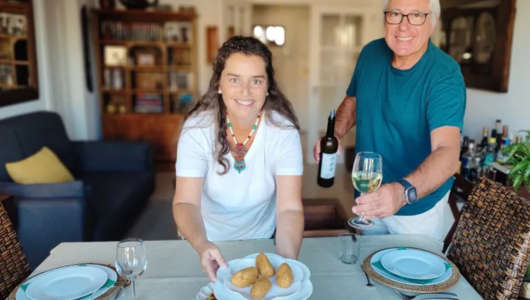
Photo by Taste of Lisboa
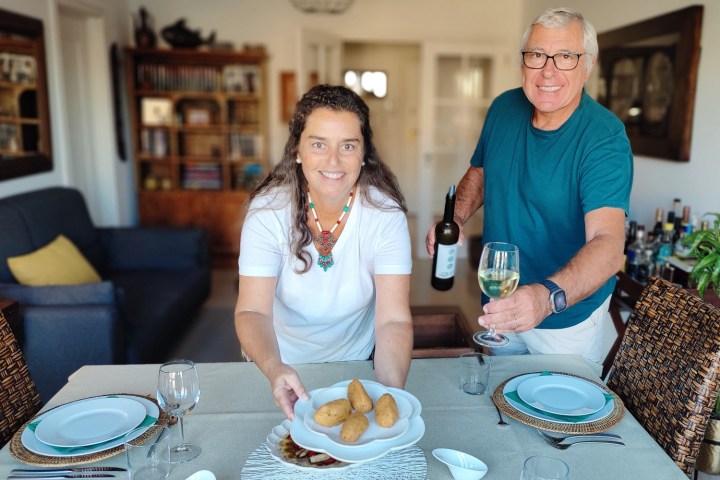
For something even more personal, having dinner in a Portuguese home can be one of the most memorable ways to experience local life in Lisbon, and at Taste of Lisboa we can help you organize this kind of experience. This gives you access to a side of the culture that most visitors rarely see, including not only home cooking, but also the atmosphere around it. You get to sit at someone’s table, hear stories, ask questions, and understand a little better how hospitality works in Portugal in a more intimate setting. We believe this kind of experience can create the sort of connection that stays with you long after the trip, because it is more human than commercial, especially if compared to dining at a restaurant.
More broadly, in Portugal, meals often create a setting where people are more open, more relaxed, and more inclined to talk than they might be in other contexts. Sometimes, Portuguese wine also helps break the ice. So if you are hoping to connect with local people while traveling, it makes sense to follow the food, but not only in the obvious sense. Look for situations where eating also means sharing time, conversation and context as, in Portugal, that is often where the real cultural exchange begins.
Volunteer in Lisbon and Portugal to connect with local communities
If you want to get closer to local culture in a way that goes beyond eating, sightseeing and polite small talk, volunteering can be a surprisingly good place to start. It may not sound like the most obvious travel activity at first, but it means that instead of only observing daily life, even if briefly, you get to participate in it. You meet people around a shared task, you see a different side of the city, and you often come away with a much more grounded sense of how local communities actually function.
Realistically, many volunteering opportunities require more time, some prior coordination, or a regular commitment. But in Lisbon and elsewhere in Portugal, there are still a few ways to contribute meaningfully, even if you only have a few hours or a day to spare. The trick is to look for initiatives that already work with short-term volunteers, specific campaigns, or platforms that match people with opportunities according to availability.
One of the clearest examples is Banco Alimentar Contra a Fome. Its nationwide food collection campaigns usually take place twice a year, around the end of May and again in November, and volunteers can register through the official campaign platform. This is probably one of the most realistic options for travelers who happen to be in Portugal on the right weekend, because the format is already designed for short-term participation and the task is easy to understand even if your Portuguese is limited.
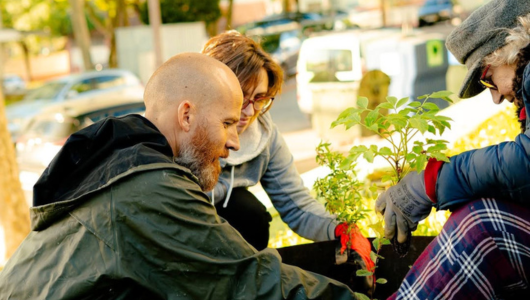
Photo by Upfarming on Instagram
If you would rather get your hands in the soil than sort food parcels, Upfarming offers another route into local life through urban agriculture. Its work focuses on food literacy, community development and urban wellbeing, and its Estufa Comunitária de Alvalade has hosted open community harvests and hands-on activities around planting and harvesting.

Photo by Lisboa Cidade COM VIDA
For something more creative and certainly original, A Avó Veio Trabalhar, which translates as “Grandma came to work”, is worth knowing about too. With the catchy slogan “old is the new young”, the project describes itself as an intergenerational creative hub that regularly opens workshops in areas such as serigraphy, creative embroidery and knitting. Joining one of these is not volunteering in the strictest sense, but it can still create the kind of human contact that many travelers are actually looking for, involving slower conversations, making something together, and the chance to engage with local people through skills and stories.
For something broader and more flexible, Serve the City Portugal is worth knowing about. The organization works across themes such as homelessness, isolation, youth vulnerability, migration and refuge, and specifically states that it offers both occasional and regular volunteering opportunities, some requiring only a couple of hours and others a full day. It also directs volunteers to its ServeNow app and orientation sessions, which makes it one of the more practical tools for visitors who want to see what is available at the time of their trip rather than rely on one fixed opportunity.
For animal lovers, there are opportunities in Lisbon too, although these tend to work better for travelers staying a little longer rather than for those in town for just a day. União Zoófila, one of the city’s best-known animal welfare associations, relies on volunteers for practical tasks such as cleaning kennels and catteries, brushing and comforting animals, helping with blankets and laundry, and supporting the day-to-day running of the shelter. Because the association values regular attendance, it is not the most realistic option for a very short stay, but it can be meaningful for visitors with a bit more time who want to contribute in a hands-on way.
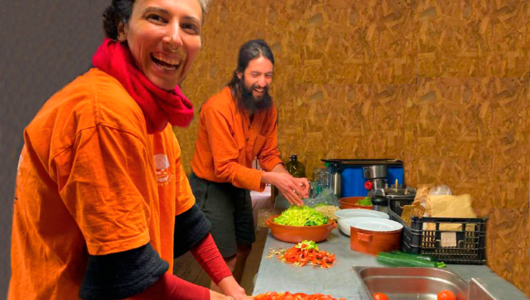
Photo by AMURT
Another example that works particularly well for short stays is Cozinha Solidária, run by AMURT. In Lisbon, volunteers can help cook and prepare plant-based meals on Wednesdays from 5 pm to 7 pm, with other sessions also taking place in nearby areas such as Carcavelos. That makes it a very practical option for travelers who want to contribute for a couple of hours rather than commit to an ongoing role. Food-based solidarity projects like this can also feel especially meaningful in Portugal, where meals are such an important part of how care and community are expressed.
If you are traveling during summer, you might want to look up volunteering opportunities at festivals, including popular musical festivals, but also events dedicated to other art forms such as film. These work particularly well if you’re social and open to making friends while enjoying art as an ice-breaker. In Lisbon, film festival IndieLisboa has an official volunteer programme, as does MOTELX, another cinema event dedicated to horror movies. Outside Lisbon, large musical festivals such as Boom Festival also run official volunteer applications, although these tend to involve earlier planning and a slightly bigger time commitment.
If you volunteer in any of these initiatives, even if just for a few hours, you stop being only someone passing through and start participating in one small part of how Lisbon works, and that can be a great way to connect with local culture. Also, having something to do rather than just showing up at a place and having to strike up a conversation with someone from scratch, helps take the pressure off, so this can be useful in more than one way.
Cultural events in Lisbon that help you connect with local life
One of the easiest ways to feel closer to local culture in Lisbon is to stop thinking only in terms of monuments and start paying attention to where people actually go for music, art and everyday cultural life. Thankfully, Portuguese culture is not confined to formal venues such as museums, and it also happens in small fado houses, community kitchens, old civic associations, neighborhood cultural centers, local cinemas, football grounds and parish-led events. In these kinds of places people are consuming culture but, in reality, also using it as a reason to gather.
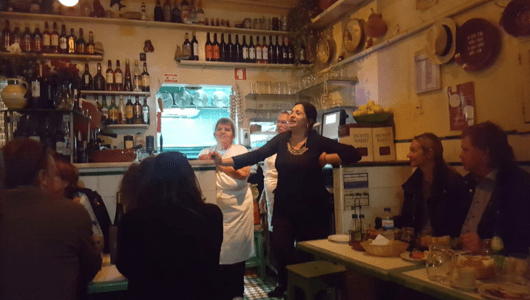
Photo by The European Bar Guide
A good place to begin is with fado music, but not necessarily the polished dinner-show format that many visitors book by default. Traditional fado houses usually work around a more structured performance, which often includes a sit-down meal with several courses. In contrast, fado vadio is a term used for fado sung more spontaneously, often by amateurs, and frequently even without a commercial purpose. In these informal setups, mostly associated with some of Lisbon’s most traditional neighborhoods, singers may step in without a fixed repertoire and it’s not unusual for the audience to sing along if the song that is being performed is a popular fado. If you want to experience something closer to that spirit, look for smaller venues such as Pulga Taberna de Alfama, A Baiuca, also in Alfama, which is one of the birthplaces of fado music, as well as A Tasca do Chico, in Bairro Alto, which is quite popular but nonetheless remains one of the best-known places for this more informal style. No matter where you end up going for a fado performance, try to understand the code of the room, which involves keeping quiet while someone sings.
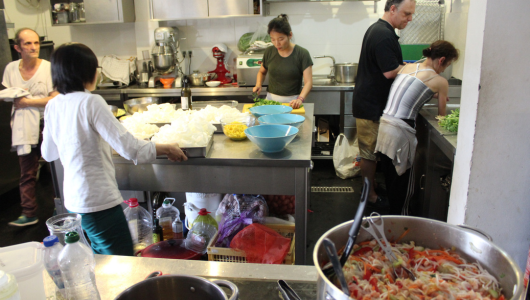
Photo by European Pathfinders
Beyond fado, there are other interesting aspects of cultural life happening around Lisbon. Cozinha Popular da Mouraria, for example, is a space for the community built around food, but also around exchange, with workshops, pop-ups, group meals, and activities that bring together people from different backgrounds in the already very multicultural neighborhood of Mouraria. Coming for a workshop or a shared meal here might be fun but, besides that, it will also bring you closer to the human side of the neighborhood in a way that would be hard to get by simply wandering around.
Casa do Comum, in Bairro Alto, is another excellent example of the sort of venue that can help visitors plug into Lisbon’s cultural life without needing an invitation into anyone’s inner circle. Its current programme includes reading clubs, concerts, staged readings, DJ nights, film screenings and conversations, all under one roof. For a slightly older-school version of this idea, Cossoul is also worth knowing. The Sociedade de Instrução Guilherme Cossoul has been around for 140 years and still combines events, projects, courses, radio and artistic programming, including things like a youth wind orchestra and dramaturgy initiatives. It is the sort of institution that reminds you Lisbon still has a network of civic-cultural spaces still going strong, even if in recent years such associations often struggle with rents and appropriate places to host their events.
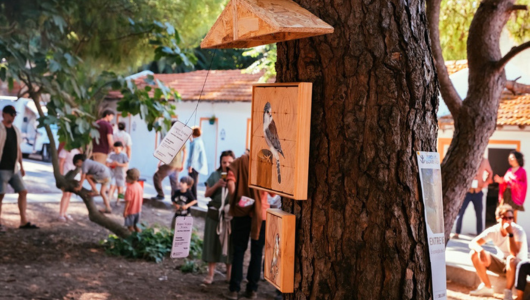
Photo by Agenda Cultural de Lisboa
If you are drawn to greener forms of cultural life, Jardins do Bombarda is one of the most interesting additions to Lisbon’s current landscape. It is a cultural and community center created in part of the former Miguel Bombarda hospital grounds, and its programming usually includes markets, workshops and community activities. Within that ecosystem, Verdejar is particularly relevant, with recurring market days, workshops and open greenhouse sessions that make it possible to mingle around sustainability, local producers and hands-on activities rather than around a conventional cultural event.
For those who are into film and theatre, Lisbon also offers ways to join the kind of programming residents usually also attend. The municipal initiative Avenidas – Um Teatro em Cada Bairro is part of a network of neighborhood-scale cultural venues with programming that brings together theatre, cinema, literature, music and exhibitions in a setting designed to stay close to local communities and cultural agents.
The same applies to some movie theaters outside the shopping mall circuit. Going to Cinema Ideal in Chiado, Cinema Nimas in Avenidas Novas, or Cine-Teatro Turim in Benfica can bring you closer to a more everyday way of experiencing culture in the city. In these spaces, the experience is usually more connected to film cycles, special screenings and independent programming than to the big releases shown in more commercial theaters.
How football and sport bring people together in Lisbon
If you want to connect with local people in Lisbon through sport, football is the obvious starting point, but it is not the only one. In Lisbon, football is one of the city’s most common shared languages, but we also have running clubs, cycling groups and surf communities that offer easy ways to meet people more actively, even if you are only in town for a short period of time.
When it comes to football, the first thing to know when you land in Lisbon is that the city’s main rivalry is Benfica versus Sporting. That split runs through neighborhoods, family loyalties, office banter and everyday identity, and it becomes especially visible on derby days or during decisive matches. Watching a game at Estádio da Luz or Estádio José Alvalade is the full version of the experience, but even before kick-off there is already a lot going on around the stadiums.
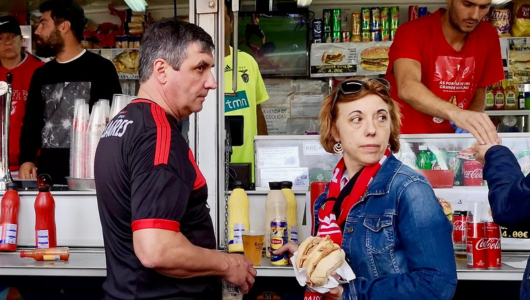
Photo by VICE
Part of the fun is precisely everything around the match. People often meet beforehand for a beer and something quick to eat, whether that is a bifana or a more old school pork rind sandwich (sandes de courato), grabbed standing up before heading in. After the final whistle, the ritual often continues and, if the result is good, people stay out for another round to celebrate, argue over key moments and soak up the mood. If the result is bad, they often do pretty much the same thing, just with more complaining and a gloomier tone. These before-and-after rituals of a football match can also give you a sneak peak into Lisbon’s social life as they are often an easy way to witness how people gather, joke, argue and perform loyalty in public.
And if a stadium ticket is not in the budget, or attending a match simply does not align with your trip’s schedule, you can still enjoy some of this spirit watching a match in a local bar or neighborhood café. Even something as simple as wearing a Benfica or Sporting shirt can trigger comments, teasing or full conversations with strangers, which is part of the point, keeping in mind that this would usually be done in good spirits.

Photo by Portugal.com
If you would rather join in than just watch, running is one of the easiest things you can do as, apart from a good pair of shoes and a decent level of energy, there’s nothing else required from you. Join other locals and visitors via the Rookie Run Club Lisbon, that has open social runs every Wednesday at 7:30 pm in Cais do Sodré and Saturday at 10 am in Praça do Comércio, or Lisbon Running Community that also promotes three weekly runs, on Tuesdays and Thursdays at 7:30 pm and Sundays at 9 am, with monthly community events.
Cycling can work in a similar way, so, if you have or can rent a bike, you may want to check out the events regularly put together by Lisbon Social Cycling Club or the Nonstop Cycling Club Lisbon. MUBi, an association that promotes urban cycling in Portugal, has formats such as Sexta de Bicicleta, which includes end-of-day bike rides, picnics and neighborhood socializing.

Photo by Odisseias
Surf is another route in, especially because Lisbon gives you easy access to breaks such as Costa da Caparica and Carcavelos. If you want something more social than a one-off lesson, there are clubs and communities that combine sport with meetups. IST Surf Club, for example, promotes beginner lessons, beach volleyball and sunset hangouts. This is not a traditional “local club” in the neighborhood-association sense, but it can still be a good, low-pressure way to share time with people in and around Lisbon through something active.
Day trips from Lisbon that will get you closer to real life in Portugal
If you want to connect more deeply with local culture in Lisbon, one of the smartest things you can do is leave the city for the day. Portugal changes quickly once you get out of the capital, and day trips are very much part of how we locals also spend our free time. For people living in Lisbon, weekends often involve getting out of town for lunch, heading somewhere by the sea, visiting friends or family in another area, or simply enjoying a change of pace without needing to travel far. You can do this yourself when you visit our country, to learn about how people in and around Lisbon actually enjoy the country, but also to learn more about what the country is like outside the biggest city.
Of course, there are the obvious classics, and they are well-known for a reason. But if your goal is to get closer to local life rather than visiting the most famous places, we would encourage you to look beyond those. Outside the capital, things often move at a different pace. Meals stretch longer, conversations come more easily, prices are often gentler on the pocket, and it becomes easier to learn more about regional Portuguese food and culture. Because we are such strong advocates of day trips that are shaped around local food and everyday culture, on the Taste of Lisboa blog, we have a whole series of travel guides for food lovers focused on destinations that can be enjoyed from Lisbon in a day, including places that many visitors would not think of first. These are exactly the kinds of destinations that can help you experience more of Portugal’s regional character, whether through a market, a bakery, a traditional lunch, or a walk during which you’ll hopefully get to breathe in some local life. Destinations we would recommend for this include Abrantes, Caldas da Rainha, Tomar (pictured below), or Alcobaça, just to name a few.
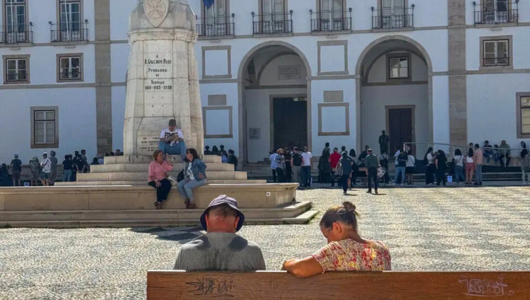
Photo by The Blond Travels
There are also more well-known places that more often make it to travelers’ itineraries, but that are indeed great day trips from Lisbon. We’re talking about Arrábida for hiking enthusiasts, Setúbal or Peniche for those willing to travel a little to enjoy the freshest seafood, Ericeira for surfers and ocean lovers, and even Évora for a quick taste of the Alentejo region without necessarily having to spend the night away from Lisbon.
Maybe not every day trip will result in a deep cultural exchange but, by taking these kinds of trips, you are putting yourself in settings Portuguese people genuinely use and enjoy, letting real daily life happen.
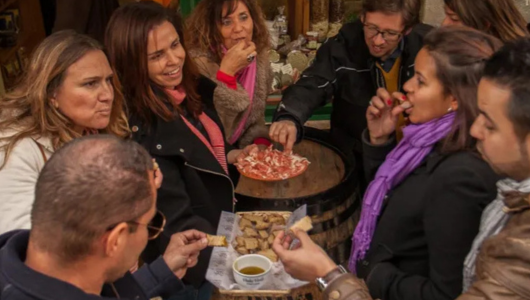
Photo by Taste of Lisboa
Ultimately, connecting with local culture in Lisbon and Portugal is usually less about doing extraordinary things and more about approaching ordinary things differently. It is about choosing participation over distance, curiosity over hesitation, and real daily life settings over tourist-oriented ones. If you travel to our country with openness and curiosity, you will not only see more of Portugal but you will understand it in a fuller way too. Often, the most rewarding travel moments are not necessarily the most spectacular, but the ones in which you feel briefly included in the life of a given place rather than standing outside it.
That is very much the spirit behind how we like to explore Lisbon at Taste of Lisboa. Going where locals go is not just about finding the right restaurant or market stall, even if that helps. It is also about being open to the habits, conversations and forms of hospitality that give this city and this country their particular character. If you travel with that mindset, Lisbon becomes more than a beautiful destination, it becomes a place you can actually connect with.
We look forward to welcoming you for one of our food and cultural walks in Lisbon. Until then, keep learning about Lisbon via Taste of Lisboa’s Instagram.
Feed your curiosity on Portuguese food culture:
Local guide to the best viewpoints in Lisbon
How to identify an authentic Portuguese Tasca
How to spot an authentic Portuguese restaurant in Lisbon (and avoid the tourist traps)
Real people, real food. Come with us to where the locals go.
Signup for our natively curated food & cultural experiences.