
Local guide to the best viewpoints in Lisbon
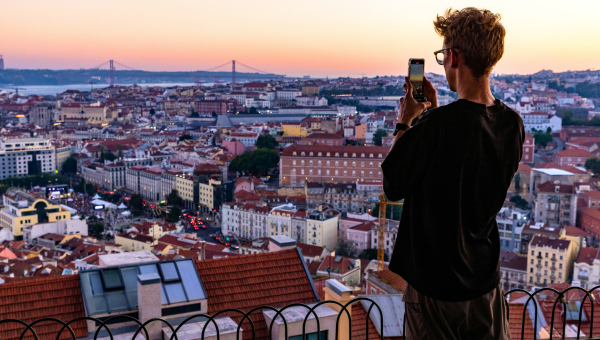
Lisbon is often described as the city of the seven hills, so this naturally creates a lot of wonderful viewpoints. Lisbon is indeed popular thanks to its miradouros, which include small lookouts to broader balconies over the city, from which you can enjoy views not only of our city itself, but also across the Tagus river and beyond to the south bank. For travelers, these viewpoints are a big part of the Lisbon experience, as from them you can enjoy some of the things the Portuguese capital is known for, including red-tiled rooftops stepping down the slopes, São Jorge Castle on its hill, as well as church domes and towers on the skyline, before your eyes meet the river line.
Featured photo by Mick Haupt
But besides being sightseeing stops, viewpoints in Lisbon are also part of local life. Locals go to viewpoints to catch the sunset, take a break between neighborhoods, meet friends before dinner, or decompress after work. Many of the best miradouros have a kiosk nearby, inviting you to slow down and grab a coffee, a cold beer or even a glass of wine as you people-watch and enjoy the views. It’s also not at all uncommon for people to bring their own drinks and snacks and treat the miradouro like an outdoor living room.
Each viewpoint in Lisbon has its own vibe. Some miradouros are famous for postcard views and are busy most of the day, while others feel more local, with a stronger neighborhood atmosphere. Some are best early in the day when the light is clear and the crowds are smaller, while others are at their best at golden hour, when Lisbon turns warmer and the river reflects the late afternoon sun. A few viewpoints are ideal for understanding the city’s geography, how Lisbon stacks itself across hills and valleys and funnels down toward the water. So, the best miradouros in Lisbon do not just offer a beautiful panorama, but can also help you read Lisbon from up above.
We’d love to share with you the viewpoints that we believe are most worth your time, plus what makes each one special.
Miradouro do Parque Eduardo VII
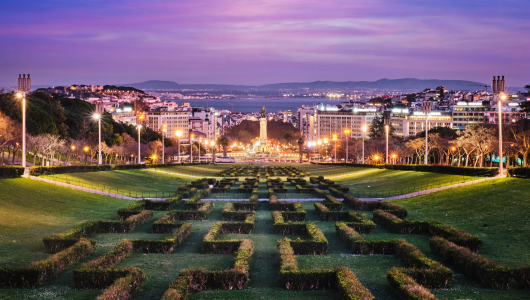
Photo by Bubbly & Living
Miradouro do Parque Eduardo VII gives you a very different Lisbon view from the hilltop miradouros in neighborhoods like Bairro Alto, Graça or Alfama. Here, the city appears in one long, clean line. From the top of the park, your eye travels straight down the geometric slopes of Parque Eduardo VII, past Marquês de Pombal, along Avenida da Liberdade, and all the way toward Baixa and the Tagus. That direct axis with an unobstructed view sure makes this viewpoint memorable. It’s so rare to enjoy symmetry in Lisbon, that that alone makes it stand out.
Eduardo VII Park covers around 26 hectares and was originally called Parque da Liberdade before being renamed in 1903 after the visit of King Edward VII of the United Kingdom. It later became one of central Lisbon’s main public green spaces and still hosts major city events, including the annual Lisbon Book Fair.
This is also one of the easiest viewpoints to fit into a day without planning a whole hill-climb around it, especially if you are already close to Marquês de Pombal, Avenida da Liberdade, or São Sebastião. Right beside the park is the Estufa Fria, a greenhouse garden with lush plants, grottoes, water features and winding paths, which gives you a good reason to explore the park beyond the observation deck.
People come to this part of Lisbon to walk, run, sit on the grass, bring children, or just take a break from the traffic below. Even when the viewpoint is busy, it is never with the shoulder-to-shoulder feeling you may experience at the more famous miradouros in the higher season. Because this viewpoint is set within a major public park, people come here not just for the view, but mostly to enjoy the green space around it.
For food and drinks, from Miradouro do Parque Eduardo VII you can walk to the area of São Sebastião, where there are a lot of convenient options. Avenida da Liberdade is right below if you want cafés, hotel bars or a more polished meal. In the northern part of the park itself, right above the viewpoint area, there’s Linha d’Água (Jardim Amália Rodrigues), a relaxed café and terrace, right in front of a pretty fountain, ideal for a coffee, a refreshment or a light meal. This entire area is also popular in Lisbon for picnics.
📍Alameda Cardeal Cerejeira, 1070-051 Lisbon
🗺️https://maps.app.goo.gl/EcrfhdotHVSjwkWN8
Miradouro de São Pedro de Alcântara
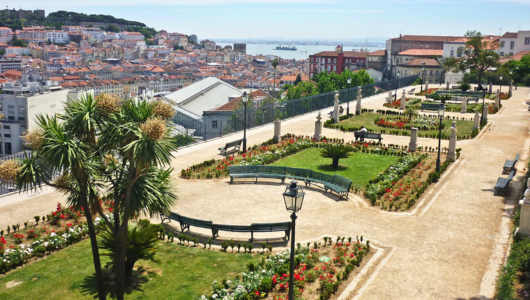
Photo by SchiDD on Wikimedia

Miradouro de São Pedro de Alcântara sits on the edge of Bairro Alto, right above Restauradores, and it faces straight across the valley toward the castle hill. In one glance, you can trace the city from the central axis of Avenida da Liberdade and Restauradores, across Baixa, and up to Castelo de São Jorge. It is one of the easiest places from which to spot several of Lisbon’s most popular landmarks, and there’s even a tile panorama map that labels key monuments in the view.
São Pedro de Alcântara was designed as a place to spend time out, as it is laid out as a garden with two levels, with benches, shade, a fountain, and statues, so it works for a proper pause more than just a quick lookout spot for a pretty picture. Because it’s central, it can get crowded, especially late afternoon, but it is so expansive that it rarely feels too tight, as the garden layout gives people space to spread out, sit, and take their time.
It also fits naturally into a Lisbon day exploring Lisbon’s most popular areas, because it sits at a crossroads between neighborhoods. Coming up from the center, it’s the perfect first stop before drifting into Bairro Alto and Príncipe Real neighborhoods. Coming the other way, it works as a break before dropping down toward Baixa again. Overall, it naturally fits into walks that include Avenida da Liberdade, Rossio, Chiado, and the historic center. At the same time, it sits at the entrance to two of Lisbon’s most popular areas for eating and drinking, so the viewpoint often becomes the starting point for the rest of the evening.
Step behind the terrace and you’re in Bairro Alto, Lisbon’s classic nightlife neighborhood. Early in the evening it’s a good area for a drink before dinner, while later on it becomes way busier, as the small streets are lined with bars where people usually grab their drinks and head out onto the streets so, as one would anticipate, can imagine, it is a fairly noisy place. If you want to keep things calmer, walk in the other direction toward Príncipe Real, which has a totally different personality, being one of Lisbon’s most popular areas for restaurants and late afternoon drinking, with more sit-down options, more terrace culture, and a generally more polished feel than Bairro Alto. Príncipe Real also has its own daytime pull, which makes São Pedro de Alcântara useful beyond sunset. The neighborhood is known for its gardens and shopping streets, and it hosts the Príncipe Real organic market on Saturday mornings, which is one of the best outdoor food markets in Lisbon.
At the miradouro itself, you can enjoy the kiosk, which will invite you to rest your legs and refresh yourself with a cold drink in hand. Here you’ll see plenty of travelers, but also locals hanging out, walking their dogs, and sipping a beer before meeting other friends to perhaps head out to the nearby areas.
📍Rua de São Pedro de Alcântara, 1250-238 Lisbon
🗺️https://maps.app.goo.gl/hdHggF8GzbvJrBKq5
Miradouro de Santa Luzia
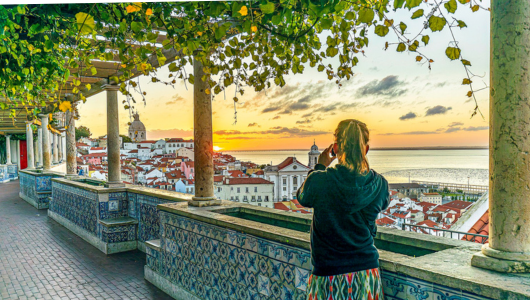
Photo by Hansfotos on Wikimedia

Miradouro de Santa Luzia is located between the Sé area and the heart of the neighborhood of Alfama, close enough to the cathedral and the castle route that you will likely pass it without even trying. It is one of the best viewpoints in Lisbon for getting that very recognizable old town panorama. From up there you’ll get to appreciate Alfama’s tight patchwork of rooftops going downhill toward the Tagus river, dotted with church domes and towers in between the maze looking alleys. From here, you can easily spot the dome of the National Pantheon (a part of the church of Santa Engrácia), or the Igreja de Santo Estêvão, both classic Lisbon landmarks that pop against the skyline.
Besides the actual views, what makes Santa Luzia stand out are also the azulejos. The two large tile panels on the onsite church wall are a big part of why this miradouro is so photographed. These typical tiles depict historical scenes including Praça do Comércio before the 1755 earthquake and the 1147 siege during the Christian reconquest of Lisbon. Even if you are not a particular history buff, there’s no doubt that this is a detail that adds some context to what you are seeing.
In terms of atmosphere, Santa Luzia is beautiful, but it is also very popular. It is often busy with visitors, and you will hear the classic Lisbon soundtrack here, which includes the bell of the tram passing nearby, the hum of tour groups, the occasional street musician, and plenty of people trying to take practically the same photo. Even considering all of this, we firmly believe this is one of the viewpoints in Lisbon that you should not skip. But if you do want to enjoy Santa Luzia in a calmer way, we recommend visiting earlier in the morning, when Alfama is still waking up and you can actually spend time here with not that many people around. If you come at sunset, you can for sure expect company, because this is one of those Lisbon viewpoints that attracts everyone at once, locals and tourists included. Whether it’s morning or evening, there’s a local café and kiosk where you can buy a drink, sit down and take it all in.
📍Largo de Santa Luzia, 1100-487 Lisbon
🗺️https://maps.app.goo.gl/qWRiCnxk8aFn3Sc67
Miradouro das Portas do Sol
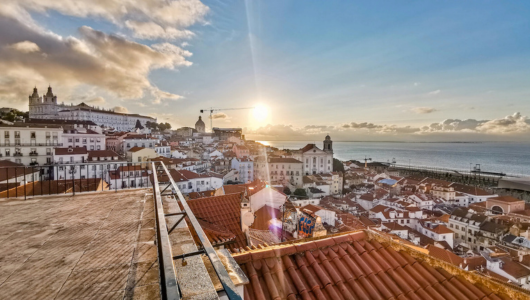
Photo by Duarte Drago on Time Out Lisboa
Miradouro das Portas do Sol is one of Lisbon’s best viewpoints for a big, open look over Alfama and the river. Set on the upper edge of the neighborhood, it gives you a wide angle perspective of Lisbon’s oldest quarter, with its tight rooftops and steep streets running downhill toward the river. Across the valley, the church of São Vicente de Fora helps frame the view and gives you an easy reference point to orient yourself.
It’s useful to note that Portas do Sol is very close to Miradouro de Santa Luzia, and many people come here in one combined stop. The views share the same Alfama theme, but they do not feel identical, as Santa Luzia is a more decorative terrace with a small garden atmosphere and its famous azulejo panels, while Portas do Sol is more expansive, with a classic “balcony over Lisbon” effect. If time is tight, it is worth choosing based on what you want most, either a prettier setting with tile details (Santa Luzia) or a broader, more panoramic feel (Portas do Sol).
Portas do Sol is within easy reach for travelers because trams 12 and 28 stop nearby, which explains why this viewpoint is so popular throughout the day. That convenience comes with a trade-off as it can get really busy, especially late morning and mid-afternoon, when tour groups and tuk-tuks cluster in the same area. For a quieter experience, early morning tends to be the sweet spot, when the light is also dreamier and the surroundings are not yet at full volume. Later in the day, the viewpoint becomes more lively and social, which is exactly how many locals still use it, in spite of the tourist influx.
Like many miradouros, this is not only a place for a photo, but a great spot to pause properly. The kiosk and nearby terrace options make Portas do Sol an easy spot to stay for a while, especially as the day cools down during Summer season. If the goal is to enjoy it the local way, consider grabbing a drink and enjoying the sunset in an unhurried way.
Portas do Sol has a few details that give it extra character beyond the view, including the statue of São Vicente, who is Lisbon’s oficial patron saint, even though many visitors (and even some distracted locals) embrace Santo António as the one, as we have the Lisbon’s June festivities dedicated to this saint. Across the square, you’ll also find the Museu de Artes Decorativas Portuguesas, dedicated to Portuguese decorative arts, with a focus on historic furniture, ceramics, textiles, and other traditional interior pieces.
There is no ticket and no formal closing time, but the atmosphere at Miradouro das Portas do Sol shifts noticeably depending on the hour. If the priority is quiet and space, come early. If the priority is the city’s buzz, come later, when the light warms the rooftops and the miradouro becomes full of people and pulsing with energy.
📍Largo Portas do Sol, 1100-411 Lisbon
🗺️https://maps.app.goo.gl/apJxJZ5DiD7rThF38
Miradouro da Graça
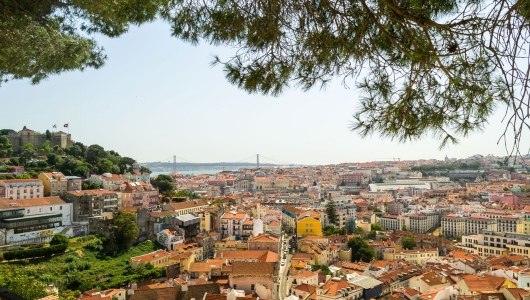
Photo by pxhere
Miradouro da Graça is in a neighborhood that still feels residential and lived-in, even with the steady flow of visitors climbing up for the view. Graça’s viewpoint is a proper public space where you feel tourism but, just as much, a healthy dose of local daily life.
The perspective is broad and legible, as you are high enough to get the castle clearly in the frame, plus a wide view over the historic center pointing down to the river. From here, it’s easy to understand Lisbon’s layout. You can see the older hillside neighborhoods in the foreground, the city center stretching beyond them, and the Tagus in the background, which helps you stay oriented. The view also depends a lot on conditions, as on clear days, visibility is wide and the river stands out, but when it’s hazy, the long-distance view fades and you notice the closer details more, like the rooftops and the way the city is built across the hills.
The miradouro sits right beside the Igreja and Convento da Graça, which gives the place a certain historic feel. Officially, it’s called Miradouro Sophia de Mello Breyner Andresen, named after one of Portugal’s most important poets, but most people still refer to it as Miradouro da Graça.
The atmosphere is one of Graça’s main selling points. Compared with viewpoints like Santa Luzia or Portas do Sol, which can feel like a constant rotation of people arriving, photographing, and leaving, Graça tends to encourage lingering. There is usually a mix of locals and visitors, plus people using the space as a meeting point before heading elsewhere. It is a social miradouro, which tends to get busy and a little noisy even, as this is a place more for hanging out than quietly contemplating the skyline. That suits the neighborhood around it, with Graça feeling almost like a hilltop village inside the city, with narrow streets, local shops, and a pace that tends to slow down once you are away from the main streets.
For nearby food and drink, this is one of the best viewpoints in Lisbon to connect easily with places that have real Lisbon character. Botequim da Graça (Largo da Graça 79) is the obvious reference, as this establishment is part of Lisbon’s cultural memory. For decades it was associated with writer and poet Natália Correia, one of the most influential cultural voices in 20th century Portugal, known for her sharp writing and outspoken role in public life. The place became a meeting point for artists and intellectuals, and that legacy still matters today.
If you want something classic and no frills, O Pitéu da Graça (Largo da Graça 95) is a reliable choice nearby, being the kind of place you go for straightforward Portuguese cooking after the walk up. For seafood with a twist, A Taberna do Mar (Calçada da Graça 20B) is just one minute from the viewpoint and they do a tasting menu of around 14 courses for a little over €30, built as a surprisingly good fusion between Portuguese and Japanese flavors. And if you want to keep things even more local and traditional, it’s an easy walk from the miradouro to Estrela d’Douro (Rua da Graça 22), also known as O Cardoso, an old-school authentic tasca, which serves incredible Portuguese comfort food.
Graça is one of those viewpoints that often ends up paired with Miradouro da Senhora do Monte, which is a short walk further uphill. Many people do Graça first, then continue to Senhora do Monte for an even higher view. Graça gives you a panoramic overview with a social, neighborhood terrace feel, while Senhora do Monte, which we will explore next, just above, tends to feel more purely scenic.
📍Calçada da Graça, 1100-265 Lisbon
🗺️https://maps.app.goo.gl/NLt6qU7CNqaRBqcc7
Miradouro da Senhora do Monte
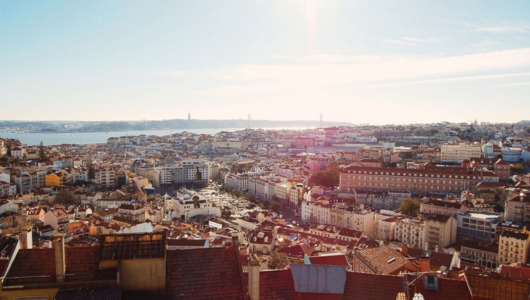
Photo by On The Grid
Miradouro da Senhora do Monte is the viewpoint you go to when you want Lisbon in one wide, uninterrupted sweep, with great perspective. It sits above Graça, next to the small Capela de Nossa Senhora do Monte, and to get there your legs might end up feeling a little tired, but that honestly can help to enjoy the wonderful views even more once you get there, as you may end up feeling like you have earned them.
This is, hands-down, one of the greatest viewpoints in Lisbon for a big-picture panorama because it opens up across multiple famous sights at once. You get São Jorge Castle from above, you see the straight grid of Baixa neighborhood, the Tagus stretching out behind it, and even the 25 de Abril Bridge and Cristo Rei statue in the distance if the day is clear. This is a great place to stop if you want to understand how Lisbon spreads across hills and how the city’s older and newer layers coexist.
The atmosphere is different from Graça just down the hill. Graça is sociable and buzzy, with people using it as a meeting point, while Senhora do Monte is usually calmer and people tend to come here to sit and enjoy the view for a while, take some photos as well, of course, but generally they stay put for a little longer. As it’s a higher viewpoint than most, it tends to get windier up here, especially later in the day, so we would recommend coming prepared with an extra layer of clothing so that the temperature doesn’t stop you from enjoying for as long as you’d like to.
If you’re choosing timing, Senhora do Monte is one of the strongest spots in Lisbon for late afternoon and sunset, simply because the horizon is wide and the city lights start to come on in front of you as the sky changes. It’s also worth considering earlier in the day if you want maximum visibility, since this is a viewpoint where weather conditions really change what you can see.
Unlike other viewpoints across Lisbon, Miradouro da Senhora do Monte doesn’t have a kiosk setup. You can pick up water or a drink on the way up and bring something to snack on, or rely on some small food trucks that are often parked nearby, selling simple things like coffee and lemonade. Right next to the viewpoint, there’s also Secret Garden LX (Largo Monte), a tucked-away garden bar with greenery, art installations, and regular music programming. It’s set up on different levels, so you can usually find a corner to sit, and it’s designed for sticking around with a drink while the sun goes down. If you want to eat a proper meal while visiting this miradouro, we would recommend heading back down into Graça, where you have more options.
📍Largo Monte, 1170-107 Lisbon
🗺️https://maps.app.goo.gl/VHh2DYPMUZnUndY6A
Miradouro de Santa Catarina
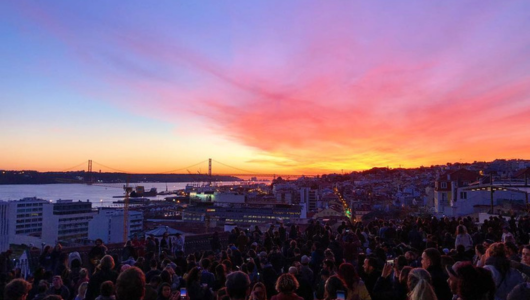
Photo by Portugal de Norte a Sul
Miradouro de Santa Catarina, better known to most people as Adamastor, offers great views of the river and the south bank. From here, you can see the 25 de Abril Bridge in frame and the Cristo Rei visible across the water on clear days. The view is great, but what defines this miradouro is the atmosphere, as this is a classic Lisbon hangout spot at the end of the day.
The Adamastor nickname comes from the statue on the terrace, a reference to Adamastor, the sea giant from Os Lusíadas, Portugal’s national epic poem written by Luís de Camões in the 16th century, which celebrates the Age of Discoveries and the country’s maritime voyages.
Santa Catarina has a very lively energy, especially later in the afternoon. People come here to sit and chill, grab a drink, talk for ages, listen to whoever is playing music nearby, and watch the river traffic and the light changing over the bridge. It’s a viewpoint that feels social by default, and we would even dare to say that people come here to meet other people outdoors, more than to enjoy the view per se.
This is also one of the easiest viewpoints in Lisbon to build into an evening without planning much. There’s a kiosk right there, so you can keep things casual, or explore the neighborhood further for plenty of places to eat and drink.
Right nearby, there’s the Bica neighborhood, which encourages wandering and perhaps stopping at a bar or simple eatery. Uphill and east, you’re within walking distance of Chiado, where you’ll easily come across wine bars where you can sample labels from the several Portuguese wine regions, cafés, and more sit-down dinner options. Downhill, you’re close to Cais do Sodré, which means bars, late-night establishments, and an easy continuation if the night is still young. In other words, Santa Catarina is a perfect “let’s meet here first” viewpoint, being central enough that it works as a rendezvous point, and flexible enough that it suits whatever comes next.
📍Miradouro de Santa Catarina, 1200-012 Lisbon
🗺️https://maps.app.goo.gl/mk4EwPMnkTxpbnzF6
Miradouro do Jardim do Torel
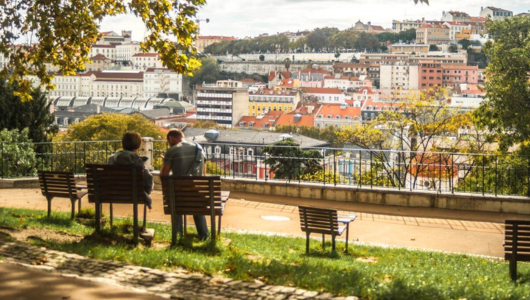
Photo by On The Grid
Miradouro do Torel is a good reminder that not every Lisbon viewpoint has to come with a crowd and a queue for the same photo. Set inside Jardim do Torel, near Campo dos Mártires da Pátria, this one feels more like a small garden escape that happens to have a great view. The garden itself occupies land that once belonged to an estate from the 18th century, and that older residential setting still shows in the grand houses around it.
The perspective is also different from the better known miradouros. Instead of looking over Alfama or straight out to the river, Torel opens over the valley of Avenida da Liberdade, with Baixa beyond and the São Roque hill opposite, where you can spot Miradouro de São Pedro de Alcântara. That makes it a useful counterpoint to the more obvious viewpoints, being less about the usual postcard Lisbon and more about understanding the city’s elevations and built-up center from another angle.
The space itself is super inviting, consisting of a green area with benches and shade that make it easy to stay for a while. That calm atmosphere is exactly why we love Torel and we think it deserves to be highlighted here. After the sociable buzz of Graça or Santa Catarina, this is the viewpoint that feels less exposed, even though we should realistically say that it is not exactly unknown. Torel is not the viewpoint to pick if you want Lisbon’s most famous skyline shot. But if you feel like taking a break from the obvious, enjoy a bit of shade while trying to escape the heat in Lisbon, and see a view that feels more central and even residential, this is a great option.
To get there you can walk up, but the nicer approach is often via the Elevador do Lavra, Lisbon’s oldest funicular, which brings you up from the lower city toward this quieter hill. From there, Torel fits into a route that includes Campo dos Mártires da Pátria, the Colina de Santana area and, if you want to keep going, the central avenues below.
📍Tv. do Torel 21, 1150-122 Lisbon
🗺️https://maps.app.goo.gl/uJ8JpubQV5LR6s6T8
Miradouro de Monte Agudo
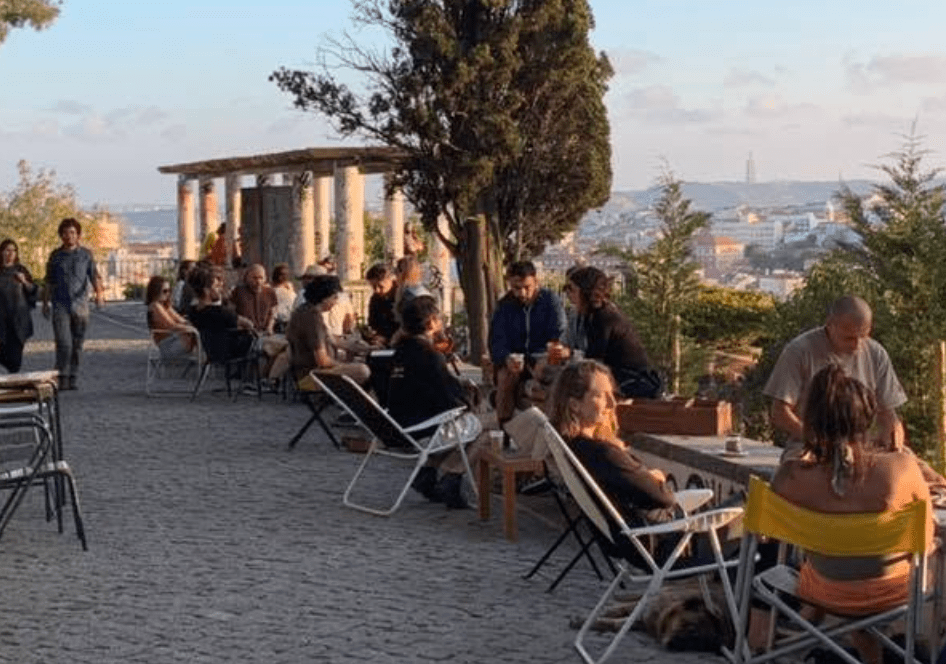
Photo by Café Esplanada do Miradouro do Monte Agudo
Miradouro de Monte Agudo dates back to the 1950s, when this natural lookout was turned into a small park and viewpoint with a pedestrian path linking Rua Heliodoro Salgado and Rua Ilha do Príncipe. This neighborhood outlook includes shaded areas, benches, and enough room to sit even at the busier moments of tourist rotation.
It is located above Avenida Almirante Reis, between the neighborhoods of Graça and Anjos, in a part of Lisbon that many visitors pass through without ever stopping to look up. That is part of what makes it interesting. Instead of giving you the usual old-town postcard, it opens onto a broader, less expected view of the city, with long lines of rooftops, a stretch of river in the distance, and a wider look at Lisbon’s north and west. This is one of the city’s quieter viewpoints and we think it’s worth it because it offers a perspective over a less explored side of Lisbon. Monte Agudo is also a good reminder that Lisbon’s miradouros are not all about checking off famous monuments.
Arroios and the upper stretch of Almirante Reis, the areas around the viewpoint, have become some of Lisbon’s most varied food neighborhoods, with old cafés, bakeries, no-frills Portuguese spots, and a strong international restaurant scene all mixed together. That means Monte Agudo works well as part of a longer walk through a more everyday side of the city, especially if you want a break from the usual Alfama, Baixa and Chiado circuit. It is close enough to Graça and Senhora do Monte to combine with them, but the mood is different. Those viewpoints draw more people and more attention, while Monte Agudo feels calmer and more residential.
There is also a kiosk at the miradouro, which makes it easy to stop for a coffee, a cold drink, or something simple to eat while taking in the view. If you make it here, though, we would highly encourage you to keep exploring the nearby neighborhood of Penha de França, which doesn’t always make the usual Lisbon itinerary but has plenty of food gems if you know where to look. Browse our Penha de França travel guide for food lovers if you’d like to enjoy this neighborhood as a starting point for seeing a less obvious, more everyday side of Lisbon.
📍Rua Heliodoro Salgado, 1170-175 Lisbon
🗺️https://maps.app.goo.gl/7pQ1tPK75br3FwQp7
Miradouro da Penha de França
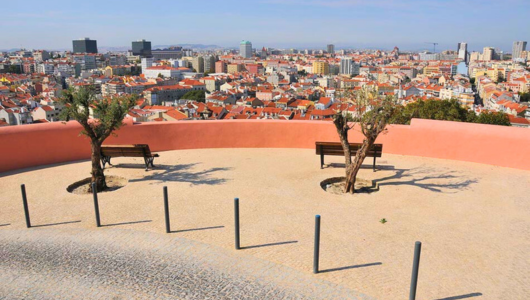
Photo by Ricardo S. Alves
Located next to the Nossa Senhora da Penha de França church, Miradouro da Penha de França is on a hill that is essentially residential. From here, the city feels a little different than from most view decks, as you don’t really get to see the usual historic center views, with the castle and the river as the main highlights. From here, you see the eastern and northern areas of Lisbon that rarely get much attention in travel guides. This includes the neighborhoods of Areeiro, Alameda, and, when visibility is good, even parts of Marvila and beyond. From here, you get the feel that Lisbon is a capital where people actually live, it’s not only a collection of picturesque hills and monuments.
The church next to the viewpoint was rebuilt after being destroyed in the 1755 earthquake, but the original building dates back to the late 1500s. This hill has long been associated with devotion and pilgrimage, and that history still gives the square and surrounding area a certain solemn feel.
The miradouro is quite simple, which suits the neighborhood around it. But, as mentioned above, Penha de França has indeed been gaining attention for its food scene. Just a five minute walk from the viewpoint, we would recommend Porta 17 (Rua Cesário Verde 17A) for petiscos and a glass of wine or, a couple more minutes down the road, Tati (Rua Carrilho Videira 20B), which is only open in the evenings. If, on the contrary, you visit during the morning, we would suggest heading to Pastelaria Nilde (Rua Morais Soares 61) for a Portuguese style breakfast, or simply a cup of coffee and a typical Portuguese pastry.
The area around this miradouro and the entire Penha de França neighborhood give you good reasons not to rush off immediately. But, as there are no specific points of interest to see here, and it’s more of a “let’s get lost and found” vibe, this part of Lisbon rewards walking. You can continue toward Arroios, walk down toward Almirante Reis avenue, or connect the stop with the Monte Agudo viewpoint, which is also nearby.
📍Rua Marques da Silva, 1170-318 Lisbon
🗺️https://maps.app.goo.gl/67CMaCzwRsJfZQAS6
Miradouro da Rocha de Conde de Óbidos
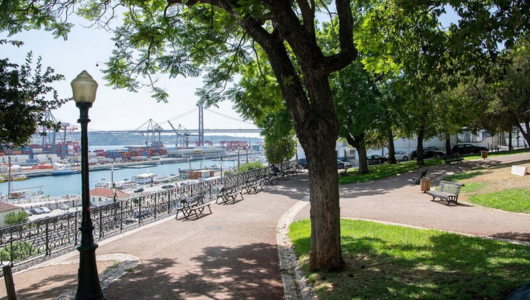
Photo by CM Lisboa
Miradouro da Rocha de Conde de Óbidos looks out over a side of Lisbon that most viewpoints barely acknowledge. You do not come to this viewpoint between the neighborhoods of Santos and Alcântara to enjoy the typical tiled rooftops of the medieval hills, but to observe the riverfront, the port, the bridge and the working life by the waterfront. Here, you’re in Jardim 9 de Abril, above Avenida 24 de Julho, right next to the Museu Nacional de Arte Antiga, realizing how Lisbon is a river city, with the Tagus, the 25 de Abril Bridge, Cristo Rei and the activity around the Rocha de Conde de Óbidos dock all in view. We could say that, at Rocha de Conde de Óbidos viewpoint, you switch the famous hilltop viewpoints for a more horizontal view of Lisbon, swapping churches and castle walls for ships, cranes, quays, water traffic and the wide south bank beyond.
If you come to this side of the city, make sure to check out the National Museum of Ancient Art. This Santos / Janelas Verdes area is also good for eating and drinking, offering a mix of Portuguese and international eateries. At the viewpoint itself, you’ll find Catch Me (Jardim 9 de Abril), a rooftop restaurant and bar where you can grab a cocktail with a view, enjoy great food, and even listen to live music on some evenings.
You wouldn’t come to Miradouro da Rocha de Conde de Óbidos for Lisbon’s most iconic skyline shot, but we think it can be special to see a side of Lisbon that many visitors tend to miss.
📍Rua Pres. Arriaga, 1200-771 Lisbon
🗺️https://maps.app.goo.gl/tu3PbgHHq4wAuEi19
Miradouro de Santo Amaro
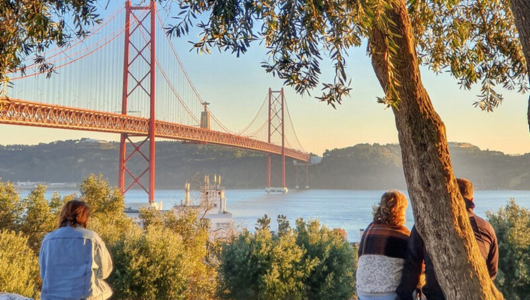
Photo by Lisbohème
In the neighborhood of Alcântara, Miradouro de Santo Amaro gives way to a more river-facing, industrial view. Some may consider this a less “romantic” view of Lisbon, but we could also argue saying that it is a realistic one. This small lookout is right beside the Capela de Santo Amaro, a chapel that dates to 1549 and is classified as a National Monument, popular because of its interior decorated with tilework. From here you can observe the Tagus river, with the 25 de Abril Bridge cutting across the frame and the south bank opening up beyond it.
This viewpoint feels a little off to the side of the standard Lisbon route. It is decidedly not as panoramic as other options we have explored above, but it’s interesting because it offers a different angle of the city, with Alcântara below, the bridge almost within reach, and the expansive river on the horizon.
This is a good spot from which to start exploring the area of Alcântara. From here, you can head down toward LX Factory if you want bars, shops and a more contemporary creative scene, or stay in the wider Santo Amaro area to explore small eateries that feel more local, concentrated mostly along Rua Luís de Camões. Café Dias (Rua Pedro Calmon 3B) is one of the treasures of this area, a local establishment with live jazz on Thursday evenings and live poetry on Monday nights.
If you decide to go to Miradouro de Santo Amaro, keep in mind that this is a strong stop for the late afternoon, especially when the light starts to soften over the water and you get to see the transition between day and night.
📍Rua Academia Recreativa de Santo Amaro, 1300-001 Lisbon
🗺️https://maps.app.goo.gl/C9p4XUSRJf4HdRm26
Miradouro do Bairro do Alvito
Photo by Amal Al Mansur
If after all of the views above you still crave a less obvious side of Lisbon, consider heading to Miradouro do Bairro do Alvito. This is not the place for the usual old city skyline or the standard castle and rooftops composition. The main draw here is the bridge as, from this angle, the 25 de Abril Bridge takes over the frame in a more frontal way than it does from other miradouros, including Santo Amaro above.
The setting is simple and slightly rough around the edges, located in the neighborhood of Alvito, close to Monsanto. This viewpoint works best when approached with the right expectations, meaning that you’d come here for the perspective, and certainly not for the polished surroundings nor amenities (which are basically non-existent).
This is also a good starting point if you still have energy and want to keep going into Monsanto Forest Park. From here, it makes sense to continue exploring the park and even some of its other viewpoints, such as Miradouro dos Montes Claros and Miradouro do Moinho do Penedo, both of which are part of the wider network of lookouts scattered across Lisbon’s green lung. Monsanto walking routes connect Alvito with these other stops, which makes this part of the city especially appealing for anyone who likes viewpoints but doesn’t mind walking (quite a bit) between them. So this is the miradouro to save for the moment when you want something different.
📍Estr. Estrangeira 2, 1300-052 Lisbon
🗺️https://maps.app.goo.gl/sF1bseKqLA8VNXmq7
For more Lisbon recommendations that go beyond the obvious, follow Taste of Lisboa on Instagram.
Feed your curiosity on Portuguese food culture:
Best places in Lisbon for a first date (with food and drinks)
The best spots for brunch in Lisbon (with a Portuguese twist)
How to spot an authentic Portuguese restaurant in Lisbon (and avoid the tourist traps)
The history of Fado and how to experience it live in Lisbon
Real people, real food. Come with us to where the locals go.
Signup for our natively curated food & cultural experiences.
Follow us for more at Instagram, Twitter e Youtube