
The 10 best wine bars in Lisbon

Scottish writer Robert Louis Stevenson once wrote that “the wine is bottled poetry”, and there is no doubt that Portugal gives wine lovers plenty to read. From fresh whites and sparkling wines to robust reds, skin-contact wines and centuries-old fortified styles, the country’s wine culture is remarkably varied, especially considering Portugal’s relatively small size.
Photo by Nova Wine Bar
If you have the time, we still think one of the best ways to understand Portuguese wine is to go straight to the source. There are several excellent wine tourism experiences near Lisbon, where you can walk through vineyards, visit cellars and see what happens before the wine reaches your glass. But you certainly don’t need to leave Lisbon to start exploring.
Most restaurants will have at least a handful of Portuguese labels, and ordering a glass with lunch or dinner is not reserved for special occasions. Even if you stop for lunch during working hours, it is perfectly normal to enjoy a glass of wine with your meal, and then go back to work.
While you’ll be able to find wine just about everywhere around Lisbon, including some places travelers may find odd, such as stores attached to gas stations or some fast food chains, it’s worth visiting Lisbon’s dedicated wine bars to explore further. Some concentrate almost entirely on Portuguese producers, while others have helped turn the city into an increasingly interesting destination for natural and low-intervention wine. There are tiny neighborhood bars, specialist bottle shops where you can stay for a glass, places built around guided tastings, and wine bars with kitchens serious enough that you’ll want to come hungry.
When you visit a wine bar, ordering by the glass is standard, which also gives you the chance to try a larger variety. In smaller bars, the selection usually changes according to what bottles have been opened that day. If you come across unfamiliar grape varieties, ask whoever is serving you for recommendations based on what you normally enjoy and how much you want to spend. You can choose to play it safe or try something completely different.
A glass might come on its own, or with little more than olives or cheese, or you could add Portuguese canned seafood (conservas), cured meats (enchidos) and other petiscos. At more food-focused wine bars, a couple of plates can easily turn into dinner. You might stop somewhere for a glass before eating elsewhere, stay for several wines and something substantial, or simply make the wine bar your destination for the evening.
Natural, organic, biodynamic and low-intervention wines appear frequently on Lisbon wine lists, particularly at the newer independent bars. The terms do not all mean the same thing, as we explain below. Lisbon’s newer independent bars have also introduced many drinkers to smaller producers, unusual bottles and less familiar styles, alongside the classic Portuguese regions and producers that are very much still worth drinking.
No matter what kind of wine you are looking for while traveling in the Portuguese capital, chances are you’ll find it among Lisbon’s top places for drinking wine:
10 – Best for discovering Portuguese wine: Nova Wine Bar

Photo by Nova Wine Bar
More than 600 wines from small Portuguese producers make up the selection at Nova Wine Bar, on Rua Nova do Almada, between Baixa and Chiado, covering a remarkably broad section of Portuguese wine production. Portuguese wine is often reduced abroad to a few familiar names from the Douro, Alentejo and, perhaps, Vinho Verde, even though the country’s official wine map stretches from Trás-os-Montes and the Minho in the north to the Algarve, as well as the archipelagos of Madeira and the Azores. Nova’s selection reflects that diversity, with wines spanning regions, native grape varieties and very different approaches to winemaking.
At Nova, you could for instance explore the Lisboa wine region itself, which already contains nine denominations of origin, including Bucelas, known particularly for whites made with Arinto; Colares, where vines have traditionally been grown in sandy soils close to the Atlantic; and tiny Carcavelos, associated with a historic fortified wine now produced in very limited quantities. A list this broad also makes it easier to move beyond the regions that dominate Portuguese exports and get a clearer picture of the country’s wine diversity.
Nova opened in 2017, when Pedro Caixado and Miguel Branco, then working in advertising, turned a shared interest in food and wine into a bar and bottle shop. Its focus from the beginning was on newer Portuguese wines and smaller producers, and Pedro continues to oversee much of the wine selection and service, while also being involved with the food.
The menu is designed with pairing in mind, with dishes such as canned sardines with roasted peppers on toast, salted black pork belly carpaccio, smoked blood sausage with sour cherry and lime, low-temperature cod with chickpea purée, and smoked tuna or swordfish with pineapple and mint. The wine suggestions can move across regions, grape varieties and styles depending on the dish, and that range extends to dessert too, where Madeira can appear among the pairings.
📍Rua Nova do Almada 20, Chiado, 1200-289 Lisbon
9 – Best for natural, organic and biodynamic wines: Black Sheep Lisboa
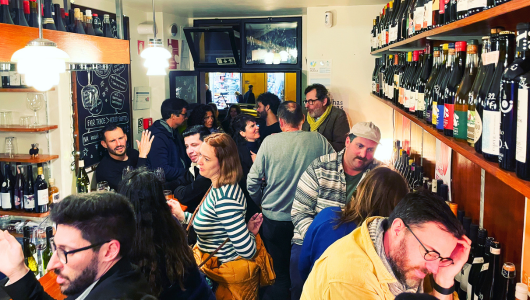
Photo by Fem Hektar
Black Sheep Lisboa has been pouring wine from its tiny space on Praça das Flores, just below Príncipe Real, since 2019. Americans Brian and Jennifer Patterson originally opened the bar with a strong focus on independent Portuguese producers, and it is now run by Brazilian owners Bruna Ventura and Lucas Ferreira, who continue to build the selection around small-scale winemakers from Portugal, alongside a smaller number of international references. The wines poured by the glass change daily, so the selection available on a particular visit is constantly changing.
Natural, organic, biodynamic and low-intervention wines all appear at Black Sheep, but the terms should not be used interchangeably. Organic wine is regulated in the European Union and must follow rules governing both grape growing and winemaking. Biodynamic viticulture follows a more specific farming philosophy, treating the vineyard as an interconnected ecosystem. Natural wine has no single universally regulated definition, but it generally refers to wines made from organically or biodynamically farmed grapes with minimal intervention in the cellar. Low-intervention is similarly broad and can include practices such as spontaneous fermentation with native yeasts, limited filtration and fewer additives.
The selection includes natural, sustainable, organic and biodynamic bottles, with producers chosen for their farming and winemaking practices as much as for where they come from. Depending on what has been opened that day, you may come across skin-contact whites, pet-nats, wines fermented with native yeasts or wines made with very little added sulfur. Natural wine does not automatically mean cloudy, funky or orange, though, and the range at Black Sheep is broad enough to show how varied low-intervention winemaking can be.
The bar is famously small, with only a handful of seats inside, while Praça das Flores provides plenty of room to linger outside with a glass in hand when the weather is good. Black Sheep also functions as a bottle shop, so anything that catches your attention can potentially be bought to take home. For travelers curious about the part of Lisbon’s wine scene that has grown around independent producers and less conventional methods of winemaking, few bars will be as relevant as Black Sheep Lisboa.
📍Praça das Flores 62, 1200-192 Lisbon
8 – Best for wine and a proper dinner: Prado Wine Bar
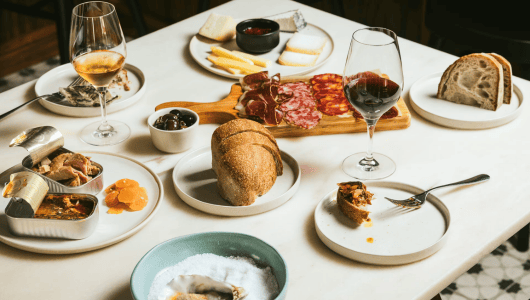
Photo by The Infatuation
A few steps from Lisbon Cathedral, Prado Wine Bar has a kitchen ambitious enough for a full meal. The menu follows the same seasonal approach centered on ingredients as neighboring Prado restaurant (Tv. das Pedras Negras 2), working with Portuguese farmers, fishermen, cheesemakers, bakers and other small producers. Dishes change according to what is available, so the food goes well beyond the cheese boards, charcuterie and conservas commonly associated with wine bars.
Prado Wine Bar opened as Prado Mercearia in 2018, a grocery shop selling many of the ingredients and Portuguese products used at Prado next door. Food and wine gradually became a larger part of the business, and the former shop eventually became the current wine bar and restaurant. Both projects are run by chef António Galapito, who returned to Lisbon after working in London, including with Portuguese chef Nuno Mendes, and opened Prado restaurant at the end of 2017.
On the menu you might find dishes such as Barrosã beef tartare with shiitake and grilled cabbage, marinated sea bass with green apple and olives, smoked eel with goat’s butter and Jerusalem artichoke, oyster mushrooms with mustard and mizuna, or acorn-fed Alentejano pork with potatoes and sea spinach. Desserts tend to be just as inventive, with combinations such as brioche, coffee, hazelnut and a sabayon made with Madeira wine. Order several plates to share and you can easily make a full dinner of it. The menu changes with the seasons and with what the kitchen can source from Portuguese producers.
The wines are all Portuguese, with a particular focus on organic and low-intervention producers. Prado was already working with this style of wine before natural and biodynamic bottles became as common on Lisbon restaurant lists as they are today.
📍Rua das Pedras Negras 35, 1100-404 Lisbon
7 – Best wine bar on a budget: Adega Etelvina
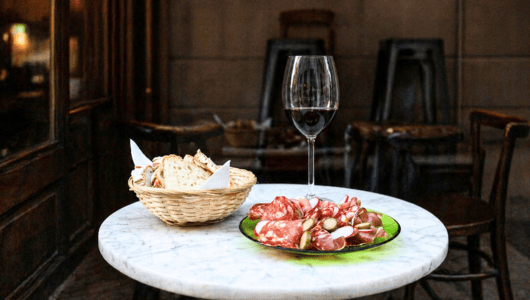
Photo by NIT
With wines by the glass starting at €4 and bottles at €14, Adega Etelvina is one of the more affordable places in central Lisbon to explore Portuguese wine without settling for a generic house red or white. All 50 or so wines can be ordered by the glass, making it possible to try several styles without spending too much.
Tiago Pinheiro Alves opened the small Bairro Alto bar in late 2025, after several years as a partner at Taberna da Rua das Flores (Rua das Flores 103-109). The name pays tribute to his grandmother Etelvina and to a family history of running taverns that stretches back several generations. His great-grandmother opened a taberna in Manaus after emigrating to Brazil as a teenager and later another one in Lisbon, while Etelvina herself would eventually run the third tavern in the family.
Tiago describes it as “grandmother’s food”, with simple dishes designed to accompany a glass. Expect things like Portuguese cheeses, cured meats, canned fish, bread topped with ingredients and usually finished with olive oil (tibornas) and oysters, among other small dishes. The space itself is tiny, with little more than a counter and around a dozen seats.
Tiago looks for smaller producers, cooperatives and less obvious bottles that can still be served at affordable prices, covering reds, whites, rosé and sparkling wine. You may also come across two old Portuguese wine styles that have been attracting renewed attention, namely palhetes, traditionally made by fermenting red and white grapes together, and claretes, which are pale, lighter-style reds.
📍Tv. dos Fiéis de Deus 74, 1200-190 Lisbon
www.instagram.com/adega.etelvina
6 – Best for a lively evening: Vino Vero
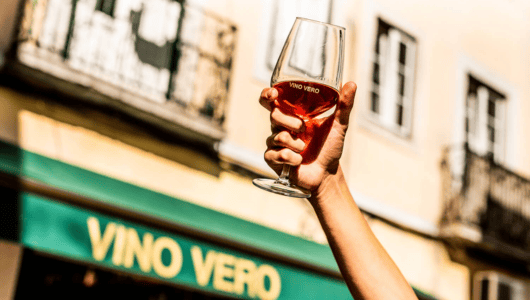
Photo by Vino Vero
Vino Vero is in Graça, on the pedestrian street Travessa do Monte, a short walk from the Miradouro da Senhora do Monte and Jardim da Cerca da Graça. The area is busy with people moving between the neighborhood’s viewpoints, restaurants and bars, and Vino Vero draws a mix of Lisbon locals, international residents and visitors. Its outdoor tables are often busy and the small interior can get packed later in the evening. Anyone looking for a quiet tasting-room atmosphere should come earlier as, during peak hours, this is a social, noisy wine bar where people tend to stay for several glasses.
The project started in Venice in 2014, when Matteo Bartoli, his wife Mara Sartore and Matteo’s brother Massimiliano opened the original Vino Vero after Matteo and Mara had been involved with a biodynamic winery in Tuscany. At the time, it was the first wine bar in Venice entirely dedicated to natural wine. The Lisbon location opened in 2019, when Giulia Riva, who was already involved with the Vino Vero project, moved to the city to launch the Portuguese location and start working with local producers.
Those Italian roots are still reflected in the Lisbon wine list. Small Portuguese producers appear alongside natural wines from across Europe, with Italy and France particularly well represented and other countries entering the mix as the selection changes. The idea from the start was to support Portuguese winemakers working with natural methods while also introducing Lisbon drinkers to European producers with a similar approach. The result is a genuinely international list, with Portuguese skin-contact whites, Italian reds, French pet-nats and many other styles available by the glass.
The food has clear Italian and Mediterranean influences and is substantial enough to keep you there for more than one round. Depending on the menu, you might find focaccia, burrata, carpaccio, fish and vegetable-based small plates, including some options suitable for vegans. The plates are designed for sharing, making it easy to order a few at a time while trying different wines over the course of the evening.
Vino Vero also hosts winemaker visits, tastings and other events. The founders have long-standing relationships with small European producers, and many of those producers have also taken part in tastings and events at the Lisbon bar. Vino Vero stays open late, and its outdoor tables make it one of the livelier wine-focused bars in this part of Graça.
📍Tv. do Monte 30, 1170-265 Lisbon
5 – Best for a Portuguese wine tasting: Lisbon Winery
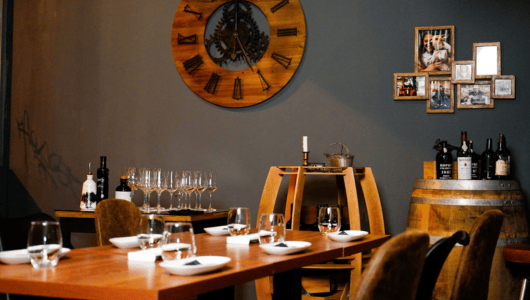
Photo by Winalist
Lisbon Winery has been running structured Portuguese wine tastings since 2015 from its space near Avenida da Liberdade. The standard tasting includes five Portuguese wines selected by the house sommeliers, with an emphasis on native grape varieties, family-run producers and bottles made in small quantities. Most come from production runs of fewer than 6,000 bottles, so the tasting can introduce you to producers you are unlikely to come across on supermarket shelves or on a typical restaurant list.
The selection changes regularly and spans different regions, grapes and styles. Over the course of the session, the sommelier explains where each wine comes from, the varieties involved, how it was made and some of the regional differences that can be difficult to grasp simply by reading a wine list. Five wines are served with six Portuguese artisanal cheeses and six cured meats, including long-cured pata negra, as well as bread and a Portuguese olive oil tasting. The sommelier also discusses some of the producers behind the cheeses and cured meats, bringing Portuguese food into the tasting as well.
Lisbon Winery calls itself a wine bar, but most people come specifically for one of its organized tastings. Sessions generally last between an hour and a half and two hours and are limited to a maximum of 12 participants, although solo travelers and couples can join too. Booking ahead is recommended, as walk-ins depend on whether a sommelier is available at the time.
At a regular wine bar, you can ask the staff for recommendations and learn plenty along the way, usually for the price of whatever you decide to drink. Lisbon Winery charges more because the experience follows a more structured format, with several wines selected for comparison, food pairings included, and a sommelier staying with the group throughout the session to explain the wines and answer questions. The standard tasting currently costs €89 per person and is aimed at travelers looking for a structured, guided introduction to Portuguese wine. More experienced drinkers can opt for private tastings built around rare wines and collector bottles. Lisbon Winery also offers separate Port tastings that concentrate on smaller Port producers.
📍Rua Rodrigues Sampaio 18 A, 1150-278 Lisbon
4 – Best for a huge choice by the glass: Grapes & Bites
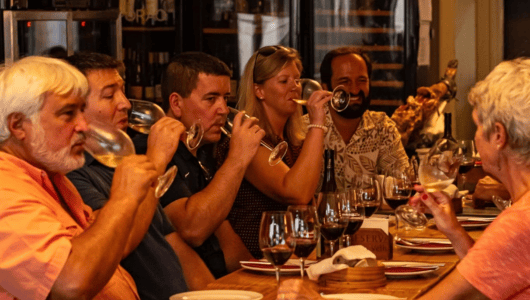
Photo by Grapes & Bites on Facebook
The cellar at Grapes & Bites includes more than 600 Portuguese wines, with around 300 available by the glass. For anyone who would rather try several wines than select a bottle, few places in Lisbon offer this much choice. The selection covers Portugal’s wine regions and includes reds, whites, rosés, sparkling wines and fortified wines, with options ranging from familiar everyday wines to unusual and prestigious bottles.
You can keep things familiar with well-known producers and classic Portuguese styles, but the list also covers lesser-known wine regions, native grape varieties and bottles rarely seen on average restaurant lists. There are prestigious names too, including Pêra-Manca, alongside more everyday bottles, aged tawny Port and plenty in between. With hundreds of references, the cellar has room for everyday wines, prestigious labels and regional styles that would be difficult to accommodate on a shorter list.
Grapes & Bites opened in 2010, when Sílvia and António Baeta combined his interest in Portuguese wine with her passion for regional food. Wine was central to the concept from the beginning, and the unusually extensive by-the-glass offering makes the list much easier to explore. You can compare wines from the same region, try different expressions of a native grape, move from still to sparkling wine, or finish with Port without ordering several bottles along the way.
The food ranges from cheeses, enchidos and other petiscos to more substantial Portuguese dishes and traditional convent sweets. Live music takes place every evening from 7PM to 10PM, giving Grapes & Bites more of a wine-focused restaurant atmosphere than the smaller, more intimate bars elsewhere in the article.
📍Rua do Norte 85, 1200-284 Lisbon
3 – Best wine bar and bottle shop: Pinot Bar de Vinhos
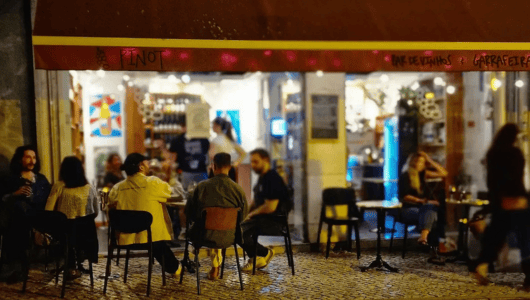
Photo by Pinot on Instagram
Facing Jardim da Estrela, Pinot combines a wine bar, wine store (garrafeira) with the headquarters of a small wine importing and distribution business under the same roof. You can stop for a glass and a few plates, browse the shelves for a bottle to take home, attend a tasting or pick up wine and food for a picnic in the park across the street. The selection brings together Portuguese producers and a broad number of international wines, particularly natural, organic, biodynamic and low-intervention bottles.
Pinot opened in November 2023 as a new project from Canadian couple chef Stéphanie Audet and sommelier Marc Singh Davidson. By then, the pair were already well known in Lisbon for Senhor Uva, which they had opened nearby in 2019. Senhor Uva became one of the city’s early destinations for natural wine and creative plant-based cooking, with Marc looking after a constantly changing cellar and Stéphanie developing vegetable-focused dishes influenced by the many places where she has lived and worked, including Mexico, Brazil and Hawaii. Senhor Uva closed in November 2025, after almost seven years, and the couple shifted their attention to Pinot.
Pinot also became a base for La Cave, Marc and Stéphanie’s growing wine importing and distribution business, which supplies restaurants around Portugal as well as private customers. Pinot serves many of these wines alongside Portuguese bottles and other international references selected by the team. Because La Cave imports directly, the bar can offer wines from producers that are not widely distributed in Portugal. The collection has a strong focus on natural and low-intervention wine, with plenty of variation in origin, grape variety and style.
Marc originally described Pinot as a cave à manger, the French idea of combining a wine shop with an informal place to eat and drink. The food carries Stéphanie’s plant-focused approach into a more casual format, and you might find sourdough with seasoned butter, vegetable dishes, cheeses, dips and more elaborate combinations using ingredients and flavors from beyond Portugal. On the menu you might find green jackfruit ceviche with ají amarillo, oyster mushrooms with pak choi, soy and coconut, and vegetables paired with ingredients such as preserved lemon, tamarind, buckwheat or sesame. The changing menu allows for a quick glass and snack or a longer meal of several small plates.
Pinot has also been expanding its food program beyond evening snacks. Lunch is served from Friday to Sunday, with set menus of two dishes and dessert and the option of adding a glass of wine. The schedule also includes guest chefs, food and wine takeovers, producer tastings and other one-off events, with visiting winemakers sometimes pouring their own bottles alongside menus created for the occasion.
📍Rua João Anastácio Rosa 4 B, 1200-693 Lisbon
2 – Best for wine with a view: Terraço Editorial
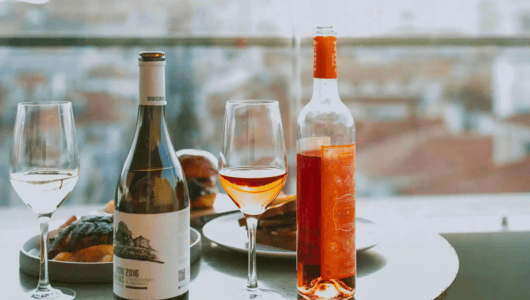
Photo by Terraço Editorial
Terraço Editorial sits on the eighth floor of Pollux, a well-known department store in Baixa specializing in homeware and household goods. So, if you arrive at street level and wonder whether you are in the right place, yes you are, and you can simply head inside and take the lift up to the rooftop. From there, the terrace looks across the rooftops of central Lisbon toward the Santa Justa Lift, the ruins of Convento do Carmo, the Tagus and the hills further west. It stays open from lunch into the evening, making it possible to stop for a daytime glass or come later for sunset and dinner.
The current project opened in 2020 under chef Rui Rebelo and Douro wine producer Rodrigo Soares, with Portuguese food and wine as the focus of the concept. Its wine library has around 190 labels, most from smaller producers, covering a broad range of Portuguese styles. Alongside reds, whites and rosés, you can find Portuguese sparkling wines, pet-nats and palhete, as well as fortified wines such as white and aged tawny Port, Moscatel Roxo from Setúbal and Madeira made from grapes such as Sercial and Verdelho. Native varieties including Arinto, Baga, Encruzado, Loureiro, Rabigato and Moreto also appear across the list, sometimes as single-variety wines that make their individual character easier to appreciate. A good number of wines are available by the glass, including sparkling, pet-nat and fortified options.
Terraço Editorial occasionally hosts tastings with small producers, wine bazaars, quiz nights centered on wine and events focused on different winemaking methods, including natural fermentation.
Rui Rebelo’s food draws heavily on Portuguese ingredients and small producers, with a menu that includes both petiscos and full dishes. You might find cuttlefish croquettes with squid ink and chili, octopus rice, fresh cod, pork belly or boards of Portuguese cheeses and enchidos, followed by desserts such as chocolate mousse with olive oil and fleur de sel. You can come just for a glass and the view, but the kitchen is a good reason to stay for lunch or dinner too.
📍Rua dos Fanqueiros 276 piso 8, 1149-031 Lisbon (inside Pollux)
1 – Best neighborhood wine bar away from tourist Lisbon: Red Nose

Photo by Mike P on Tripadvisor
Red Nose is in Campo de Ourique, a residential neighborhood we particularly like for eating and drinking in Lisbon. It has the Mercado de Campo de Ourique, traditional pastry shops (pastelarias), specialty food and wine stores, restaurants and an increasing number of contemporary bars, all within an area where everyday neighborhood life is still much more visible than in Baixa, Chiado or Príncipe Real. Red Nose is a small natural wine bar where you can stop for a glass in the afternoon, stay into the evening, or buy a bottle and a few things to eat at home.
The selection concentrates on natural, organic and biodynamic wines from both Portugal and abroad. Alongside Portuguese producers, the shelves carry wines from France, Spain, Italy and elsewhere in Europe, serving as a good complement to the more traditional wine shops found elsewhere in Campo de Ourique. The bottles change regularly, covering everything from approachable low-intervention wines to more unusual styles for drinkers who already know their way around natural wine. The team is also involved in wine distribution, which brings in producers with limited presence elsewhere in Lisbon.
The grocery store has a curated selection of cheeses, charcuterie and other products chosen to accompany the wine, and food at Red Nose has also become more varied through pop-ups and collaborations. Guest cooks periodically take over the kitchen or prepare special menus, with recent events ranging from Brazilian food to Italian bruschettas paired with natural wines. Tastings, winemaker visits and collaborations with other local businesses are also part of the program, with upcoming events normally announced on Red Nose’s Instagram.
Campo de Ourique deserves more than a trip across town for a single glass. Its market, independent shops and restaurants make it one of our favorite Lisbon neighborhoods for spending an afternoon eating and drinking, and several of those addresses and traditions also feature in our Trendy Lisbon Market – Food and Cultural Walk. Red Nose is nearby if you want another glass after the tour.
📍Rua Almeida e Sousa 10C, 1250-065 Lisbon
www.instagram.com/rednoselisbon
BONUS – Best for Port and other Portuguese fortified wines: O Jardim Wine Bar
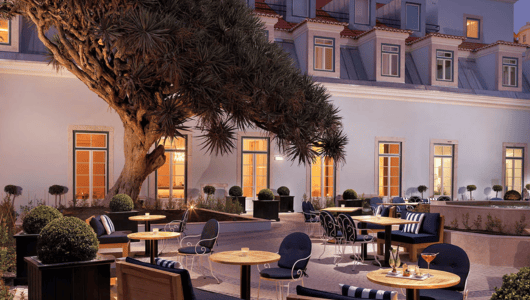
Photo by The One Hotels
Mention Portuguese fortified wine and Port will probably be the first name that comes to mind. It is certainly the most internationally famous, but Portugal also produces Madeira, Moscatel and the much rarer Carcavelos, each with its own grapes, production methods and history. These four Portuguese fortified wines are quite different from one another, and Lisbon gives you the chance to try all of them without traveling between their respective regions.
O Jardim Wine Bar is inside The One Palácio da Anunciada, a five-star hotel occupying a restored 16th-century palace close to Restauradores. The bar itself is set in one of the former noble rooms, with a restored coffered ceiling, large windows, a circular counter and direct access to the palace gardens. The setting is more formal than most of the wine bars on this list, but you can still come in simply for a glass and use the fortified section of the menu to put some of Portugal’s historic wine styles side by side.
Port is represented in several forms, including extra-dry white, tawny, aged tawny and vintage. The Madeira selection includes a 10-year Verdelho in a medium-dry style and a sweeter 10-year Malvasia. You can also order Moscatel de Setúbal and a 15-year Carcavelos, the latter particularly interesting because this fortified wine is produced in very small quantities around Lisbon and is not always easy to find, even in Portugal. All of these are served by the glass, so there is no need to order a full bottle to compare them.
If Port is specifically what you want to explore, Taylor’s has a dedicated Port wine shop and tasting room in Alfama (Rua do Cais de Santarém 8), near Chafariz d’El Rei. The historic Port house offers 15 wines by the glass, covering styles such as dry white, LBV, aged tawny and vintage, as well as a four-wine introductory tasting. For travelers who are not heading to Porto or Vila Nova de Gaia, Taylor’s offers the chance to explore several Port styles without leaving Lisbon.
From The Vine – Port & Wine Tasting Bar (Tv. do Fala-Só 15C), near Príncipe Real, is another option if you prefer a more structured format. Its one-hour Port tasting is available by reservation and is conceived as an aperitif or digestif, with someone guiding you through the wines during the session.
📍Rua das Portas de Santo Antão 112-134, 1150-268 Lisbon
www.hotelstheone.com/en/lisbon-hotels/the-one-palacio-da-anunciada/restaurants
Are you curious about exploring the world of wines in Lisbon? We invite you to taste some with us during one of our food & cultural experiences.
You can also explore Lisbon independently by visiting the businesses above, and learn more about wine culture in Portugal by reading further:
Quick introduction to Portuguese wine (and Portugal’s wine regions)
The Four fortified wines from Portugal
Azores and Madeira: discover the wines from the Portuguese islands
Feed your curiosity on Portuguese food culture:
10 Portuguese cheeses you must try
10 typical drinks from Portugal
9 Portuguese snacks and wine pairings that will surprise you
Best restaurants to eat contemporary Portuguese food in Lisbon
Real people, real food. Come with us to where the locals go.
Signup for our natively curated food & cultural experiences.