
Tipping, couvert and restaurant etiquette in Portugal

Eating out in Portugal comes with a set of habits and conventions that are rarely explained because, for locals, they are simply part of the experience. Visitors, however, can easily misread them, especially when restaurant culture at home works differently.
Some of these habits are widespread across the country, while others depend on the type of restaurant, the region and how traditional or contemporary the establishment is. This guide looks at the practical side of eating out in Portugal, with the context needed to understand not just what to do, but why things are done that way.
Featured photo by Notícias ao Minuto
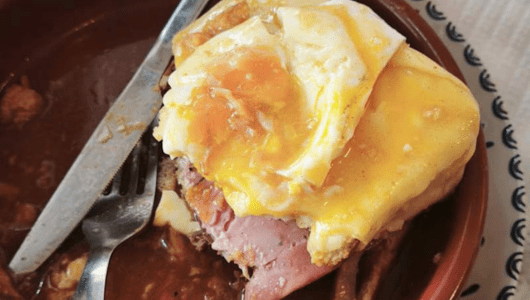
Photo by TheFork
What time do people eat in Portugal?
Portuguese meal times tend to be later than in the UK or North America. Lunch (almoço) is usually between noon and 2:30PM, while dinner (jantar) commonly starts around 7:30PM with restaurants serving until around 10PM. Sitting down to dinner at 8 or 9PM is entirely normal.
The day often starts with a light Portuguese-style breakfast (pequeno-almoço), generally between 7:30 and 10AM. At home this may be little more than coffee and bread or toast, while cafés and pastelarias are central to the morning routine. A galão or meia de leite with buttered toast, a sandwich or a pastry is common, and a second coffee or small breakfast later in the morning is not unusual.
Lunch is traditionally a substantial meal. On weekdays, cafés, tascas and neighborhood restaurants still fill with workers ordering a daily special rather than grabbing a quick sandwich at their desk.
Many Portuguese people have lanche around 4 or 5 PM, an afternoon snack roughly comparable to merienda in Spain or fika in Sweden. It may be fruit, bread or yogurt for children, or coffee with a pastry, toast or a sandwich for adults.
Portugal is often grouped with Spain when it comes to late meals, but Spanish lunch and dinner tend to start later. In Portugal, lunch at 1PM and dinner at 8PM are both completely ordinary, but in Spain those timings would probably be at least one hour later.
Traditional restaurants commonly separate lunch and dinner service, often closing the kitchen during the afternoon. Lisbon has more places serving continuously, especially in central areas, but this is far from universal. Check kitchen hours rather than relying only on whether a restaurant is marked as “open”, and keep in mind that independent restaurants often close one day a week.
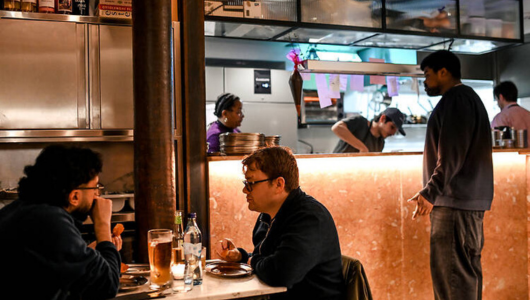
Photo by Time Out Lisboa
Do you need to book restaurants in Portugal?
Traditional tascas, neighborhood restaurants, cafés and pastelarias still rely heavily on walk-ins, particularly at lunchtime. Small contemporary restaurants and fine-dining restaurants are much more likely to require advance planning.
In Lisbon and Porto, booking is advisable for popular restaurants and weekend dinners throughout much of the year. In the Algarve, coastal Alentejo and other holiday destinations, a restaurant that is easy to walk into in February may be full every night in July or August. Major festivals, public holidays and long weekends can have the same effect, while spontaneous meals remain much easier outside peak periods, especially in smaller towns and inland Portugal.
Newer restaurants often use online reservation systems, while an old-school tasca may still expect you to call. Others take bookings through Instagram or their own website, so check the restaurant’s preferred method. TheFork is another option in Lisbon, Porto and other cities around Portugal, and some participating restaurants offer discounts for particular booking times.

Photo by Albufeira Paradise on Facebook
Do you wait to be seated in restaurants in Portugal?
In full-service restaurants, especially in Lisbon, Porto and other busy destinations, wait near the entrance and let a member of staff show you to a table. More formal restaurants are also more likely to expect this, and if you have a reservation you should always announce yourself first.
At a neighborhood tasca, café, pastelaria or snack bar, there may be no host at the door at all, and regular customers may simply walk in, greet whoever is behind the counter and sit at an available table. This can feel unusually informal to visitors from North America, where even casual restaurants often control seating from the entrance.
At some café terraces you can sit down and wait for a waiter, while at very casual places you may need to order at the counter (balcão) and carry your drink or snack outside.
Do not assume, however, that an empty table is available. A small restaurant may be keeping it for a reservation or for a larger group, and tables on a terrace may belong to different establishments even when they appear to occupy the same stretch of pavement. If nobody acknowledges you, simply ask “Podemos sentar aqui?”
If people are walking straight in and choosing tables, you probably can too. If everyone waits by the door for a waiter, do the same.
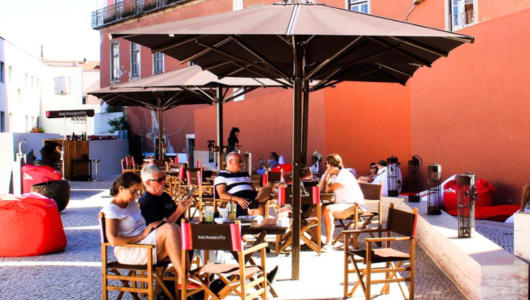
Photo by NIT
Do you pay more to sit outside at restaurants and cafés in Portugal?
Yes, sometimes, particularly in traditional cafés. The same coffee, beer, pastry or sandwich may cost less at the counter (balcão), more at an indoor table and more again on the terrace (esplanada). The difference reflects the type of service rather than who the customer is, and the prices must be clearly displayed in advance.
You are more likely to notice this in cafés than in restaurants, and especially in older establishments in Lisbon, Porto and other cities with a strong café culture. At a traditional pastelaria, locals in a hurry often drink their bica standing at the counter, while sitting down outside turns the same quick coffee into table service. A well-known Lisbon example is A Brasileira in Chiado, where the price list distinguishes between regular and esplanada prices for a number of items. In Lisbon’s historic center, especially around Baixa, Chiado and the main tourist squares, check the menu before choosing a terrace table. A higher esplanada price is perfectly legitimate if it is clearly displayed in advance.
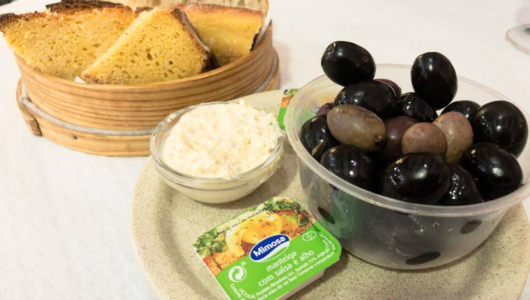
Photo by Life Part 2 and Beyond
What is couvert in Portugal, and do you have to pay for it?
In Portugal, couvert is the food placed on the table before you order, most commonly bread, olives, butter, cheese or pâté. More elaborate couverts can include small cheeses, octopus salad, fritters or other savory bites alongside the bread basket.
Some restaurants price the bread, olives, butter, cheese or pâté separately, so you may pay for the bread you ate while untouched olives do not appear on the bill. Others list the couvert as one fixed amount per person or per set and, in that case, eating any part of the set generally means paying the full listed price.
If you do not want an item from the couvert, leave it untouched and ask for it to be taken away. Saying “Não queremos o couvert, obrigado/a” is enough. Eating even one olive from a bowl is enough for that portion to be charged, and opening an individual butter, cheese or pâté also counts as using it.
Portuguese diners are used to this system and do not assume that food placed on the table is complimentary. The price must be shown on the menu or price list, and food you have neither requested nor consumed should not appear on the bill.
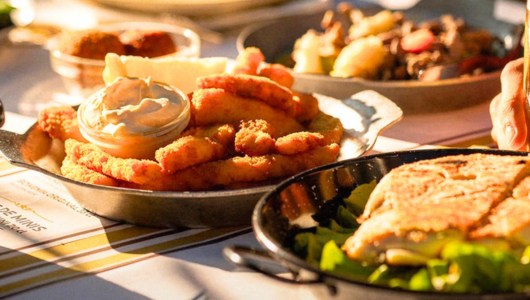
Photo by Páteo Do Petisco on Facebook
What are petiscos?
Portuguese menus do not always divide food into the same categories visitors may be used to. An entrada is a starter ordered before a main course, while a petisco is more flexible and usually consists of a smaller dish, likely to be shared, and just as likely to be enjoyed with a drink.
Petiscos are often compared to Spanish tapas, but the terms are not interchangeable. Octopus salad (salada de polvo), fried cuttlefish (choco frito), clams in lemony sauce (amêijoas à Bulhão Pato), chicken gizzards (moelas), pieces of beef or pork in a garlicky sauce (pica-pau), croquettes, cheese and cured meats (enchidos) can all be petiscos, and several ordered together can easily become dinner.
Portuguese friends might suggest “Vamos petiscar alguma coisa?” when they want to meet for food without necessarily planning a full sit-down meal. Petiscar means eating small amounts or trying different things, often while having beer or wine, which is why cheese, cured meats and other small plates are so common in wine bars and similar places.
A traditional tasca might serve petiscos such as fried pork liver, pig’s ear salad (salada de orelha), shredded cod salad (punheta de bacalhau) or small fried horse mackerel (jaquinzinhos), while contemporary menus have become much broader. In Lisbon and other Portuguese cities it is now perfectly normal to see Padrón peppers (pimentos de Padrón), broken eggs with potatoes and cured ham (ovos rotos) and other Iberian or internationally influenced small plates alongside Portuguese staples. What makes these dishes petiscos is usually the way they are eaten rather than where the recipe originated or an exact portion size.
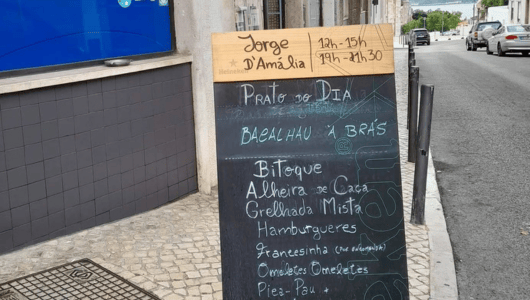
Photo by Jorge d’Amália on Facebook
What do prato do dia and menu do dia mean?
On weekday lunchtimes, many Portuguese restaurants, tascas, cafés, and pastelarias offer one or more dishes of the day (pratos do dia). These are often the dishes regular customers come in for, perhaps grilled fish, a stew, baked cod or a meat dish with rice and potatoes, with the selection changing from day to day and sometimes with the season. You may find them on a chalkboard outside, on a handwritten sheet or simply hear them from the waiter rather than see them on the main menu. A prato do dia normally refers to the main dish itself. A menu do dia is usually a fixed-price lunch combination that might add soup, bread, a drink, dessert or coffee, but there is no universal formula.
Because many customers are workers on their lunch break, service is often quick and prices can be lower than ordering à la carte. The most popular dishes can also run out, so arriving close to the end of lunch service may mean that the fish everyone was ordering at 1PM is already gone.
You may also see expressions such as “ementa do dia”, “ementa diária” or “sugestões do dia” referring to the day’s selection. Daily specials remain a big part of weekday lunch culture in Lisbon, particularly at neighborhood restaurants serving people who work nearby.
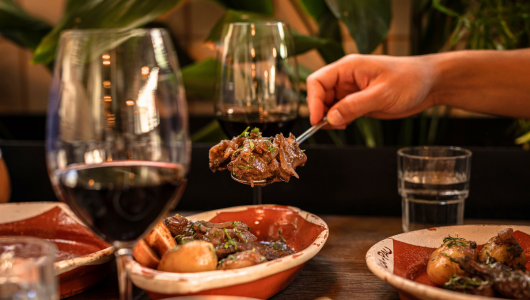
Photo by MAGG
What do dose and meia dose mean on Portuguese menus?
In traditional and regional Portuguese restaurants, particularly in northern and central Portugal, you will often see dishes offered as portion (dose) and half portion (meia dose), sometimes written simply as 1 dose and 1/2 dose. The system is especially common with substantial dishes served from a platter, roasting tray or pot rather than assembled as individual plates.
In the Minho, where restaurants are particularly famous for generous portions, this may apply to dishes such as blood rice with pork (arroz de sarrabulho), Minho-style fried pork (rojões à moda do Minho), oven-roasted kid (cabrito assado no forno), roast veal (vitela assada) and salt cod preparations. Elsewhere, you may encounter the same format with Portuguese boiled dinner (cozido à portuguesa), goat and red-wine stew (chanfana) and many other regional specialties.
A dose and a meia dose are the restaurant’s own serving sizes rather than standardized quantities. In a particularly generous regional restaurant, a meia dose may feed two people, while elsewhere it may simply mean a good portion for one. The price is not necessarily divided neatly in half either.
Ask “Dá para quantas pessoas?” before ordering if you are unsure. Portuguese diners do this too, especially in restaurants known for generous portions. In this kind of establishment, ordering one or two larger dishes for the table can make more sense than automatically ordering one main course per person.
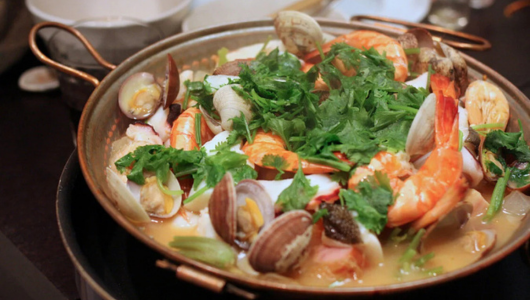
Photo by Postal do Algarve
What does “minimum 2 people” mean on Portuguese restaurant menus?
Some Portuguese dishes are prepared and served for the table rather than as individual portions, so you will often see “mínimo 2 pessoas,” “2 pessoas” or “2 pax” beside them. This is particularly common with seafood rice (arroz de marisco), fish or seafood cataplana, fish pasta stew (massada de peixe) and other preparations that are cooked together in a pot or pan and make little sense to prepare as a single serving.
A cataplana, pictured here, is cooked in the metal vessel that gives the dish its name and is commonly prepared for sharing. Seafood rice is also cooked as one pot for the table rather than as separate individual servings. Larger whole fish, including fish baked in a salt crust, may also be marked for a minimum of two diners.
Check carefully what the price beside the dish refers to. A restaurant may list “Cataplana de marisco – 2 pessoas – €68,” meaning €68 for the whole dish, while another may state “€35 por pessoa – mínimo 2 pessoas,” making the minimum total €70. Both formats are used in Portuguese menus. If it is not obvious, ask “Este preço é por pessoa ou para os dois?” before ordering.
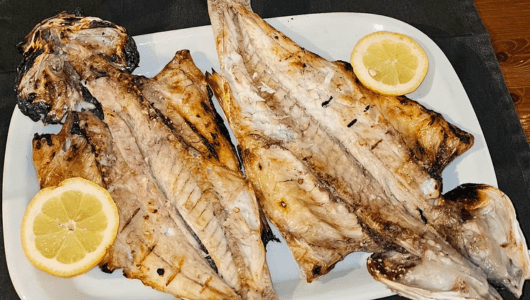
Photo by São Sebastião Restaurante on Facebook
Why is fish priced by the kilo in Portugal?
Whole wild fish in Portuguese restaurants is often priced by weight because the size can vary considerably from one specimen to another. You are particularly likely to see this in marisqueiras and fish restaurants with a fresh-fish display. Species commonly sold this way include wild-caught turbot (pregado), grouper (garoupa), wreckfish (cherne), white seabream (sargo) or red mullet (salmonete). More uniform farmed fish, including gilt-head bream (dourada) and European seabass (robalo), are more often sold at a fixed price per portion.
A menu showing €60/kg does not mean you are expected to order a kilo. The waiter may recommend a whole fish according to the number of people at the table, or show you the available fish before it is cooked. The price is calculated from its raw weight, so ask “Quanto pesa?” and, if you want to know the likely total, “Quanto fica mais ou menos?” before agreeing. Asking to see the fish first is also perfectly normal in Portugal.
Fresh fish and seafood may also appear as “price of the day” (preço do dia), particularly when availability and market prices change frequently. Lobster, crab and larger prawns may likewise be sold by weight, while oysters and some other seafood are commonly priced by the unit. Check whether the figure refers to one portion, 100 grams, a kilogram or an individual item.
For much more detail on choosing fish, understanding cuts and preparations, and dealing with whole fish at the table, see our guide to how to order fish in Portugal.
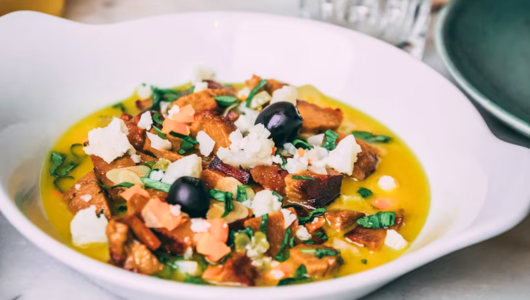
Photo by TheFork
How do you tell a restaurant about food allergies in Portugal?
Restaurants in Portugal are legally required to provide information about the 14 allergens covered by EU food rules, including gluten-containing cereals, milk, eggs, peanuts, nuts, fish, crustaceans and molluscs. This does not mean that every menu has to display an allergen symbol beside every dish. In Lisbon, Porto and many newer restaurants, allergen numbers and icons are increasingly common, while a traditional tasca or a restaurant writing its pratos do dia on a board each morning may keep the information separate. If you do not see it, ask.
For a serious allergy, tell the waiter before ordering rather than simply asking whether a particular ingredient appears in the dish. Portuguese cooking can contain ingredients that are not obvious from the menu description, such as flour used to thicken a sauce, egg in breaded or fried snacks, or lard in a vegetarian-looking dish. Cross-contamination is also worth discussing if even traces are a problem, particularly where the same fryers, grills or utensils are used for several dishes.
Useful phrases to say or show to restaurant staff include:
– I have an allergy to… – Tenho alergia a…
– I have celiac disease / I cannot eat gluten – Sou celíaco/a / Não posso comer glúten.
– I am allergic to milk/dairy products – Tenho alergia ao leite e aos produtos lácteos.
– I am lactose intolerant – Sou intolerante à lactose.
– I am allergic to nuts – Tenho alergia a frutos de casca rija, such as walnuts (nozes), almonds (amêndoas) or hazelnuts (avelãs).
– I am allergic to peanuts – Tenho alergia a amendoim.
– I am allergic to shellfish – Tenho alergia a marisco. If necessary, specify crustaceans (crustáceos) or molluscs (moluscos).
– Is there a risk of cross-contamination? – Há risco de contaminação cruzada?
Vegetarian and vegan requirements are different from allergies. “Sou vegetariano/a” and “Sou vegano/a” will be understood, particularly in cities and tourist destinations, but a traditional restaurant may have very few dishes designed around either diet. Rather than assuming a dish can simply be adapted, ask what can be prepared without meat, fish, dairy or eggs as applicable. There are also plenty of ways of eating vegan the traditional Portuguese way, especially once you look beyond dishes explicitly labeled as vegan.
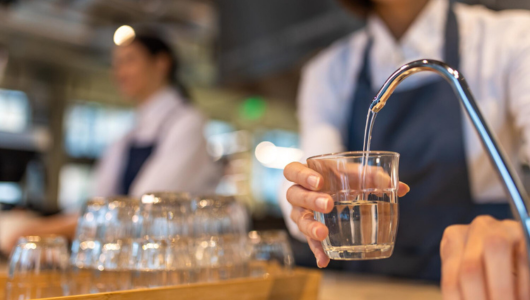
Photo by Prontos Pra Voar
Can you ask for tap water in restaurants in Portugal?
You can ask for tap water in Portuguese restaurants, although bottled water is still the default in many places. So, unless you specifically ask for tap water, a waiter may simply offer água com gás or água sem gás. The latter means still bottled water, not water from the tap.
Asking for “um copo de água” has long been normal in Portuguese cafés, particularly alongside an espresso. In restaurants, you can ask for “água da torneira”, and customers consuming on the premises are legally entitled to tap water and reusable glasses free of charge. You may get a jug, but particularly in smaller establishments you might simply receive a glass and ask for another when you need it. A restaurant cannot require you to buy bottled water instead or charge you for ordinary tap water, even if you feel pressured to do so as they may serve you little amount of tap water each time you ask.
Do not expect the water to arrive with ice. Unlike in the United States, a glass or jug of tap water in Portugal is normally served straight from the tap, without ice unless you request it or they’re extra nice to offer. Ice is routinely used in soft drinks, cocktails and many other cold drinks, but it is not automatically added to drinking water, not even when you order bottled water. Cafés may also serve an espresso with a separate glass of ice if you order café com gelo. Restaurants and cafés are allowed to charge separately for ice, but only when that charge is clearly included in the price list.
Increasingly, particularly in contemporary restaurants in Lisbon and other cities, you may instead be offered filtered house water in reusable glass bottles, sometimes both still and sparkling. Restaurants generally present these systems as a more sustainable alternative to commercial bottles, but filtered house water is still a paid product and can cost as much as mineral water. Ordering it does not remove your right to ask for ordinary tap water for free.
Tap water in Lisbon is safe to drink and closely monitored, as is public drinking water throughout Portugal.
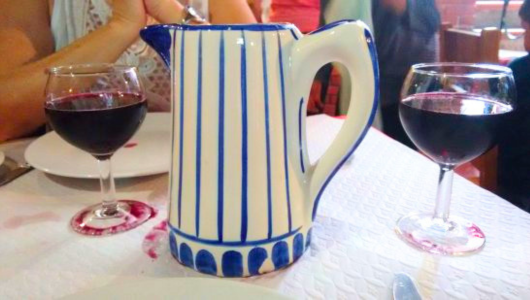
Photo by Alfonso la Coruna on Tripadvisor
How do you order house wine in Portuguese restaurants?
Most Portuguese restaurant wine lists include reds (tintos), whites (brancos), Vinho Verde and, increasingly, rosé, alongside sparkling wine (espumante). Bottled reds from the Alentejo and Douro are particularly common, while Vinho Verde frequently accompanies fish, seafood and lighter meals.
In traditional restaurants, vinho da casa is normally the most affordable option. It may be a commercially bottled wine that the restaurant has chosen as its house red or white, but it can also arrive in a glass jug (jarra or jarro), poured from a larger container rather than from an individually labeled bottle. Older neighborhood restaurants may still serve house wine from a bag-in-box or other bulk format, particularly when they buy directly or regularly from a producer.
You will commonly see servings by the glass (copo), jugs of around half a liter (meia jarra / meio jarro) and one little (jarra / jarro), although the exact capacity should be stated on the menu.
In Lisbon, some long-established family restaurants with connections to northern Portugal also serve inexpensive Vinho Verde sourced from producers they know in the Minho, sometimes without a commercial label at all. Wine arriving served in a jug is not automatically a sign of poor quality, it is just part of an older, everyday way of drinking wine with food.
Ask for “um copo de vinho tinto/branco” if you only want a glass, or “meia jarra de vinho da casa” if you are sharing. If the menu simply says vinho da casa, it is also perfectly reasonable to ask what wine it is and where it comes from before ordering.

Photo by Notícias ao Minuto
Do you tip in Portugal?
Tipping (gorjeta) is optional in Portugal, and Portuguese diners do not normally calculate a fixed percentage of the bill. At an everyday lunch or neighborhood restaurant, someone who is happy with the service might round €28 up to €30, leave a couple of euros on the table or simply pay the exact amount. Larger tips are more common after an especially good meal, attentive service or a long dinner with a group, but 15 or 20% is not the local default. Tipping is entirely voluntary, both in whether you leave anything and how much.
Visitors from North America sometimes read Portuguese restaurant service as less attentive because waiters do not necessarily return every few minutes to check on the table. Bringing the bill without being asked can also feel more like rushing customers than being efficient. When you are ready to leave, simply ask for “A conta, por favor”.
In Lisbon and other heavily visited destinations, suggested gratuities have become more visible on bills and card terminals, sometimes presented as percentages familiar to international travelers, but accepting the suggested amount is optional.
A tip should not be confused with a mandatory service charge. Portuguese restaurants do not routinely add a standard service percentage to the bill, so an amount presented as a gorjeta can be declined. If you choose to tip, leaving cash is still common, as some restaurants can also add it to a card payment, while others cannot.

Photo by Globo
Can you split the bill in Portugal?
Among friends in Portugal, the bill is often divided equally when everyone has eaten and drunk roughly the same amount. Groups may instead work out individual shares if, for example, one person ordered wine and another did not, or if some people only joined for drinks. There is no strong expectation that one person should automatically cover the whole table.
On dates, it is perfectly acceptable for each person to pay their share, and there is no general rule that the man is expected to pay. One person may offer, especially on a first date or for a special occasion, but splitting the bill is socially unremarkable.
Restaurants will often divide the total between two or more cards, especially if you simply want to split it evenly. Asking staff to calculate exactly who ate which dish can be more cumbersome, particularly when several petiscos, bottles of wine or larger dishes have been shared. If needed, ask “Podemos pagar separado?” or “Pode dividir em dois?”
Portuguese groups frequently have one person pay the restaurant and everyone else send their share afterwards through MB WAY, the mobile payment system widely used with Portuguese bank accounts.
Cards are widely accepted in Lisbon and other cities, but smaller traditional restaurants may still prefer cash or accept only certain payment methods, so carrying some cash remains sensible. Menu prices already include VAT, so tax should not be added separately when the bill arrives.
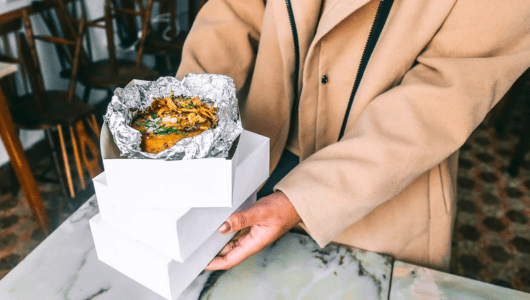
Photo by Time Out Lisboa
Can you take leftovers home from restaurants in Portugal?
Taking leftovers home is increasingly common in Portugal, particularly in Lisbon, Porto and other urban areas where restaurants normally have containers available for food to go. In smaller towns and more traditional restaurants it may still be less routine than in North America, but there is nothing improper about asking.
Regional restaurants can serve unexpectedly generous portions, so taking the rest home may save a considerable amount of food. If you cannot finish what you ordered, ask “Pode pôr isto para levar, por favor?” or “Podemos levar o que sobrou?”.
You can take home food you have paid for, except in formats such as all-you-can-eat buffets where different rules apply. A restaurant that does not normally offer takeout service is not obliged to provide a container, although in practice most will have something available. The container may appear separately on the bill, and certain single-use plastic or multimaterial packaging carries a mandatory €0.30 charge plus VAT. Restaurants offering food to go must also accept customers’ own suitable containers, provided they do not present a food-safety risk. So if you know you are likely to have leftovers, bringing a clean reusable container is perfectly acceptable in Portugal and can avoid unnecessary packaging altogether.
Restaurant habits vary across the country, but a little local context makes eating out in Portugal considerably easier. For more local tips, Portuguese food culture and places worth knowing in Lisbon and beyond, follow Taste of Lisboa on Instagram and subscribe to our newsletter.
Feed your curiosity on Portuguese food culture:
How to connect with local culture in Lisbon and Portugal
How to choose the right food tour in Lisbon for your travel style
The difference between Portuguese gaspacho and Spanish gazpacho
Real people, real food. Come with us to where the locals go.
Signup for our natively curated food & cultural experiences.
Follow us for more at Instagram, Twitter e Youtube