
How to order seafood in Lisbon like a local
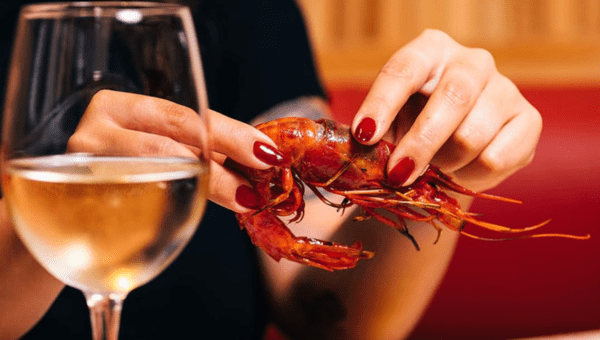
Seafood restaurants are a big part of Lisbon’s food culture, but they can be difficult to read if you’re not used to the Portuguese way of ordering and sharing shellfish. A Portuguese style seafood restaurant, a marisqueira, is not always a place where you sit down, choose one main course, and wait for a plate to arrive. More often, the meal is built around shared plates, seafood ordered by weight, cold shellfish, grilled prawns, crab to pick apart slowly, bread for soaking up the sauces, and a fair amount of eating with your hands.
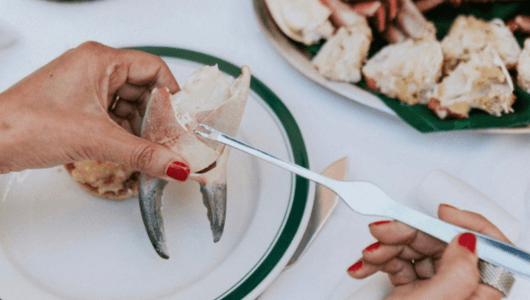
Photo by Restaurante Pinóquio
To make the most of your seafood experience in Lisbon, it’s worth knowing that, generally speaking, some things are priced by portion, while others are sold by kilo. Some of the best orders may look strange if you have never seen them before, and certain dishes arrive cold on purpose. Most of these things are obvious to us Portuguese who grew up eating seafood, but they can be confusing and sometimes even a little intimidating for travelers. However, this guide is here to change that.
Feat photo by Marisqueira Azul
What is a marisqueira? Understanding Portuguese seafood restaurants
A marisqueira is a restaurant specialized in seafood, but in Lisbon this can mean different things depending on where you go. Some places are more high-end and often include large shellfish tanks, with curated wine lists and prices that quickly add up, especially if you are tempted to order things like scarlet shrimp (carabineiros) or lobster (lavagante). Others are more ordinary neighborhood restaurants, sometimes bright and noisy, where people sit down for clams, toasted buttered bread, prawns, perhaps some crab, and beer, without the meal necessarily being a special occasion.
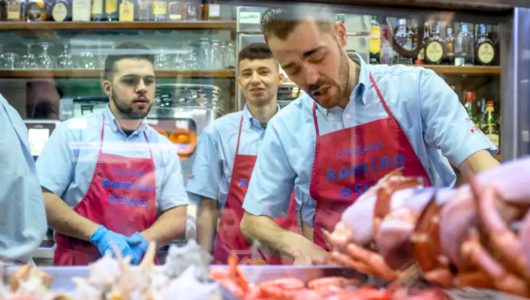
Photo by Viagem e Turismo
When planning a seafood meal in Lisbon, it’s also useful to understand the concept of cervejaria. In Portugal, a traditional cervejaria, which literally translates as “beer house”, is not necessarily a craft beer bar or a modern taproom. In Lisbon, many classic cervejarias are also known for seafood, especially shellfish eaten with cold beer. Places such as Cervejaria Ramiro (Av. Alm. Reis 1H), Cervejaria Ribadouro (Av. da Liberdade 155) and O Palácio (Rua Prior do Crato 142) are good examples of how the old-school cervejaria tends to overlap with the world of marisqueiras, usually with lively rooms, quick service, and platters of seafood that are very often best eaten with your hands.
Seafood in Lisbon is not exactly cheap, but it does not have to be prohibitively expensive either. A seafood meal can mean a generous platter of premium shellfish, but it can also mean sharing clams in tangy sauce (amêijoas à Bulhão Pato), ordering a stuffed crab, adding a plate of prawns, drinking house white wine or cold beer, and leaving perfectly happy without having to break the bank. To manage expectations according to your budget, it’s important to know what kind of restaurant you are in, and also what to order.
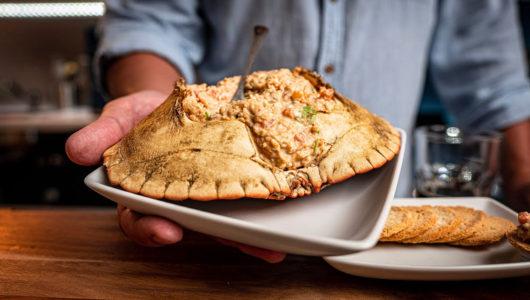
Photo by Receitas de Culinária TV
When you visit a seafood restaurant, do not approach the meal with the usual structure of starter, main dish and dessert. Locals often order in stages, especially when eating shellfish. You might begin with clams, move on to some stuffed crab (sapateira recheada), add something hot like garlic prawns, and then decide whether there is still room, or budget, for goose barnacles (percebes). It is perfectly normal to ask for one or two things first and order more later. In fact, depending on how many people you are sharing the table with, this may be a better approach than ordering a large selection all at once, before you really understand what you actually feel like eating.
Most meals focused on seafood in Portugal aren’t particularly formal. In many cases, the food is placed in the middle of the table for everyone to reach in and get their hands dirty… quite literally. You will pick up clams with your hand in order to scoop up some sauce using the shells, you’ll peel prawns by hand, you will need to break apart the crab shell so that you can reach its meat, and while eating goose barnacles it is very likely that some briny liquid may end up squirting at your shirt.
How to choose fresh seafood in Portugal
In many Portuguese seafood restaurants, you are better off choosing from the counter rather than just looking at the printed menu. On the counter, you can check that the seafood is very cold and appears fresh and well kept, never dry or with a strong smell. Seafood has a smell, of course, but it should smell clean and marine, not sour, muddy or aggressively fishy.
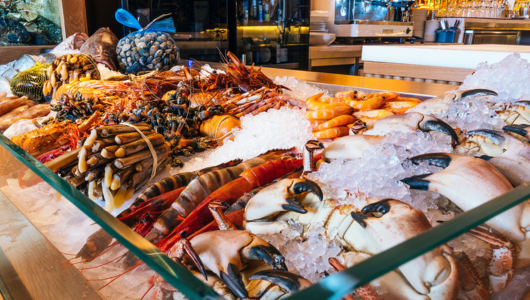
Photo by NIT
Freshness is not only about appearance, but also about turnover. So places where locals are ordering steadily and where the staff can confidently tell you what is good that day are usually more promising than places with fewer customers. Keep in mind that, when a restaurant tells you something is not available on that day, this can actually be good news, as it may mean that if something is not in season or the quality is not particularly good, they will not be serving it. Seafood availability changes according to the species, weather, origin, fishing conditions, restaurant sourcing and, in the case of bivalves, safety controls. If a good restaurant tells you they do not have something on a given day, take that as a green flag. This is a more honest approach than, for example, tourist-oriented restaurants that advertise “the best sardines in Lisbon” all year-round.
Feel free to ask questions before you order, as this is commonplace here in Portugal, and even more so when ordering fish or seafood. Portuguese folks will routinely enquire the staff about what is freshest, what the house recommends, and even where certain seafood came from, as we know, for example, that goose barnacles from Berlengas have a strong reputation, that the grooved carpet shell (amêijoa-boa) from the Ria Formosa is a highly valued delicacy we won’t always come across, or simply because we want to know if whatever we are about to eat came from the coast around Sesimbra, Setúbal or Peniche.
Most restaurant servers around Lisbon will speak English, but in case you end up somewhere where they don’t, or you simply would like to practice your Portuguese, perhaps because you have already browsed our Portuguese crash course for food travelers, here are a couple of sentences which may come in handy before ordering:
O que recomenda hoje? – What do you recommend today?
O que chegou fresco hoje? – What came in fresh today?
O que é melhor hoje? – What is best today?
Isto é ao quilo ou à dose? – Is this priced by kilo or by portion?
Pode mostrar-me antes de preparar? – Can you show it to me before preparing it?
That last question is especially useful when something is sold by weight, such as large crab, lobster, scarlet shrimp or goose barnacles. If the final price depends on the size or weight of what you choose, ask to see it and don’t be shy to ask for an estimated price before it goes to the kitchen, as this is absolutely normal. In fact, the same happens with fish prices per weight in fish-focused restaurants, and you can read our guide on how to order fish in Portugal to better understand how to navigate these situations.
What to order at a seafood restaurant in Lisbon beyond the obvious
Shrimp and prawns are popular for a reason. These are the options most international travelers will usually know and they are liked by many, easy to share and, when cooked well, very hard not to enjoy.
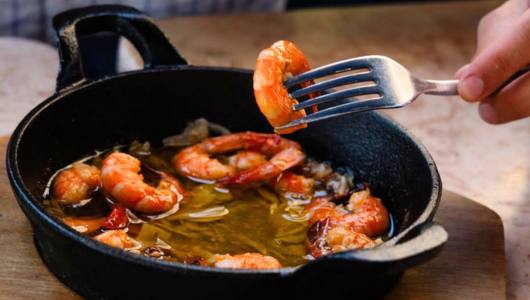
Photo by Marisqueira Azul
In Lisbon seafood restaurants, you will often see boiled shrimp (camarão cozido) served cold, gambas à guilho sizzling with garlic and olive oil, or larger grilled prawns brought to the table with little more than salt and lemon. These are beautiful options, but we hope you don’t stop there and dare to explore a little further to discover other species of seafood common in Portugal.
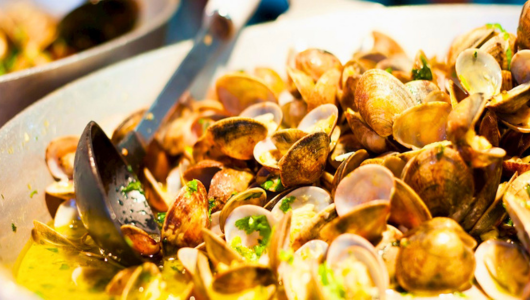
Photo by Taste Atlas
One of the most classic seafood dishes in Portugal is amêijoas à Bulhão Pato, which consists of clams cooked with olive oil, garlic, coriander and usually a little white wine or lemon. The clams matter, but everyone knows that the sauce is what makes this dish addictive. This is why ordering bread is standard practice when you order this kind of clam dish, and if the richness of the sauce isn’t enough for you, you can even order buttered toast (pão torrado com manteiga) to make dipping even more indulgent.
Another very Portuguese order is sapateira recheada, that is, stuffed brown crab. The shell is filled with a rich mixture usually made with the shredded crab meat, mixed with mustard, mayonnaise, chopped boiled egg, pickles, onion, parsley, beer or whiskey, and perhaps a touch of spicy piri-piri, depending on the house recipe. It is then served with toasted bread, as the crab’s mixture is meant to be eaten as a spread, not on its own.
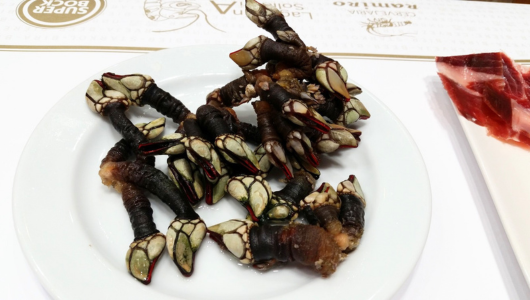
Photo by melhuang1972
Once you are ready to move beyond the safer classics, start looking for the things that may not appear on seafood menus back home. Percebes, or goose barnacles, are one of the great Atlantic orders. They look strange and they are certainly not the cheapest option from the counter, but their intense taste of the sea makes them such a must-have Lisbon food experience. To eat them, you twist or snap the outer skin near the claw-like end and pull out the meat on the inside.
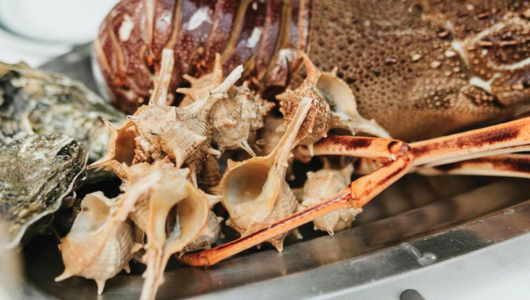
Photo by Restaurante Pinóquio on Facebook
Búzios, or sea snails, are another option for curious eaters. They are usually served cold and have a firm, chewy texture, which may be an acquired taste for some, but they are special precisely because of it.
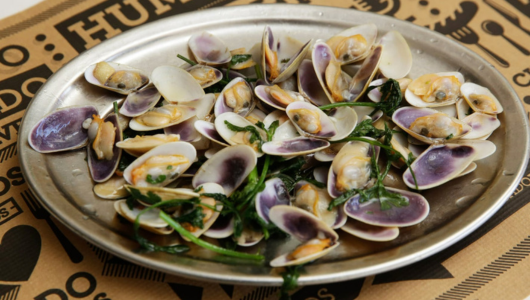
Photo by Ruralea
Cadelinhas or conquilhas, small wedge clams, are more delicate and often cooked simply with garlic, olive oil and cilantro, similarly to other types of clams you are more likely to come across. If they are available, they are well worth ordering, especially in summer.
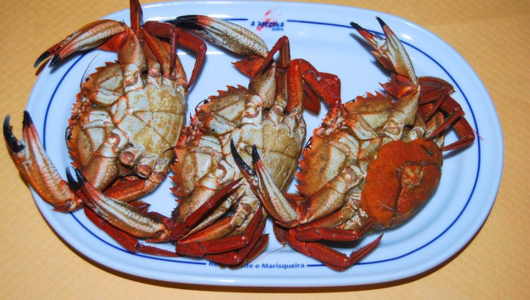
Photo by Restaurante a Piscina
You may also come across navalheiras, smaller crabs that may be considered less glamorous than lobster or a large sapateira, but also delicious, fun to eat and often more accessible in price. Mussels, cockles and oysters can also be good choices, depending on the restaurant. You may find some of these species elsewhere too, but the point is not to order something weirder for the sake of it, but to mix things you already know you like with a little culinary curiosity.
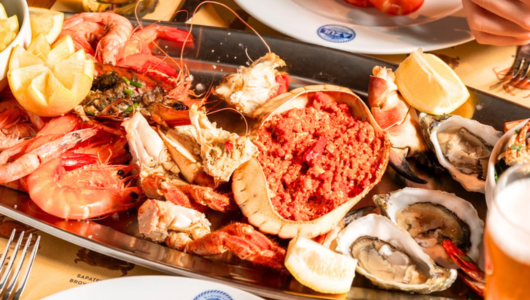
Photo by Marisqueira Azul
Generally speaking, be wary about mixed seafood platters, which you will see listed on menus as mariscadas. There are excellent options in reliable restaurants, but they sometimes can be vague in terms of what they really feature and how much of each item is included. Once again, do not shy away from asking questions until you know exactly what you would like to order.

Photo by Cervejaria Ribadouro on Instagram
If you’d like to order something that may sound a little strange but that is perfectly ordinary here in Portugal, ask for a prego, that is, a beef steak sandwich. In many marisqueiras and traditional cervejarias, ending your meal with a Portuguese style meat sandwich is part of the ritual, regardless of which seafood dishes came before it. This makes sense because seafood is delicious, but it can sometimes leave you wanting something more substantial, salty and meaty to close the meal. A good prego, usually served in a simple bread roll with garlic, a little sauce from the steak, and some mustard to taste, does the job beautifully.
Ordering with a bit of curiosity can make your meal more interesting. Instead of always chasing lobster, giant prawns or the most expensive shellfish on the menu, ask what is good, what is local and what the house actually recommends. Bivalves such as clams, mussels, cockles and oysters can be excellent choices, and smaller or less glamorous seafood may be just as satisfying as the luxury items. A good seafood meal is not necessarily about the rarest or priciest ingredients, but about things that are fresh, well prepared, fairly priced and right for that moment.
How seafood prices work in Portugal and how to avoid surprises
Seafood in Portugal can be priced in different ways, and understanding this can be useful before ordering. Some dishes are sold by portion, or dose. Others may be available as a meia-dose, a half portion, which can be enough if you are ordering several things to share. Some items are priced by unit, or unidade, while others, especially larger or more expensive seafood, are sold by kilo.
So when you see a price like €80/kg, that does not mean the dish costs €80. It means the final price depends on the weight of the item you choose. This often applies to larger or premium seafood such as spider crab (santola), European lobster (lavagante), spiny lobster (lagosta), tiger prawn (camarão tigre), scarlet shrimp (carabineiros), langoustines (cigalas), goose barnacles (percebes), or even some wild-caught fish sold whole, such as sea bass (robalo), gilt-head bream (dourada) or turbot (pregado). The menu may be perfectly clear, but if you are not used to reading seafood prices this way, keep this in mind to avoid a bitter aftertaste. As always, the safest approach is to ask before you order. If something is priced by weight, ask to see it before it is prepared and request an estimated final price. In Portuguese, you can say quanto fica, mais ou menos?, meaning “how much will it be, more or less?” Nobody should be offended by this.
Also keep an eye on the small things placed on the table at the start of the meal, including items such as bread, butter, olives, pâté, cheese and other snacks that are usually part of the couvert and will be charged if you eat them. This is normal in Portugal, not automatically a tourist trap, and you are allowed to refuse what you do not want. That said, in a seafood restaurant, bread is very often needed for the clam sauce, to spread the crab filling on, or to mop up the garlicky olive oil from things like shrimp.
How to build a good marisqueira meal
One of the most local things you can do at a seafood restaurant in Portugal is not order everything at once. Seafood meals are often built gradually, especially when you are sharing. We would suggest starting with a couple of dishes and ordering more as needed.
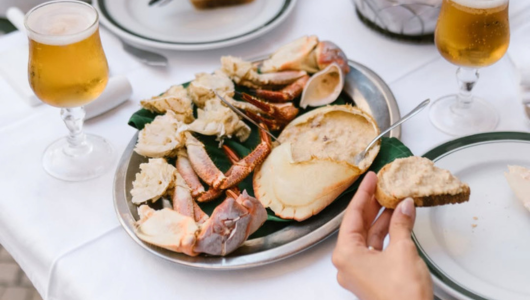
Photo by Restaurante Pinóquio
For a first-time seafood meal in Lisbon, start with something easy to share, such as clams, cockles or cold prawns, then add one dish that takes a little more time and attention, such as crab or another shellfish you need to pick apart. If you’re still hungry afterwards, this may be a good time for something hot, like grilled prawns, garlic prawns or another simple cooked dish.
We truly believe going to a seafood restaurant doesn’t necessarily mean every order must include a luxury item. Very often, what many Portuguese people do is order a few more standard options, as mentioned above, and then perhaps include one more expensive choice, such as goose barnacles, scarlet shrimp or a larger crab, alongside more accessible dishes such as clams, mussels, cockles, prawns or toasted bread with crab filling. This balance will make your seafood meal feel generous without having to spend a fortune.
For a lighter summer lunch, we suggest a plate of clams, some cold prawns to peel by hand, some toasted bread and a chilled glass of white wine or beer may be more than enough. A good seafood meal doesn’t have to be a feast, and you can certainly order according to your taste, your appetite on a given day, and your budget.
There are a few practical eating tips worth knowing too, especially if you do not eat seafood often. Know that it is perfectly normal for seafood restaurants to have ready-made cold seafood options, often displayed at the counter or even by the refrigerated window display, usually including things like prawns, shrimp and goose barnacles. And, more importantly, do not eat clams or mussels that remain closed after cooking, as this may indicate they were not alive when cooked or that they did not cook properly, making them safer to leave behind. It is absolutely normal for a platter of overall fresh seafood to include a couple of shells like this, and unless there is an unusual amount or closed shells, this should not usually be taken as a sign that the restaurant is poor quality.
What to drink with seafood in Portugal
Vinho Verde is one of the most obvious choices with seafood in Portugal, especially in summer. Vinho Verde is produced in the northwest of the country, and it is worth clarifying that it does not automatically mean white wine. The region also produces red, rosé and sparkling wines, even if most people associate the name with young, fresh whites. When it comes to seafood, though, white Vinho Verde is usually the best pairing, as it tends to be bright, aromatic and often moderate in alcohol, with the kind of acidity that works well with salt, garlic, olive oil, lemon, coriander and the natural sweetness of shellfish.
With a simple seafood meal of amêijoas à Bulhão Pato, cold prawns, cadelinhas, cockles, mussels or percebes, white Vinho Verde works beautifully, keeping things refreshing. The grape variety Loureiro is often floral and citrusy, which makes it great for delicate shellfish. Alvarinho, especially from Monção and Melgaço, tends to have more structure and body, so it can stand up better to richer dishes such as crab, grilled prawns or seafood with buttery sauces. Arinto, Avesso and Trajadura can also appear in Vinho Verde blends, bringing acidity, texture or roundness depending on the producer.
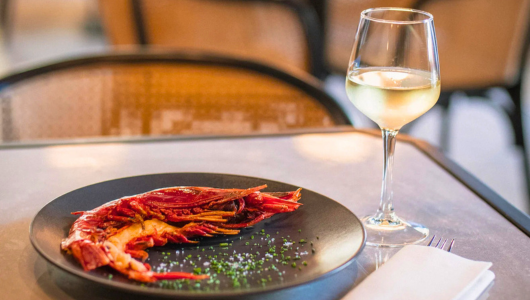
Photo by Trendy Report
But, besides Vinho Verde, Portugal has plenty of white wines that make sense with seafood. Arinto from Bucelas, just north of Lisbon, is one of the best local choices for clams, oysters, grilled fish and dishes with lemon, garlic or coriander, as it brings sharpness without being too aromatic. From the Lisbon wine region more broadly, especially areas such as Colares, Óbidos and Torres Vedras, you’ll also find Atlantic-influenced whites that suit seafood well, particularly when the meal involves crab, prawns or grilled fish.
Encruzado from Dão is a good choice when the seafood is richer, as with sapateira recheada, grilled prawns, lobster or dishes where the sauce plays a bigger role. Bairrada whites, often made with Bical, Maria Gomes or Arinto, can also work beautifully when they lean mineral rather than tropical. Setúbal, coastal Alentejo, the Algarve and even some Douro producers can be worth considering too, as long as the wine is dry and balanced.
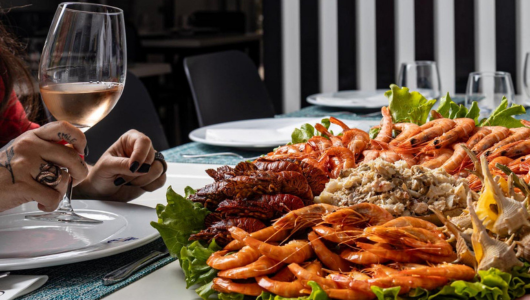
Photo by Restaurante El Cristo Elvas
For something more unexpected, look to the islands, which are among the best Portuguese wine regions and are often less known. White wines from Pico, in the Azores, often made with Arinto dos Açores, Verdelho or Terrantez do Pico, can be excellent with oysters, barnacles, limpets (lapas), clams and grilled fish, thanks to their saline, volcanic character. Madeira also produces dry white wines that can pair well with seafood when they are mineral and not overly aromatic. These island wines are not always available in every marisqueira, but if you see them on the list, they are worth considering.
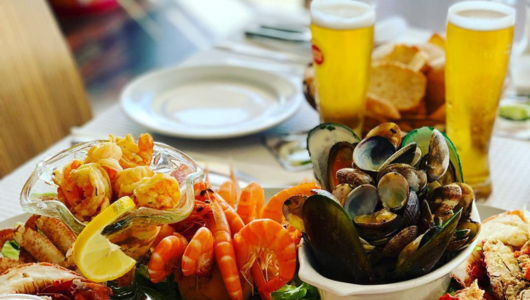
Photo by O Barbas on Facebook
For a casual marisqueira meal, beer can also be a great choice, and many people will actually keep ordering rounds of cold draft beer (imperial) as they munch on platters of prawns, crab, goose barnacles and shellfish, especially in old-school cervejarias.
Nowadays, many seafood restaurants and cervejarias also serve sangria, especially in more tourist-friendly places. A white wine sangria or sparkling sangria can be pleasant with seafood if it is not too sweet, particularly on a hot day, but it is worth remembering that sangria is usually more about refreshment than careful pairing and, if the seafood is delicate or expensive, wine or beer will usually give you a cleaner match.
For those who are not drinking alcohol, the most common choices are usually sparkling water, lemonade, iced tea or a non-alcoholic beer, which more restaurants are beginning to offer. In old-school places, the alcohol-free options are usually simple and will not include things like mocktails. But, with seafood, you mostly want something cold, clean and refreshing enough to handle salt, garlic and sauce, so even water (água) or sparkling water (água com gás) will do.
So now that you know how to order seafood like a Portuguese local, don’t miss our recommendations for the best seafood restaurants in Lisbon.
For more food and cultural tips to enhance your trip to Lisbon, don’t forget to check our posts on Instagram and subscribe to the Taste of Lisboa newsletter.
Feed your curiosity on Portuguese food culture:
A brief guide on how to order fish in Portugal
The best Portuguese cold dishes to eat in summer
How to connect with local culture and people in Lisbon and Portugal
Real people, real food. Come with us to where the locals go.
Signup for our natively curated food & cultural experiences.
Follow us for more at Instagram, Twitter e Youtube