
The best Portuguese cold dishes to eat in summer
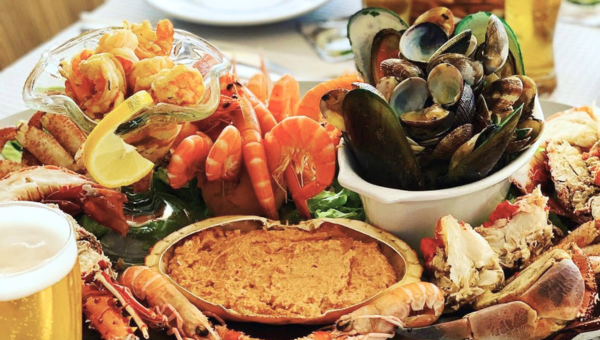
In Portugal, summer does not simply mean switching from cooked food to raw salads. In fact, in our country, the word “salad” is broader than some visitors might expect. We also have more common salads such as salada mista, with lettuce, tomatoes, onions and perhaps a little shredded carrot, but Portuguese salads are by no means synonymous with raw vegetables. The best Portuguese salads may involve boiled octopus, shredded salt cod, fish roe, canned tuna and other seafood specialties, chickpeas or boiled eggs, all brought together with a generous amount of Portuguese olive oil and a splash of vinegar to make the ingredients livelier on the palate.
Featured photo by O Barbas on Facebook
During the warmer months, we favor simpler dishes, many of them prepared ahead of time and served without fuss, but this simplicity has nothing to do with lack of substance. In Portuguese cooking, cold food often begins as cooked food, as some of the ingredients may be boiled, grilled, fried, cured or preserved before being dressed and brought back to the table at room temperature.
Visitors looking to eat in Portugal during summer are often pointed toward dishes like grilled sardines, grilled fish, clams or seafood rice. These are great options indeed, but they do not include some of the most interesting Portuguese summer dishes, recipes served cold or at room temperature, which do not always get the attention they deserve. If you are interested in Portuguese food culture and traveling to Lisbon and beyond during the summer, do not miss:
Gaspacho alentejano | Alentejo-style gazpacho
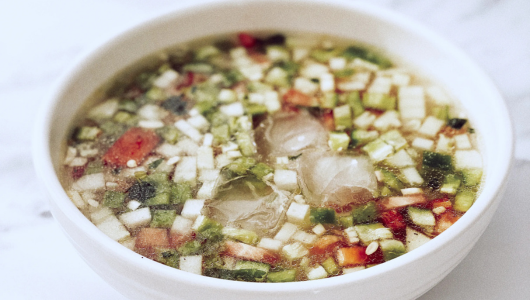
Photo by Choice of Magic
Portuguese-style gazpacho (gaspacho alentejano) comes from Alentejo, the large inland region south of Lisbon, infamous for its long and dry summers. It’s easy to understand why a cold bowl made with bread, water, ripe vegetables, olive oil, vinegar, garlic and oregano would taste so good in such a hot environment, even more so back in the day, when people would enjoy some cold gaspacho after a day working outside in the fields.
If your reference point is Andalusian gazpacho, you may expect a smooth, blended tomato soup served in a glass or a small bowl. But, to make gaspacho alentejano, the vegetables are chopped rather than puréed, so tomato, cucumber and pepper remain visible in the bowl, floating in cold seasoned water. Bread is often added in pieces inside the soup itself, but it could also be served on the side to dip and soften it as you keep eating.
Alentejo is one of Portugal’s great bread regions, and many of its traditional dishes, from açordas to migas, originated as recipes to repurpose stale bread. In gaspacho alentejano, bread gives body to the liquid, making it much more filling than if it only had vegetables.
Summer is the best time to enjoy gaspacho alentejano, not only because this is a cold dish, sometimes literally served with ice cubes directly inside the bowl, but because this is also tomato season and, when properly ripe, they give this recipe the right levels of sweetness and acidity, which is complemented by the freshness of cucumbers and peppers, and to which garlic, oregano and vinegar give an extra punch of flavor.
Gaspacho alentejano can be served on its own on very hot days, but it often appears with fried fish, small horse mackerel, sardines, cured meats or other simple accompaniments to complete the meal. If you’d like to learn more about the origins of gaspacho alentejano and understand the differences between the Portuguese version and Spanish gazpacho, we have a full article on that subject.
In Lisbon, look for gaspacho alentejano in restaurants specializing in the cuisine of Alentejo, such as Casa do Alentejo (Rua das Portas de Santo Antão 58) or O Galito (Rua Adelaide Cabete 7), but keep in mind that this is a seasonal specialty so it’s always best to check before assuming it will for sure be on the menu.
Salada de polvo | octopus salad
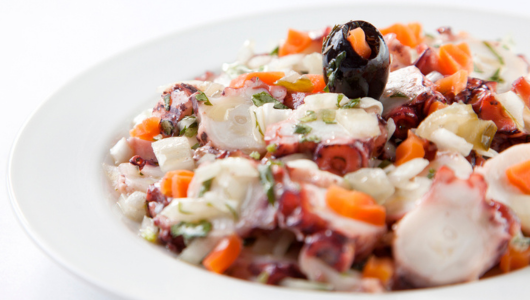
Photo by Portugália
Octopus salad (salada de polvo) is one of Portugal’s best octopus dishes and also one of the best examples of how a “salad” here can begin with a pot on the stove. The octopus is cooked first, usually until the tentacles are tender, but not for too long that they become rubbery, then cooled and cut into pieces before being dressed with olive oil, vinegar, onion and fresh herbs. In some versions, chopped peppers or pickles can make it to the plate but, generally speaking, this is a recipe about cold tender pieces of octopus with a seasoning of olive oil and vinegar.
Like other seafood specialties, octopus salad is a delicious example of Portuguese cuisine that originated by the coast but, even though it tends to taste best closer to the water because of the charm of the surroundings, thankfully today you can find it a little all over the country, including many restaurants across Lisbon, like seafood restaurants, cervejarias and tascas.
For first-time octopus eaters afraid it might have an unpleasant texture, it’s good to know that when it is well cooked, it is neither chewy nor dry. Before you order a full plate of octopus tentacles in Portuguese specialties such as roasted octopus with garlic olive oil (polvo à lagareiro), give salada de polvo a try, as this may be a smoother introduction. The salad is usually served as a plate meant for sharing (petisco) or appetizer, so each serving won’t generally be too big and, chances are, you may end up wanting more.
Mariscada | seafood platter
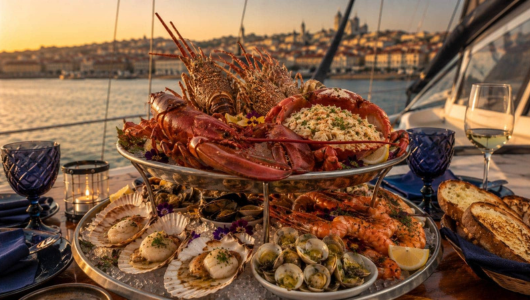
Photo by Lusitana Boat
When a mariscada appears on the menu of a Portuguese seafood restaurant, it refers to a predefined seafood platter chosen by the house and intended to be shared. The exact ingredients included vary depending on the seafood restaurant (marisqueira), as well as the price of the platter. Mariscadas can be convenient for groups who want to try a variety of things or whose members have diverse tastes. But this convenience doesn’t always translate into mariscadas being the best value.
A predefined platter may contain items you would not have ordered separately, while leaving out the seafood you were most interested in trying. Some mariscadas are generous and thoughtfully composed, while others rely heavily on relatively inexpensive shrimp to create volume, with only small quantities of the more distinctive or costly species. Before ordering, it is recommended to check, so that you judge for yourself if it’s worth the price, also depending on how many people the platter is supposed to serve.
If you have specific preferences, you could also build your own seafood feast by ordering several individual plates from the menu and sharing them around the table. This way, you could sample things like boiled shrimp, goose barnacles, maybe a crab, some whelks or oysters, and combine them into the assortment that suits your tastes and budget.
The cold seafood most commonly associated with mariscadas is cooked with very little intervention, mostly boiled, with no elaborate seasoning beyond salt, and served chilled. You are supposed to grab shrimp with your hands to peel them as you eat, twist and turn goose barnacles with your fingers to pull out the inside flesh, use a small fork or toothpick to extract whelks from their shells, and you may even enjoy making a little bit of a mess cracking crabs open with a small hammer directly at the table. Other cold items may include velvet crab (navalheira), lobster, crayfish, scarlet prawns or other seasonal shellfish available that day.
Even though it is often ordered separately rather than automatically included in a mariscada, stuffed spider crab (sapateira recheada) deserves particular attention because it is a classic order in Portuguese marisqueiras. The shell is filled with a seasoned mixture of crab meat and roe, commonly combined with mayonnaise, mustard, pickles, boiled egg, beer, whiskey or other ingredients according to the restaurant’s recipe, and then eaten spread over toast.
Goose barnacles are another species visitors should seek out while in Portugal. This seafood with unusual appearance is very hard to harvest from rocks by the coast where the waves crash so, because this is dangerous work, percebes come with a price tag to match. However, their flavor is intensely saline and often described as one of the purest expressions of the Atlantic. If you are curious to experience this and other less predictable choices of seafood, we would recommend reading our guide to unusual seafood to try in Portugal during summer.
In Lisbon, many travelers will queue at Cervejaria Ramiro (Av. Alm. Reis 1H) for a seafood feast. As much as we also love this restaurant, it’s worth noting that there is no shortage of great marisqueiras in Lisbon, so you could be ordering a mariscada or your own seafood spread at many other addresses around town, or even hop on the ferry to Cacilhas, or the train to Setúbal, and make fresh seafood your delicious excuse for a small day trip outside the Portuguese capital.
Salada de búzios | whelk salad
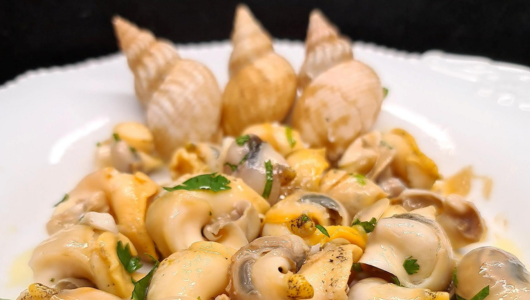
Photo by Amigos na Cozinha
Whelk salad (salada de búzios) belongs to the same Portuguese family of cold seafood petiscos as octopus and fish roe salads (see below), but it is much less likely to be recognized by visitors. Whelks are marine gastropods with a firm flesh and a naturally chewy texture that, for some, might be an acquired taste. To turn them into a cold salad, once they are cooked and removed from the shell, their meat is cleaned and dressed with olive oil, vinegar or lemon, onion and fresh herbs. Making salada de búzios is a little laborious because besides cooking the shells and extracting the whelk’s meat from their inside, they are also carefully trimmed, as the darker and softer internal sections are normally discarded.
This is another example of Portuguese coastal cooking, of turning whatever ingredients were available into enjoyable petiscos that could be prepared in advance and shared with other people. Whelks have traditionally been boiled and eaten directly from the shell in seafood restaurants, but turning them into salad makes the tougher meat easier to season with olive oil, acidity and aromatics, making the gastropods more enjoyable depending on personal taste.
When you come across búzios in Portuguese seafood menus, note that this term can be used broadly for several shellfish resembling sea snails. Larger species are often served whole, boiled and eaten directly from the shell with the help of a toothpick, while smaller varieties are more likely to be chopped and turned into salada de búzios. In some restaurants, you may also see names such as canilhas, which generally refer to larger whelks served whole rather than in salad.
Although whelk salad is delicious, it’s not as easy to find as other seafood salads. In Lisbon, you may find this traditional petisco in the neighborhood of Alcântara, at O Palácio (Rua Prior do Crato 142). A little farther west, Sol de Oeiras (Rua Caldas Xavier 3, Oeiras) serves its whelk salad with shrimp, onion and peppers. As availability may change with supply and menu rotation, it is always best to confirm before making a special journey for it.
Salada de bacalhau com grão | salt cod and chickpea salad
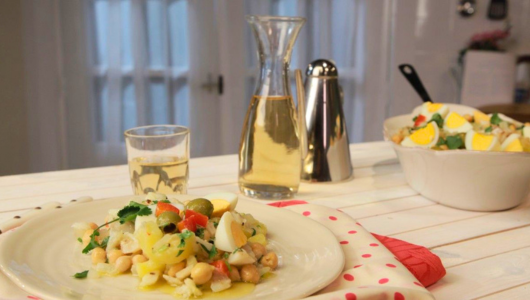
Photo by 24Kitchen
Salt cod and chickpea salad (salada de bacalhau com grão) is a common option at traditional tascas and, even though it’s simple and works great as a shared appetizer, it’s substantial enough to work as a proper lunch as well. It consists of flakes of cod that have previously been soaked and cooked, mixed with chickpeas, onion, garlic and parsley, then seasoned generously with olive oil and vinegar. Boiled egg is one of the most common additions, while potatoes and even olives can sometimes also be included.
The dish is often prepared in advance and eaten cold or at room temperature, allowing the chickpeas and cod to absorb the seasoning. That said, depending on where you go, some cod salads can also be served slightly warm, which helps the olive oil penetrate even better into the ingredients. This salad is close to meia-desfeita de bacalhau, one of Lisbon’s most classic dishes, and the small differences that these two recipes may present vary more according to the cook than the actual dish in itself, as there is no definite recipe for either, as long as flaked cured cod and chickpeas are involved.
Portuguese cooks have spent the past five hundred years preparing salt cod in a multitude of ways, so it is no surprise that one of Portugal’s favorite ingredients has also made it into salads. This imported fish from northern waters could be stored and transported before modern refrigeration, helping to explain why salt cod became so deeply embedded in Portuguese culinary identity. Its firm flesh breaks naturally into flakes after soaking and cooking, making it particularly suited for dishes assembled from modest quantities and pantry ingredients, such as salada de bacalhau com grão.
At home, salt cod and chickpea salad is normally prepared by instinct and it often comes about when you end up having leftover cooked cod after preparing one of Portugal’s best salt cod dishes, or other lesser-known bacalhau recipes, according to each household’s tradition. This salad is just one example of the Portuguese habit of combining legumes with fish, namely cured and tinned fish, particularly in uncomplicated meals that work equally well at home and as petiscos in restaurants.
To try salada de bacalhau com grão while in Lisbon, we recommend visiting restaurants such as Casa do Bacalhau (Rua do Grilo 54), specializing in classic Portuguese recipes for this cured fish, or Cravó (Rua da Misericórdia 95) for a more contemporary take on salt cod and chickpea salad, featuring a smoked-pepper vinaigrette.
Conservas de peixe | canned fish
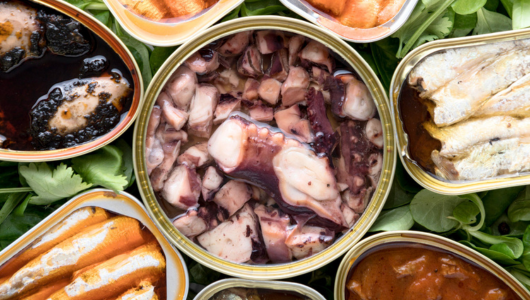
Photo by Revista Veja Portugal
When we think about Portugal’s cold summer food, it’s impossible not to mention something as simple as opening a can of fish. A good tin can be opened and served at room temperature within minutes, needs no cooking, keeps well in the pantry and can become anything from a quick home lunch to a carefully presented petisco. The Portuguese canning tradition is considerably older than Lisbon’s current enthusiasm for colorful tins and specialist shops, with the country’s first commercial fish-canning businesses appearing during the 19th century, developing around a long-established fishing industry and the need to preserve abundant seasonal catches for transport and export.
What has changed in Lisbon during recent years is the visibility of premium canned fish (conservas de peixe). Tinned fish was already an ordinary part of the typical Portuguese pantry before it became a unique edible souvenir from Lisbon, but specialist stores, brands with sophisticated illustrated packaging and even restaurants focusing on canned fish, have encouraged visitors’ demand.
Loja das Conservas (Tv. do Cotovelo 6), the official shop of Portugal’s national fish-canning industry association, currently brings together a wide range of Portuguese producers, and for those more interested in the contents than in aesthetics alone, we believe it’s a better address to purchase preserved fish than other colorful establishments such as The Fantastic World Of Portuguese Sardines (Praça Dom Pedro IV 39). Another good place to buy tins to try at home, or to take back with you abroad, is Conserveira de Lisboa (Rua dos Bacalhoeiros 34), where they also sell many of the highest quality brands.
To try Portuguese canned fish at a restaurant, you can visit Sol e Pesca (Rua Nova do Carvalho 44, aka “Pink Street”), where plates are simple but they even have a fixed-price tasting menu so that you get to try a variety of things, or Can the Can (Praça do Comércio 82), which has a more elaborate approach to Portuguese conservas. Instead of simply opening the tin and serving it with bread, its kitchen incorporates preserved sardines, mackerel, cod, tuna and octopus into composed dishes such as bruschettas, salads and other contemporary small plates, combining them with fresh ingredients but always highlighting the canned fish as the star of the dish. This restaurant works with seafood preservation beyond featuring canned fish, as they also do their own curing, drying and fermentation, including its revival of garum, the intensely savory fish sauce with roots in the Roman period.
Because it may be surprising for some to find something as straightforward as canned fish on a restaurant menu, it’s important to make a distinction between everyday and premium tins. We have plenty of canned fish at the supermarket, and this is what most Portuguese use at home during everyday life. At the higher-end of the market, however, the price may reflect the quality of the species and their origin, the specific cut that was used, the quality of the olive oil or the gourmet sauce used to enhance the flavors of the preserve. Whole sardines packed neatly, intact mackerel fillets or tuna belly (ventresca), for example, require a different level of selection and handling from flaked tuna intended for sandwiches.
Sardines may be the symbol of Portuguese conservas, but the selection goes much further. Depending on the producer, tins may contain tuna and tuna belly (while in Portugal, we recommend looking for Azorean tuna), mackerel, horse mackerel, anchovies, cod, octopus, squid, mussels, clams, cockles, fish roe, or eel. The preserving liquid is part of the product rather than something that should automatically be discarded. Olive oil and spicy olive oil are classics, but other beloved options include tomato sauce, escabeche (see more on this vinegary sauce below), natural brine, garlic, herbs and smoke.
How conservas are served in Lisbon depends on the type of establishment. Some bars and petisco restaurants keep the presentation deliberately simple, opening the tin and bringing it to the table with bread or toast, perhaps accompanied by pickles or another acidic element to offset the oiliness of the fish. This approach can work really well when you crave a simple bite to go with a cold beer on a sunny Lisbon afternoon.
At home, tins of tuna, sardines and mackerel are kept for meals that need to come together quickly, often combined with ingredients already found in the pantry or refrigerator. Black-eyed pea and canned tuna salad (salada de feijão-frade com atum) is one of the most familiar examples, featuring the beans and tuna with onion, parsley, boiled egg, olive oil and vinegar. Similar salads can be improvised with other legumes and canned fish, usually assembled by instinct, so if you’re looking for summer cooking inspiration, browse our collection of Portuguese recipes with canned fish.
Salada de ovas | fish roe salad
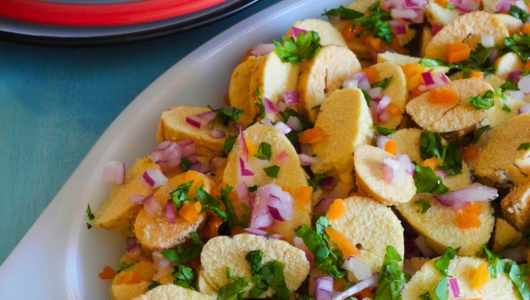
Photo by O Meu Tempero
Fish roe salad (salada de ovas) can be confusing to anyone expecting the loose, shining eggs associated with caviar or sushi. In this Portuguese appetizer, the roe usually reaches the kitchen inside its natural sac, which is cooked whole so that it firms up before being cooled, peeled and cut into thick slices or smaller pieces. The most common versions use hake or cod roe, both widely available in Portuguese fishmongers and frozen-food sections, although the exact fish is not always identified on restaurant menus. Traditional recipes then dress the sliced roe with onion, garlic, peppers, coriander or parsley, generous olive oil and vinegar, creating a cold salad that, in terms of seasoning, could easily be compared with octopus salad or salt cod and chickpea salad.
If you are a fan of exploring new textures, we would highly recommend trying salada de ovas, as the cooked roe is compact and firm enough to hold its shape when sliced, but its interior has a fine-grained, slightly crumbly consistency than many of us grew up loving. In terms of flavor, you will definitely get hints of the ocean, but in a much milder way than you might expect from the idea of fish eggs, even more so as the taste is balanced by sharp vinegar, raw onion and fresh herbs. If the roe sacs are boiled for too long or with way too high heat, they may become dry, but when they are well prepared, the result will feel moist and delicate, and almost creamy as it breaks apart in the mouth.
This is an old recipe that clearly showcases how, traditionally, Portuguese cooks made the most of ingredients and, when killing an animal for food, all parts of the creature would be used. This is in fact how many of Portugal’s most bizarre foods came about. Even though fish roe is most commonly served as a petisco as salada de ovas, it is not at all uncommon to also come across roe incorporated into bread-based açordas and migas, or served simply boiled with potatoes, vegetables, egg and olive oil.
If you’re curious to try salada de ovas while in the Portuguese capital, you may come across it in traditional fish restaurants and uncomplicated neighborhood tascas, although it is considerably less ubiquitous than octopus salad, for example. Some reliable addresses to find this Portuguese specialty include Sem Palavras (Av. Rio de Janeiro 52), inside Mercado de Alvalade in Lisbon proper, or at O Pontão (Av. 25 de Abril de 1974, 44), in close-by Linda-a-Velha, a short trip west of central Lisbon.
Salada de orelha | pig’s ear salad
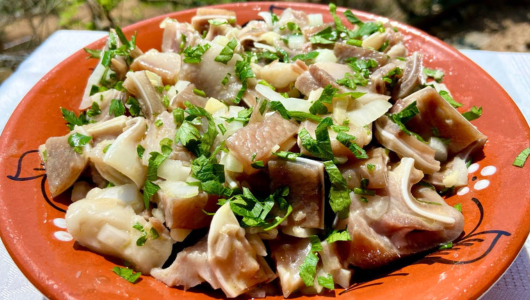
Photo by Cozinhamor on Youtube
Pig’s ear salad (salada de orelha) is one of the cold Portuguese petiscos most likely to test visitors’ idea about what a salad should contain. The ear is thoroughly cleaned and cooked until the skin, fat and cartilage become tender enough to eat while retaining a noticeable bite. Once cooled, it is chopped into small pieces and dressed with onion, garlic, parsley or coriander, olive oil and vinegar, often with black pepper and sometimes peppers, paprika or bay leaf. The result is sharp and aromatic, with a texture that moves between soft, gelatinous and distinctly crunchy depending on which part of the ear you happen to pick up. As you can see once again, the concept of “salad” in Portugal goes far beyond greens and raw vegetables.
The flavor of the pork itself is rather mild, so much of the personality of salada de orelha comes from the contrast between the richness of the ear and the acidity of the dressing. This is a surprisingly fresh salad, always served chilled and best prepared in advance, so that the pieces of chopped meat can absorb the vinaigrette.
Salada de orelha probably came about in rural areas, namely after the annual slaughter (matança do porco) when sacrificing an animal would translate into abundance of meat, fat, blood and offal, all put to good use via grills, stews, cured and smoked meats (enchidos), and even cold dishes such as this.
Although it’s a modest rustic salad, you can still find it in some old-school establishments around Lisbon, namely Fulgor (Rua Dr. Júlio Dantas 2) and A Bica Cervejaria (EN 247, 64). At Zé do Cozido (Rua José Acúrcio das Neves 3), a restaurant specializing in what we consider to be Portugal’s national dish, they also serve it as an appetizer, which you can indulge in before digging into the proper pork feast that is cozido à portuguesa.
Salada de cenoura à algarvia | Algarve-style carrot salad
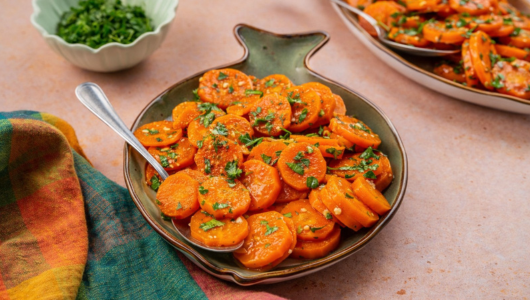
Photo by Continente Feed
Among the cold dishes in this guide, Algarve-style carrot salad (salada de cenoura à algarvia, also commonly called cenouras à algarvia) is one of the simplest. If you are trying to eat vegan in Portugal while still seeking traditional flavors, it’s for sure one of the best dishes you can order as an appetizer or side dish.
To prepare this salad, the carrots are cooked until tender while retaining enough firmness to hold their shape. They are seasoned with garlic, olive oil, vinegar and fresh herbs such as parsley or coriander. Sometimes, a little cumin and paprika are also added, but no matter what you put in the seasoning, it’s important to let the carrots rest in the marinade for a while, so that the sharpness of the flavor cuts through the natural sweetness of the carrots.
In the Algarve, these carrots may arrive at the beginning of a meal with bread, olives and other small starters (as part of what we refer to in Portuguese as couvert), or be served as a petisco, usually with bread to soak up the marinade. Although it can be eaten throughout the year, salada de cenoura à algarvia is more common during the warmer months, and it’s one of those Portuguese dishes you should enjoy by the beach.
If you are in Lisbon’s city center, you can find Algarve-style carrot salad at Algarvian cuisine restaurant Entre (Rua das Escolas Gerais 120), in the neighborhood of Alfama. Ofício (Rua Nova da Trindade 11), one of Lisbon’s best contemporary taverns, also includes it alongside sourdough bread, butter and pork rillette, as part of their couvert. This dish is also the easiest on this list to prepare at home, so if you are far away and craving a little Portuguese taste in your part of the world, we would recommend trying your hand at it.
Escabeche | pickled fish
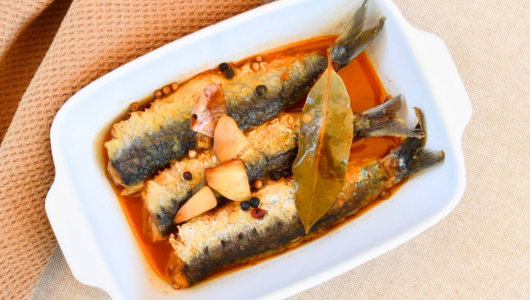
Photo by Newlux
Portuguese escabeche is not a recipe per se, but a cooking and preservation technique. It consists of cooking or frying the main ingredient, covering it with a vinegar-based preparation containing olive oil, onion, garlic, bay leaf and other aromatics, and allowing it to rest so that the acidity penetrates the food. Escabeche is mostly applied to fish, namely sardines, horse mackerel, mackerel and trout, although traditionally this technique has also been applied to shellfish (namely mussels), poultry, rabbit, partridge and other game.
The word escabeche, used both in Portuguese and Spanish, derives from the Arabic iskabāj, which refers to food prepared with meat and vinegar, which in turn evolved from the Persian sikbāj, a sweet-and-sour meat dish cooked with vinegar and ingredients such as honey or date molasses. The technique entered Iberian food culture during the centuries of Muslim rule in al-Andalus, and it’s one of the longest-living examples of Portuguese food inherited from the Moors.
Even though escabeche didn’t enter Portugal more than a millennium ago as a fish recipe, the most familiar Portuguese version today is indeed prepared with fish, more often than not dusted with flour and fried before being coated with the acidic marinade. To prepare a flavorful escabeche, onions and garlic are softened in oil, seasoned with bay leaf, parsley, pepper, paprika or chili, before the vinegar is added and the hot mixture is poured over the fish. Some recipes include white wine, tomato or carrot, while others result in a simpler sauce with a paler color. The fish is supposed to rest in the escabeche, ideally for several hours or overnight, absorbing acidity and softening slightly, while also absorbing the sweetness of the onion and the aroma of the spices. Even though the sauce is prepared hot and the fish could be served warm after cooking, it is much more common to enjoy escabeche chilled or at least at room temperature.
Sardines and horse mackerel are particularly good options of fish for escabeche because their pronounced flavor takes on very well the vinegar, garlic and onion. Mussels in escabeche (mexilhões de escabeche) are also popular for those who prefer shellfish. That being said, you can still find partridge in escabeche (perdiz de escabeche), particularly in the cuisine of the Alentejo, and also it’s not unheard of to apply this technique to other meats such as rabbit.
Portugal shares this tradition with Spain, and Iberian expansion subsequently carried the idea of escabeche into Latin America, the Caribbean and the Philippines, where local vinegars, chillies, vegetables and spices produced distinct interpretations. One of the most fascinating branches of this family developed in Japan, after Portuguese traders and missionaries introduced several food practices during the 16th-century Nanban period. Japanese nanbanzuke adapted the escabeche principle by frying fish and marinating it in a sweetened vinegar mixture, now commonly flavored with soy sauce, dashi, onion, carrot and chilli – it is one of those foods you didn’t know were Portuguese. Horse mackerel is one of the classic choices, and the dish is generally left to absorb the marinade before being served chilled or at room temperature, just like we do it here in Portugal until today.
In Lisbon, sample fish escabeche at Grill D. Fernando (Rua Castilho 11, inside Altis Grand Hotel), where they serve mackerel escabeche on Alentejo-style toasted bread with cider vinegar (escabeche de cavala em torricado alentejano com vinagre de sidra). If you are curious to try Japanese nanbanzuke to compare it with the Portuguese version, you could do so at Hikidashi Taberna Japonesa (Rua Coelho da Rocha 20A) or at Izakaya Lisboa (P. do Tijolo 11). For a meat version, Pabe (Rua Duque de Palmela 27A) serves partridge in escabeche made with sherry vinegar, and Solar dos Nunes (Rua dos Lusíadas 70) serves the same dish, perdiz de escabeche à alentejana, with an Alentejano touch.
Muxama de atum | tuna muxama
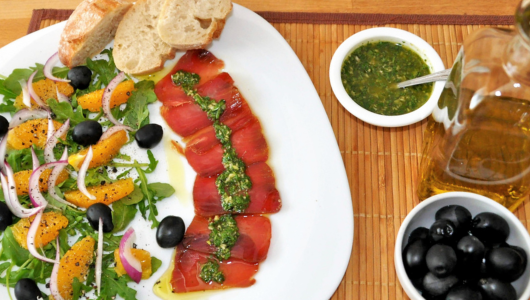
Photo by Algarve für Entdecker
Tuna muxama (muxama de atum) shows how closely the traditional preservation of fish can resemble the curing of meat. This tuna loin cured with salt and slowly dried could be regarded as a cured ham (presunto) from the sea. It features dark red flesh and an intense flavor, best sampled via thin slices. Unlike pork ham, muxama contains no ribbons of fat to soften each slice and it is much leaner and, naturally, more saline than cured meat.
Muxama is particularly associated with the eastern Algarve and the tuna-fishing culture that once supported coastal communities around Tavira, Monte Gordo and Vila Real de Santo António. For centuries, large tuna were intercepted during their seasonal movement through southern Iberian waters using complex fixed-net systems known in Portuguese as armações. Once brought ashore, the fish were divided through a specialized cutting process called ronqueamento, which treated the tuna almost like a large land animal, with each part being valued differently and having a distinct culinary purpose. The lean loins produced muxama, while other sections could become salted tuna known as estupeta.
The practice of preserving tuna with salt and drying it is older than Portugal itself. Phoenician, Greek and Roman communities all salted fish around the western Mediterranean, but the word muxama comes from the Arabic musama, associated with something dried. The technique was widely practiced in the Islamic period and continued after the Christian conquest of the Algarve, making muxama another clear example of the many layers of Mediterranean and North African influence in southern Portuguese cooking. Across the border in Spain, the closely related product is known as mojama and continues to be strongly associated with Andalusia and other parts of southeastern Spain. Italy also has a related tuna product called mosciame.
Traditional production relied on salt, pressure, dry air and the experience of the person overseeing the cure. The tuna loins were buried in salt, pressed under considerable weight, washed to remove the excess and hung or laid out to dry. Contemporary producers generally use controlled drying rooms, where temperature and humidity can be regulated, but the objective is still to remove enough moisture to preserve the fish and concentrate its flavor.
Because muxama’s taste is strong, it should be sliced thinly and eaten at room-temperature, often with a drizzle of olive oil and bread, sometimes served over a bed of greens in the shape of a salad with vinaigrette. Even in the Algarve, muxama is now far less common than grilled tuna or canned fish, partly because the old tuna fisheries declined and the knowledge required to produce it became concentrated among fewer specialists. This scarcity has contributed to turning it into a relatively expensive delicacy, generally eaten in modest quantities, as an aperitif or part of a selection of cured foods, not as the main protein of a meal.
In Lisbon, A Taberna do Mar (Calçada da Graça 20B) prepares its own version as dried tuna cured in olive oil. Via Graça (Rua Damasceno Monteiro 9b) also serves muxama among its cold starters and even includes it in a tasting of hams made from pork, beef, duck and tuna, a presentation that truly showcases it as “sea charcuterie”. For a straightforward version, sample muxama at Vamos ao Algarve (Rua do Terreiro do Trigo 88), where they serve it with tomato, toast, olive oil and goat cheese, as well as in a salad with orange vinaigrette. To purchase muxama to take home, we recommend visiting one of Lisbon’s most traditional grocery stores, such as Pérola do Arsenal (Rua do Arsenal 94), where you can ask for it vacuum-packed and ready to travel.
Carapaus alimados | Algarve-style marinated horse mackerel
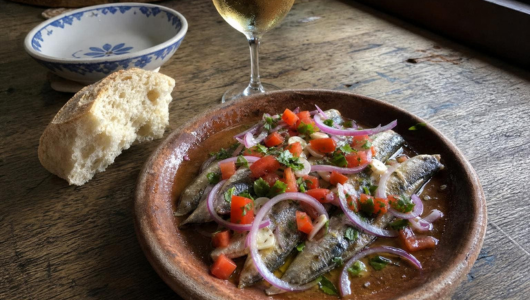
Photo by Menu 5
The preparation of carapaus alimados turns one of Portugal’s most affordable oily fish into a delicate dish that is not very common around Lisbon, but it’s certainly worth seeking out. You may find it mostly in restaurants dedicated to the cuisine of the Algarve, such as Taberna Albricoque (Rua dos Caminhos de Ferro 98), by chef Bertílio Gomes.
This southern delicacy is prepared with small or medium-sized horse mackerel, cleaned, salted and left to rest before being cooked in water. Once cool enough to handle, the fish are carefully stripped of their skin, scales and bones, leaving only the neat fillets that are seasoned with olive oil, vinegar or lemon, sliced garlic and fresh herbs. They are normally eaten cold or at room temperature, when the acidity and garlic have had time to settle into the fish.
The dish is firmly associated with the Algarve coast, where horse mackerel was plentiful and salting fish in brine helped coastal households manage a catch before refrigeration was widely available. Today, we keep eating horse mackerel this way because the Portuguese have developed a taste for it and learnt how to love its texture as well, similarly to what happened with salt-cured cod, as the flesh of the fish becomes firmer, yet still moist and very flavorful. You could think of carapaus alimados as a cooked fish with a light cure, different from escabeche above.
Household recipes vary in how long the fish remains under salt and whether the final acidity comes from vinegar, lemon or a mixture of both. Onion may be layered over the fillets, garlic can be sliced or crushed, and some cooks add oregano for an aromatic touch. If eaten as an appetizer, carapaus alimados are served on their own, but they are also commonly served with boiled potatoes as a main dish.
For a less straightforward rendition of this southern Portuguese specialty while in Lisbon, you can ask for the carapaus alimados with roasted pepper salad, sherry vinegar and olive oil at Cravó (Rua da Misericórdia 95).
For more seasonal tips, lesser-known dishes and places worth eating in Lisbon, follow Taste of Lisboa on Instagram or subscribe to our newsletter.
Feed your curiosity on Portuguese food culture:
How to choose the right food tour in Lisbon for your travel style
How to connect with local culture in Lisbon and Portugal
Know the classics? Try these Portuguese dishes next
Real people, real food. Come with us to where the locals go.
Signup for our natively curated food & cultural experiences.
Follow us for more at Instagram, Twitter e Youtube