How to choose the right food tour in Lisbon for your travel style
Lisbon is not a difficult city in which to find something great to eat. There are pastry shops on almost every corner, humble tascas where locals go to frequently, seafood restaurants with incredibly fresh options displayed by the window, cafés where people sit down to hang out with friends or where they quickly sip on an espresso to carry on with their days, and enough salt cod dishes to make you wonder why the Portuguese chose an imported fish as one of the most relevant ingredients of their national cuisine.
As it happens in many destinations around the world, especially those that have become popular with international travelers, it’s not about what you eat but what the food can eventually tell you about the place you are visiting.
Featured photo by Contemporary Nomad
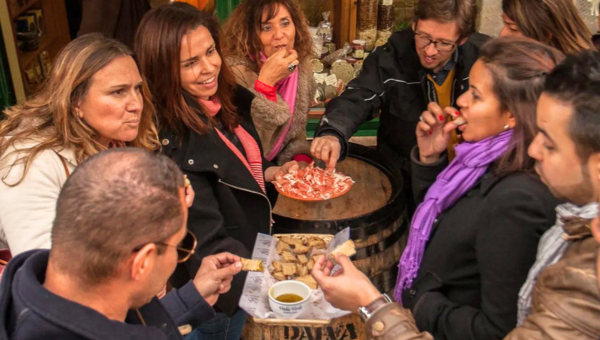
Photo by Taste of Lisboa
Food tours can be a great introduction to a new destination, if you like using food and beverage as mediums to understand a new culture. But there are many different types of tours out there, so choosing the one that matches your travel style and which will work as a good introduction for you to keep exploring on your own after the activity is done matters. A food tour in Lisbon can be a quick “greatest hits” walk through the city’s most famous snacks. It can be a large group tasting route through the busiest parts of town. It can be an evening of wine and petiscos. It can be a market visit, a cooking class, a private experience, or dinner in someone’s home. It can show you Lisbon as a travel destination, or Lisbon as a place where people actually live, work, shop, cook and eat according to local traditions, contemporary influences, and their own individual family’s heritage.
All of the above options are valid when seeking to book a food tour in Lisbon. Ultimately, the best food tour in Lisbon depends on what kind of traveler you are, how curious you feel, how much time you have, and whether you want to simply eat Portuguese food or go deeper into the context of what you are tasting and understand how it relates with the local culture.
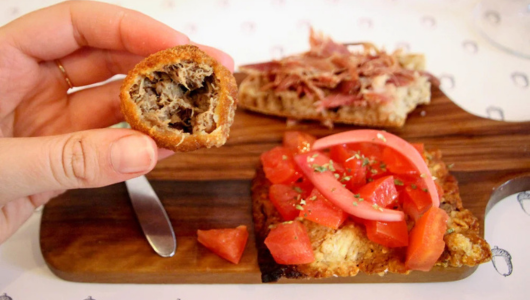
Photo by SF Eats SF
If you are short on time while visiting the Portuguese capital and you won’t have time to eat around it makes sense to look for a tour that gives you a broad first taste of Portuguese staple foods. But if you have more time, or if food is one of the main reasons you travel, you may prefer an experience that goes beyond the obvious dishes and into neighborhoods, markets, local businesses and everyday eating habits.
Beyond the food itself, the route, the guide and the type of businesses included along the way will shape the experience. These details are what separate a simple tasting route from a food tour that helps you understand Lisbon more deeply.
When properly organized and run, a Lisbon food tour should do more than introduce you to what Portuguese people eat. It should help you understand more about the city and the overall Portuguese culture, especially the food culture, but certainly not limited to cuisine. Choosing the right kind of experience can make all the difference during your trip.
What to expect from a food tour in Lisbon
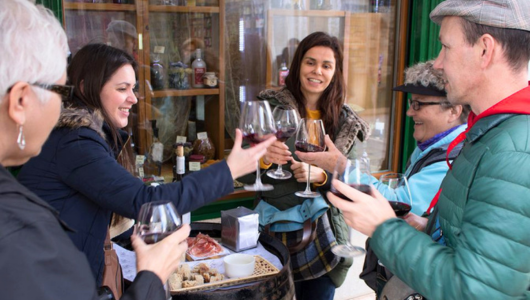
Most food tours in Lisbon combine walking, tasting, storytelling and practical tips. You move through a neighborhood or several nearby areas, stopping along the way to try different foods and drinks. Depending on the tour, those stops may include cafés, pastry shops (pastelarias), markets, traditional grocery stores, wine bars, small restaurants, or family run businesses that have been part of local lives and routines for years.

Photo by Taste of Lisboa
But the format can vary a lot, as some Lisbon food tours are designed as a first introduction to Portuguese food, while others focus more on neighborhoods, markets, ingredients, recipes and the people behind them. Some are more social and may even include some wine to help break the ice among participants, while others are more cultural, using food as a way to talk about history, neighborhoods, art, migrations, daily habits and the way the city has evolved over time.
This is why it is worth looking beyond the number of tastings which may be included, as more food does not automatically mean a better experience. Sometimes a tour with fewer but more meaningful stops can teach you much more than one that includes a greater variety of dishes and drinks, because what really matters is whether the food has a context. If you are simply interested in eating, you’d generally be better off visiting a good restaurant.
A good food tour should also give you confidence for the rest of your trip. You should leave knowing how to order certain things again, what to look for in a local restaurant, how to avoid the most obvious tourist traps, which neighborhoods deserve more of your time, and why some foods matter beyond the fact that they taste good.
What do you eat on a food tour in Lisbon?
The exact food depends on the tour, the season and the operator, but many Lisbon food tours include some combination of the foods visitors most associate with Portugal. You may come across sweet staples like pastel de nata, savory snacks like bifanas or codfish fritters, Portuguese cheeses and cured meats, canned fish, typical soups like caldo verde, regional wines, ginjinha, coffee, Portuguese bread, olive oil, or other local specialties.
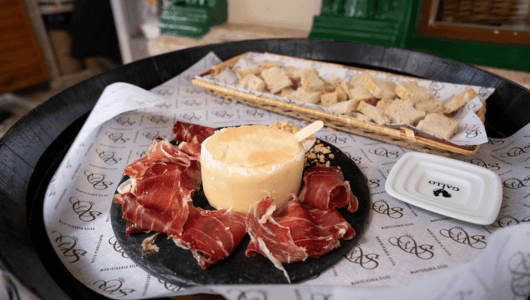
Photo by Andrewrice on TripAdvisor
For first-time visitors, this can be a useful introduction because, if you are not used to Portuguese food, understanding a regular restaurant menu might not always be easy. Some of our foods may also look quite simple at first sight, but carry a complex story behind them – see how alheira was invented, as a good example of that. The point is not to eat as many things as possible, but to understand how the foods you get to sample during a tour are connected with the local way of life. A pastel de nata, for instance, is not just a delicious custard tart, but a conventual sweet that embodies how many of Portugal’s best desserts were invented in religious institutions and how the abundance of sugar, from Portuguese colonies abroad after the 15th century, came to revolutionize our sweet recipes.
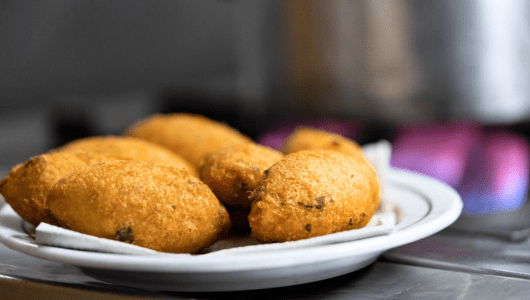
Photo by Taste of Lisboa
Similarly, bacalhau isn’t simply salt cured cod, it’s a symbol of the country’s maritime history and, until today, dare we say it, a national obsession. Also important, petiscos are not just “Portuguese tapas”, no matter how many menus in touristic areas keep on insisting on this comparison simply to make the concept more approachable for those who aren’t used to it. This is a social way of eating and a prime example of slow living and slow eating in Portugal.
The type of tour you choose will be related to what ends up on your plate. So, while a classic introductory tour usually focuses on more recognizable Portuguese foods, a neighborhood food walk may include some of the same classics, but the emphasis is more on where you eat them and who is behind them. A market tour also tends to focus more on ingredients and regional specialties, while an evening food and wine experience will usually focus more on petiscos, and Portuguese wines.
This is why the point of a good food tour should never be to eat as many things as possible, because that is something a good restaurant could already do. A good food tour should help you understand why certain foods matter, when locals eat them, where they come from, who keeps making them, and how they fit into the city around you.
How to choose the right Lisbon food tour for your travel style
There is no universal best food tour in Lisbon. There is the best one for your interests, your pace and the kind of experience you want to have.
A first-time visitor may want a broad introduction to Portuguese food, while a repeat visitor may prefer a market tour, a cooking class, a meal in a local home, or a neighborhood walk away from the obvious tourist routes. Families, travelers with dietary restrictions and people with mobility concerns should also look carefully at the format before booking. The following types of food experiences all exist in Lisbon, but they serve different kinds of curiosity.
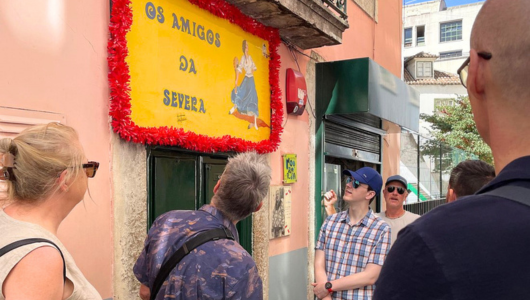
Photo by Jamwg on TripAdvisor
Classic Lisbon food tours for first-time visitors
A classic Lisbon food tour is a good option for travelers who want a general introduction to Portuguese food, especially if they are visiting the city for the first time or only staying for a short period. These tours usually focus on well-known foods and drinks visitors most strongly associate with Portugal, giving them a basic vocabulary of pastry shops, salt cod, tavern snacks, regional wines and simple dishes they may want to order again later.
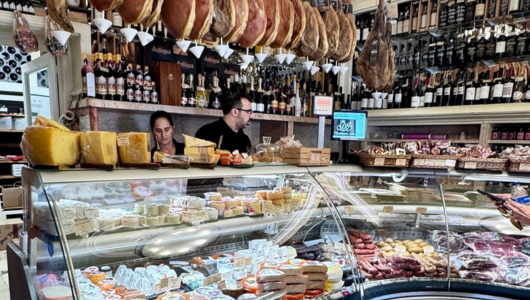
Photo by Nova_Scotia_Tourista on TripAdvisor
This type of experience can be useful because it gives visitors context for the rest of their trip, but the quality of these tours varies a lot depending on the company you hire and the actual tour guide which will lead your experience. But, generally speaking, they should give you a little context about history, local habits, regional differences and Lisbon’s food culture. After you know about how the Portuguese tend to eat a little better, you should gain more confidence to choose local restaurants on your own, recognize typical dishes on menus, and understand why certain foods have become “must try” items.
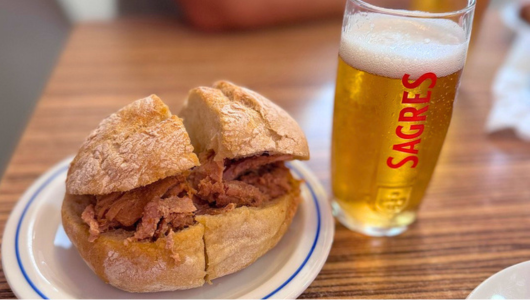
Photo by Daniel S on TripAdvisor
It is worth checking the scale of the tour before booking, as some of these introductory food tours operate in very central areas and may include larger groups. This can work if you want something simple, social and convenient. But if you prefer more conversation with the guide and more contact with local businesses, we would recommend looking for a smaller group format.
Non-touristy small-group food tours in Lisbon
If you are more interested in local neighborhoods than in the most obvious tourist routes, a small-group food and cultural walk may be a better fit. This kind of tour is usually less about covering the famous highlights and more about understanding Lisbon through its food businesses, markets, tascas, cafés, pastelarias and everyday habits.
In the past decade or so, Lisbon’s historic center has changed a lot with tourism and the changes keep happening every year. Some streets still have plenty of local life, but there are others that have increasingly changed to cater to visitors in a way that starts stirring away from authenticity. If you take a food tour that only stays in the busiest areas you may still have fun, but the truth is that it may not end up revealing all that much about how people in Lisbon actually eat, shop or socialize.
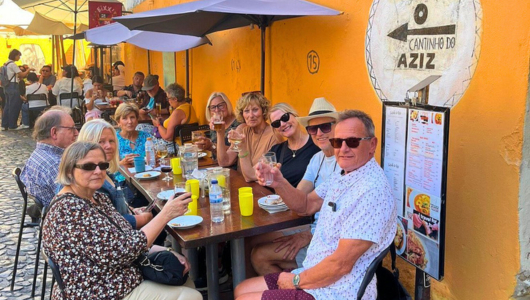
Photo by Taste of Lisboa
A neighborhood-focused tour should feel more contextual. In this kind of set-up, when you stop at places where food is served, each place should ideally contribute to explain the area, the people who run those businesses, the type of clients they serve, and how the neighborhood has historically been and has changed until today. A good guide should also talk about traditions, food habits and family businesses, not only because of the food they serve but the role they play in society. Other topics such as art, architecture, migration and gentrification can also be covered, as to give a realistic and broad idea of what life in the area is actually like.
Joining a small group food and cultural tour can make a real difference. This type of experience allows for more direct conversation with the host, with more time to develop actual conversation rather than just following a guide who says a script as participants listen and end up having little time or opportunity to ask questions and allow the conversation to flow. If there are fewer people, this also means a better chance to connect with your fellow travelers, even if you have never met before, and thus get to exchange experiences, talk about the food and drinks you are trying and comment on what you are learning along the way.
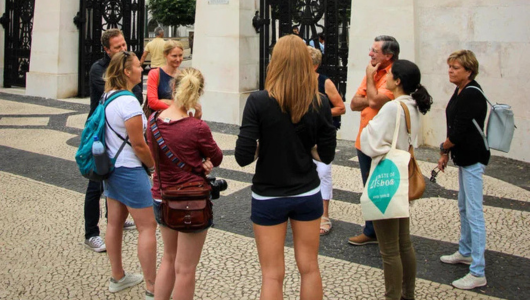
Photo by SF Eats SF
Smaller tours also tend to be more responsible from a social and economic point of view. When you are with a smaller group of people you are more likely to be able to enter a small café or shop in a way that still feels manageable, whether a larger group would immediately change the atmosphere of the place, in a way that would often deter regulars from visiting it, at least during peak times. Joining a small experience you will generally be more confident that the money spent during the tour circulates more directly in the local economy, while also giving visibility to places that help preserve Lisbon’s identity, instead of concentrating visitors in the busiest tourist areas.
This does not mean that every small tour is automatically good, or that every central tour is bad. The important thing is to look at how the operator describes the route before you confirm your reservation. A strong food and cultural walk should explain why those places were chosen and how they connect with the neighborhood, rather than simply promising a generic list of “authentic tastings”.
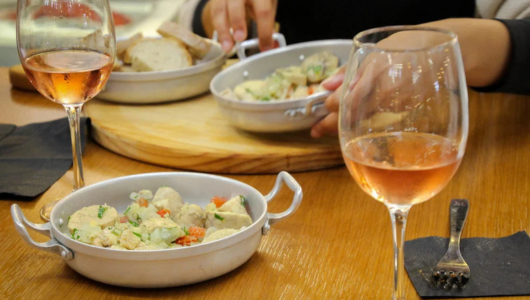
Photo by SF Eats SF
Another advantage of small-group tours is that they may also be easier to adapt when possible, including for dietary restrictions. This is not guaranteed, because traditional Portuguese food traditionally involves fish, meat, eggs and dairy. But, with a request in advance, for example at Taste of Lisboa, we would be able to adapt our food tours to cater to all sorts of diets except for fully plant-based. The point is to always replace the default food and drink options for others that are not only suitable according to your dietary needs, but to give alternatives that are still representative of Portuguese food and meaningful in terms of storytelling.
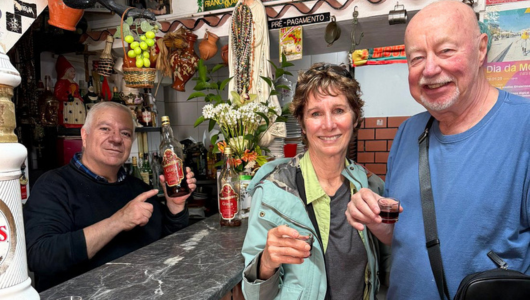
Photo by Sheila on TripAdvisor
Many small-group food tours can also be booked privately. This can be a good option for families, groups of friends, corporate groups, or travelers celebrating a birthday or other occasions. A shared group can be fun, especially for solo travelers or sociable visitors, but a private format can offer more flexibility in terms of pace, practical needs and even focus, in case you’d like to explore one particular aspect of local culture even further.
This is the kind of experience that reflects Taste of Lisboa’s way of exploring the city. Our food and cultural walks are designed around local neighborhoods, independent businesses and the people who keep Lisbon’s food culture alive. The goal will never be to treat food as a list of things to try, but instead to make the most of these walks as a way to understand local routines, family businesses and the neighborhoods that give Lisbon its character.
Lisbon market tours for food lovers
Market tours are a good option for travelers who want to understand Portuguese food starting with the ingredients. Instead of focusing only on finished dishes, these experiences look at where people shop, what ingredients are most typical in the Portuguese pantry, and how you can start to understand the life of a certain neighborhood through market stalls, counters, regular customers and food habits .
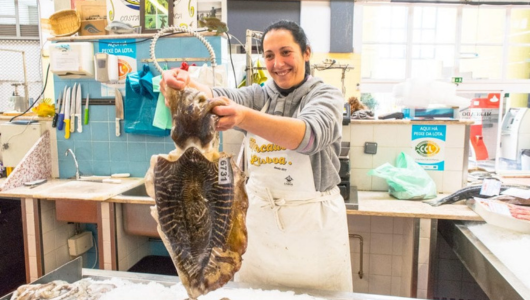
Photo by Our Escape Clause
Visiting a food market in Lisbon today, you will very likely come across more traditional vendors who focus on things like fish, vegetables, fruit, bread, cheese, cured meats, spices and regional products, alongside newer restaurants, cafés and specialty food concepts. A lot of the city’s old markets have been renovated in recent years and adapted to contemporary eating habits, selling ingredients, ready-made foods and often including food courts where to taste a variety of local and international foods. Time Out Market in Cais do Sodré is the most popular amongst all of these contemporary markets in Lisbon, but that doesn’t mean it is necessarily the best in terms of being representative of Portuguese eating habits.
If you are interested in cooking, food history or everyday eating habits rather than only restaurant culture, a market tour can be a good idea for further depth. It can also be a good choice if you have already done a more general food tour in Lisbon and want to explore a less obvious side of the city. A market-focused tour can be just as cultural as a historic walking tour, depending on the quality of the host and the way the neighborhood is presented.
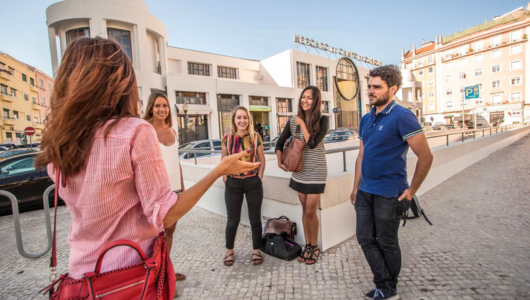
Photo by Taste of Lisboa
Campo de Ourique is a good example of a neighborhood where a market tour can work well for food-loving travelers who want to dig deeper. This is a residential and multigenerational area, with neighborhood pastelarias, restaurants, shops and a market that reflects both traditional habits and newer food trends.
Taste of Lisboa’s Lisbon Market Food and Cultural Walk was created around this kind of experience. It is particularly suited to travelers who want to connect food with ingredients, shopping habits and neighborhood life. Because the route is flatter than many older parts of Lisbon, it may also be a more comfortable option for travelers who want a food-focused experience without dealing with some of the city’s steeper streets.
Evening food and wine experiences in Lisbon
Lisbon also has evening experiences focused on food and wine, but it’s important to stress that these are different from pub crawls. These tours usually focus on Portuguese wines, petiscos, casual restaurants, taverns or wine bars, and the social side of eating and drinking after the day’s sightseeing is done.
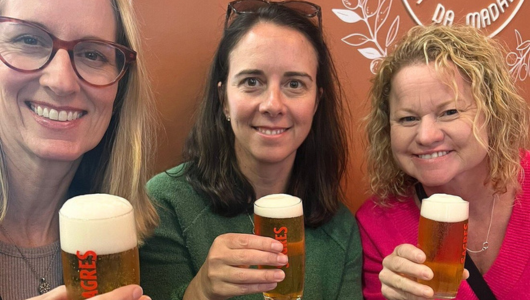
Photo by Kate H on TripAdvisor
This type of experience can be a good fit for solo travelers, couples, groups of friends, or visitors who want a relaxed evening activity with food, wine and conversation. The tone is usually more social than educational, although a good guide should still explain what is being served and how it connects to Portuguese food culture.
Evening food tours often focus on petiscos rather than main dishes. Often described as Portuguese tapas, a comparison often used to make the concept easier for visitors to understand, these are small servings of typical Portuguese foods meant to share. They are often enjoyed socially, with friends around the table, most usually with drinks, plenty of conversation and laughter. In general, petiscos are a great way to be able to try a little bit of everything but, in the context of a food tour, you should already trust the company you booked through to take care of portioning things in a way which will allow you to sample a good and representative variety of local bites.
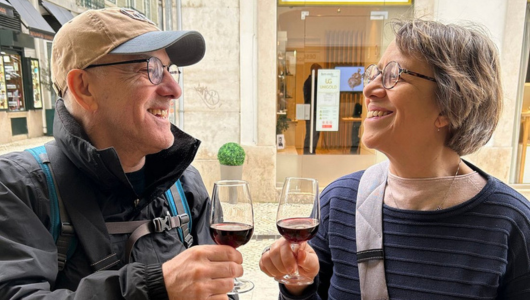
Photo by Marcelle R on TripAdvisor
While these experiences may be lighter on historical context than a daytime food and cultural walk, that may not necessarily be a problem. If your goal is simply to understand how people eat and drink together in a more informal setting, this type of tour may be right for you. However, if you do want a deeper introduction to neighborhoods, markets, family businesses and local history, you may prefer a daytime or early evening cultural food tour.
Portuguese cooking classes in Lisbon
Cooking classes in Lisbon are a good choice for travelers who want a hands-on experience rather than a walking tasting route. They are usually more practical and focused on how Portuguese flavors are built, not only on how they taste when served.
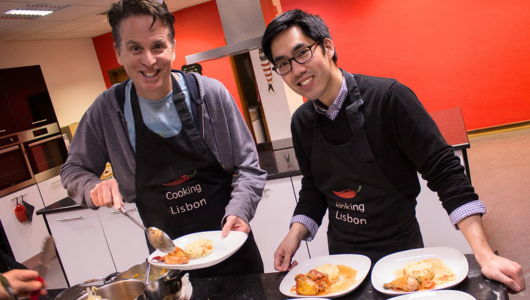
Photo by Contemporary Nomad
In Lisbon, cooking classes tend to fall into a few main categories. Some focus on typical Portuguese dishes, often including recipes such as caldo verde soup, bacalhau recipes, seafood rice and other traditional Portuguese rice dishes, cataplana, fish dishes, meat stews, or seasonal petiscos. Others focus on sweets, especially pastel de nata, which has become one of the most popular cooking class themes in the city. There are also other dessert classes that may cover simpler recipes of convent sweets, even though these egg-based desserts usually require more time and technique, so pastel de nata ends up being an enjoyable option for most visitors, whether they have previous baking experience or not.
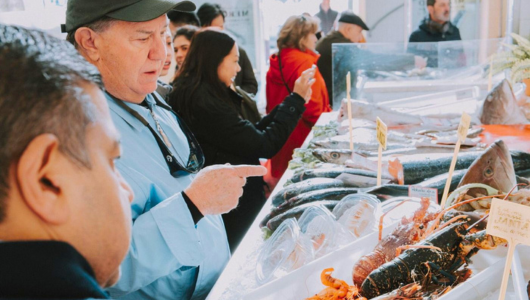
Photo by Taste of Lisboa
A cooking class gives access to a different layer of food culture, focusing on home-style cooking and how people eat at home. Some classes start with a visit to the market to buy ingredients, which can help you understand how to choose fresh seafood, what vegetables are used in certain soups, or which products are most common in a Portuguese kitchen. If you want to gain a practical skill you can repeat at home, a cooking class is one of the most useful edible souvenirs you can take from Lisbon.
Food experiences in local homes in Lisbon
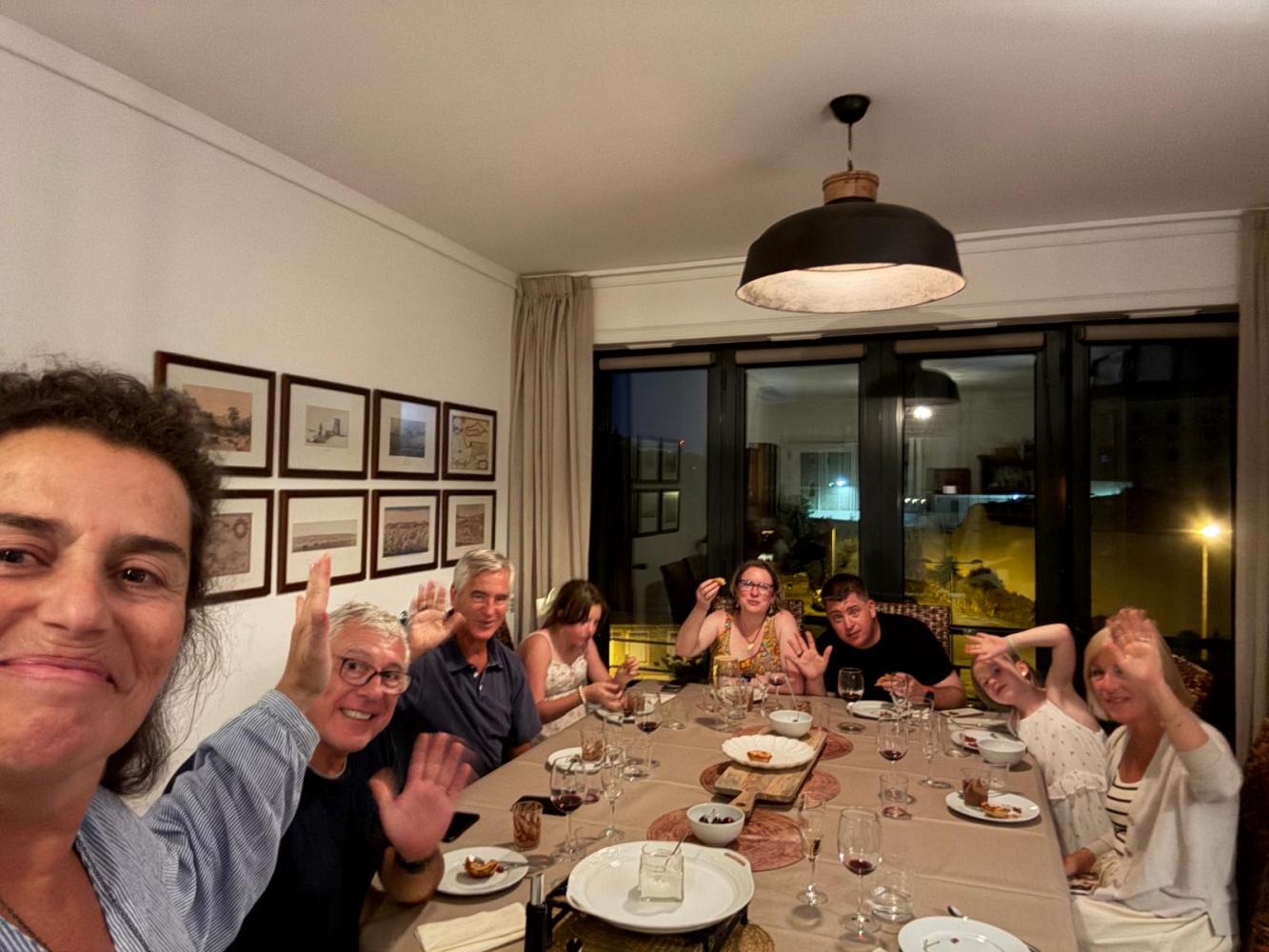
Photo by Mirjam J on TripAdvisor
If you are curious about Portuguese hospitality in a domestic setting, a meal in a local home offers something different from both a food tour and a restaurant. This type of experience is ideal for travelers interested in home cooking, family recipes and everyday food culture. In Portugal, many dishes are still strongly associated with the home table, and some recipes are rarely found in restaurants.
A local home dinner can be especially interesting for repeat visitors looking to deepen their understanding of Portuguese food and culture. You will not usually try as many different foods as you would on a walking tour, but that is not the point. The value is in the setting, the hosts, the conversation and the chance to understand how Portuguese food works outside a restaurant environment.
If you have any dietary restrictions, these should be discussed before booking. Of course adaptations may be easier when doing a private booking, but this depends on the host and the menu.
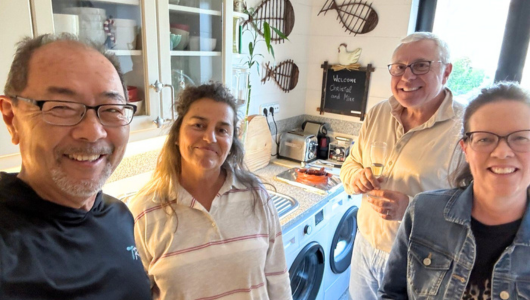
Photo by Michaely704 on TripAdvisor
At Taste of Lisboa, our Dinner at a Portuguese Local Home invites you to an informal meal in a private home, hosted by a local family, with homemade Portuguese food, drinks and relaxed conversation. The goal is to share the table in a way most visitors would not normally access on their own, offering a side of Portuguese hospitality that is difficult to experience through restaurants alone.
Family-friendly and accessible food tours in Lisbon
Families should choose food tours not only based on the food, but also based on route and flow. You may find a tour with excellent food, but if it is too long, physically demanding, too late in the day, or too dependent on standing tastings, it may not be the best choice for everyone in your group.
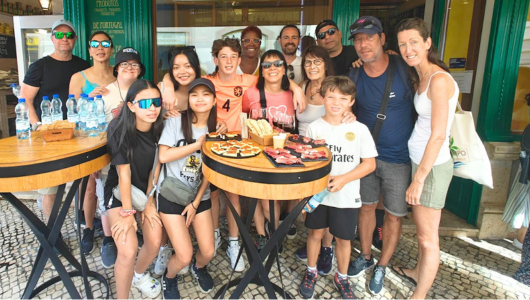
Photo by Taste of Lisboa
If you are traveling with children, look at the duration, number of stops, walking distance, food variety and whether there are opportunities to sit down. Children may enjoy tasting new things, but they may not always follow long explanations before every bite. A shorter route, a market-based experience, a private tour or a cooking class may work better for some families.
If you are traveling with older relatives or a multigenerational group, comfort becomes even more important. Private tours can be helpful because they allow the pace to be adjusted where possible. They can also make sense for family celebrations or groups of friends who want a more personal experience.
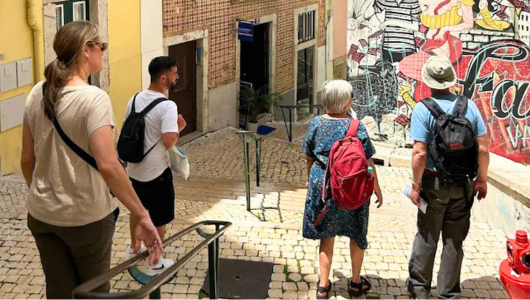
Photo by Nancy Stitt on Google
Accessibility is a separate issue and deserves careful attention in Lisbon, a city that can be very difficult for people with reduced mobility. Hills, cobblestones, stairs, narrow pavements and old buildings can make some food tours unsuitable, and even a short distance may be challenging depending on the area.
Some operators specialize in accessible tours in Lisbon, and these may include food stops even when they are not food tours in the strictest sense. For travelers who need step-free routes, wheelchair accessibility, adapted transport or carefully planned restaurant access, this type of specialist operator may be the best choice. If accessibility is a concern, contact the operator directly before booking and ask about hills, stairs, pavements, toilets, seating, transport and restaurant access. In Lisbon, vague descriptions like “easy walk” or “short distance” may not be enough.
Food tours in Lisbon for repeat visitors
Repeat visitors should choose differently from first-time visitors. The same applies to travelers who have already done a food tour in Lisbon or elsewhere in the country and want something more specific.
If you already know the main sights and have tasted the most obvious Portuguese classics, another generic introduction may not add much. But that does not mean a food tour has nothing left to offer. It simply means you should look for an experience that goes deeper or takes you somewhere you probably would not have chosen on your own.
This could mean a market tour in a residential neighborhood, a cooking class, a dinner in a local home, a private route with a specific theme, or a food and cultural walk through an area outside the usual tourist circuit.
Portuguese people can enjoy a good food tour, and you do not need to be foreign to learn something new about foods you have eaten your whole life. Sometimes the most familiar dishes are the ones we question the least. A good guide can make you look differently at soup, bread, cod, pastries, tascas, markets and daily rituals that may seem ordinary until someone explains how much history is hiding in plain sight. For repeat visitors as well as for locals, a food tour should not be about collecting famous foods, but be about noticing more.
What makes a food tour in Lisbon feel genuinely local?
When it comes to food walks, authenticity starts with the places which the host will take you to. A genuinely local food tour should introduce you to establishments that have a real relationship with the city around them. That does not mean every stop must be old or rustic, but the places should have some connection to daily habits, neighborhood routines, family histories, local ingredients, Portuguese food culture, or contemporary Lisbon in a way that feels solid.
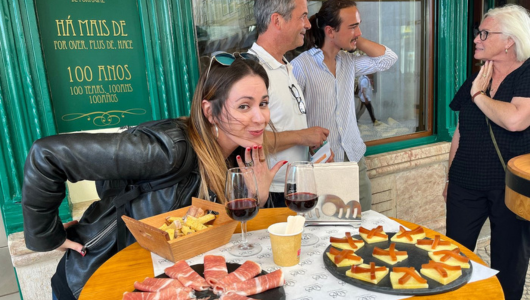
Photo by Getaway424028 on TripAdvisor
It also depends a lot on the guide, as a good one will not only explain what it is on your plate but will help you understand the context behind a given recipe and the place where it comes from.
A local feeling also comes from scale and, in this regard, nothing beats small-group experiences. With fewer people you can visit small spaces and the group is less likely to overwhelm local businesses. At the end of the day, you do want to visit a local establishment but, ideally, you would want to do so while other folks from the neighborhoods are still sitting on the tables around you. This is how you start to connect with local life in Lisbon. With fewer people in the group, there will also be more time to ask questions and, chances are, the conversation will flow more naturally. The more you learn during the walk, the more equipped you’ll be to explore independently during the rest of your stay in Portugal. A genuinely local food tour is not one that makes you dependent on the guide, but one that teaches you how to keep exploring without them.
How to choose the best food tour in Lisbon for you
A smaller group usually allows for better conversation with the guide, easier movement through local establishments, and a less intrusive presence in cafés, markets, tascas and family-run restaurants. The neighborhood also matters, even though a central route can still be interesting, especially for first-time visitors, but it should offer more than the obvious. The most rewarding tours tend to connect what you taste with the places where you taste it, explaining not only the dish, but the local habits, histories and people around it.
The way an operator presents food can tell you a lot and a good tour should not only list dishes, but explain why they matter. Portuguese food is full of everyday things such as soup, bread, cod, pastries, wine, canned fish, market produce, coffee and petiscos, and they can certainly become much more interesting with proper context.
Practical details are just as important. If you are traveling with children, older relatives or people with reduced mobility, choose the route according to comfort, not only appetite, as Lisbon’s hills, and cobblestones can make even short distances feel demanding. If you have allergies or dietary restrictions, contact the operator before booking and check what can realistically be adapted. Smaller or private experiences often allow more flexibility, while standardized tours may have less room for changes.
It is also worth paying attention to local impact. Food tourism affects real places, so tours that work with independent businesses, local guides and smaller groups usually offer a different experience from those built mainly around volume and convenience. They are more likely to support the people and establishments that keep Lisbon’s food culture alive so that you can come visit us again in a few years and still have access to the places us locals also love.
The best food tours do more than feed you. They show you how Portuguese food culture is an ever evolving living culture shaped by family habits, neighborhoods, people, old businesses and new ideas alike. To experience all of this firsthand here in Lisbon, we look forward to hosting you for one of Taste of Lisboa’s food and cultural tours.
To keep learning about Portuguese culture and opening your appetite before you get to travel to Portugal, subscribe to our newsletter to receive more stories like this.
Feed your curiosity on Portuguese food culture:
How to connect with local culture and people in Lisbon and Portugal
How to spot an authentic Portuguese restaurant in Lisbon (and avoid the tourist traps)
Local guide to the best viewpoints in Lisbon
Real people, real food. Come with us to where the locals go.
Signup for our natively curated food & cultural experiences.
Follow us for more at Instagram, Twitter e Youtube