
Bairro Alto or Cais do Sodré? Where to eat authentic food in two most lively Lisbon neighborhoods
Bairro Alto and Cais do Sodré are two of central Lisbon’s liveliest areas. They are close enough to explore during the same afternoon or evening, although each also justifies a separate visit. Bairro Alto sits uphill in a compact network of narrow streets filled with old restaurants, cafés, bars, small shops and fado houses. This article also covers neighboring Santa Catarina, a quieter, more residential area known for its local cafés, small restaurants and one of Lisbon’s most popular viewpoints. Further downhill, Cais do Sodré is shaped by the river, its transport connections and Mercado da Ribeira. Between the waterfront and the upper parts of the city, Bica combines steep streets, older buildings, cafés, bars and a distinct neighborhood identity.
Featured photo by Pap’Açorda on Facebook
The four areas are closely connected, and visitors often move between them as part of the same route. It is easy to start in Santa Catarina, cross Bairro Alto, walk down through Bica and finish by the river in Cais do Sodré, or vice versa. Their proximity makes them easy to explore together, but their atmospheres change from one place to the next and, even more noticeably, from day to night.
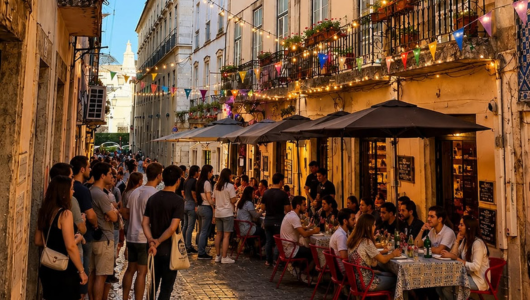
Photo by Taberna do Bairro Alto on Instagram
Bairro Alto is best known for nightlife, although its daytime character is quite different. In the morning and around lunchtime, the streets are quieter and it is easier to notice the cafés, traditional restaurants, shops and other businesses that operate there throughout the day. Santa Catarina is more residential and has plenty of tourist accommodations, local pastelarias, lunch spots and terraces that are particularly pleasant before the area around the viewpoint becomes busier toward sunset.
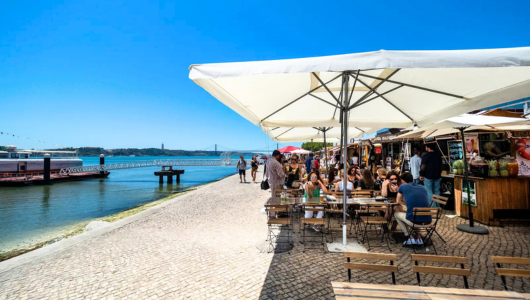
Photo by Bubbly & Living
Bica and Cais do Sodré have a different daytime atmosphere. Bica remains partly residential, while also serving as one of the main pedestrian routes between the upper city and the river. Cais do Sodré is one of Lisbon’s major transport hubs, and it’s also popular because of the market, with a big mix of working people, commuters, visitors and, generally speaking, all sorts of people moving between downtown and the waterfront. At night, Bica becomes part of the route between Bairro Alto and the river, while Cais do Sodré becomes increasingly busy in and around Rua Nova do Carvalho, aka Pink Street.
These changes affect where and when it makes sense to eat. Some places are better suited to a Portuguese-style breakfast or simply a coffee and a pastel de nata. Others are best for lunchtime, for a dish of the day (prato do dia) and a glass of house wine (vinho da casa). In the evening, the options may also include petiscos for sharing, a fado dinner, wine bars, and even a few options of late-night food. International restaurants and newer food concepts are also part of the area, particularly around Cais do Sodré, but this guide focuses on Portuguese food and on the places that still have a clear connection to Lisbon. That connection is not always easy to identify and, while both areas have many restaurants advertising “traditional food”, appearance alone does not guarantee a meaningful local meal. This guide looks at how Portuguese food fits into the different ambiances of Bairro Alto, Santa Catarina, Bica and Cais do Sodré, from breakfast and lunch to dinner.
Bairro Alto, Santa Catarina, Bica and Cais do Sodré at a glance
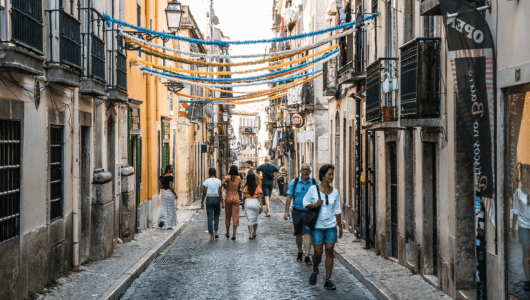
Photo by Viaggia Scrittori
Explore Bairro Alto and Santa Catarina
– Go for: narrow streets, traditional restaurants, cafés, fado houses, small shops and one of Lisbon’s busiest nightlife areas. During the day, the area is calmer and good for walking, coffee and lunch. In the evening, Bairro Alto fills with diners, people heading to bars and groups gathering in the streets, while Santa Catarina becomes particularly busy around sunset.
– Walk through: Rua da Atalaia, Rua do Diário de Notícias, Rua da Rosa, Rua do Norte and Travessa da Queimada in Bairro Alto. Continue toward Largo Trindade Coelho and São Pedro de Alcântara, or walk south into Santa Catarina through Rua do Loreto, Calçada do Combro and the streets around the viewpoint.
– Visit: the Church and Museum of São Roque for Portuguese religious art and architecture, the São Pedro de Alcântara viewpoint for views over downtown Lisbon and the castle hill, and the Santa Catarina viewpoint for the Tagus River, the port and the 25 de Abril Bridge. These areas also provide easy access to Chiado, Príncipe Real and Bica.
– Food experience: coffee and a custard tart in the morning, a dish of the day at lunch, or a longer dinner before the nightlife begins. Look for traditional restaurants, tascas, fado dinners, grilled fish and meat, salt cod dishes (bacalhau), small plates, Portuguese wine and classic desserts from Portugal. International restaurants and modern dining concepts are also common, but the most convincing Portuguese meals are often found in long-standing establishments with short, focused menus.
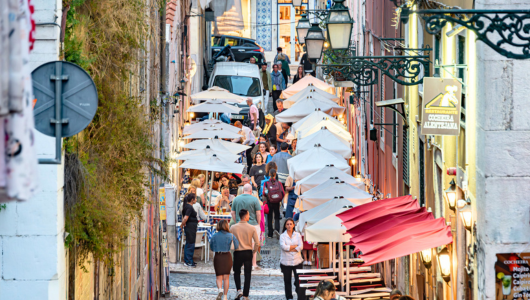
Photo by Jorge Franganillo on Flickr
Explore Bica and Cais do Sodré
– Go for: steep residential streets, the Bica funicular route, traditional cafés, Mercado da Ribeira, river views, seafood, bars and late-night activity. Bica is generally quieter during the day, while Cais do Sodré stays busy with commuters, market customers and visitors. Both become more crowded in the evening.
– Walk through: Rua da Bica de Duarte Belo, Travessa do Cabral and the streets leading down to Rua de São Paulo. Continue through Praça de São Paulo, Rua Nova do Carvalho and Praça do Duque da Terceira before reaching the river. From there, Ribeira das Naus provides an easy and pleasant walk toward Praça do Comércio.
– Visit: Mercado da Ribeira and Time Out Market, the Bica funicular route, Praça de São Paulo and the waterfront around Cais do Sodré. The ferry terminal also provides connections across the Tagus to Cacilhas and Almada, while the train station links central Lisbon with Belém, Estoril and Cascais.
– Food experience: coffee and Portuguese pastries in Bica, a traditional lunch around São Paulo, Portuguese food inside Mercado da Ribeira, seafood near Cais do Sodré, or dinner and late-night food before or after going out. Time Out Market brings together many well-known Lisbon restaurants and chefs, but it’s best to be selective once inside. We recommend looking for Portuguese dishes or well-known Portuguese chefs serving recipes with a clear local identity.
Bairro Alto and Santa Catarina: old restaurants, local cafés and nightlife
Bairro Alto was developed from the 16th century onward as one of Lisbon’s early planned urban expansions. Its compact grid defines the area today, with narrow streets and small buildings. Over the centuries, the neighborhood became associated with crafts, newspapers, writers, artists, fado and nightlife. Several street names still refer to the newspapers and trades that once operated here.
The neighborhood changes considerably throughout the day. In the morning, bars are closed and the streets are relatively quiet. This is when residents go about their routines, shops receive deliveries and cafés and pastelarias serve breakfast. Around lunchtime, traditional restaurants open for local workers, regular customers and visitors looking for a dish of the day. The quieter streets also make it easier to notice older businesses that are less visible once the evening crowds arrive.
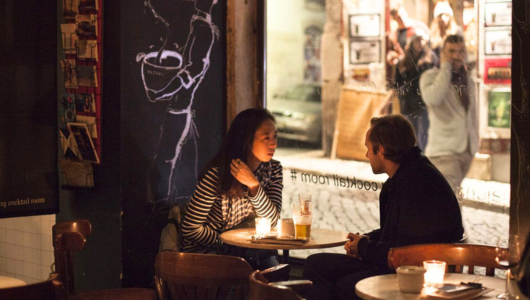
Photo by On The Grid
At night, restaurants, some fado houses and plenty of bars take over much of Bairro Alto. Some people come specifically for dinner or a performance, while others eat here before moving between bars or continuing downhill toward Bica and Cais do Sodré. The busiest streets can become crowded, particularly later in the evening and on weekends. For a calmer meal, it usually makes sense to arrive early or choose streets away from the main concentration of bars.
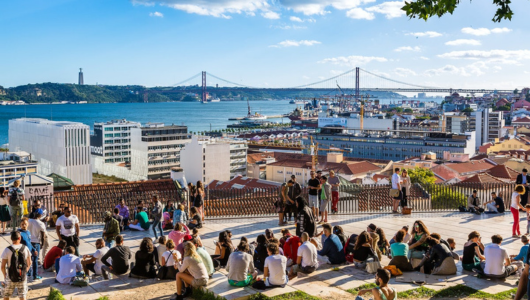
Photo by Home Lisbon Hostel
Santa Catarina has a more residential vibe, although it sits immediately beside Bairro Alto and shares some of its evening activity. During the day, people come to the area for coffee, breakfast, lunch or a walk through the streets between Calçada do Combro and the viewpoint. Toward sunset, the Miradouro de Santa Catarina, commonly known as Adamastor, attracts people for the river view, drinks and informal gatherings, often with live music played by street performers. The streets around it also become busier, but the crowds tend to be more dispersed than in central Bairro Alto.
Food in both areas reflects the mix of daily life, tourism and nightlife, with traditional Portuguese restaurants, cafés and pastry shops operating alongside international restaurants, brunch cafés, wine bars and newer dining concepts. The result is a broad range of food options that changes throughout the day, from breakfast at a neighborhood counter and affordable lunch menus to grilled fish or meat, salt cod dishes, small plates (petiscos), traditional desserts and dinner accompanied by fado.
Where to eat in Bairro Alto and Santa Catarina
In Bairro Alto and Santa Catarina, the time of day helps narrow down the options. Mornings are better for cafés and pastry shops (pastelarias), lunchtime is all about traditional restaurants and daily menus, and the evening is when longer dinners, fado houses and wine bars shine.
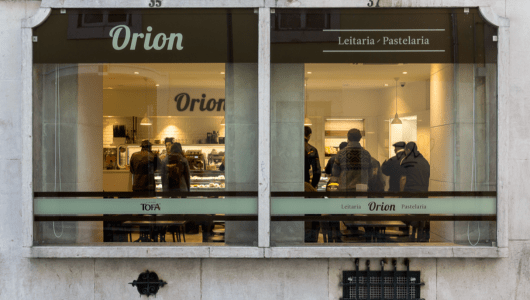
Photo by Projetobra
For a typical Portuguese breakfast or a quick coffee, Pastelaria Orion (Calçada do Combro 1), open since 1945, is one of the most iconic sweet shops in the area. This is a traditional pastelaria rather than a specialty coffee shop, so keep the order simple with things like espresso (bica), coffee with milk (galão), buttered toast (torrada), a pastry or one of the typical Portuguese savories at the counter.
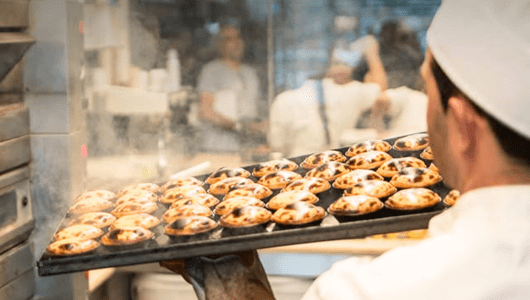
Photo by Manteigaria on Facebook
For a popular version of the custard tart, Manteigaria (Rua do Loreto 2) is one of the best places in central Lisbon to try a freshly baked pastel de nata. The shop specializes in this pastry, with new batches coming out throughout the day. We wouldn’t recommend it for a full breakfast, but it’s an excellent place for a warm custard tart with an espresso, which tastes great any time of day. Its long opening hours also mean you can visit in the morning, during an afternoon walk or even later in the evening.
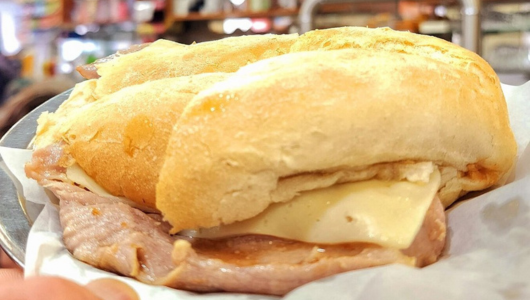
Photo by Donny Pusawong on Tripadvisor
At Praça Luís de Camões, on the edge of Bairro Alto, O Trevo (Praça Luís de Camões 48) is one of central Lisbon’s best-known places for a Portuguese pork sandwich (bifana). The small snack-bar became internationally famous after Anthony Bourdain ate here, but it was already well-known among locals long before that. Most customers order a bifana or beef steak sandwich (prego) at the counter, although the menu also includes soup and inexpensive dishes of the day. Come for a snack, a quick lunch or something substantial before heading into Bairro Alto for drinks.
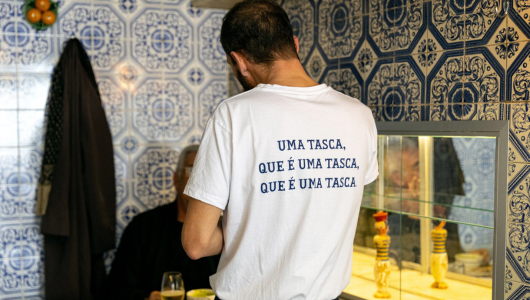
Photo by Time Out Lisboa
Further along Calçada do Combro, As Zebras do Combro (Calçada do Combro 51) is a great choice for lunch or an early dinner. The restaurant serves Portuguese and regional food in an authentic neighborhood tasca setting, despite being on a busy route between Bairro Alto, Santa Catarina and Bica. This is the kind of place to consider for soup, fish, seafood, salt cod fritters (pastéis de bacalhau) or a traditional main course before the area becomes busier later in the day.
Príncipe do Calhariz (Calçada do Combro 28-30) is another excellent choice for a traditional Portuguese lunch in the same part of town. Its menu covers the kind of Portuguese comfort dishes that you may crave when you want a complete meal rather than petiscos, including grilled fish, steaks, salt cod dishes and standard Portuguese sides.
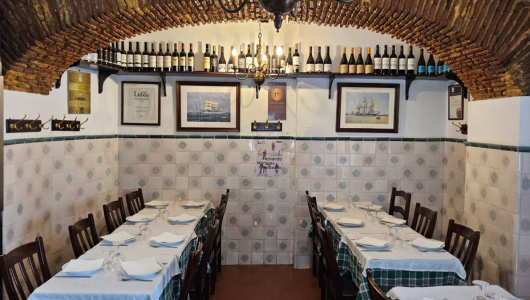
Photo by Comércio com História
Inside Bairro Alto, Antigo 1º de Maio (Rua da Atalaia 8) is one of the neighborhood’s strongest references for an old-school Portuguese meal. The restaurant dates back to the early 20th century and is recognized by Lisbon’s Shops with History program. Lunch is a particularly good time to go, when the surrounding streets are quieter and the restaurant feels more connected to the neighborhood’s daily life than to its nightlife.
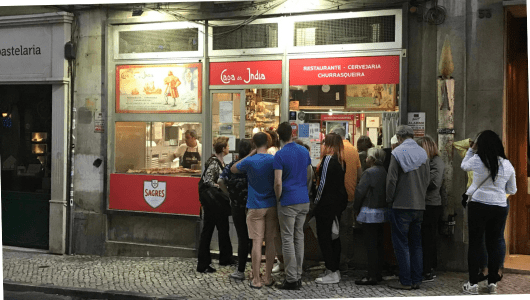
Photo by Lisbon City Break
On the edge of Bairro Alto, Casa da Índia (Rua do Loreto 49-51) is open from lunchtime until late in the evening. Despite the name, this is a Portuguese restaurant known for simple grilled food, including fish, chicken and other meat dishes, served in a busy and informal room. As it serves food until 1AM, it is a particularly good choice for travelers who may want to eat later than the usual Portuguese mealtimes.
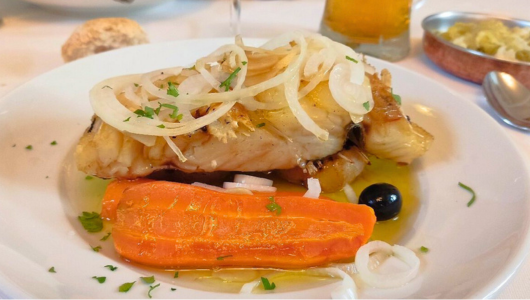
Photo by Antonio A on Tripadvisor
Alfaia (Travessa da Queimada 18-24) is a good choice for a more substantial sit-down meal, as its menu focuses on regional Portuguese cooking, with dishes such as Maronesa veal, octopus with olive oil and potatoes (polvo à lagareiro), and salt cod fritters with bean rice (pataniscas com arroz de feijão). It also serves shredded salt cod with eggs and potatoes (bacalhau à Brás) and, although it was not invented at Alfaia, the dish originated in Bairro Alto. Portuguese wine is an important part of the experience, so the adjoining wine bar might be a better choice when you prefer petiscos and a few glasses rather than a full meal.
Sinal Vermelho (Rua das Gáveas 89) is another established Bairro Alto restaurant for a full Portuguese meal, particularly in the evening. Its broad menu includes seafood bread stew (açorda de marisco), monkfish rice (arroz de tamboril), salt cod prepared in several traditional ways, octopus rice (arroz de polvo), duck rice (arroz de pato) and roasted meats. Portions are generous and the dining room follows a traditional restaurant format, classical but casual. Reserving ahead is advisable, particularly for dinner.
For a more sophisticated evening meal without fado, Lisboa à Noite (Rua das Gáveas 69) serves Portuguese cooking in a more formal dining room at the edge of Bairro Alto. This is the type of restaurant where you’d come for a planned evening out when you feel like lingering around the table with time for several courses and Portuguese wine.
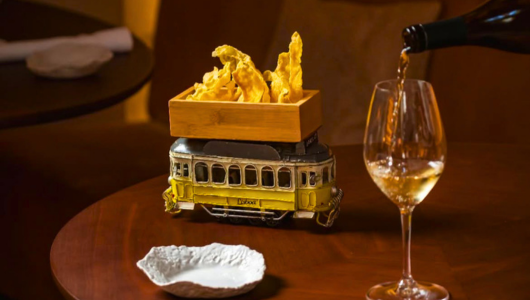
Photo by SUBA on Instagram
For Portuguese fine dining in Santa Catarina, SUBA (Travessa da Portuguesa 53) is located inside the Verride Palácio de Santa Catarina. Chef Fábio Alves draws on his Trás-os-Montes background while also using ingredients and recipes from other parts of Portugal. The tasting menus include references to typical Portuguese products from across the country, such as fish and shellfish, alheira, and cornbread (broa de milho), in contemporary dishes. Reservations at SUBA are essential and, after dinner, guests can also visit the hotel’s rooftop for views over Lisbon and the Tagus.
Aldeia (Rua do Diário de Notícias 49) is another evening option for a contemporary take on petiscos. The menu includes cheeses, traditional smoked sausages (enchidos), tinned fish, seafood, and small plates designed for sharing.
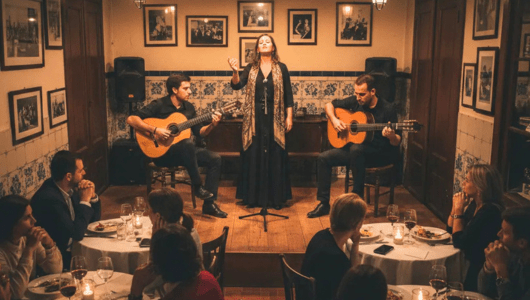
Photo by TodoWeekend
Adega Machado (Rua do Norte 91, pictured above) and O Faia (Rua da Barroca 54-56), open since 1937 and 1947 respectively, are two established options for a fado dinner in Bairro Alto. Both combine Portuguese cooking with professional fado performances, although their menus and formats differ. These are full evening experiences and certainly not places where you should expect to eat quickly and leave.
Tasca do Chico (Rua do Diário de Notícias 39) offers a less formal introduction to fado. It is associated with fado vadio, in which amateur or professional singers may take part, and the atmosphere is closer to a crowded tasca than a formal dinner show. Go mainly for the music and drinks, knowing that you can grab a few simple snacks as well, but not a complete restaurant meal.
Bica and Cais do Sodré: market life, the waterfront and nightlife
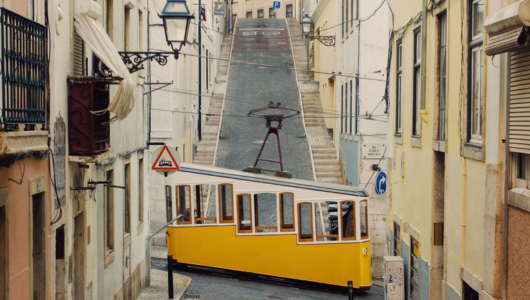
Bica connects the upper parts of central Lisbon with Rua de São Paulo and the riverfront. Its best-known street, Rua da Bica de Duarte Belo, follows the route of the Bica funicular between Largo do Calhariz and Rua de São Paulo. The neighborhood is small and steep, with residential buildings, cafés, restaurants and bars located along streets that many visitors use when walking between Bairro Alto and Cais do Sodré.
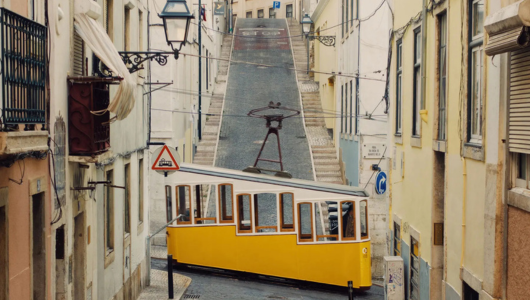
Photo by Accidentally Wes Anderson
During the day, Bica retains a clear residential character. Local cafés, small shops and restaurants serve residents alongside visitors photographing the funicular route or passing through on their way downhill. The quieter hours are better for seeing the neighborhood beyond its most famous street and for stopping for coffee, lunch or a simple snack. In the evening, bars become busier and Bica forms part of the nightlife route between Bairro Alto and the river.
At the bottom of the hill, Cais do Sodré is one of Lisbon’s main transport and commercial hubs, with train, metro and ferry connections, including routes to the south bank of the Tagus. Its proximity to the port shaped the area for generations, bringing sailors, dockworkers, warehouses, taverns and cheap accommodation to the streets around the station and waterfront. That working-port identity later became closely tied to nightlife. Bars such as Tokyo and Jamaica preserve names associated with the area’s late-night past, while Pensão Amor draws more directly on the history of Rua Nova do Carvalho, once known for brothels and venues catering to sailors. Today, the neighborhood has a different profile, shaped by tourism, restaurants, bars, transport and the redevelopment of the waterfront.
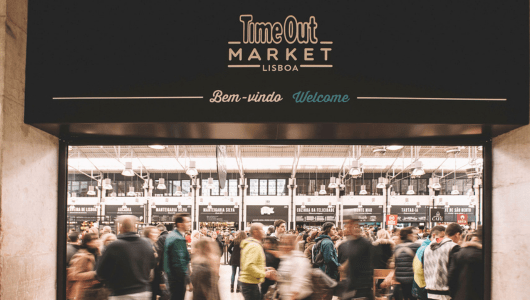
Photo by Maria Leite Castro
Mercado da Ribeira is central to the daytime food culture of Cais do Sodré. Opened in 1882, it was once one of Lisbon’s main wholesale markets for fish, fruit, vegetables and flowers. Part of the building still operates as a traditional market in the morning, while the other half has housed Time Out Market since 2014. The two spaces represent different sides of the same building. While one continues the market’s commercial function, the other brings together selected restaurant counters, bars and food projects.
Time Out Market has made Cais do Sodré one of Lisbon’s most visible food destinations, but it should not be seen as a place for a complete introduction to Portuguese cuisine. Alongside international food and contemporary concepts, its counters include Portuguese chefs, regional dishes and traditional recipes. Good options include Marlene Vieira’s polvo à lagareiro and Henrique Sá Pessoa’s confit cod with chickpeas and sun-dried tomatoes, a contemporary interpretation of familiar Portuguese ingredients. The most useful approach is to choose selectively, looking for businesses with an established connection to Portuguese cooking.
Outside the market, daytime Cais do Sodré is busy with commuters, workers, market customers and people meeting for lunch. Cafés, seafood restaurants, traditional lunch rooms and newer businesses operate alongside one another. Portuguese food is certainly still present, although the growth of tourism, nightlife and international restaurant concepts has made it less dominant than it once was.
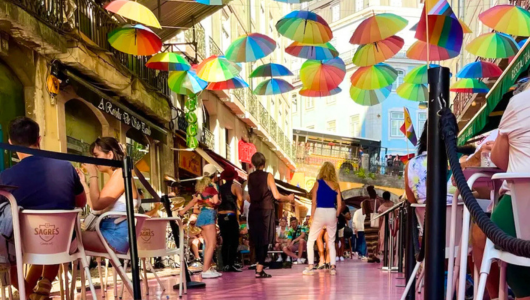
Photo by TravelAwaits
The atmosphere changes after dark, particularly later in the evening when the bars in Bairro Alto begin to close, usually around 2AM. From there, many people make the 10-minute walk downhill to Cais do Sodré, where the bars and clubs around Rua Nova do Carvalho, commonly known as Pink Street, stay open later, usually until around 4AM. The area also offers some options for simple late-night food for those continuing their evening near the river.
Where to eat in Bica and Cais do Sodré
Bica and Cais do Sodré offer a wide range of places to eat, from market stalls, neighborhood cafés and Portuguese restaurants to tourist-oriented venues and businesses aimed mainly at the nightlife crowd. The best choice depends on the street, the type of place and the meal you have in mind.
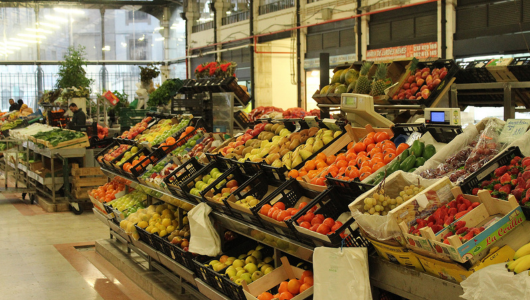
Photo by Dguendel on Wikimedia

Mercado da Ribeira (Avenida 24 de Julho 49) contains two very different food experiences. Visit in the morning to see the traditional municipal market, where vendors sell fish, fruit, vegetables, cheese, groceries and flowers. Travelers staying in an apartment can buy ingredients, while others can pick up fruit, cheese or Portuguese food products before most of the traditional stalls close.
Time Out Market occupies another part of the same building and stays open much later. Its counters include well-known Portuguese chefs and restaurants alongside international food, bars and dessert shops. To find the strongest Portuguese options, choose a specific dish rather than treating the entire food hall as a traditional Lisbon experience. Look for seafood, regional recipes, Portuguese pastries and counters connected to established local restaurants.
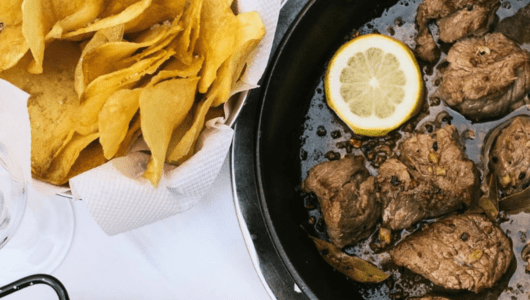
Photo by Pinóquio on Facebook
Among the stronger Portuguese choices inside Time Out Market is Pinóquio, serving some of its iconic dishes such as oven-roasted grouper and beef pica-pau (pictured above). Monte Mar and Marisqueira Azul, two of Lisbon’s best seafood restaurants, also have stalls inside the market. They are good places to try fresh shellfish, including clams with garlic and cilantro (amêijoas à Bulhão Pato), prawns and the traditional steak sandwich often eaten at the end of a seafood meal (prego).
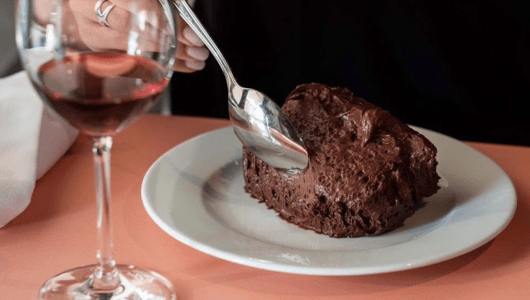
Photo by Pap’Açorda on Facebook
Pap’Açorda is located upstairs, above the main food hall, and it’s a full-service restaurant, not a market counter. This establishment first became famous in Bairro Alto during the 1980s and 1990s before moving to Mercado da Ribeira after 35 years. Several of its best-known dishes remain on the menu, including fried turnovers filled with meat (pastéis de massa tenra), prawn bread stew (açorda de gambas), breaded lamb chops with creamed spinach and its well-known chocolate mousse.
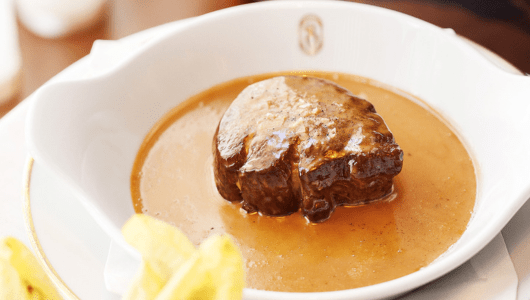
Photo by Brilhante
Beside Mercado da Ribeira, Brilhante (Rua da Moeda 1) offers a more formal option for lunch or dinner. The restaurant combines the style of a classic French brasserie with references to Lisbon’s nineteenth-century cafés. Its signature dish is the Brilhante steak (bife à Brilhante), created as a tribute to bife à Marrare, one of Lisbon’s historic steak preparations. The original is associated with António Marrare, a Neapolitan-born restaurateur who opened several cafés in Lisbon, including one nearby on Rua dos Remolares. The menu also includes fish and salt cod, but the steak provides the strongest connection to the city’s restaurant history.
Behind Mercado da Ribeira, O Triângulo da Ribeira (Rua da Ribeira Nova 48) is a small family-run snack bar known for bifanas. Order the Portuguese pork sandwich plain or with egg and cheese, or choose a steak sandwich (prego), samosa or shrimp rissole if available. There are very few seats and lines are common around lunchtime, but service is quick and prices are affordable, making the wait worthwhile. Do not leave it until after a night out as this is a daytime shop only.
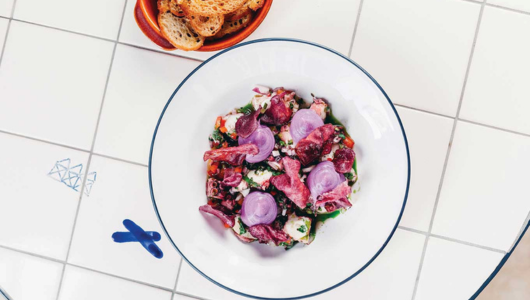
Photo by FaceFood Mag
The streets around Mercado da Ribeira, Rua de São Paulo and Rua da Boavista once had more traditional cafés, taverns and businesses serving local residents. Many have been replaced by international restaurants, brunch cafés, cocktail bars and newer dining concepts. Corrupio (Rua da Moeda 1) is one example of a contemporary restaurant that proudly focuses on Portuguese food. Seating is arranged mainly around a large counter, and the changing selection may include cured fish, salt cod, pork, octopus, rice dishes, Portuguese-style sandwiches and updated versions of traditional desserts. Choose it for lunch or dinner when you want modern Portuguese cooking rather than the format of a conventional tasca.
For lunch, petiscos or an informal dinner near Praça de São Paulo, Taberna Tosca (Praça de São Paulo 21) serves Portuguese regional cheeses, smoked sausages, octopus salad, fried cuttlefish, salt cod fritters, stuffed eggs with herbs (ovos verdes) and traditional desserts. A meal and some Portuguese wine here could be a good option before continuing toward Bica, Pink Street or the river, particularly in the evening.
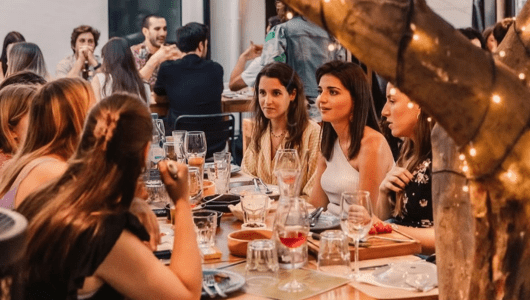
Photo by Santa Bica
In Bica, Santa Bica (Travessa do Cabral 37-39) occupies a former bakery and has both an indoor dining room and an outdoor courtyard beside the Bica funicular route. The menu focuses on Portuguese petiscos and main dishes, accompanied by Portuguese wine and cocktails. Choose it for an evening meal in Bica before continuing downhill toward Cais do Sodré, or when you would rather stay in the neighborhood than eat around the busier market and nightlife streets.
Bica Sour (Rua da Bica de Duarte Belo 31) is primarily an evening bar, but its food menu includes several recognizable Portuguese petiscos, such as chicken gizzards (moelas), roasted chouriço, salt cod fritters, fried green beans (peixinhos da horta), fried cuttlefish, octopus salad and shredded salt cod with eggs and potatoes (bacalhau à Brás). It is primarily a bar, but the petiscos menu is substantial enough for an informal dinner, and it even includes some international bar food options.
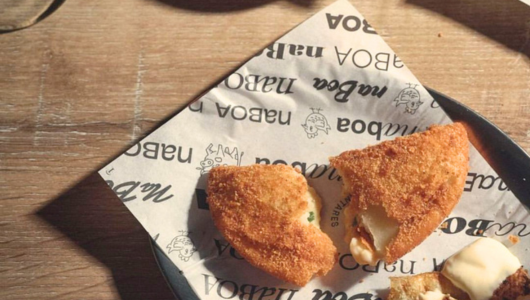
Photo by Na Boa on Instagram
Further west, where Cais do Sodré begins to merge into Santos, naBOA (Rua da Boavista 128) is a newer business that draws inspiration from traditional Portuguese snack bars. It opens from late afternoon and serves bifanas, pregos, salt cod fritters, shrimp rissoles (like pictured above) and familiar desserts such as flan pudding (pudim flan), sweet rice pudding (arroz doce) and custard with a burnt sugar top (leite-creme). Visit to try Portuguese snacks with beer before going out, grab a bite during a football match, or eat after traditional lunch restaurants have closed.
Bairro Alto, Santa Catarina, Bica and Cais do Sodré change considerably throughout the day. Mornings and lunchtimes are better for cafés, pastelarias, traditional lunch menus and the stalls inside Mercado da Ribeira. Later in the day, restaurants, fado houses, wine bars and places serving petiscos become more prominent. As is often the case in Lisbon, some of the best food finds are not the most obvious choices on the busiest streets.
To explore more of Lisbon through its food, neighborhoods and local history, join one of our food and cultural tours. To receive more Lisbon stories and local tips straight to your inbox, subscribe to Taste of Lisboa’s newsletter.
Feed your curiosity on Portuguese food culture:
Chiado or Príncipe Real? Where to eat real Lisbon food in the two most charming neighborhoods
Alfama vs Mouraria: what to choose in the two most ancient Lisbon neighborhoods
How to connect with local culture in Lisbon and Portugal
How to choose the right food tour in Lisbon for your travel style
Real people, real food. Come with us to where the locals go.
Signup for our natively curated food & cultural experiences.
Follow us for more at Instagram, Twitter e Youtube