
Chiado or Príncipe Real? Where to eat real Lisbon food in the two most charming neighborhoods
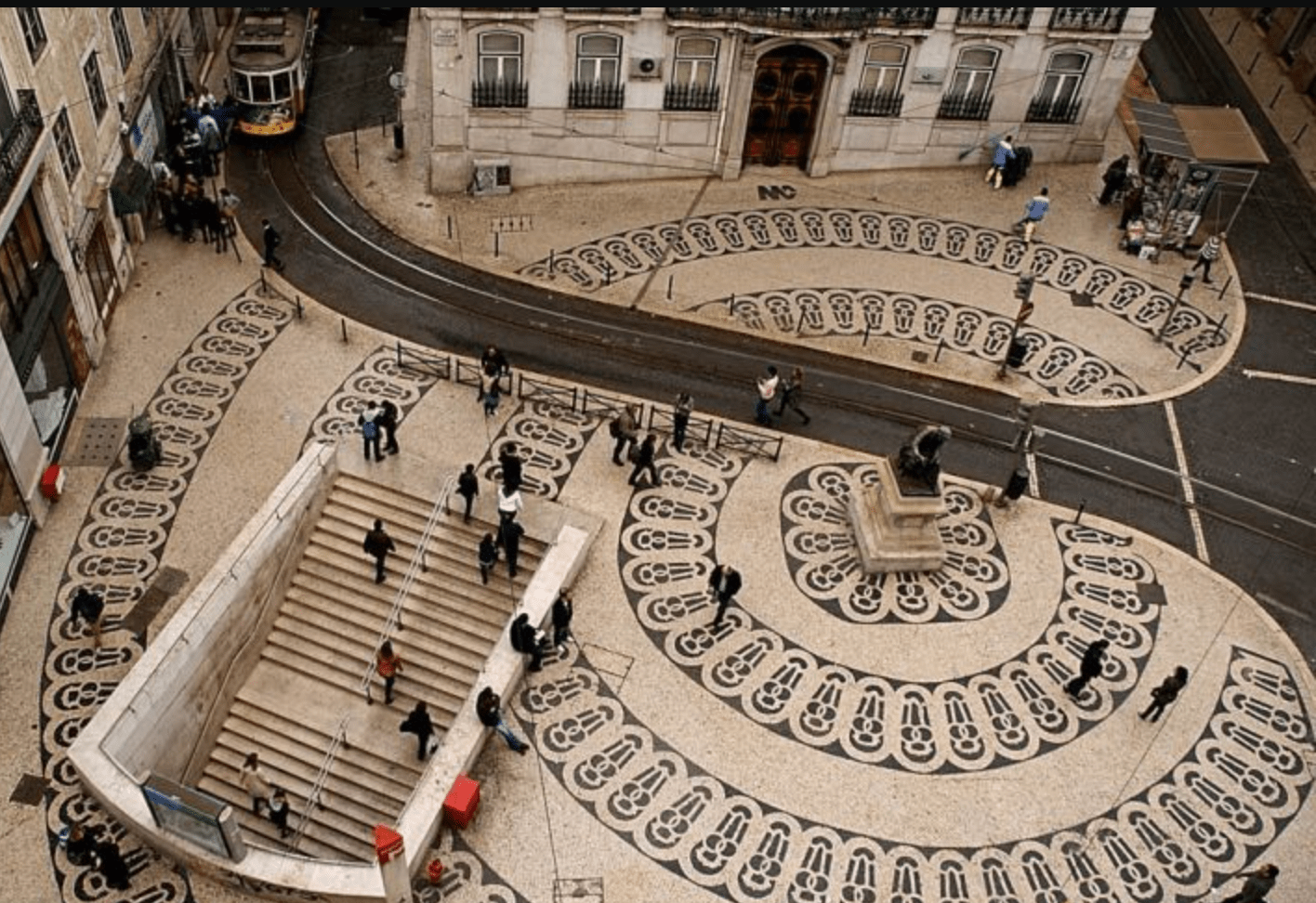
If you spend more than a day or two in Lisbon, chances are Chiado and Príncipe Real will end up in your plans. Chiado sits between Baixa, Bairro Alto and Cais do Sodré, and is known for its historic cafés, theaters, old shops, bookstores and the kind of old-world charm that still suits the center of one of Europe’s oldest capitals. Príncipe Real is just uphill, greener and more residential in feel, centered around a shaded garden and streets lined with 19th-century mansions. It is still central Lisbon, but with more breathing room than Chiado and a local life that continues behind the boutiques, terraces and good-looking façades.
Featured photo by Bairro do Avillez
Both areas are worth visiting, but both are easy to reduce to the usual checklist. In Chiado, that often means café A Brasileira to snap a picture with the statue of poet Fernando Pessoa; Bertrand bookshop, which is the oldest still operating bookstore in the world; and the shops along Rua Garrett and its surrounding streets. In Príncipe Real, it usually means the garden, shopping at EmbaiXada, a few boutiques and perhaps a drink before heading towards Bairro Alto for the night. All of that is pleasant enough, but there is more to see, do and eat once you move past the obvious route.
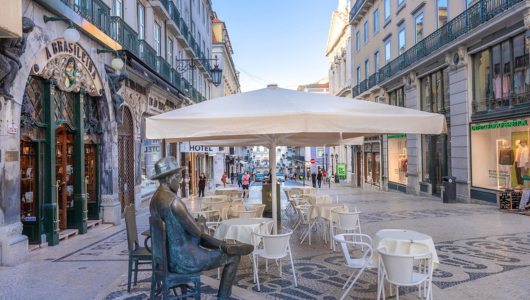
Photo by VDT2021 on Wikimedia

We’re about to look at Príncipe Real and Chiado through food as a medium to connect with Lisbon. For Chiado, think of historic cafés visited for context, Portuguese beer halls or seafood restaurants known as cervejarias, wine bars away from the first terraces on Rua Garrett, and quick snacks that make sense during a busy day in the city center. In Príncipe Real, the route moves past boutiques and cocktail bars towards garden kiosks, Praça das Flores, contemporary Portuguese cooking, wine bars and older addresses that keep the neighborhood grounded. Both areas are famous and heavily visited, but both still have good food when you choose with some care.
Príncipe Real and Chiado at a glance
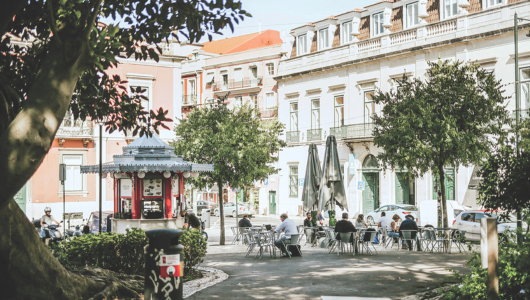
Photo by Time Out Lisboa
Explore Príncipe Real
– Go for: its pretty garden, 19th century architecture, independent shops, design stores, trendy restaurants and cocktail bars, LGBTQ+ nightlife and a more residential-feeling version of central Lisbon, just uphill from Chiado and Bairro Alto.
– Walk through: Jardim do Príncipe Real, Rua Dom Pedro V, Rua da Escola Politécnica, Rua Nova de São Mamede and the streets leading down towards Praça das Flores and São Bento. The garden and EmbaiXada are the obvious stops, but the quieter side streets show how Lisboners actually use the area.
– Visit: EmbaiXada, inside the Ribeiro da Cunha palace, the Botanical Garden, the Reservatório da Patriarcal when accessible, the Miradouro de São Pedro de Alcântara nearby and Praça das Flores if you want a more local pause away from the main flow.
– Food experience: contemporary Portuguese cooking, contemporary petiscos, old-school lunch spots, wine bars, brunch, garden cafés and restaurants that generally feel more relaxed than the Baixa rush. Here you’ll find a good mix of trendy and humble spots that have stood the test of time.
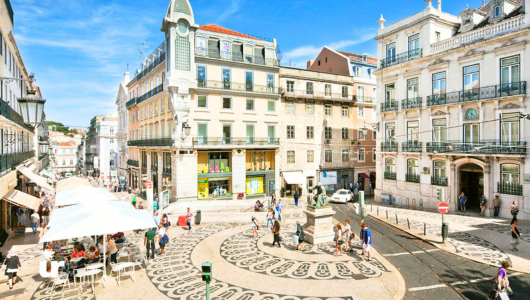
Photo by NIT
Explore Chiado
– Go for: historic cafés, theaters, old shops, bookshops, classic Lisbon architecture, elegant streets and the city’s literary and commercial memory. This is one of the areas where visitors most easily recognize Lisbon, which is precisely why you need to choose where you eat with some care.
– Walk through: Rua Garrett, Largo do Chiado, Largo Rafael Bordalo Pinheiro, Rua Nova da Trindade, Largo do Carmo and the streets that slope towards Cais do Sodré. The busiest routes are beautiful, but the better food is usually located slightly off the most obvious path.
– Visit: Coffee shop A Brasileira for historical context but not necessarily coffee, Bertrand for bookshop history, Armazéns do Chiado for shopping, Teatro Nacional de São Carlos, Teatro São Luiz, Igreja do Carmo and the Carmo Ruins, as well as the small streets around Trindade and Carmo where Chiado still gives a glimpse of what older central Lisbon used to be like.
– Food experience: historic cafés, conventual pastries, cervejarias, wine bars, classic dining rooms, old lunch addresses and more elegant restaurants that work for a proper meal before or after theater, shopping or a long walk through the city center.
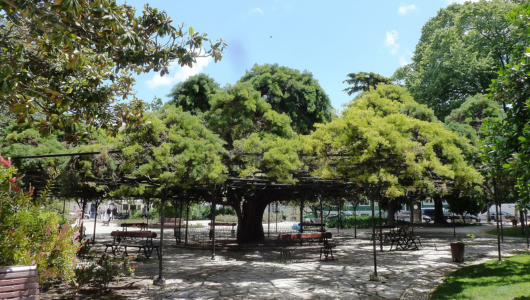
Photo by Nicola on Wikimedia

Príncipe Real: garden life, palaces and contemporary Lisbon food
Príncipe Real is located just uphill from Chiado and Bairro Alto, but the area feels different as soon as you reach the garden. The streets are wider, the buildings become more residential, and central Lisbon suddenly has more trees, more benches and more room to sit down without feeling that the area is overly busy. Around here, places to eat and drink sit close to homes, shops and old palaces, sometimes so prettily that visitors forget this is also a neighborhood where people live, shop, work and walk their dogs.
The Jardim do Príncipe Real, officially Jardim França Borges (Praça do Príncipe Real), is the neighborhood’s natural meeting point. Designed in the 19th century with the feel of a romantic English garden, it is known for its monumental cedar tree, kiosks, benches, and surrounding mansions. On Saturday mornings, the garden also hosts the Príncipe Real farmer’s market, where producers from around Lisbon sell seasonal fruit, vegetables and other organic products. As locals go about their weekend shopping, this is one of the best times to see and enjoy the area with a neighborhood vibe, rather than a more touristic one.
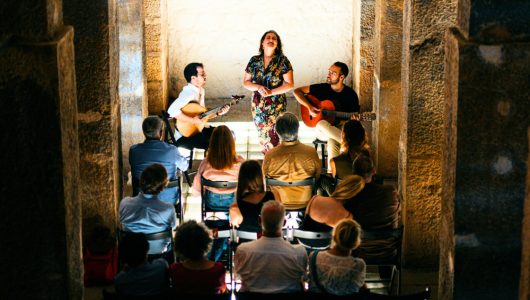
Photo by Real Fado
The Water Museum – Patriarcal Reservoir sits beneath the garden and adds a literal underground layer to the neighborhood. Built in the 19th century to supply water to downtown Lisbon, it places practical city infrastructure directly under one of Príncipe Real’s prettiest surfaces. Today, Real Fado Concerts also uses the reservoir for intimate fado performances, taking advantage of the acoustics inside the stone chamber.
EmbaiXada, inside the 19th-century neo-Moorish Palácio Ribeiro da Cunha (Praça do Príncipe Real 26), is one of the obvious stops, but it is worth seeing for the sake of appreciating the building itself, even if you are not interested in shopping. This gallery-style commercial space hosts Portuguese brands linked to design, crafts, fashion, gastronomy and culture. But Príncipe Real becomes more interesting when you do not stop there. The streets towards Rua da Escola Politécnica, Rua Dom Pedro V, Rua Nova de São Mamede, Praça das Flores and São Bento show a neighborhood where old Lisbon, design-conscious Lisbon and everyday Lisbon coexist.
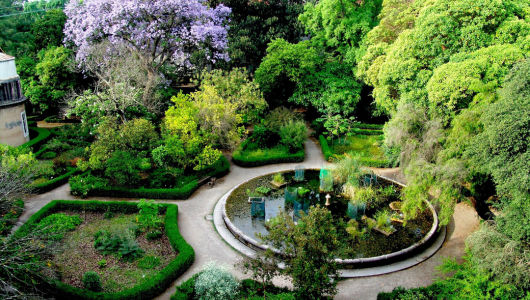
Photo by Universidade de Lisboa
Food in Príncipe Real changes from street to street. Around the garden and Rua da Escola Politécnica, many restaurants reflect the neighborhood’s current appetite for contemporary Portuguese cooking, careful interiors and international influences. A few streets away, older lunch addresses continue to serve daily dishes, grilled fish, meat, rice and house wine to people who live or work nearby.
Príncipe Real is often associated with cocktail bars and fashionable restaurants, but Portuguese food has not disappeared from the area. You can still find addresses where local ingredients are taken seriously, as well as cafés where a simple espresso gives you an easy way into Lisbon’s coffee culture.
Where to eat in Príncipe Real
Eating in Príncipe Real depends on which side of the neighborhood you follow. Around the garden and Rua Dom Pedro V, restaurants tend to be more visible and design-conscious. Rua de O Século has smaller Portuguese addresses and a more everyday lunch scene. Down towards Praça das Flores, the pace slows, with outdoor tables, wine, coffee and neighborhood life taking over from the busier route around EmbaiXada.
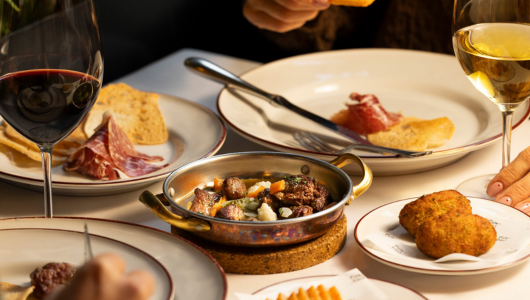
Photo by Pica-Pau Restaurant
For Portuguese food, one of our top recommendations in the area is Pica-Pau (Rua da Escola Politécnica 27). Even though this restaurant is far from an old-school tasca, they are great at preparing traditional Portuguese dishes which would serve as a good introduction to the local cuisine for food-loving travelers. Look for salt cod fritters (pastéis de bacalhau), shrimp or meat turnovers (rissóis), savory bread puddings with herbs and seafood (açordas), strips of beef or pork in a garlicky sauce (pica-pau), pork dishes, seafood, seasonal specials and traditional Portuguese desserts. The restaurant’s creativity shines when it comes to drink creations such as cocktails made of Amarguinha, Ginginha or Moscatel, which are typical drinks from Portugal.
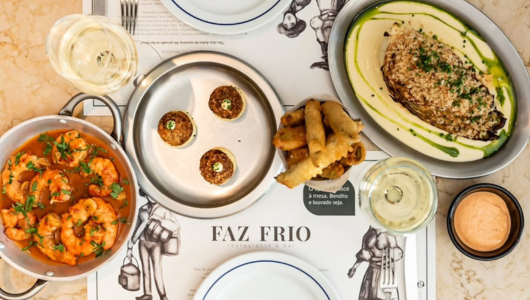
Photo by Faz Frio on Instagram
Faz Frio (Rua Dom Pedro V 96) has been part of Príncipe Real since before the neighborhood became associated with design shops and restaurants made to be photographed. Inside, the private wooden booths and old dining-room atmosphere give the meal a more traditional setting, even though the cooking has been updated. The menu includes Portuguese petiscos such as green bean tempura (peixinhos da horta), octopus salad and alheira croquettes, alongside mains like octopus with garlic and olive oil (polvo à lagareiro) or Portuguese-style steak.
Tascardoso (Rua de O Século 242) is one of the more straightforward Portuguese restaurants in this part of Príncipe Real. The menu is built around generous portions, daily dishes, roasted meats, grilled fish, rice, house wine and the kind of lunch the old-school Lisbon crowd tends to love. In an area where many restaurants now lean towards design, cocktails and small plates, Tascardoso keeps closer to the traditional Portuguese table.
A little further along the same street, Mercearia do Século (Rua de O Século 145) has a smaller and quieter feel. Despite the name, it functions more like a modest neighborhood restaurant than a grocery shop, with Portuguese cooking in a simple room. The menu changes but, depending on the day, dishes may include salt cod with scrambled eggs and matchstick fries (bacalhau à Brás), small mackerel in olive oil with Algarve-style potato salad, or octopus cooked with olive oil and wine.
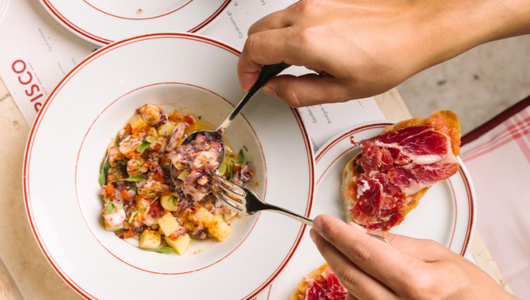
Photo by Tapisco on Instagram
Tapisco (Rua Dom Pedro V 81) is a lively choice for shared plates, especially if your group wants something central and easy before a night out. The menu moves between Portugal and Spain, with petiscos, croquettes, seafood, cured meats, vermouth and cocktails. It is more about drinking and sharing than exploring old Lisbon cooking in detail, which matches this side of Príncipe Real.
Atalho Real (Calçada da Patriarcal 40) occupies part of the former Ribeiro da Cunha palace, the neo-Moorish building now known as EmbaiXada. The restaurant focuses on grilled meat, with steaks, burgers, wine, cocktails and a terrace that takes advantage of the palace setting. It belongs to the more contemporary side of Príncipe Real, where old buildings have been adapted for shopping, eating and drinking.
Praça das Flores shows a more residential side of Príncipe Real, especially during the day. Pão de Canela (Praça das Flores 25-29) is part of that picture, with outdoor tables facing the square and an easygoing format for breakfast, brunch, coffee or a light meal. Its appeal is not only what comes to the table, but the square itself with trees, people, dogs, and the feeling that nobody is in a hurry.
The Quiosque da Praça das Flores (Praça das Flores) is a good example of Lisbon’s kiosk culture. [inserir link para artigo sobre quiosques] A kiosk can be a morning coffee counter, an after-work beer spot, a quick snack table, or the place where neighbors take ten minutes outside between errands. In Praça das Flores, the kiosk keeps the square active through the day, while the surrounding streets increasingly fill with brunch, wine bars and renovated apartments.
Black Sheep Lisboa (Praça das Flores 62) focuses on Portuguese wines from small producers, with a strong presence of natural, organic, biodynamic and low-intervention bottles. The space is small and informal, so the experience depends less on a long food menu and more on conversation with the staff. For travelers trying to understand Portuguese wine beyond the standard restaurant list, this is a good place to taste bottles outside the usual comfort zone.
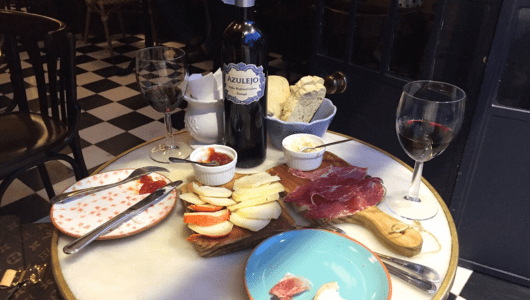
Photo by Neoplan185 on Tripadvisor
Casa da Praia (Rua Dom Pedro V 5) is a compact tapas and wine bar near Rua Dom Pedro V, São Pedro de Alcântara and Bairro Alto. The beach name is misleading, as the place is more about wine, small plates and a casual pause between neighborhoods. It makes most sense for a snack and a glass, especially before heading toward Bairro Alto or back down to Chiado.
Pavilhão Chinês (Rua Dom Pedro V 89-91) is a bar, not a food recommendation, but it belongs in this route because it has one of Príncipe Real’s most distinctive interiors. The rooms are filled with collections of model planes, helmets, medals, old toys and other objects gathered over decades. Come for a late drink and for the setting, especially if you want to see a more eccentric side of Príncipe Real.
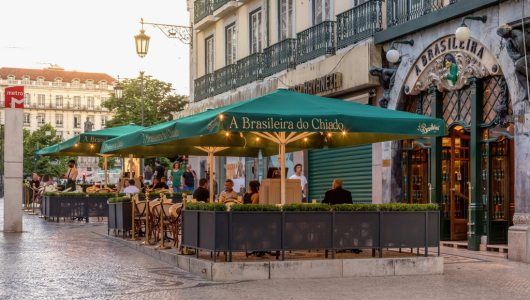
Photo by O Valor do Tempo
Chiado: historic cafés and old commercial Lisbon
Chiado sits between Baixa, Bairro Alto, Carmo and the slope down towards Cais do Sodré, which is why so many visitors pass through it even without planning to. This is one of the most recognizable parts of central Lisbon, where old cafés, bookstores, tiled shopfronts and elegant façades share space with delivery vans, office workers, shoppers, tourists and people trying to cross Rua Garrett without losing patience.
The neighborhood is famous for good reasons. Rua Garrett still carries much of Chiado’s commercial identity, Bertrand gives the area its bookish aura, A Brasileira keeps the memory of literary café culture alive, and the theaters around São Carlos, São Luiz and Trindade remind us that this has long been one of Lisbon’s cultural stages. Nearby, the ruins of the Carmo Convent add another layer of history, while the streets leading down towards Rua do Alecrim and Cais do Sodré show how quickly Chiado connects with other parts of the city.
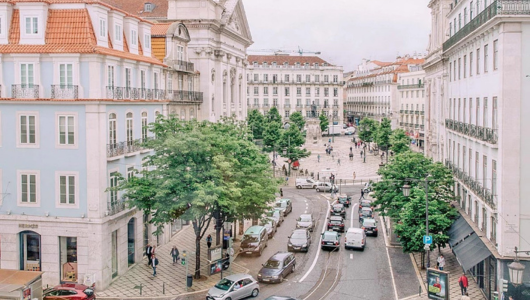
Photo by Athena Advisers
For food lovers, Chiado needs a bit of selection. It is beautiful, central and crowded enough that location alone can fill a room. The area has excellent addresses, but also plenty of menus aimed at people who will only pass once. A terrace on Rua Garrett or Largo do Chiado can be pleasant, but the view from the table should not be the main reason to sit down. Arrive with a clear idea of what you want, whether that is coffee in a historic room, a quick bifana, seafood and beer in a Portuguese beer hall known as a cervejaria, Portuguese wine with petiscos, or a proper restaurant meal away from the busiest signs.
Chiado is a crossing point and people usually come through after shopping, after visiting Carmo, between Baixa and Bairro Alto, or on the way down towards Cais do Sodré. That movement gives the neighborhood a more hurried, city-center character than Príncipe Real. Meals here often feel more urban, sometimes more formal, and sometimes more expensive than they should be. The better choices tend to sit just off the main flow, especially around Trindade, Carmo, Rua das Flores and the smaller streets that visitors often treat as shortcuts.
A Brasileira belongs to Chiado’s history, even if coffee is not the reason to prioritize it. Rua Garrett belongs on the walk, but not every menu along it deserves your money. Use the famous places for context, then make the food decisions with more care.
Where to eat in Chiado
The addresses below cover different sides of eating in Chiado, from historic cafés and pastry counters to bifanas, traditional lunch rooms, cervejarias, chef-led restaurants and wine bars. Some suit a quick stop between Baixa and Bairro Alto, others ask for a proper meal.
For Lisbon’s historic café culture, A Brasileira (Rua Garrett 120-122) is the obvious landmark, especially because of its connection with Fernando Pessoa and early 20th-century literary Lisbon. Pastelaria Bénard (Rua Garrett 104) offers another old Chiado pause, with less attention around the door and a long history on Rua Garrett. Stop for coffee, tea, pastries or a light lunch, and treat the room as part of the reason to be there.
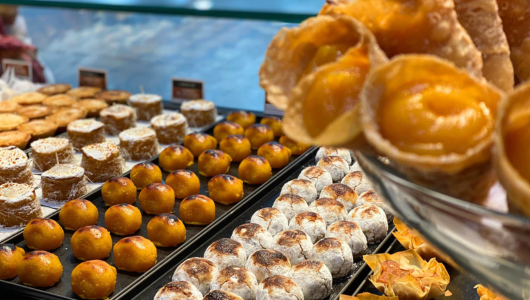
Photo by Pastelaria Alcôa on Facebook
Pastelaria Alcôa (Rua Garrett 37-39), a business originally from Alcobaça, is arguably the best place in central Lisbon for trying a variety of Portuguese conventual sweets. These pastries come from recipes historically associated with convents and monasteries, where egg yolks and sugar, along with a few other ingredients, were turned into some of Portugal’s richest desserts. The display usually includes sweets such as cornucópias, crisp pastry cones filled with egg cream; trouxas de ovos, delicate egg-yolk rolls; and toucinho do céu, a dense almond and egg-yolk cake.
O Trevo (Praça Luís de Camões 48) is mainly about bifanas and beer. The juicy pork sandwich is the reason people queue, and the location on Camões keeps the counter busy from lunch into the evening. Fame has caught up with it, especially since Anthony Bourdain visited back in 2012. But what made this place popular in the first place, that is, quick affordable food that hits the spot, hasn’t changed.
Family-run Das Flores (Rua das Flores 76-78) is a small traditional restaurant on a street increasingly shaped by visitors, wine bars and more photographed addresses. This is a place for Portuguese home-style cooking, fair portions and a proper prato do dia, the daily dish that many Lisbon lunch restaurants still build their service around. Depending on the day, that may mean a salt cod dish, pork with pickles and fried potatoes (carne de porco à portuguesa) or liver strips (iscas). The dining room still attracts office workers, neighbors, older regulars and visitors looking for a good lunch in Chiado.
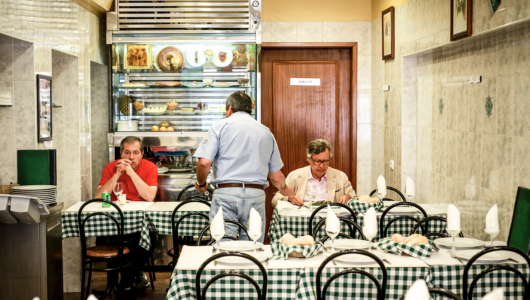
Photo by Time Out Lisboa
Just like Das Flores above, Popular do Capelo (Rua do Capelo 8) is another everyday Chiado address, close to some of Lisbon’s most expensive dining rooms but built around a much simpler idea. The menu focuses on Portuguese lunch plates, grilled dishes, fried fish, oven roasts and generous portions served in a plain dining room with a stainless-steel counter. Expect the kind of food that makes sense in the middle of a workday, such as fish, meat, potatoes, rice, soup or whatever is listed as the daily special.
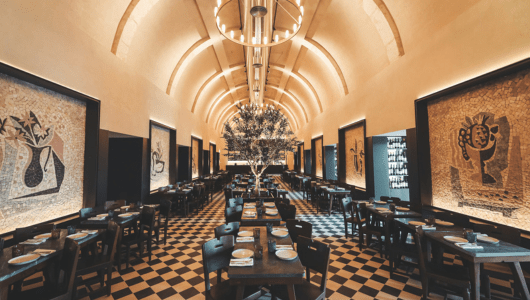
Photo by Betar
Cervejaria Trindade (Rua Nova da Trindade 20C) is central and touristy, but the room still explains its place in Chiado. The restaurant occupies a former convent building with large tile panels, high ceilings and the scale of a traditional Lisbon beer hall. Order what you would in a classic cervejaria, that is, seafood, beer, steak, croquettes, shellfish, or one of the house classics. Trindade’s own menu highlights dishes such as the “Trindade” seafood platter, sirloin steak “à Trindade”, codfish and beer-based desserts.
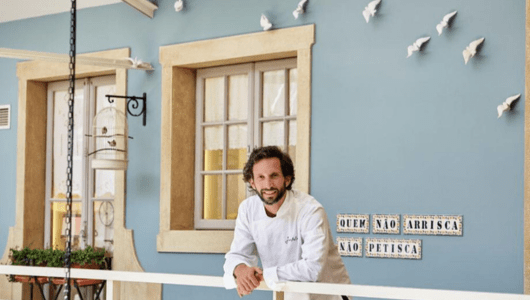
Photo by The World’s Best 50 Restaurants
Chef José Avillez is impossible to ignore in Chiado, where several of his restaurants occupy some of the neighborhood’s most visible culinary addresses. Bairro do Avillez (Rua Nova da Trindade 18) gathers several concepts under one roof, including tavern-style petiscos, seafood, pizza and cocktails. Belcanto (Rua Serpa Pinto 10A) is the fine-dining address, with contemporary Portuguese cooking at a much higher level of ceremony and price. Encanto (Largo de São Carlos 10) follows a vegetarian tasting-menu approach, placing vegetables at the center of the meal in a creative and surprising way.
At Taberna da Rua das Flores (Rua das Flores 103), not to be mistaken with Das Flores above, chef André Magalhães presents a menu that changes often and is usually presented at the table. His cooking starts from Portuguese products and recipes, then draws on ingredients, techniques and references from countries historically connected to Portugal. The result is a more restless version of Portuguese tavern cooking, shaped by the season, the market and whatever direction the kitchen is exploring that day.
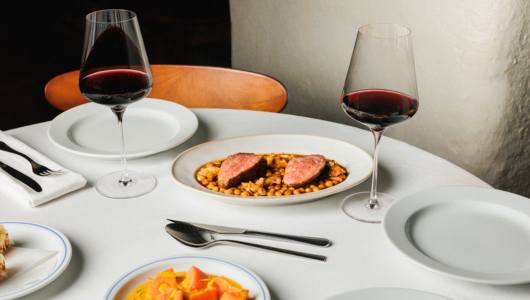
Photo by Paradigma
Ofício (Rua Nova da Trindade 11K) serves Portuguese contemporary tavern cooking close to Trindade. The menu takes familiar references such as alheira, escabeche, Portuguese fish, seafood and regional drinks, then reworks them into dishes designed for sharing. Depending on the season, that can translate into dishes like an alheira croquette sandwich, blue fish with escabeche emulsion, or desserts using Portuguese flavors such as Amarguinha or Moscatel.
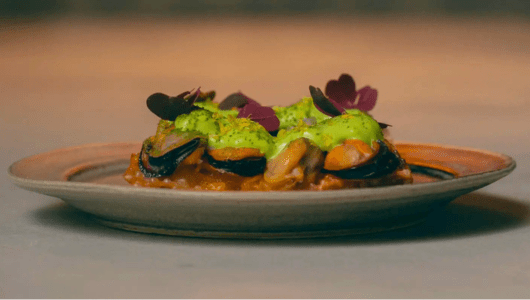
Photo by Broto
At Broto (Largo Rafael Bordalo Pinheiro 20A), chef Pedro Pena Bastos works with Portuguese products and references from a contemporary point of view. The restaurant sits in one of Chiado’s most interesting small squares, which gives it a calmer setting than the busier routes around Rua Garrett. This is a more deliberate meal for travelers looking for current Portuguese cooking, not a quick snack between stops.
By The Wine (Rua das Flores 41-43) is one of Lisbon’s best wine bars, although it is more accurate to see it as the Lisbon showcase for Sogrape wines than as an independent wine bar. The list includes labels such as Casa Ferreirinha, Herdade do Peso, Quinta dos Carvalhais, Quinta da Romeira, Sandeman and Ferreira Port wines. Food is built for pairing and sharing, with options such as homemade Algarvian bread, Iberian bellota ham platters, salted cod with chickpeas, salmon ceviche, beef carpaccio, veal cheek and steak sandwiches. The room, lined with bottles, makes the focus on wine clear from the start.
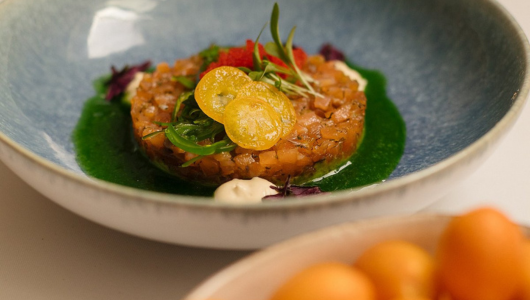
Photo by Tágide on Tripadvisor
Tágide Wine & Gastrobar (Largo da Academia Nacional de Belas Artes 20) sits in a quieter pocket, close to Chiado but away from the busiest movement around Rua Garrett. On the menu, expect things like caramelized onion soup with homemade bread gratinated with São Jorge cheese, croquettes inspired by cozido à portuguesa, Portuguese cheese boards, and steak in the house style. Wine is also central here, with a list focused on Portuguese terroirs and pairings, including organic wine options.
Príncipe Real and Chiado are close enough to visit on the same walk, but they show different versions of central Lisbon. Chiado is denser, busier and more tied to the city’s old commercial and cultural life. Príncipe Real is greener, more residential and easier to turn into a slower meal or an evening out. Both are heavily visited, so avoid choosing by location alone in order to find the best meals the areas do still offer.
To keep exploring Lisbon through its food, people and neighborhoods, join one of Taste of Lisboa’s food and cultural walking tours, and follow us on Instagram for more local tips, delicious discoveries and Lisbon stories beyond the usual travel guide clichés.
Feed your curiosity on Portuguese food culture:
How to connect with local culture in Lisbon and Portugal
How to choose the right food tour in Lisbon for your travel style
Bairro Alto vs Cais do Sodré: where to eat authentic food in two most lively Lisbon neighborhoods
Alfama vs Mouraria: what to choose in the two most ancient Lisbon neighborhoods
Real people, real food. Come with us to where the locals go.
Signup for our natively curated food & cultural experiences.
Follow us for more at Instagram, Twitter e Youtube