
Bifana: the story of Portugal’s famous pork sandwich (with recipe)
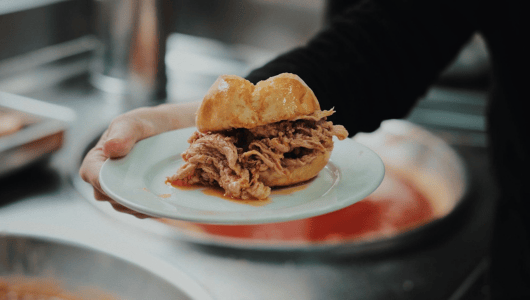
The bifana is one of Portugal’s best-known meat sandwiches and one of those foods many visitors have on their must-try list when they travel to our country. You will find it in cafés, traditional tascas, roadside restaurants and festival stalls, usually for just a few euros and often eaten standing at the counter with a cold beer.
Featured photo by CM Vendas Novas
What sounds like a very simple pork sandwich changes considerably depending on where you order it. Vendas Novas has built a national reputation around its bifanas, Porto has developed a distinctive style of its own, and Lisbon offers everything from juicy versions to the grilled sandwiches served during the city’s June festivities.
We believe that, to understand what a bifana really is, you have to taste more than one.
What exactly is a bifana?
A bifana is a thin pork steak, and the same word can refer either to the meat itself or to the sandwich made with it. A bifana no prato is a pork steak with sides such as rice, French fries and perhaps a little salad, and an optional fried egg on top, while a bifana no pão means the meat tucked inside a bread roll. In most cafés and tascas, though, simply ordering “uma bifana” will usually be understood as the sandwich.
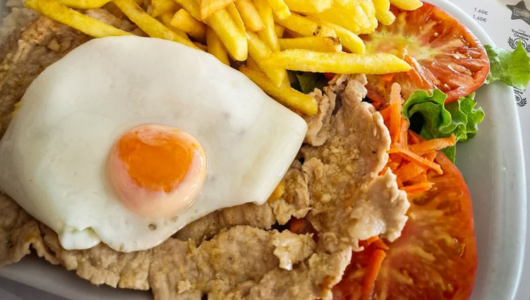
Photo by Mercado das Bifanas
Garlic, white wine, bay leaf, paprika, black pepper and spicy piri-piri sauce are the most common seasonings used for bifanas, but the recipe changes from place to place. The pork may be left to absorb the seasonings beforehand or flavored directly as it cooks, and the fat in the pan can be lard, vegetable oil, olive oil, butter or margarine, sometimes using more than one. While in dedicated bifana eateries the pork usually spends much longer simmering in a strongly seasoned liquid, at fairs it tends to go straight onto a hot grill, picking up char and little more than salt and its own juices.
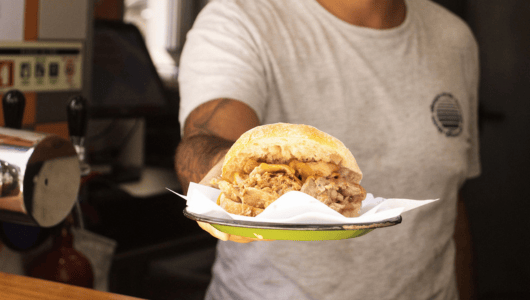
Photo by NIT
Small white wheat rolls are the usual choice for bifanas, as they have a crust sturdy enough to hold together once they begin absorbing the cooking juices, while their crumb soaks up all the flavor. Around Lisbon and much of Portugal, you will often hear papo-seco or carcaça, while in Porto molete is more common. No matter where you go, a good bifana is bound to be messy, but the right bread should keep it from turning soggy.
Mustard and piri-piri are the classic extras you will often find waiting on the counter, but both are optional. Mustard adds a slightly tangy kick, while a few drops of piri-piri can turn a mild bifana into something much spicier, making a cold beer alongside it taste even better. But plenty of people skip both and eat the sandwich exactly as it comes from the pan or grill.
Where did the bifana come from?
As with many popular street foods, identifying the exact birthplace of the bifana is difficult. Pork, bread, garlic, wine and lard had long been common ingredients in Portuguese cooking, and similar combinations would have been easy to find in cafés, taverns and places serving travelers. The early history of the sandwich is tied to the Alentejo, particularly Vendas Novas and the area around Montemor-o-Novo, where bifanas became closely connected with railway and road travel during the 20th century.
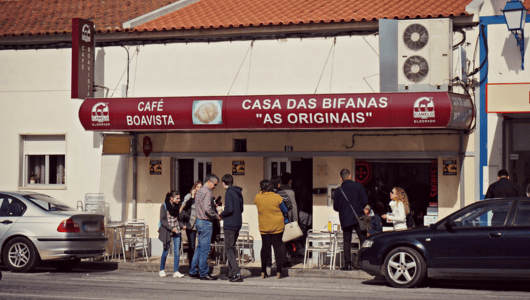
Photo by Living in Iberia
In Vendas Novas, the local tradition linked to Café Boavista, on the N4, where the style now associated with the town began to emerge around 1968. The recipe is said to have arrived with a Portuguese emigrant returning from France and was later adopted by the café, before reaching nearby establishments such as A Chaminé and Café Silva. Several businesses along Rua da Boavista gradually became known for serving bifanas, creating the concentration of specialist cafés that still characterizes this part of town today.
In Casa Branca, in the municipality of Montemor-o-Novo, the busy railway junction brought passengers, railway workers, soldiers and other travelers past cafés serving quick meals between trains. Maria Eugénia spent around 40 years running a café beside the station, where a fifteen-minute stop could be enough to sell close to a hundred bifanas before the train departed. Bifanas may therefore have been served in Casa Branca even before Vendas Novas achieved national fame.
The N4 then helped turn Vendas Novas into the place most strongly associated with bifanas. Before the A6 offered motorists a faster route, the N4 carried traffic between Lisbon and the Alentejo directly through town, and stopping along Rua da Boavista for something quick to eat became part of the journey for many drivers. A hot pork sandwich was affordable, filling and fast to serve, and with the presence of several cafés offering their own bifanas, travelers increasingly associated the town with the sandwich.
Over the following decades, the bifana became one of the strongest elements of Vendas Novas’ gastronomic identity and “Bifanas de Vendas Novas” was registered as a municipal trademark in 2011, which participating establishments can now use. The municipality has also promoted the sandwich through festivals and other initiatives. In 2024, local businesses even joined forces to prepare a 15-meter-long bifana during the town celebrations.
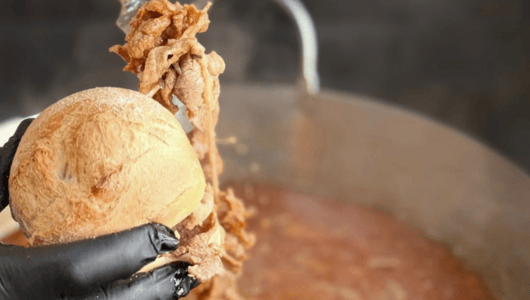
Photo by Solar das Bifanas
From the Alentejo, the bifana gradually became common across Portugal, appearing in all sorts of eateries and festival stalls. As it spread, different regions and individual establishments developed their own ways of preparing it, which is why the same name can now refer to noticeably different sandwiches depending on where you order one.
Types of bifana in Portugal: Lisbon, Vendas Novas and Porto
There are many local and individual ways of preparing a bifana, but Vendas Novas, Lisbon and Porto offer three of the clearest contrasts. The cut of pork, cooking time, amount of sauce and even the texture of the bread can all change.
Bifanas de Vendas Novas
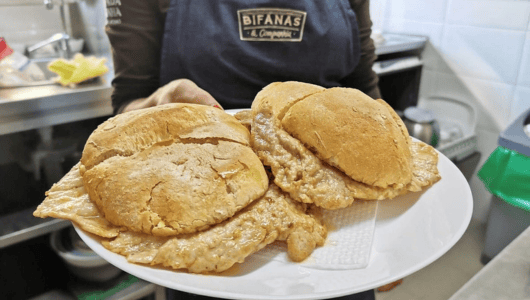
Photo by Rádio Campanário
In Vendas Novas, the bifana is usually made from pork loin cut into a steak and pounded until thin and tender. The meat cooks in a seasoned fat-based sauce, traditionally made with butter or margarine and plenty of garlic, before going into a papo-seco that may be lightly toasted. The juices flavor the bread, but the sandwich is generally much less wet than a Porto-style bifana, and the pork is clearly one steak and not a pile of thin pieces.
The concentration of specialist cafés in Vendas Novas, together with the municipal trademark, means the recipe in this region tends to vary less than in other parts of Portugal. Mustard is the most traditional condiment, while cheese and fried egg are common additions for anyone who wants a more substantial sandwich.
Lisbon-style bifanas

Photo by Dudecity on Reddit
Traditional Lisbon bifanas are usually made with thin pork steaks cooked quickly in a pan with garlic, bay leaf and fat, often with white wine in the marinade or cooking liquid. The pork absorbs the seasoning as it cooks, and some of the juices end up inside the bread, giving the crumb plenty of flavor without necessarily soaking it through.
Recipes differ widely between Lisbon cafés and tascas. Some keep the meat sitting in its cooking juices, producing a softer and more succulent bifana, while others cook the pork closer to order and serve something comparatively dry. Lard, vegetable oil and other fats can all appear depending on the house recipe, and mustard or piri-piri are usually added at the table according to taste. The sandwich is commonly eaten for a quick lunch, an afternoon snack or alongside an imperial, Lisbon’s small draft beer.
Bifanas at Lisbon’s arraiais and popular festivals
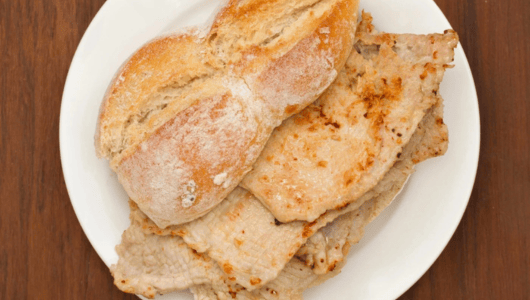
Photo by E-Konomista
At Lisbon’s arraiais, fairs and other popular festivities, thin pork steaks are often cooked directly on a grill, sometimes after a simple marinade and sometimes with very little seasoning beyond salt, garlic and the flavor picked up from the hot surface. The meat goes straight into bread and is usually finished with mustard or piri-piri added to taste.
This grilled version is noticeably different from the juicier bifanas associated with many Lisbon cafés, but it is still understood as a bifana. Served among the smoke from grilled sardines and other cuts of pork such as belly (entremeada) and pork rinds (couratos).
Porto-style bifanas
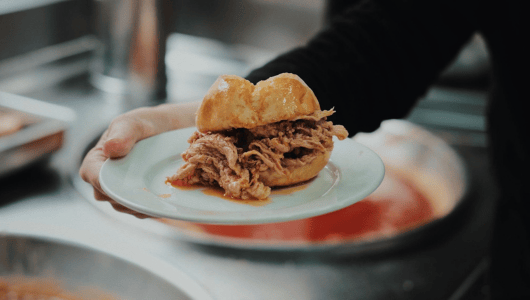
Photo by Conga on Facebook
In Porto, the pork is normally sliced extremely thin and cooked for much longer in a generous amount of seasoned liquid, producing tender pieces that are piled into a molete together with plenty of sauce. The bread absorbs much more liquid than it normally would in Vendas Novas or in many Lisbon cafés, making Porto-style bifanas softer, wetter and generally more intensely seasoned.
White wine, beer, garlic, bay leaf, paprika and chili are common additions to the cooking liquid, although house recipes vary, potentially including ingredients like Port wine, whiskey, Worcestershire sauce and lemon. Generally speaking, when you order a Porto style bifana, you can expect paper-thin pork and the generous amount of sauce that ends up soaking into the bread.
A Porto-style bifana should not be confused with another of the city’s famous pork sandwiches, the sandes de pernil. That one is made with roasted pork leg, usually served in thicker slices or pieces, rather than the very thin pork cooked in sauce that characterizes a bifana à moda do Porto.
Where to eat bifanas in and around Lisbon
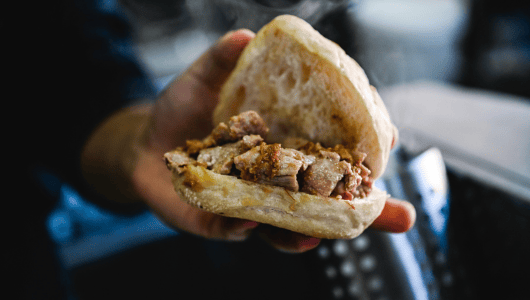
Photo by Time Out Lisboa
If you would like to taste those differences for yourself, these addresses take you from some of Lisbon’s best-known bifana counters to neighborhood favorites and specialist spots outside the city center:
As Bifanas do Afonso
One of Lisbon’s best-known bifana counters, Afonso is all about thin pork, plenty of garlicky cooking juices and bread that absorbs them, with the near-constant line outside its tiny downtown shop now part of the experience. A second location opened in 2025 at the Lisbon Art Stay Hotel, but we would still head to the original Rua da Madalena counter for the full hole-in-the-wall experience.
📍Original location: Rua da Madalena 146, 1100-340 Lisbon
www.instagram.com/explore/locations/440586039731769/as-bifanas-do-afonso
A Parreirinha do Chile
Serving Lisbon since 1937, A Parreirinha do Chile (pictured above) now shares ownership and the same bifana recipe as Afonso, but Praça do Chile offers a more local neighborhood vibe and considerably less queueing. If you are hungry enough, their courato is also famous.
📍Praça do Chile 14A, 1000-098 Lisbon
www.instagram.com/explore/locations/1015989896/parreirinha-do-chile
O Triângulo da Ribeira
Open since 1984 in an eight-square-meter triangular shop behind Mercado da Ribeira, this family-run counter is particularly famous for adding creamy Serra cheese to its bifana, a combination that helped it win a NIT 2024 readers’ vote for Lisbon’s favorite version.
📍Rua da Ribeira Nova 48, 1200-376 Lisbon
www.instagram.com/explore/locations/402850393637956/o-triangulo-da-ribeira
Ribeirão Preto
Ribeirão Preto is the kind of Arroios down-to-earth snack bar where a bifana can still be an everyday breakfast, lunch or afternoon bite, served alongside typical Portuguese savory snacks (salgados), pastries and other inexpensive counter food on busy Rua Morais Soares.
📍Rua Morais Soares 177, 1900-345 Lisbon
https://ribeiraopreto.eatbu.com
O Trevo
O Trevo was already a Chiado institution before Anthony Bourdain ate a bifana here on TV show No Reservations, and its location directly on Praça Luís de Camões makes it one of the easiest places to pair the classic pork sandwich with an imperial during a day in central Lisbon.
📍Praça Luís de Camões 48, 1200-283 Lisbon
www.otrevo48.com
26 Vegan Food Project
For a completely plant-based take on the Portuguese classic, 26 Vegan Food Project serves its “Bifana” Sublime with homemade marinated seitan, smoked vegan “cheese”, oyster mushrooms and mustard in a bolo do caco roll. It is obviously far from a traditional pork bifana, but it is one of Lisbon’s most established plant-based interpretations of the sandwich and great for vegetarians and vegans who’d still want to join the city’s bifana trail.
📍Rua da Horta Seca 5, 1200-213 Lisbon
https://26veganfoodproject.com
Pastelaria Zeka
In Amadora, Zeka turns the bifana into football food too! Since 2021 its food truck has followed Estrela da Amadora matches, drawing crowds for pork sandwiches covered in the house’s secret sauce, and many customers later seek out the original restaurant to have another one.
📍Avenida General Humberto Delgado 128, 2700-416 Amadora
www.facebook.com/p/ZEKA-Pastelaria-e-Restaurante-100063625567866
Bifanas Lounge & Drink
At Bifanas Lounge & Drink in Ramada, the pork marinates for hours in wine, spices and garlic, and you can order versions with bacon, Edam cheese, crispy onions, egg or even a Port wine reduction.
📍Praça da República 75A, 2620-543 Ramada, Odivelas
https://bifanaslounge.pt
Bifanas de Vendas Novas – As Tradicionais
You do not have to drive all the way to Vendas Novas to compare its style with Lisbon’s, as this Amora branch serves the brand’s characteristic pounded pork loin fried in its house sauce and slipped into a lightly toasted papo-seco.
📍Rua dos Foros de Amora 167C, 2845-554 Amora
www.bifanasvendasnovas.pt
Bifanas do Mestre André
A Moita favorite with particularly strong ties to the town’s popular festivities, Mestre André serves pork fried in a secret sauce and lets you choose between papo-seco and the larger pão d’avó.
📍Estrada Nacional 11, 57, 2860-606 Moita
www.instagram.com/bifanasdomestreandre
Best bifanas in Portugal outside Lisbon
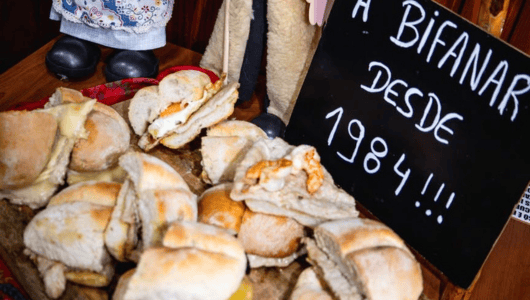
Photo by A Chaminé on Facebook
At some places around Portugal, people come specifically for the bifanas. These are some examples of restaurants across the country which are now famous thanks to this beloved Portuguese fast food:
Conga
Open in Porto since 1976, Conga is probably the city’s most famous bifana house, known for paper-thin pork piled into bread with plenty of spicy sauce. Even at busy times, the line moves quickly as tray after tray of bifanas comes out of the kitchen.
📍 Rua do Bonjardim 318, 4000-115 Porto
www.instagram.com/conga_casadasbifanas
Café Boavista – Casa das Bifanas
Café Boavista is the address most closely connected with the beginning of the Vendas Novas bifana tradition, and people still come here specifically for the thin pork steak, lightly toasted bread and restrained amount of sauce that define the local style. On busy days, the café can sell hundreds of bifanas.
📍 Rua da Boavista 68, 7080-063 Vendas Novas
www.instagram.com/odasbifanas
A Chaminé
A Chaminé (pictured above) has been serving bifanas since the 1980s and helped build Vendas Novas’ reputation for the sandwich. Alongside the classic version, you will also find combinations with cheese, fried egg and other additions.
📍 Rua da Boavista 53, 7080-063 Vendas Novas
www.instagram.com/a.chamine
Mijacão
Mijacão is one of Coimbra’s classic old-school tascas. Their very thin bifanas have been a house favorite for decades and are still served alongside petiscos such as stewed chicken gizzard (moelas), salt cod fritters (pataniscas) and pork ear (orelha).
📍Rua Nova 8, 3000-297 Coimbra
https://mijacao.eatbu.com
À do Márinho
À do Márinho in Beja is a bifanaria with several versions on the menu, including its house Bifana à Márinho, finished with the restaurant’s own sauce.
📍Rua das Novas Tecnologias, 7800-009 Beja
www.facebook.com/restauranteadomarinho
BLB – Braga Loves Bifana
BLB – Braga Loves Bifana opened in 2015 with the idea of taking the kind of bifana associated with popular festivities and making it an everyday specialty in the northern city of Braga. Its version is particularly distinctive because the pork comes with a sauce inspired by francesinha, and the menu even includes a bifana-based francesinha.
📍Largo Senhora-a-Branca 96, 4710-443 Braga
www.facebook.com/blbbifanaria
Bifana Republic
At Bifana Republic in Santarém, the entire menu revolves around the sandwich and giving its bifanas playful names such as A Popular, A Conselheira and A Diplomata. The basic version combines grilled pork with the house sauce and rustic bread, while more elaborate options pile on ingredients including fried onions, cheese, bacon, egg, pickles and even Brie and walnuts.
📍 Rua Soeiro Pereira Gomes 5, 2000-209 Santarém
www.instagram.com/bifanarepublic
Café Royal
Café Royal has been part of Ponta Delgada life for around 90 years, and its bifana has a distinctly Azorean taste thanks to pimenta da terra, the red pepper condiment used throughout the island.
📍 Rua da Alfândega 4-6, 9500-017 Ponta Delgada, São Miguel, Azores
www.facebook.com/caferoyal.pdl
Recipe: how to make bifanas at home
For an easy home version, this recipe combines thin pork, garlic, bay leaf and white wine with a little beer and enough cooking liquid to give you a juicy sandwich without completely soaking the bread. It makes four bifanas and takes around 40 minutes, plus 30 minutes for marinating.
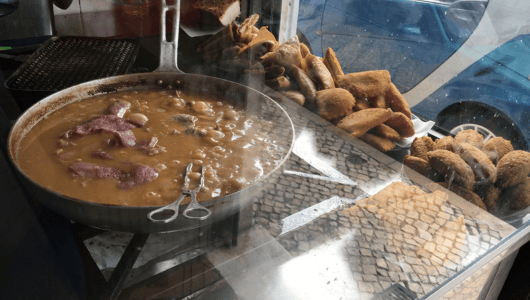
Photo by cmbsOz Tripadvisor
Ingredients for 4 bifanas
– 500g (about 1lb) pork loin, very thinly sliced
– 4 small crusty white bread rolls
– 4 garlic cloves, thinly sliced or crushed
– 2 bay leaves
– 120ml (½ cup) dry white wine
– 150ml (⅔ cup) beer
– 1 tablespoon lard
– 1 tablespoon olive oil
– 1 teaspoon sweet paprika
– Salt and freshly ground black pepper
– Piri-piri sauce, to taste (optional)
– Yellow mustard, to taste (optional)
How to make bifanas
- If your pork has not been sliced very thinly, place the steaks between two sheets of parchment paper and gently pound them with a meat mallet or rolling pin. You want thin pieces that will cook quickly without drying out.
- To marinate the pork, place the meat in a bowl with the garlic, bay leaves, white wine, paprika, a little salt and black pepper. Mix well, cover and leave for about 30 minutes.
- Add the lard and olive oil to a wide frying pan over medium-high heat. Remove the pork from the marinade and set the marinade, garlic and bay leaves aside.
- Fry the meat for about one minute on each side. If your pan is small, work in batches and give each piece enough room to brown.
- Return all the pork to the pan and pour in the reserved marinade and the beer. Add a few drops of piri-piri if you like some heat. Bring everything to a gentle simmer and cook for around 12 to 15 minutes, turning the meat occasionally, until the pork is tender and the liquid has reduced into a flavorful sauce. If it becomes too dry, add another splash of beer or white wine.
- Split the rolls without cutting them completely in half. You can warm them briefly in the oven or place the cut sides against the pan for a few seconds.
- To assemble your bifanas, put the hot pork inside the rolls and spoon some of the cooking sauce over the meat and onto the crumb. Add mustard and extra piri-piri if you wish and serve immediately while the meat is hot.
If you would rather leave the cooking to someone else, join one of our food and cultural tours in Lisbon and let us take you to the places where local specialties are at their best. Along the way, you will taste Portuguese food and learn about the stories, traditions and everyday context behind it.
Feed your curiosity on Portuguese food culture:
How to choose the right food tour in Lisbon for your travel style
The difference between Portuguese gaspacho and Spanish gazpacho
Tipping, couvert and restaurant etiquette in Portugal
How to connect with local culture and people in Lisbon and Portugal
Real people, real food. Come with us to where the locals go.
Signup for our natively curated food & cultural experiences.
Follow us for more at Instagram, Twitter e Youtube