The best Portuguese vegan food and wine in Lisbon
Traditional Portuguese cuisine revolves around meat, fish, eggs, and dairy. After all, this is a country where salt cod is said to have hundreds of recipes, pork sausages turn up in everything from soups to rice dishes, and some of the most beloved desserts depend on generous quantities of egg yolks. For vegan travelers visiting Lisbon, it might seem that experiencing the local food culture involves making quite a few compromises. Fortunately, the Portuguese capital has a number of restaurants, cafés, and independent food businesses proving that you don’t need animal products to enjoy the flavors that make Portuguese food so distinctive.
Featured photo by A Minha Avó on Instagram
Besides restaurants, Lisbon also has bakeries preparing vegan pastéis de nata, specialty shops stocking Portuguese plant-based cheeses and alternatives to traditional cured sausages, and food markets where small local producers introduce their latest creations. Even Portuguese wine deserves some attention, as not every bottle is by default vegan-friendly.
Not all Portuguese vegan food involves replacing animal products or reinventing traditional recipes. Many dishes have always relied primarily on vegetables, legumes, bread, and olive oil, and these are well worth exploring too. We’ve already covered them in our guide on how to eat vegan the traditional Portuguese way, including tips for navigating conventional Portuguese restaurant menus. Here, we’re focusing on the Lisbon businesses making Portuguese food accessible to vegans, including establishments serving plant-based versions of typical dishes and pastries, as well as places to buy Portuguese vegan specialties.
Best restaurants for vegan Portuguese food in Lisbon
Beyond the international vegan staples of burgers, bowls, and brunch, some of Lisbon’s most interesting plant-based kitchens are taking inspiration directly from Portugal’s culinary traditions. Think garlicky vegan bifanas, francesinhas with all the indulgence of the original sandwich from Porto, and meat-free versions of bitoque, alheira, or even salt cod dishes. Some chefs recreate traditional recipes as faithfully as possible, while others use plant-based ingredients to give familiar Portuguese dishes a new twist.
For a comprehensive directory of vegan restaurants in Lisbon, you can always browse HappyCow. Our recommendations focus on restaurants where Portuguese food plays an important role on the menu. These are the places we’d recommend to visitors who have limited time in the capital and want to discover how local culinary traditions translate into vegan cooking.
26 Vegan Food Project
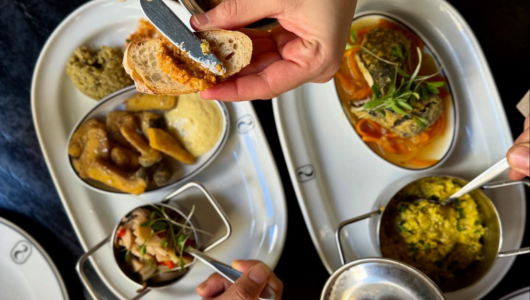
Photo by 26 Vegan Food Project on Facebook
One of Lisbon’s pioneers in plant-based dining, 26 Vegan Food Project, formerly known as Ao26, was founded in 2016 by Catarina Gonçalves, a former civil engineer who swapped construction projects for the restaurant business. Her ambition was to make vegan cooking appealing to a much wider audience, including people who couldn’t imagine a satisfying meal without meat or fish. Originally located at number 26 Rua Vítor Cordon, which inspired its name, the restaurant moved in 2022 to a larger space in Chiado, with an open kitchen, contemporary interiors, and a pleasant courtyard tucked away from the surrounding streets. In 2025, chef João Castro, who previously worked at Lisbon restaurants including Infame and Atalho, took charge of the kitchen, focusing even more on the reinvention of Portuguese culinary traditions.
The menu is ideal for anyone curious about how Portuguese seafood dishes can be recreated without seafood. 26’s Portuguese petiscos platter (pictured here) is a great place to start, as it includes a mix of traditional options in plant-based form. The “octopus salad” (salada de polvo) is prepared with marinated king oyster mushrooms, including peppers, onions and coriander like the original seafood version would. The choco frito, inspired by the famous fried cuttlefish from Setúbal, uses breaded king oyster mushrooms served with lemon and tartar sauce. You’ll also find alheira croquettes with green apple, chouriço pâté, and a creative interpretation of sardines made with marinated celeriac and nori seaweed.
The main courses include several Portuguese classics, starting with the francesinha, Porto’s famously indulgent sandwich. Instead of the usual assortment of meats, 26 uses homemade seitan, plant-based alheira and chouriço, oyster mushrooms, and melted smoked vegan cheese, all covered in the characteristic rich sauce. Bifana is another classic at 26, made with marinated seitan, mushrooms, mustard, and smoked cheese, served in bolo do caco, Madeira’s traditional flatbread. For something closer to a typical Portuguese restaurant main course, there’s tofu à lagareiro, with nori-wrapped tofu cooked in olive oil, garlic, and onion, accompanied by smashed potatoes (batata a murro) and sautéed greens. The kitchen also experiments with other plant proteins, including tempeh made from lupini beans and quinoa, used in a dish with cornbread and black-eyed pea migas and sautéed turnip greens.
Alongside the regular menu, 26 offers a changing chef’s special on weekdays, with a lunch option combining the dish of the day, soup, and a drink. The daily special is worth considering, especially for repeat visitors, but the regular menu is your best bet for Portuguese classics.
The drinks list includes wines from smaller Portuguese producers, as well as local craft beer and cocktails. If you have a sweet tooth, you may want to leave room for dessert, as the menu includes indulgent options like chocolate and peanut tart or orange and cardamom crème brûlée, which are indeed delicious, but not as Portuguese-inspired as the rest of the menu.
📍Rua da Horta Seca 5, 1200-213 Lisbon
https://26veganfoodproject.com
A Minha Avó

Photo by A Minha Avó on Instagram
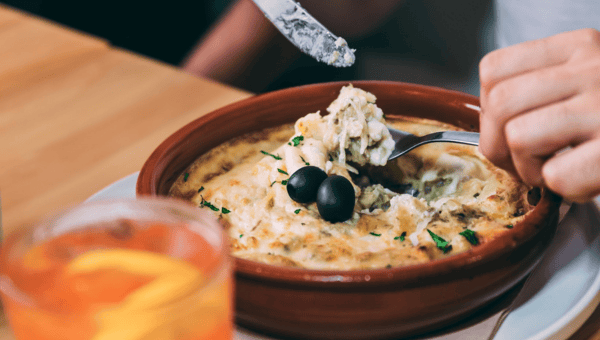
Reading the menu at A Minha Avó, you’ll almost feel like you’re at a typical Portuguese tasca. You’ll see dishes like steak with fried egg (bitoque), oven-roasted duck rice (arroz de pato), salt cod with cream au gratin (bacalhau com natas), pieces of meat with sauce and pickles (pica-pau), and some of the most popular Portuguese desserts. The difference is that absolutely everything is vegan.
The name means “my grandmother”, and that sense of familiar, comforting food is exactly what founders Pedro Mourarias and Gustavo Grilo wanted to recreate. Friends since their teenage years, they came up with the idea during the pandemic, when they realized how difficult it was to order the Portuguese dishes they had grown up eating without animal products. Neither had a background in hospitality, but in March 2022 they launched A Minha Avó as a delivery-only business. After building a following, they opened their first sit-down restaurant in July 2023, which has been gathering great feedback from vegans and curious omnivores alike.
With chef Carina Monteiro leading the kitchen, A Minha Avó focuses on recreating the flavors and textures associated with Portuguese home cooking. Seitan prepared in-house takes the place of beef and pork in several recipes, whereas mushrooms, tofu, and seaweed help reproduce the characteristics of fish and seafood. Among the starters, you can order peixinhos da horta, green beans coated in a light batter and fried until crisp, or cogumelos à Bulhão Pato, a combination of three varieties of mushrooms cooked with garlic, coriander, and white wine, inspired by the traditional clam dish. There are also croquettes made with soy and tofu, and pica-pau prepared with homemade seitan, pickles, olives, and parsley.
The bitoque is one of the restaurant’s best-known dishes and a particularly good example of the veganization of typical Portuguese recipes. In place of the usual beef steak, a slice of homemade seitan is served with the usual combination of fries, white rice, sauce, and a surprising plant-based fried “egg”. The kitchen also prepares arroz sem pato (pictured here), a vegan interpretation of Portuguese oven-baked duck rice, using oyster mushrooms, smoked tofu, and plant-based chouriço. For those who miss Portugal’s beloved salt cod recipes, the bacalhau com natas substitutes the fish with oyster mushrooms, leeks, and seaweed, baked with potatoes and dairy-free white sauce. Another option is bacalhau à moda d’avó, featuring tofu wrapped in seaweed, Portuguese cabbage, smashed potatoes, sautéed onions and peppers, and a crunchy cornbread topping. The lentil-based meatloaf stuffed with vegan alheira sausage is another particularly Portuguese creation, served with creamed greens (esparregado) and potatoes.
Portuguese desserts tend to rely heavily on eggs and dairy, so A Minha Avó’s sweets are especially appealing to vegan visitors discovering them for the first time, as well as Portuguese vegans who miss the desserts they grew up eating. Options include bolo de bolacha, made with layers of biscuits and plant-based buttercream, leite creme with its caramelized sugar topping, and doce da casa, a layered dessert of biscuits, custard, cream, and chocolate shavings commonly served in family-run restaurants.
A Minha Avó also offers a changing lunch menu, but visitors with only a few opportunities to eat out in Lisbon should prioritize the Portuguese classics on its regular menu. Whether you’re a Portuguese vegan missing the dishes you grew up with or a visitor trying them for the first time, this is one of the city’s best places for plant-based Portuguese comfort food.
📍Av. António Augusto de Aguiar 74B, 1050-016 Lisbon
www.instagram.com/a.minha.avo.restaurante
Kong – Food Made With Compassion
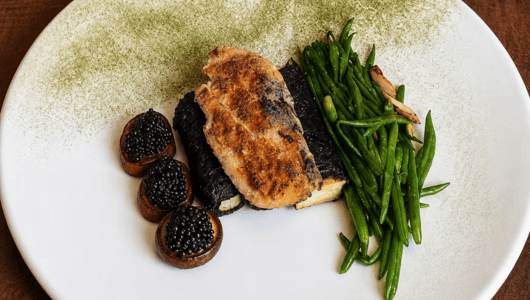
Photo by Kong
Kong was born out of animal rights activism, so much so that, if you attend an animal rights march in Lisbon, chances are you’ll come across familiar faces from Kong. When it first opened in Lisbon in 2019, Brazilian-born Sarah Lavagnoli, who developed and managed the original concept alongside owner Raul Pereira, wanted to challenge the idea that a meal without meat or fish couldn’t be satisfying. The restaurant’s name and original jungle-inspired decor played on the strength of herbivorous animals, and the philosophy has always extended beyond the plate. Kong’s team has also been known to donate part of the restaurant’s profits to organizations working for animal welfare and other causes. Today, the restaurant occupies the first floor of a historic building near Cais do Sodré, with a welcoming dining room full of greenery and wood.
With chef Ricardo Vitali involved in developing its contemporary menu, Kong has become particularly interesting for the way it recreates Portuguese comfort food using ingredients such as seitan, tofu, mushrooms, and hearts of palm. The kitchen makes most of its food from scratch, including plant-based cheeses, bread, and ice cream, and this attention to homemade components is particularly noticeable in dishes that attempt to reproduce the textures and familiar combinations of Portuguese cooking.
There’s plenty to explore among the petiscos, including the vegan pastéis de bacalhau, which feature hearts of palm and nori seaweed instead of salt cod, with the usual combination of potatoes, onion, and parsley. Setúbal’s famous choco frito gets a mushroom makeover using eryngii, or king oyster mushrooms, served with aioli and lemon. For something more traditionally meaty, there’s pica-pau, a classic Portuguese bar snack usually prepared with small pieces of beef in a garlicky sauce, accompanied by pickles and bread for soaking up the sauce. The alheira croquettes, served with mustard mayonnaise, are another good introduction to the flavor of Portugal’s most peculiar sausage, without the actual meat.
Among the mains, the bitoque is an especially convincing adaptation of the everyday Portuguese combination of steak and egg. Here, a seitan steak comes with a plant-based fried “egg”, rice, fries, and salad. The francesinha, already a favorite among customers at Kong’s previous location, is another indulgent option. This version of Porto’s famously substantial sandwich combines seitan, portobello mushrooms, plant-based sausages, caramelized onions, and vegan cheese, all covered in the restaurant’s own sauce and accompanied by fries. Seafood lovers who miss Portuguese fish dishes should look out for the filetes de pescada e robalo com arroz de marisco (pictured here), in which hearts of palm, celeriac, mushrooms, and nori help recreate the flavors and textures of fish and seafood, served with a tomato-based, brothy rice. There’s even oven-roasted “ribs” (entrecosto), made with seitan and a rich red wine sauce, served with mashed potatoes.
The menu isn’t exclusively Portuguese, including other dishes such as Brazilian feijoada and homemade mushroom ravioli. For dessert, the tarte de nata served with homemade nata ice cream is particularly worth saving room for if you’d like to end your meal with some Portuguese-inspired flavors. Note that it isn’t the traditional individual custard tart you’ll find in Lisbon’s pastry shops (see below), but a more elaborate interpretation of Portugal’s most iconic sweet.
📍Rua do Corpo Santo 2, 1200-129 Lisbon
Encanto
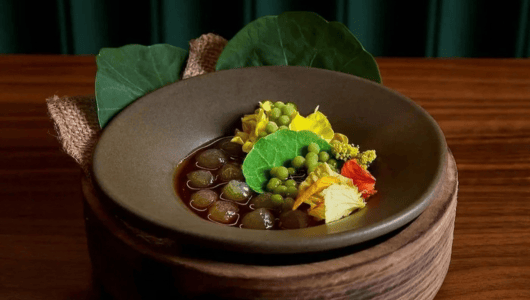
Photo by Encanto on Facebook
If you’re willing to splurge on a special-occasion meal in Lisbon, Encanto offers a different way to discover Portuguese food, with a vegetarian tasting menu that can be adapted for vegan guests. Opened in March 2022 by celebrated Portuguese chef José Avillez, the restaurant sits right next to his two-Michelin-starred Belcanto, in Chiado. Encanto earned its own Michelin star in its opening year and received a Michelin Green Star for sustainability in 2025. Unlike the other restaurants in this guide, it doesn’t concentrate on recreating traditional Portuguese dishes without meat or fish. Instead, it celebrates the extraordinary variety of vegetables, fruits, herbs, mushrooms, and other ingredients grown in Portugal, allowing their natural characteristics to inspire the cooking.
The restaurant is led day-to-day by head chef Diogo Formiga, whose background is rather unusual for a fine dining chef, as he studied biology and holds a master’s degree in marine biology. He’s particularly interested in biodiversity, seasonality, and how the farmers supplying the restaurant grow their produce. His scientific curiosity translates into a particular interest in biodiversity, seasonality, and the agricultural practices of the people supplying his kitchen. Around 85% of Encanto’s ingredients are purchased directly from carefully selected local producers, and approximately 90% of its vegetables and fruit are organic. Some are grown at Casa Nossa, José Avillez’s property near Alqueva, in the Alentejo, which has its own vegetable garden. But the restaurant’s commitment to Portuguese produce goes much further than growing a few ingredients itself.
Encanto maintains close relationships with small farmers, often planning what to cook according to what they can harvest instead of ordering ingredients to fit a predetermined menu. Formiga has explained that he regularly speaks with growers about planting schedules and upcoming harvests, sometimes changing dishes almost weekly during spring, when the availability of vegetables changes particularly quickly. Among the producers the restaurant has worked with are A Cerquinha, an organic farm near Grândola, which grows vegetables and aromatic herbs, and Neptun Pearl, an aquaculture business in the Sado Estuary that supplies Portuguese seaweed. These partnerships are particularly meaningful for small-scale producers whose work rarely receives the attention given to the chefs cooking their ingredients. At Encanto, the team takes care to introduce diners to the origins of what they’re eating, making the people who grow and harvest the food part of the experience.
Dinner consists of a seasonal tasting menu of approximately twelve courses, often combining familiar Portuguese ingredients in unexpected ways. Previous menus have included Algarvian carrots with buckwheat and coriander, arroz carolino (Portugal’s traditional short-grain rice) with wild mushrooms, pine nut tofu, and beetroot prepared à Bairrada, a playful reference to one of Portugal’s most famous regional cooking traditions. More recent creations have explored fava beans and their pods, asparagus, and even a plant-based interpretation of barriga de freira, a traditional conventual dessert normally rich in egg yolks. The kitchen also tries to use as much of each ingredient as possible, transforming vegetable trimmings into broths, sauces, and other preparations rather than discarding them. Rather than relying on a fixed selection of signature dishes, the kitchen changes the menu according to what’s in season.
The tasting menu costs a little over €150 per person, excluding drinks, with optional wine and alcohol-free pairings that include house-made kombuchas and infusions. One important detail for vegan visitors is that Encanto is ovo-lacto vegetarian rather than strictly vegan, and its regular menu may include eggs and dairy products. The kitchen can accommodate vegan diners with advance notice, so make sure to request and confirm the adaptation when booking, and you’ll get to enjoy a fully plant-based tasting menu without the usual compromises of simply removing ingredients from the plate.
📍Largo de São Carlos 10, Chiado, Lisbon
Where to enjoy vegan Portuguese pastries and café treats in Lisbon
If there’s one Portuguese specialty vegans shouldn’t have to miss out on, it’s the pastel de nata. The traditional custard tart relies on eggs and milk, but several Lisbon bakeries have developed plant-based versions that deliver the same pleasure of biting through crisp, flaky pastry into a creamy filling. And, beyond pastéis de nata, there’s a growing selection of vegan Portuguese-style cakes and savory pastries (salgados) worth making a coffee stop for.
VeganNata
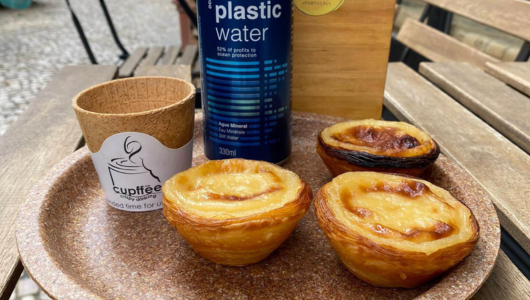
Photo by VeganNata
VeganNata is a Portuguese bakery dedicated exclusively to making pastel de nata without eggs, dairy, or any other animal-derived ingredients. The concept was developed by nutritionist Rita Santos and entrepreneur Luís Simões, who met in a coworking space where they were pursuing separate projects related to nutrition and sustainability. They joined forces in 2019 with the ambition of proving that plant-based food could be as appealing as its conventional counterpart. Their first bakery opened in Campo de Ourique in January 2020, introducing what became the first vegan pastel de nata brand certified by the internationally recognized V-Label.
Today, visitors can stop at VeganNata’s small shop on Rua da Misericórdia, in Chiado, for a freshly baked tart and a coffee. This is just a counter café where you can grab a quick bite or ask for a takeaway box. The pastéis have the characteristic golden pastry shell and creamy filling, and they’re best enjoyed warm, perhaps with a sprinkle of cinnamon, as many Portuguese people like to have theirs. The drinks selection includes espresso and coffee prepared with plant-based milk, and you can also buy boxes of six or twelve pastéis to share or take back to your accommodation. VeganNata makes it easy to enjoy one of Lisbon’s most familiar food rituals, which consists of enjoying a bica and a warm pastel de nata, here entirely plant-based.
📍Rua da Misericórdia 9, 1200-208 Lisbon
Nat’elier

Photo by Nat’elier
Not every pastry shop offering vegan pastéis de nata is exclusively plant-based and, at Nat’elier, located directly opposite Lisbon’s famous Santa Justa Lift, traditional custard tarts share the display counter with adventurous creations, including several entirely vegan flavors. The bakery opened in May 2024, with pastry chef João Batalha among its founders. The idea was to preserve the traditional craftsmanship behind pastéis de nata while experimenting with flavors inspired by desserts from around the world. The result is a dessert shop where purists can order a classic nata, but those feeling adventurous might opt for something inspired by French crème brûlée, Italian tiramisù, or American cheesecake.
João Batalha comes from a family of pastry makers and was already popular among the Lisbon vegan community before Nat’elier opened. Back in 2019, at his previous business, Pastelaria Batalha, he introduced a plant-based pastel de nata after spending months perfecting the recipe. The challenge was reproducing the crisp layers of puff pastry and the creamy, slightly caramelized custard without eggs or dairy. His version uses an oat-based filling and resembles the traditional version quite closely.
At Nat’elier, that original vegan recipe has become the starting point for several other flavors. Alongside the classic vegan nata, there’s a plant-based crème brûlée version, torched on the spot in front of the customer, as well as cookie cheesecake with a creamy topping and pieces of biscuit. Flavors keep changing seasonally, but may also include apple and cinnamon, as well as Biscoff, which incorporates the spiced caramel flavor and Lotus biscuits. These are particularly fun options if you’re visiting Lisbon with non-vegan friends, as everyone can explore different flavors without necessarily choosing the same type of pastry.
The bakery itself is also worth spending some time in, as it occupies a spacious building that preserves architectural features from Lisbon’s Pombaline period, with indoor seating on two levels, an outdoor terrace, and an open production area where customers can watch the pastry-making process. Alongside the pastéis, Nat’elier serves specialty coffee, including drinks prepared with plant-based milks. The bakery also organizes hands-on pastel de nata masterclasses, although these teach the traditional recipe containing eggs, not the vegan adaptation. Vegan participants can, however, choose to taste the bakery’s plant-based pastéis de nata at the end of the experience.
📍Rua de Santa Justa 87, 1100-581 Lisbon
Inquieta Livraria
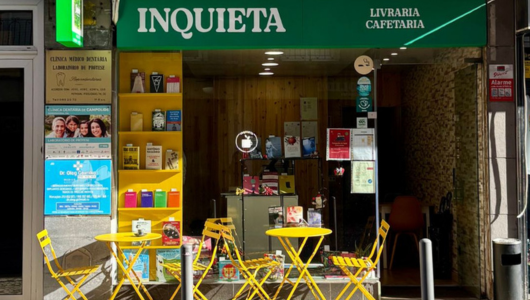
Photo by Inquieta Livraria on Instagram
In the residential neighborhood of Campolide, Inquieta combines an independent bookshop with a fully vegan café. The concept was created by Hugo Lourenço, a former bookseller who wanted the freedom to curate his own selection of titles, particularly from independent publishers. After years working in bookshops, he opened Inquieta in November 2024, adding a plant-based café to the project. Hugo is vegan himself, and the decision was partly personal, but also a response to what he saw as a shortage of fully vegan cafés in Lisbon.
The space is divided between two floors and, at street level, a small counter displays cakes and savory snacks, with a few tables for coffee. Downstairs, the atmosphere is more like that of a neighborhood cultural center, with bookshelves, comfortable seating, and walls decorated with murals by Portuguese artist Daniela Guerreiro. Alongside fiction, poetry, and books from independent publishers, there’s a selection of English-language titles, secondhand books, and a book exchange corner. Inquieta also organizes literary events, book club meetings, and other cultural activities. Check its Instagram for upcoming events, and feel free to bring your dog.
For those interested in Portuguese vegan specialties, you could have yet another pastel de nata, but it’s also worth looking out for the pão com chouriço, a vegan interpretation of the traditional Portuguese bread stuffed with slices of smoked sausage. The counter also features sweet and savory pastries sourced from small suppliers, including mini quiches, cakes, cookies, and cinnamon rolls.
Coffee is served in the usual Portuguese formats, including galão and meia de leite, prepared with plant-based milk, and there’s also vegan hot chocolate for those who prefer something sweeter. Inquieta isn’t exclusively focused on Portuguese baking, but it’s an appealing stop for a local-style breakfast or afternoon snack, particularly if you’d like to venture beyond Lisbon’s busiest tourist neighborhoods.
📍Rua de Campolide 94B, 1070-028 Lisbon
www.instagram.com/inquietalivraria
Green Beans
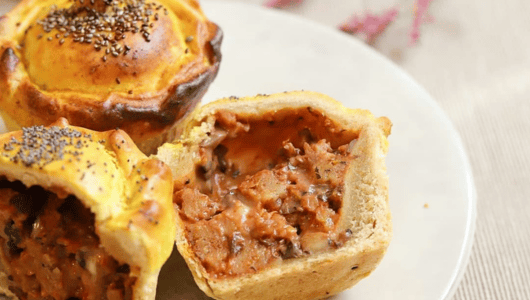
Photo by Green Beans on Instagram
Half café, half vegan grocery store, Green Beans is one of those places where you can stop for a coffee and a pastry but easily end up leaving with a bag full of things to try later. The project began in 2016 as an online store founded by Mário Curado and Alexandra, a couple who wanted to make plant-based products more accessible in Portugal. A year later, they opened a physical shop in Lisbon, joining forces with Sapato Verde, Alexandra’s vegan footwear and accessories business. Since May 2024, both businesses have been based on Rua do Poço dos Negros, in a compact space combining a café, grocery shelves, and a selection of ethical lifestyle products. Their philosophy goes beyond food, with animal welfare and environmentally conscious consumption guiding what they sell.
Mário is also responsible for the café’s kitchen, where the menu combines everyday vegan comfort food with several popular Portuguese specialties. In November 2023, he developed Green Beans’ own pastel de nata recipe, with a creamy plant-based custard filling and crisp puff pastry. Unlike the specialist bakeries mentioned above, Green Beans also has a broader selection of pastries, including croissants filled with vegan custard cream, chocolate and hazelnut, or custard and almonds. The savory options are particularly interesting if you’re looking for something resembling a typical Portuguese bakery snack. Try the empada de alheira, a small savory pie filled with plant-based Portuguese sausage, mushrooms, and spinach, or a vegan croissant misto, with dairy-free cheese and plant-based ham.
For a more substantial bite, there’s a tosta de alheira with spinach and melted vegan cheese, or a sandes de panado, featuring homemade breaded seitan served in bolo do caco, Madeira’s traditional bread, with mayonnaise, tomato, and greens. The café also prepares burgers, pizzas, and other quick meals, although its Portuguese-style snacks are what we’d prioritize if your goal is to immerse yourself in the world of traditional Portuguese food. Order a galão made with oat milk, or simply an espresso, and you’ll get to enjoy a typical Portuguese coffee break, minus the animal products.
Many of the ingredients used in Green Beans’ kitchen are also available to buy. The grocery selection includes plant-based cheeses, milk alternatives, and vegan versions of Portuguese enchidos, including chouriço, farinheira, linguiça, and morcela. You can browse the shelves after eating or explore the online shop, which also offers delivery.
📍Rua do Poço dos Negros 15-17, Lisbon
Where to shop for Portuguese vegan food and wine in Lisbon
As Green Beans shows, Lisbon’s food scene also includes an increasing number of Portuguese producers developing plant-based alternatives to some of the country’s most recognizable specialties. You can now put together a very Portuguese spread of bread, olives, cheese, cured “meats”, and wine without a single animal-derived ingredient. Whether you’re staying in an apartment and planning to cook, putting together a picnic, or simply looking for edible souvenirs from Lisbon, there are several shops and markets worth exploring.
Finding vegan groceries in Lisbon is considerably easier than it was just a few years ago. Major supermarket chains such as Continente, Pingo Doce, and Auchan stock plant-based milks, yogurts, meat substitutes, tofu, seitan, and other vegan products, although the selection varies between stores. For a wider range, Celeiro has branches throughout Lisbon and a substantial selection of organic foods, vegan products, and ingredients that can be harder to find in conventional supermarkets. However, if you’re particularly interested in Portuguese-made products, independent groceries are often much better than the larger chains.
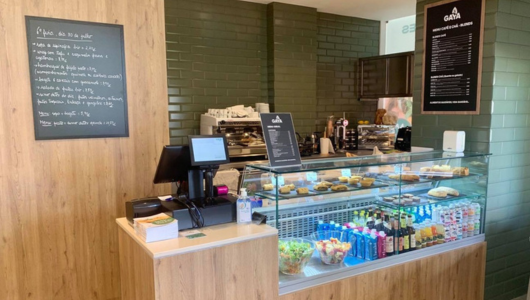
Photo by Gaya on Instagram
Founded by chef Daniela as a family business, Gaya Veggie Market (Avenida das Nações Unidas 21) combines a small plant-based grocery shop with a café and an artisan production kitchen. The team prepares its own vegan meals, including seitan steaks with onions (bifes de seitan de cebolada), lasagna, croquettes, vegetable burgers, and other dishes available frozen to take home. The shop also sells bulk ingredients and groceries from small suppliers, prioritizing local producers whenever possible. Also worth knowing is Loja São (Rua de São Bento 106B), a small gourmet and organic grocery carrying a curated selection of foods and drinks, including plant-based products.
For a more direct encounter with Portugal’s independent vegan food producers, however, we’d recommend timing your visit to coincide with the Lisbon Vegan Market. Usually held on the second Sunday of the month at Loft Marvila (Rua Pereira Henriques 3), the free-entry market brings together small businesses selling vegan cheeses, enchidos, pastries, ready-to-eat meals, and drinks. There’s also clothing, cosmetics, and other vegan merchandise, and the participating businesses vary between editions, so there’s usually something new to discover.
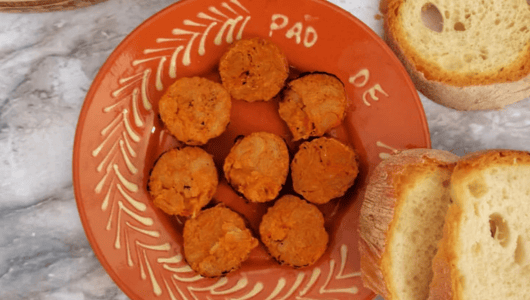
Photo by Fumeiro Vegano on Instagram
Among the Portuguese producers worth looking out for is Fumeiro Vegano, a project from Setúbal dedicated to recreating traditional Portuguese enchidos without meat. Its range includes soy-based chouriço, plant-based farinheira, spicy linguiça, and morcela, which is Portugal’s version of blood sausage. Some products are smoked over holm oak wood, much like traditional sausages, giving them true depth of flavor. If you’d like to prepare Portuguese dishes at home, or simply serve slices of vegan chouriço with good bread and olives as petiscos, these ingredients are a must. The brand also sells online and through selected retailers, including Green Beans, which we have mentioned above.
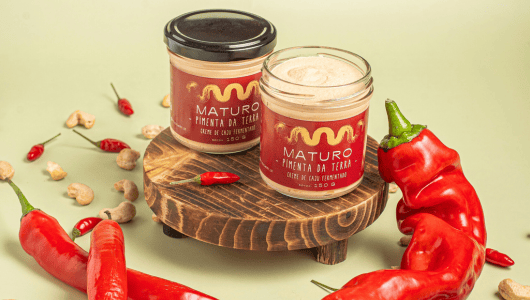
Photo by Maturo on Lisbon Vegan Market

Among the plant-based cheese makers which usually participate in the Lisbon Vegan Market, we can find Maturo, which makes fermented cashew-based “cheeses”. Their flavored varieties include herbs and garlic, sun-dried tomatoes and basil, or pimenta da terra, the distinctive chili pepper preparation from the Azores. Another Portuguese brand worth seeking out is MUKA, which produces fermented and aged cashew-based alternatives to cheese in Lisbon. Its range includes Cajuberto, inspired by Camembert, Brito, a Brie-style creation, and Veden, a semi-cured variety. Fermentation and maturation give these cheeses more complex flavors and textures than the processed vegan slices commonly sold in supermarkets. MUKA also sells directly through its website, selected supermarkets and even branches of Portuguese bakery chain Gleba.
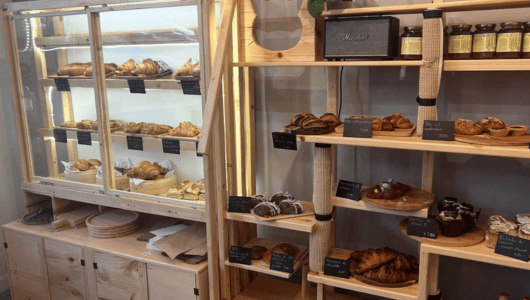
Photo by Moko Vegan Bakery on Instagram
For sweet and savory treats with a distinctly Portuguese character, Comer com Cor makes several versions of pão com chouriço, stuffed with plant-based sausage and, depending on the recipe, vegan cheese, olives, or caramelized onions. There are also croquettes, quiches, and desserts such as salame de chocolate. Another producer worth seeking out is Food with Jo, whose creations include pães de Deus, mushroom rissóis, seitan croquettes, and savory bites filled with vegan farinheira. Around Christmas, the selection becomes even more Portuguese, with plant-based versions of azevias, filhoses, and bolo-rei. For something more elaborate, CAOS – O Futuro É Vegetal, founded by pastry chef Sara Soares and chef Rodrigo Cláudio, has expanded from sophisticated vegan pastries into creative savory cooking. Their recent work has included developing a bolo de figos from Alcorriol, near Torres Novas, using fresh and dried figs and fig leaves to celebrate this regional specialty. Moko Vegan Bakery also makes occasional appearances at vegan markets, but you can also visit its permanent shop in São Sebastião. Run by Taiwanese couple Joyce Chi and Renato Lai, Moko has a permanent bakery at Rua Pinheiro Chagas 69B, where vegan Portuguese favorites such as pastéis de nata and puffs with “ham and cheese” (folhados mistos) share the counter with Taiwanese-inspired treats, including buns filled with black sesame or azuki beans.
And what about Portuguese wine? Although it may come as a surprise to some people, not all wines are vegan, because animal-derived substances such as egg whites, casein (a milk protein), gelatin, or fish-derived fining agents may be used during clarification. Fortunately, many Portuguese winemakers now produce vegan-friendly wines, either by using plant-based or mineral alternatives or by avoiding these fining processes altogether. Keep in mind that organic, biodynamic, or natural wine isn’t necessarily vegan, so it’s worth looking for a vegan indication on the label or confirming with the producer and, when in doubt, you can also visit Barnivore to explore an extensive list of vegan friendly wines from Portugal.
Besides the independent food shops we’ve already mentioned, Garrafeira Nacional is worth visiting if you’re looking for Portuguese vegan wine. One of Lisbon’s most established wine stores, with knowledgeable staff who can help you navigate Portugal’s wine regions and producers, it also has a particularly useful online catalog dedicated to vegan wines, where you can filter the selection by region, grape variety, producer, and style. Several well-known Portuguese producers offer vegan wines, including Soalheiro, known for its Alvarinho from Vinho Verde, Quinta do Crasto in the Douro, Herdade do Peso, whose Trinca Bolotas red from Alentejo is listed as vegan, and Niepoort, with its organic Quinta de Nápoles red. Just keep in mind that a producer having vegan wines doesn’t necessarily mean its entire range is suitable, so check the specific bottle and vintage.
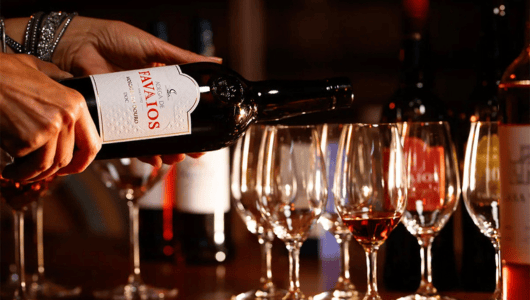
Photo by Revista de Vinhos
Portugal’s famous fortified wines deserve attention too because, just like regular table wines, Port wine, for example, isn’t automatically vegan. However, some of the country’s best-known Port houses now have vegan-certified wines. Taylor’s has V-Label certification for several Ports, including Fine Ruby, Fine Tawny, and LBV, while Poças has certified selections ranging from white and ruby Ports to aged tawnies. Fonseca also identifies its Terra Prima Organic Port as vegan-friendly. Besides Port, Adega de Favaios, in the Douro, introduced vegan certification for its Moscatel de Favaios and Favaíto ranges in 2022, making them another option for an after-dinner drink. [LINK PENDING: Portugal’s best after-dinner drinks]

Photo by Pure West
Another Portuguese drink worth trying in Lisbon is ginjinha, the city’s traditional sour cherry liqueur. Although traditionally made by macerating sour cherries in alcohol with sugar, it’s worth checking the brand rather than assuming every version is vegan. Two certified options are Licor de Ginja MSR, produced in Alcobaça, and Vila das Rainhas, from Óbidos, which uses just sour cherries, sugar, water, and alcohol. Both are excellent examples of traditional Portuguese drinks that don’t need any recipe adaptation to be suitable for vegans. Another familiar after-dinner drink is Licor Beirão, the famous herbal liqueur from Lousã. Although it isn’t vegan-certified, the producer has confirmed that no animal products are used in its ingredients or production process.
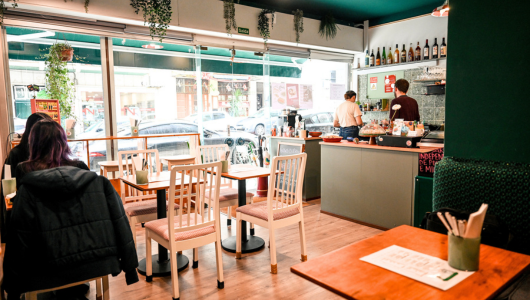
Photo by Time Out Lisboa
Of course, you don’t have to buy a whole bottle to enjoy Portuguese vegan wine in Lisbon. Besides the restaurants we’ve already recommended, there are a few other places worth knowing. In Bairro Alto, Adega Etelvina (Travessa dos Fiéis de Deus 74) is a tiny, traditional-style wine bar where owner Tiago Pinheiro Alves serves around 50 Portuguese wines by the glass, including a changing selection of vegan-friendly options. For a completely different atmosphere, head to Casa da Mully (Rua Dr. Gama Barros 17A/B – pictured above), in Alvalade. This entirely vegan neighborhood café serves vegan wines alongside homemade ice cream, sandwiches, and snacks, including its own interpretation of Portuguese pica-pau made with smoked tofu. Casa da Mully also hosts concerts, film screenings, and other cultural events, making it a lovely place to spend an afternoon or early evening. For more places to explore Portugal’s wines, check our guide to the best wine bars in Lisbon.
We hope this guide inspires you to explore Lisbon’s food scene beyond the usual vegan options and discover just how creative Portuguese cuisine can be. For more local food stories, insider tips, and delicious places to explore, follow Taste of Lisboa on Instagram.
Feed your curiosity on Portuguese food culture:
How to eat vegan the traditional Portuguese way
Portuguese chefs redefining vegetarian and vegan cuisines
Pastel de nata: where to eat the best Portuguese custard tarts in Lisbon
The 10 best wine bars in Lisbon
Real people, real food. Come with us to where the locals go.
Signup for our natively curated food & cultural experiences.
Follow us for more at Instagram, Twitter e Youtube