
Winter day trips from Lisbon for food lovers

Winter is a great time to explore the food and wine regions around Lisbon. Temperatures are usually mild enough for a day out, and the cooler weather makes regional soups, slow-cooked dishes, cheese, fortified wines and long meals even more appealing. The colder months are also a good time for visiting wineries, markets, bakeries and small towns without the crowds you may come across during the peak summer season.
Featured photo by Casa Negrito on Facebook
We already have a broader guide to day trips from Lisbon that we locals also enjoy, covering destinations for beaches, history, hiking, wine and sightseeing throughout the year. This time, we are choosing destinations mainly for what there is to eat and drink during the colder months. Some of these places are established day-trip destinations, while others are much closer to Lisbon and are worth visiting even if the main plan is simply to have a memorable regional lunch, buy local products and return to the city later that day.
Azeitão and Palmela for Queijo de Azeitão, Moscatel and Tortas de Azeitão
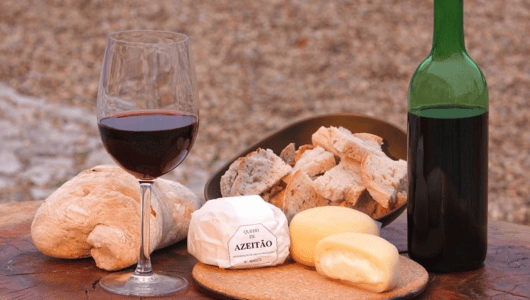
Photo by New in Setúbal
Winter suits the traditional foods and drinks of Azeitão and Palmela particularly well. Queijo de Azeitão DOP is produced throughout the year today, but its traditional production season ran from November to May, before temperature-controlled facilities made cheesemaking possible during the warmer months. Made from raw sheep’s milk and coagulated with thistle flower instead of animal rennet, this small cheese has a soft, creamy interior and its flavor keeps getting more pronounced as it matures. It is, hands down, one of the best Portuguese cheeses.
Restaurants, local food shops and specialist charcuteries throughout the area serve and sell Queijo de Azeitão, but you can also see how it is made. Fernando & Simões Queijaria Artesanal, in Quinta do Anjo, can be visited as part of a pre-booked experience organized with nearby winery Venâncio da Costa Lima. The approximately three-hour program includes a visit to the cheesemaking facility during production, followed by a guided winery visit and tastings of three wines, Moscatel Roxo and several artisanal cheeses.

Photo by Doce RAR
While in Azeitão, you should also try Tortas de Azeitão, which are soft sponge rolls filled with doce de ovos, a rich cream made from egg yolks and sugar, and finished with a little cinnamon. Several local pastry shops make their own versions, including Casa Negrito, where the tortas are produced in-house and can be eaten alongside other regional specialties. Pairing one with a small glass of Moscatel de Setúbal, the aromatic fortified wine produced in the area, is one of the most typical ways to enjoy them.
The vineyards around Azeitão and Palmela form part of the Península de Setúbal wine region, mostly associated with the Castelão grape and Moscatel de Setúbal. In Vila Nogueira de Azeitão, the Casa-Museu José Maria da Fonseca runs guided visits every day, including during the winter months, taking visitors through the historic cellars before a tasting. Bacalhôa offers another great visit in Azeitão, combining wine with the collection at its Adega Museu and, depending on the chosen program, the historic Palácio da Bacalhôa. In Palmela, Quinta do Piloto also runs pre-booked visits to the vineyards and cellar followed by wine tasting.
This area offers some of the best wine tourism experiences near Lisbon, but a full winery tour is not necessary if you mainly want to taste the region’s wines. Wine Corner by José Maria da Fonseca, beside the Casa-Museu in Azeitão, serves dozens of wines by the glass and bottle alongside petiscos and dishes using regional ingredients, making it easy to compare Moscatel with other wines from the producer over lunch. In the center of Palmela, Casa Mãe da Rota de Vinhos represents producers from across the Península de Setúbal and offers wine and Moscatel tastings without the need to do an actual winery visit. Its shop also stocks Queijo de Azeitão, sheep’s butter, regional sweets and other local products.
For more ideas around the Setúbal Peninsula, including places for seafood, regional pastries and Moscatel, see our Setúbal travel guide for food lovers.
🚗 Azeitão is around 30 to 40 minutes from Lisbon by car, and Palmela takes roughly 40 minutes. Driving is the easiest option if you want to visit more than one winery, stop at a cheesemaker and move between Azeitão and Palmela during the same trip.
🚌 Carris Metropolitana connects Lisbon with both destinations. Line 4730 runs from Sete Rios toward Setúbal via Vila Nogueira de Azeitão, taking roughly 50 minutes to one hour. Line 4710 connects Gare do Oriente with Palmela in around 50 minutes. Vila Nogueira de Azeitão is particularly manageable without a car, as several shops, pastelarias and José Maria da Fonseca are within walking distance of the center.
Alcochete for eel stew and Fogaça de Alcochete
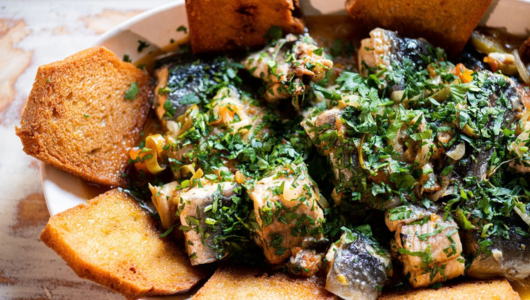
Photo by 24Kitchen
Alcochete’s food is a product of the town’s relationship with the Tagus estuary, and you can see this particularly well in dishes based on fish and eels. Ensopado de enguias, an eel stew served over slices of bread that soak up the broth, is one of the town’s traditional specialties and can be found in several local restaurants. Its rich, hot broth makes it even more comforting and delicious during the colder months.
Several restaurants around town specialize in eel, so there are a few places where you can try this local specialty. Ai Caramba includes both ensopado de enguias and fried eels (enguias fritas) among its specialties, and Don Peixe also serves eel alongside other local fish and seafood. A Taverna is another option for traditional eel dishes. Particularly at weekends, booking ahead is recommended, and it is worth confirming availability if eel is the main reason for your trip, as this may vary with the seasons.

Photo by Ponto de Espadana
Alcochete also has its own traditional sweet, Fogaça de Alcochete, a firm round cake flavored mainly with cinnamon and lemon, with a crisp exterior and a softer center. Its history is connected with the Círio dos Marítimos, a religious tradition associated with the town’s seafaring community, but fogaças are eaten locally outside the festivities too. Padaria Popular, one of the traditional bakeries in town, is a good place to look for them and buy a few to take back to Lisbon.
If you want to spend more time eating around town, our Alcochete travel guide for food lovers has more recommendations for restaurants, bakeries and other local specialties.
🚗 Alcochete takes around 30 to 40 minutes from Lisbon by car, crossing the Vasco da Gama Bridge. Traffic on the bridge can add considerably to journey times, particularly on weekday mornings and late afternoons.
🚌 Carris Metropolitana line 4702 connects Lisboa-Oriente with Alcochete, making this an easy south-bank food trip to do without a car. Depending on traffic and where you get off in Alcochete, the trip should take approximately one hour.
Moita for fish stew and “loaded pork bones”
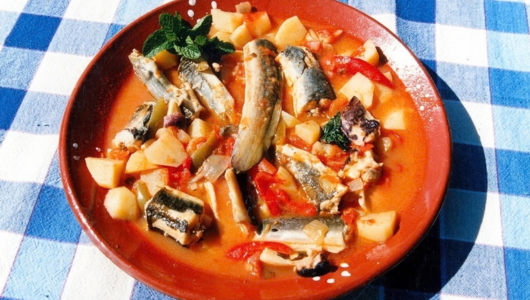
Photo by CM Moita
The riverfront communities of Moita developed a style of fish stew associated with the fragateiros, the men who worked aboard the traditional cargo boats that once carried goods along the Tagus. Caldeirada à fragateiro combines several kinds of fish cooked together with potatoes and other vegetables, producing a generous amount of broth and the kind of warming meal that feels so good during the colder months.
Restaurants around Moita and the small riverside towns of Gaio and Rosário usually prepare the dish but, as usual, we recommend checking before you travel specifically for it. Keep in mind that the fish used can depend on what is available, and caldeirada is usually prepared for two people rather than as an individual portion. Baía Tejo, beside the Tagus in Rosário, serves the dish for two and has a menu focused mostly on fish and seafood. In Moita itself, Tapas Wine Bar is another option where Caldeirada à fragateiro features among the traditional Portuguese dishes.
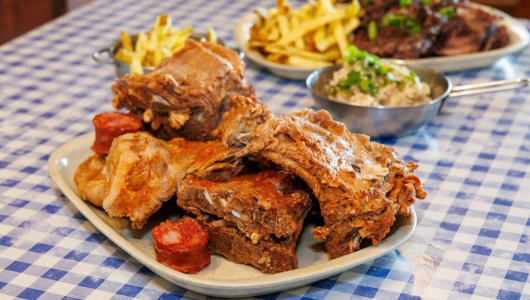
Photo by CM Moita
Those who enjoy hearty, old-school Portuguese cooking should also look out for Ossos Carregados, literally “loaded bones”. Pork bones with plenty of meat attached are cooked slowly until the meat becomes tender enough to easily fall off the bone, while the cartilage and juices create the rich, slightly sticky texture that characterizes the dish. 3ª Parte, in Gaio-Rosário, is particularly well known for its Ossos Carregados, and Restaurante Girassol, in Moita, is another place where this kind of traditional cooking is taken seriously.
Ossos Carregados belong to a broader style of Portuguese cooking that makes full use of inexpensive cuts and parts of the animal, turning long cooking times into deeply flavored dishes rather than relying on prime cuts. If this is your kind of food, you may also enjoy our guide to some of Portugal’s more unusual traditional dishes. For many more restaurant and typical dish recommendations in this part of the south bank, see our full Moita travel guide for food lovers.
🚗 Moita is approximately 35 to 45 minutes from Lisbon by car. Having your own transport is useful if you want to combine lunch in Moita with the smaller riverside settlements of Gaio and Rosário, where several traditional restaurants are located.
🚌 Carris Metropolitana line 4701 connects Lisboa-Oriente with Moita, with several services throughout the day. Once in Moita, the town center is easy to explore on foot, but reaching restaurants in Gaio or Rosário would require a local bus or taxi.
Vila Franca de Xira for hearty chicken soup and torricado with olive oil
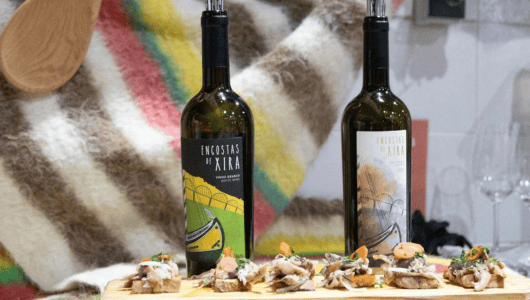
Photo by Jornal Valor Local
Vila Franca de Xira’s rural cooking is connected with the agricultural communities of the Lezíria, and torricado is one of the simplest yet most delicious examples of this heritage. Thick slices of rustic bread, traditionally already starting to go stale, are toasted over the fire, rubbed with garlic and generously dressed with olive oil and salt. The most typical local version is served with roasted salt cod, as pictured here.
Several traditional restaurants in Vila Franca de Xira serve torricado com bacalhau assado. O Retiro, in the center of town, is particularly known for the dish, and Bica do Chinelo is another long-standing local restaurant that has regularly participated in municipal campaigns dedicated to torricado. During November, the town celebrates Mês do Torricado e dos Sabores do Campo, when many more restaurants throughout the municipality put torricado and other Ribatejo country dishes on their menus.
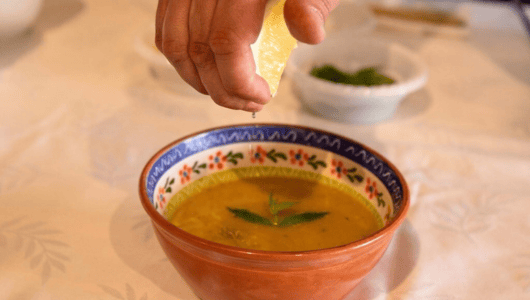
Photo by CM VFX
The other local specialty particularly suited to winter is Canja à Vila-Franquense, which happens to pair very well with torricado for a more substantial meal. Do not expect the light chicken soup usually called canja in Portugal, the kind people often eat at home when they are feeling under the weather. The Vila Franca version is much more substantial, combining chicken with pork trotter, chouriço, beef, small pasta, vegetables and mint. The recipe is officially registered as a gastronomic trademark of Vila Franca de Xira and is rooted in the filling meals once prepared by farmers and campinos, the traditional cattle herders of the Ribatejo.
The municipality promotes Canja à Vila-Franquense throughout the year, although it becomes much easier to find during the November gastronomic campaign. Tasca da Vila and Clube Taurino are among the local restaurants that usually serve it as part of the official food program. As it is not necessarily a permanent item on every menu, check what is being served if the canja is one of the main reasons for your visit.
Torricado and Canja à Vila-Franquense are only part of the traditional food culture of this area along the Tagus. Our Vila Franca de Xira travel guide for food lovers includes more restaurants, local dishes and ideas for your day trip from Lisbon to Vila Franca de Xira.
🚗 Vila Franca de Xira is around 30 minutes from Lisbon by car via the A1. Most of the restaurants mentioned above are in or close to the center, so once you arrive you will not need the car much unless you plan to explore the surrounding countryside.
🚆 CP suburban trains connect Santa Apolónia and Oriente with Vila Franca de Xira in roughly 25 to 35 minutes. The railway station is right by the town center, so it is definitely easy to do this day trip from Lisbon without a car. You can check current schedules on CP’s Lisbon–Azambuja timetable.
Almeirim and Santarém for Sopa da Pedra, Caralhotas and Tejo wines
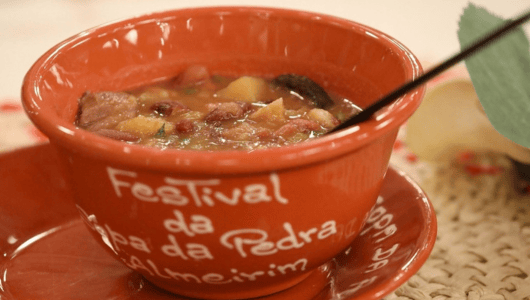
Photo by Notícias de Coimbra
Enjoying a bowl of Sopa da Pedra in Almeirim is one of the most wintery foodie things you can do relatively near Lisbon. Despite the name, which literally translates as “stone soup”, there is no stone in the soup served. The reference comes from the folk tale of a traveling friar who persuaded his hosts to keep adding ingredients to a soup he claimed he could make from a stone. The actual dish is very substantial, including beans and potatoes, as well as different cuts and preparations of pork (including sausages such as chouriço, morcela and farinheira), so many people enjoy it as an actual meal instead of as an appetizer. Sopa da Pedra de Almeirim is registered as an EU Traditional Speciality Guaranteed, recognizing the ingredients and preparation associated with the local version.
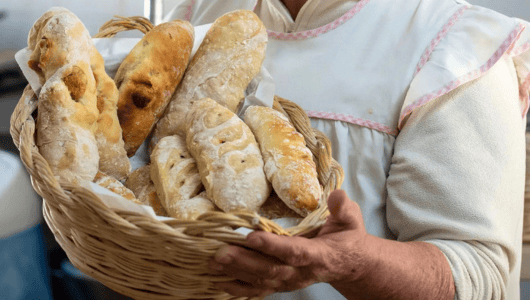
Photo by Andarilho
Almeirim has several restaurants specializing in Sopa da Pedra. Start at O Toucinho, which is the restaurant most closely connected with the dish, believed to be the first restaurant in town to serve Sopa da Pedra. O Forno is another well-established choice, with the soup permanently among its regional specialties. O Pinheiro is even more interesting if you want the full Almeirim combination, as it also makes Caralhotas, the round rustic loaves traditionally eaten with the soup. Another option is Tertúlia da Quinta, with a menu specialized in Ribatejo cooking, featuring not only Sopa da Pedra but also other dishes such as roast bull, pork with migas and pork trotters with coriander (pezinhos de coentrada).
The surrounding vineyards belong to the Tejo wine region, so it is easy to add a winery visit to the day. Fiúza & Bright, in Almeirim itself, offers pre-booked winery visits and tastings, including an experience that combines wine with a lunch featuring Sopa da Pedra. Quinta da Alorna is another option nearby, with visits to the vineyards, winery and barrel room followed by tastings, and Quinta do Casal Branco also welcomes visitors for vineyard and winery tours with Tejo wines and regional food.
If you prefer to concentrate on lunch rather than book a separate winery visit, order a red from the Tejo region with the soup. The combination will allow you to taste local cuisine paired with local wine, which complement each other.
Santarém is just across the Tagus from Almeirim, about a 15 minute drive, and makes a great addition to the day, particularly if you want to spend some time exploring before or after lunch. Our Santarém travel guide for food lovers goes into much more detail about the city and the surrounding Ribatejo food culture.
🚗 Driving from Lisbon to Almeirim takes approximately one hour, mostly via the A1, while Santarém is around 15 minutes away on the other side of the river.
🚆 Regular CP trains travel from Santa Apolónia and Oriente to Santarém in around one hour. From Santarém, a taxi is the simplest way to continue to Almeirim. Ribatejana line 901 also connects Lisbon, Almeirim and Santarém, but the road journey is considerably longer than taking the train to Santarém first.
Torres Vedras for sweet bean pastries and local wine

Photo by Visite Torres Vedras
The Pastel de Feijão de Torres Vedras has a longer documented history than many travelers might expect. Its production in the town can be traced back at least to 1840, and by the 1890s local newspapers were already treating it as a Torres Vedras specialty. In 1896, it was included among the characteristic regional sweets presented at the Exposição Ethnografica Portugueza. The recipe combines white beans, almonds, egg yolks and sugar inside a thin pastry shell. The beans contribute texture more than making this specialty taste like actual beans, as the almonds and egg yolks end up dominating the filling. In 2025, the name Pastel de Feijão de Torres Vedras was formally added to the European register of Protected Geographical Indications, meaning certified versions must be produced and packaged within the municipality.
Trying more than one version makes sense because Torres Vedras has a surprisingly large number of producers. Fábrica Coroa has been making them since 1940 and sells directly from its premises on Praça 25 de Abril, being a great stop as you also explore the historic center. Maria Adelaide has one of the strongest connections with the early history of the pastry, with a recipe passed down through the same family. For a more recent comparison, Massa Mãe com Alma won the municipal Pastel de Feijão competition in 2024, and Serra da Vila took first place in 2025. Pastéis Brasão is another long-established producer and, if you are curious to see how the pastries are made beyond simply tasting them, you can visit their factory in Bonabal, outside the center, as long as you arrange your visit in advance.
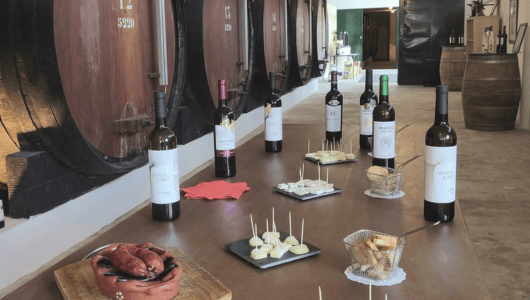
Photo by Visite Torres Vedras
Because with good food there shall be good wine, we would also recommend exploring the wines of this region. Torres Vedras has its own Denomination of Origin within the wider Lisboa wine region, and the municipality’s Wine Tourism Route brings together 14 producers, ranging from cooperatives and more contemporary wineries, to more independent family estates. AdegaMãe is one of the most complete options for wine tourism near Torres Vedras, with several tasting formats and vineyard experiences. You can also stay for a meal at its restaurant Sal na Adega, overlooking AdegaMãe’s vineyards. Quinta da Boa Esperança offers a more intimate estate experience, with vineyard walks, tastings, picnics and food-focused activities, while the family-run Quinta da Almiara combines an old wine press with a modern winery and offers everything from straightforward tastings to vineyard tours and wine lunches. Those looking for a more traditional side of the local wine industry can also explore some of the cooperatives included on the route, such as those of Adega Cooperativa de Carvoeira, Adega Dois Portos and São Mamede da Ventosa.
Late October and early November are especially interesting if the dates work for you. The Festas de Torres Vedras regularly include the municipal Pastel de Feijão de Torres Vedras competition alongside competitions for local wines, and producers take part in tastings and sales around the celebrations.
Our Torres Vedras travel guide for food lovers has more recommendations for exploring the town and surrounding countryside.
🚗 Torres Vedras is around 40 to 45 minutes from Lisbon via the A8. AdegaMãe is outside the town center, so a car is useful if the winery is part of your plans.
🚌 Barraqueiro Oeste lines 700 and 701 connect Campo Grande with Torres Vedras, with the fastest services taking roughly one hour. From the bus terminal, the center is walkable, while reaching wineries in the surrounding countryside will normally require a taxi.
Lourinhã for Aguardente DOC and sweets made with local brandy

Photo by Center of Portugal
Aguardente Vínica DOC Lourinhã is one of Portugal’s most distinctive protected drinks, made from local grapes that are first fermented into relatively low-alcohol, high-acidity wines before being distilled and aged within the demarcated region. The denomination was created in 1992 specifically for this style of wine brandy, making Lourinhã unique in Portugal. Aging takes place over several years in wooden casks, traditionally including French and Portuguese oak and, in some cases, chestnut. During that time, the spirit develops its amber color and the notes of wood, spice, vanilla and dried fruit that become more pronounced in older expressions.
There are only two certified commercial producers, which makes it possible to get a surprisingly complete introduction in a single day. Adega Cooperativa da Lourinhã is the most straightforward place to understand the production process. Visits take you through the winery and aging cellars before a tasting of different expressions, making this the better choice if your priority is understanding how the aguardente is distilled, aged and blended. The other certified producer is Quinta do Rol, a family estate outside town that also produces other wines and offers rural and equestrian tourism. Contact either producer in advance as tastings aren’t usually available for walk-ins.
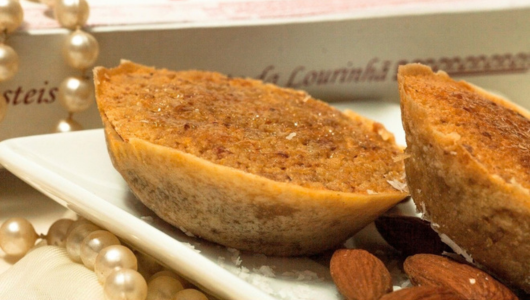
Photo by Gourmet da Vila
The local aguardente has even inspired its own pastry, the Pastel de Aguardente da Lourinhã, which is a relatively recent creation, not to be confused with Portugal’s extensive repertoire of sweet conventual recipes. Pastry chef Pedro Ferreira developed it at Pastelaria Lourinius after wondering why Lourinhã did not have a sweet built around one of its most iconic local products. The pastry combines Aguardente DOC Lourinhã with a filling containing ingredients such as almonds, eggs, sugar, milk and coconut. The pastel de aguardente has even won gold at a national competition dedicated to traditional Portuguese pastry. Lourinius is the obvious place to try the original, but it is not the only way local pastry makers use the DOC. Doce Lourinhã produces chocolates filled with Aguardente DOC Lourinhã, among other sweets using ingredients associated with the municipality, so we would recommend visiting both to taste different ways of cooking with the local spirit.
November is an especially interesting time to visit, particularly during the annual Quinzena Gastronómica da Aguardente DOC Lourinhã, during which restaurants across the demarcated area use the spirit in starters, main courses, desserts and drinks. The more recent Aguardente DOC fesT also hosted tastings, pairings, showcookings and other activities dedicated to the region’s brandy.
🚗 Lourinhã is roughly one hour from Lisbon by car, generally following the A8 before continuing west toward the coast.
🚌 Barraqueiro Oeste operates buses between Lisbon and Lourinhã. Public transportation works well if you mainly want to explore the town, visit the cooperative and try the pastries, but a car is much more useful if you also want to include Quinta do Rol or other stops in the surrounding countryside.
Nazaré for Caldeirada à Nazarena and dried fish
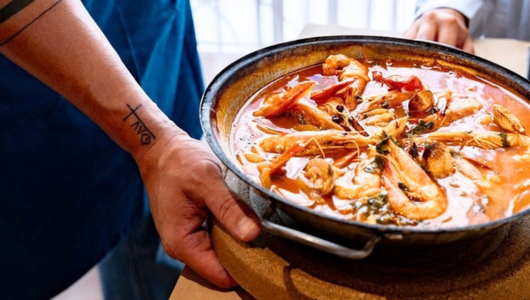
Photo by Taberna d'Adélia on Instagram
Nazaré may be one of Portugal’s classic beach destinations, but winter is also a good time to visit, albeit for different reasons than sunbathing or swimming in the ocean. From roughly October to March, powerful Atlantic swells can produce the giant waves of Praia do Norte, amplified by the underwater Nazaré Canyon just offshore. Since Garrett McNamara’s record-breaking surf here in 2011, Nazaré has become one of the world capitals of big-wave surfing, attracting professional surfers, photographers and crowds to the Forte de São Miguel Arcanjo whenever a major swell is forecast.
Cold, windy weather is also a good excuse for one of Nazaré’s most characteristic dishes, Caldeirada à Nazarena. This fish stew is made with several types of fish cooked with potatoes, onion, tomato and other ingredients, with the different fish enriching the broth as they cook. It comes directly from the town’s fishing culture and is traditionally the sort of substantial dish made to feed several people, so you’ll rarely come across a restaurant serving it in individual portions. Look for this style of caldeirada at restaurants like Fonte Mar, if you’d like to enjoy lunch after visiting the lighthouse, while still enjoying views toward Praia do Norte. Maria do Mar has been serving fish since 1977 and is also known for dishes such as caldeirada, fish rice and grilled fish. Taberna d’Adélia, highlighted by the Michelin Guide, excels at serving traditional fish and seafood dishes, including caldeirada, as well as more contemporary options inspired by the local cuisine. A Tasquinha is another central option for traditional seafood cooking but, because caldeirada depends on the fish available on the day, no matter where you go, you shouldn’t expect a standard recipe featuring always the same species.
Our Nazaré travel guide for food lovers has even more recommendations for restaurants in the city, as well as things to see and do around town when you’re not eating.

Photo by CM Nazaré
Nazaré’s dried fish represents another way to taste the regional fishing culture. Locally, there is a distinction between fully dried fish (peixe seco) and peixe enjoado, which is only partially dried. Species traditionally prepared this way include horse mackerel, sardines, dogfish and even octopus. The fish is gutted, washed, salted, opened flat and laid out on racks to dry in the sea air, usually for a couple of days depending on the weather. Fully dried fish can be shredded and eaten as it is, but it is also commonly boiled and served with potatoes, olive oil, vinegar or lemon and garlic. You can see this process along the southern end of Nazaré’s beachfront at the so-called Museu Vivo do Peixe Seco. You’ll be able to see the preparation area as well as the drying racks, and the ladies who are working and selling the dried fish directly from the beachfront. You can see a preservation method that is still part of everyday local food culture but that, considering the advanced age of most women involved in the process, is likely to die within the next few decades if the younger generations don’t take an interest in this trade. So the flavor of dried fish may be an acquired taste, but there’s no doubt that this is edible culture at its best.
🚗 Nazaré is around one hour and 30 minutes from Lisbon via the A8. On major swell days, expect much heavier traffic and parking around Sítio and Praia do Norte than on an ordinary winter day.
🚌 Nazaré is also easy to reach by public transportation. Direct buses run from Lisbon to Nazaré throughout the day, with Rede Expressos services from Sete Rios taking around one hour and 50 minutes. FlixBus and Rodoviária do Oeste also operate the route, with some departures from Oriente or Campo Grande depending on the service.
Our Lisbon food and cultural walks run throughout the winter too, so there is no need to stop exploring Portuguese food once you are back in the city. If you would like to eat your way through Lisbon with us, we would be very happy to welcome you on one of our tours. Until then, let’s keep in touch via Instagram.
Feed your curiosity on Portuguese food culture:
Homestyle Portuguese food for the winter
How to stay warm in Portugal this winter – Foodies edition
The best wine tourism experiences near Lisbon
Real people, real food. Come with us to where the locals go.
Signup for our natively curated food & cultural experiences.
Follow us for more at Instagram, Twitter e Youtube