
Roasted chestnuts and the celebrations of São Martinho

There’s a particular smell that defines November in Portugal. Step out into the streets of downtown Lisbon around autumn, and you’ll probably notice the sweet and smoky perfume of roasted chestnuts crackling over charcoal. Street vendors tend to their metal carts, twisting paper cones where they serve the warm, comforting castanhas assadas, which are, hands down, one of the best Portuguese street foods you can enjoy during the cold weather.
Feat photo by Viva o Vinho
 Photo by Florestas.pt
Around the 11th of November, this smell becomes almost symbolic. It’s Dia de São Martinho, Saint Martin’s Day, when the first new wines of the season are uncorked, bonfires are lit, and chestnuts are enjoyed by people of all ages. The legend says that when Saint Martin shared his cloak with a beggar during a storm, the skies cleared and the sun came out. This moment gave birth to the expression Verão de São Martinho, the “summer” of Saint Martin. And indeed, this is the time of year when, for a few days, autumn softens and the weather becomes warmer even though, these days, who can truly tell what’s a Saint Martin “miracle” or simply global warming.
For many of us, this celebration also carries a lot of nostalgia. It recalls magustos, which are communal chestnut feasts held in town squares, schoolyards, or countryside fields, where smoke and laughter filled the air. Even today, the tradition lives on, though sometimes in different forms, such as pop-up street parties, more formal winery gatherings, or Lisbon’s modern takes on this ancient rural ritual.
Who was São Martinho and how the tradition began
The story of São Martinho comes from a time long before roasted chestnuts became a snack you could find being sold on street corners. According to legend, Martin was a Roman soldier riding through a bitter storm when he came across a beggar shivering from the cold. He cut his cloak in half and shared it with the man and, almost instantly, the clouds parted, revealing the sun. That sudden change in weather became known as Verão de São Martinho, or Saint Martin’s summer, and ever since, the date has symbolized both generosity, and also the transition between seasons.
 Image by Santo Tirso TV on Facebook
Beyond this tale of kindness, November 11th falls right after the harvest season, when wine barrels are opened for the first tasting and families gather to celebrate abundance before winter’s arrival. In rural Portugal, people would drink água-pé, a light, sweet drink made from the second pressing of grapes, and jeropiga, a fortified wine infused with spirit. And, of course, they roasted chestnuts over open fires, because this was the season when they were freshly fallen and at their peak of quality.
Over time, these humble rituals merged with the feast of Saint Martin, mixing religion, agriculture, and community rituals, into something that is now very traditionally Portuguese. Looking at it from a more modern lens, we could say that these celebrations are proof that, once again, Portugal’s saints sure know how to throw a party.
What is a magusto?
If Christmas is about family and Easter is about faith, São Martinho is about fire. The word magusto comes from the Latin magnus ustus, meaning “great fire”, which is indeed indispensable to this celebration. Traditionally, it’s a gathering around a bonfire where chestnuts are roasted, songs are sung, and cups of jeropiga or young wine (vinho novo) are passed around. In the countryside, it was a communal event marking the end of the agricultural cycle, when neighbors would come together to share what they had, usually the new wine, the latest harvest’s chestnuts, and a sense of community and warmth.
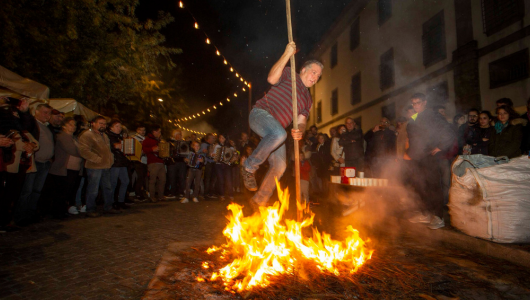 Photo by CM Arouca
For many Portuguese, the magusto is also tied to childhood memories involving smoky schoolyards, hands blackened with ash, and that first bite of hot chestnut that burns your fingers but feels worth it. In some towns, people would even jump over the embers for good luck or smear soot on each other’s faces, a playful reminder of the day’s carefree spirit.
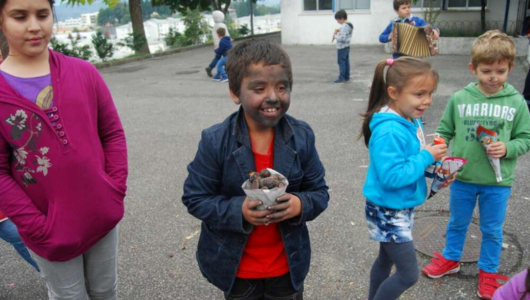 Photo by Agrupamento de Escolas de Ponte da Barca
Today, magustos have taken on new forms. In Lisbon, you might find them at local markets, wineries, or community centers, still being essentially gatherings where the scent of castanhas assadas mingles with music and street food, but now in a much more curated urban setting. Sometimes (but not that commonly), some restaurants may prepare special menus featuring chestnut dishes and seasonal desserts. From neighborhood associations, especially in traditional areas like Graça and Mouraria, to public celebrations in parks and squares, the magusto has certainly evolved and, unfortunately, it has been becoming more rare. But, when it still happens, its essence remains the same, revolving around the fire, food and gatherings of those looking forward to having fun like back in the good old days.
The Portuguese tradition of eating roasted chestnuts during Saint Martin
You can’t talk about São Martinho without talking about castanhas assadas. They are, quite literally, the flavor of the season, marking the arrival of late autumn.
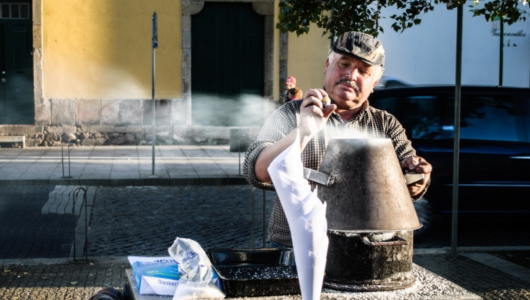 Photo by Ora Pois
In Lisbon, as in many towns across Portugal, street vendors still roast them the traditional way, over charcoal, in small metal drums with holes that let the fire breathe. The chestnuts are scored with a knife to prevent bursting, sprinkled with plenty of coarse salt, and shaken constantly until the outer skins blacken and the insides turn tender and sweet. They’re served wrapped in paper cones and, before stricter food regulations came along, these cones were very commonly made from pages torn from the Páginas Amarelas, that is, the old yellow telephone directory. Nowadays, vendors use food-grade paper, though some still print it to resemble those nostalgic pages, so don’t be surprised if your cone looks like a tiny newspaper. In recent years, a few have even adopted modern versions of the wrapping with two compartments, one for the warm chestnuts and another for the discarded peels. The act of buying them, grabbing the paper cone, and peeling them and savoring them slowly, is a delicious way to warm your hands as you walk the streets of Lisbon.
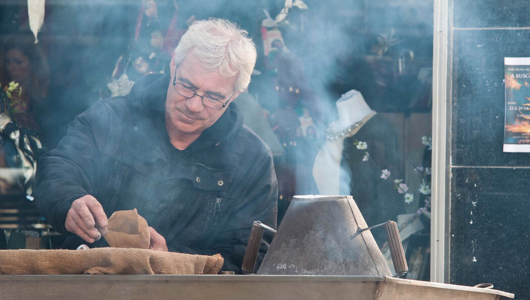 Photo by Ericeira Mag
Long before the potato or even maize became part of the Portuguese diet, chestnuts were a staple food across the country, especially in mountainous regions such as Trás-os-Montes, where wheat didn’t grow easily. They were boiled, ground into flour, turned into stews and breads, being the kind of humble ingredient that kept families fed through the cold months. That’s why, even today, the chestnut holds symbolic weight, as it represents sustenance, generosity, and a certain joy of simplicity. If you eat roasted chestnuts in Portugal during November (or any other time during winter), you’ll be participating in a custom that has been warming the hands and the hearts of locals for many generations.
What to eat and drink on São Martinho
If São Martinho had a table, it would be modest but full of comfort. The main star is, of course, roasted chestnuts, but the day is also about toasting the season’s first sips of vinho novo, Portugal’s “new wine”, which is usually fresh, slightly fizzy, and low in alcohol. Traditionally, it’s served alongside jeropiga, a sweet fortified wine made by adding grape spirit to unfermented must, or água-pé, the humble country drink made from the second pressing of grapes.
 Photo by VortexMag
These were once the drinks of rural households, where nothing went to waste. Today, they’re part of the folklore of São Martinho, enjoyed at magustos all over the country. While in Lisbon, it is more difficult to take part in the traditions revolving around these drinks but, if you are lucky, some tascas may offer them on special days. If not, they may make an appearance at restaurants featuring seasonal menus that sneak chestnuts into savory dishes and desserts, from chestnut soup (sopa de castanha), to pork meat with chestnuts (rojões com castanhas – pictured below), or chestnut pudding (pudim de castanha).
 Photo by Restaurante Furna
How travelers can experience São Martinho in Lisbon
If you find yourself in Lisbon around the 11th of November, consider it perfect timing. This is when the city smells like roasted chestnuts and locals seem to have collectively agreed that standing outdoors with a paper cone and a glass of something sweet counts as a celebration. You don’t need a ticket, a reservation, or even a plan, just follow the scent of smoke.
The easiest way to join in is to grab castanhas assadas from one of the many street vendors scattered around the city. You’ll find them downtown near Rossio, along Avenida da Liberdade, or by the tram stops in Chiado and Martim Moniz. You’ll likely hear them before you see them, as some vendors still call out “Quentes e boas!” (“Hot and good!”), like they did back in the day, a shout that’s somehow become part of the soundtrack of Portuguese autumn. If pairing your chestnuts with jeropiga seems like an impossible task in downtown Lisbon, grab a glass of sour cherry liqueur (ginjinha) instead, as it’s just as warming and it will probably hit the same spot.
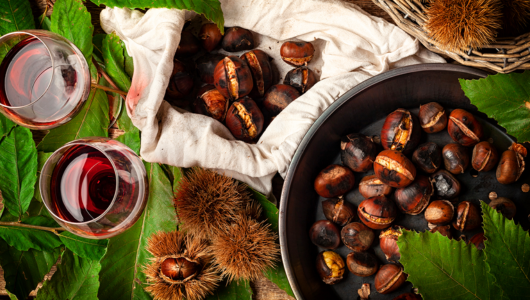 Photo by Balance Fitness Club
If you’re after something more communal, look for magusto events hosted not only in Lisbon’s markets and neighborhoods but also by local juntas de freguesia, the small parish councils that often organize open-air gatherings. In recent years, the Junta de Freguesia de Arroios has roasted chestnuts in Praça José Fontana, Misericórdia has held celebrations in Jardim de São Pedro de Alcântara, and Estrela has hosted its own magusto in the park that shares its name. Others pop up at places like the Mercado de Campo de Ourique, Jardim da Estrela, or Parque Eduardo VII, with roasted chestnuts, live music, and plenty of wine to go around. Even smaller neighborhood associations, such as those in Graça, Alcântara, and Penha de França, join in with informal parties that capture the same cheerful, smoky spirit.
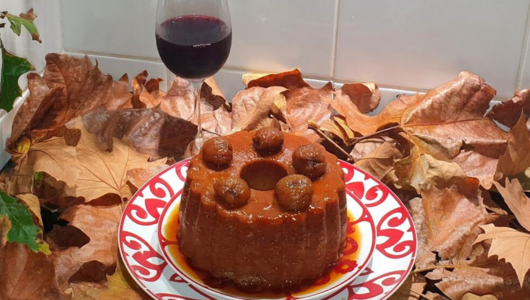 Photo by Receitas de Culinária TV
Some wineries and restaurants also mark the occasion with São Martinho menus, revolving around hearty comfort food, chestnut desserts, and wine pairings to complete the experience.
And for those who won’t be in Portugal in November, there’s still a way to join in from afar. With just a handful of chestnuts, a bit of salt, and the right spirit, you can bring a little taste of São Martinho to your own kitchen.
How to make roasted chestnuts at home
Chestnuts aren’t just delicious, they’re also naturally gluten-free, low in fat, and a great source of fiber and vitamin C. In short, they’re a guilt free excuse to keep snacking while also diving deeper into Portuguese food culture.
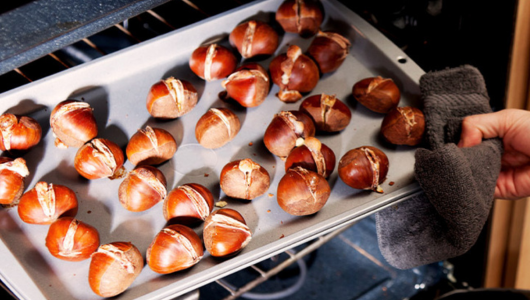 Photo by A Pitada do Pai on Intermarché
Nothing quite compares to the smoky flavor of the castanhas assadas you’ll find on Lisbon’s streets, but you can still recreate a surprisingly good version at home. Here’s how:
Ingredients:
– Fresh chestnuts
– Coarse salt
– Water
Instructions:
- Preheat your oven to 220°C (425°F).
- Score the chestnuts: with a small, sharp knife, cut a shallow cross on the rounded side of each one. This prevents them from bursting in the oven and makes peeling easier later.
- Soak (optional but worth it): place the chestnuts in a bowl of warm water for about 10 minutes. This helps soften the shells and gives you a more tender result.
- Drain and arrange them on a baking tray in a single layer, cross side up. Sprinkle generously with coarse salt.
- Roast for 20 to 25 minutes (depending on the size of your chestnuts), shaking the tray halfway through, until the shells are darkened and the cuts have opened up.
- Wrap and rest: as soon as they’re done, bundle them in a clean kitchen towel for a few minutes. The steam helps loosen the skin, making them easier to peel and, ultimately, more enjoyable.
Serve them warm, ideally with a glass of jeropiga or, if you’re far from Portugal, whatever sweet wine makes you feel closest to it. The taste won’t be exactly the same as the ones roasted over charcoal on a Lisbon street corner, but it’ll carry the same spirit of warmth and comfort and, we hope, serves as an appetizer that will make you feel like booking a trip to Portugal during Autumn.
Following the spirit that is often associated with Portuguese food culture, São Martinho is really about slowing down, sharing, and savoring life’s simple things. If you’d like more stories like this, and plenty of reasons to get hungry for Portugal, follow Taste of Lisboa on Instagram.
Feed your curiosity on Portuguese food culture:
St. Anthony or St. Vincent: Who is the patron saint of Lisbon?
The history of Fado and how to experience it live in Lisbon
10 typical drinks from Portugal
Óbidos travel guide for food lovers
Real people, real food. Come with us to where the locals go.
Signup for our natively curated food & cultural experiences.
Follow us for more at Instagram, Twitter e Youtube