
Portugal’s best bean dishes – Recipe and where to eat them in Lisbon

Beans have been in the Portuguese pantry since before bacalhau became a national obsession or fish contributed to Portugal’s modern food identity. Archaeological and historical sources point to the cultivation of fava beans in the Iberian Peninsula since at least Roman times.
Feat photo by 24Kitchen
Before going any further, it is worth clarifying what we mean by beans in the context of Portuguese food. Historically, this category includes more than the dried beans most people picture today. Before the arrival of beans from the Americas, fava beans were already part of the Iberian diet, well established in Iberian territories for at least two thousand years. Although they are often treated as a separate ingredient in modern cooking, favas belong to the same broader legume family and play a similar nutritional and culinary role. The beans that now dominate Portuguese pantries, such as white and red beans, only arrived after the 16th century, following contact with the Americas. Over time, these New World varieties gradually took over many of the roles once filled by older legumes, but without completely replacing them.
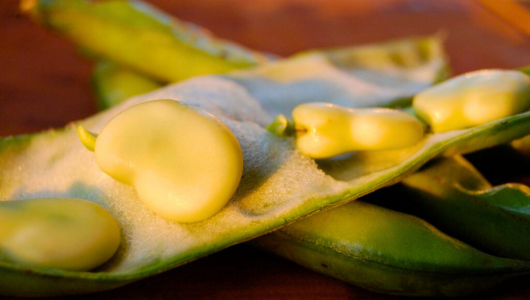
Photo by Atlas Obscura
During a large part of Portugal’s history, especially in rural areas, beans were a part of what is today known as the Mediterranean diet. That way of eating meant building meals around cereals, legumes, seasonal vegetables, olive oil, and bread, with animal protein appearing far less frequently than it does today. Meat and fresh fish were not everyday foods for most people. They were only enjoyed occasionally, depending on your income level, the occasion, and even according to your geographical situation. Inland communities depended heavily on dried foods that could be stored, while along the coast fish was naturally more accessible, but even there it was not consumed with the regularity people today might expect.
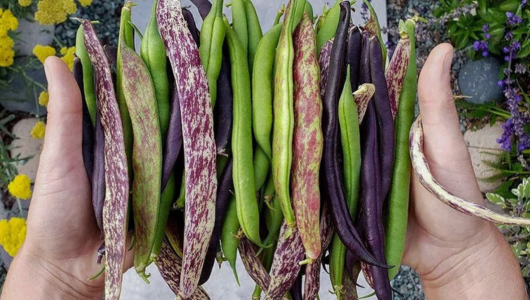
Photo by Hortas Biológicas
Until well into the 20th century, beans were the largest sources of protein for people in Portugal. They were satiating and provided energy, not costing much, making them the obvious choice for the majority of the population. Until at least the end of the Estado Novo dictatorship, in the mid 70s, beans and other pulses would appear daily at the table of most households, only later to start being replaced by meat and fish, as people’s purchasing power increased. The most common meals were thick stews, sometimes with a little meat or fish for added flavor, but with beans being the base, along with some greens, and bread. Historically, Portuguese cuisine favoured plant protein, so no wonder some old-time Portuguese recipes were naturally vegan.
The arrival of beans from the Americas after the 16th century expanded this repertoire significantly. New varieties, including white beans (feijão branco), black-eyed peas (feijão frade), red kidney beans (feijão vermelho), lima beans (feijão manteiga), and black beans (feijão preto), adapted quickly to Portuguese soils and kitchens.
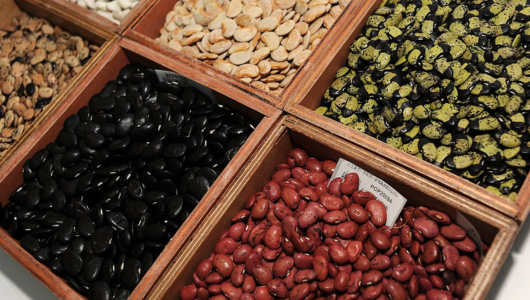
Photo by Neil Palmer on Wikipedia

Today, Portugal is often described as following an Atlantic diet more than a Mediterranean one, with a strong emphasis on fish, seafood, and animal protein much more heavily than in the past. This change happened because of improved living standards, refrigeration, and access to fresh products, particularly after the democratic revolution of 1974. But let’s not forget how recently these habits have actually taken place and that, for most of the 20th century, beans and legumes, along with grains, were the main sources of nutrition for the Portuguese.
This is how, until today, you’ll find plenty of bean dishes in Portuguese cooking. Not just soups and side dishes, but also main dishes, festive recipes and, thanks to the tradition of convent sweet making, even desserts. Back in the days when flour was scarce or expensive, cooked and mashed beans provided bulk and texture for sweets, without relying entirely on wheat. This logic and technique is also found in several parts of Asia, making the connection between Asian and European (particularly Portuguese) food narratives undeniable.
From slow-cooked stews to unexpected desserts, there are the best Portuguese bean and fava bean recipes:
Bean soups from Portugal
Sopa da pedra | Kidney beans and meat soup
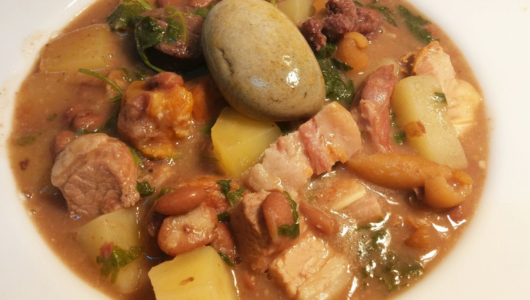
Photo by Mulher Portuguesa
Sopa da pedra originated in Almeirim, in the Ribatejo region. According to the popular story, a travelling friar tricked a villager into sharing ingredients by claiming he could make soup from a stone (pedra) alone. Of course, we are not meant to believe this literally happened, but it still reflects how a lot of Portuguese rural cooking used to happen, starting with almost nothing, adding a bit of this and a bit of that, and with creativity ending with a satisfying meal.
Sopa da pedra’s base is red kidney beans, slowly cooked until soft and creamy. To this base are added ingredients that would have been available in most households, like smoked pork cuts, cured sausages, garlic, onion, olive oil, bay leaf, and sometimes even a little blood sausage. Flavor wise, sopa da pedra is earthy and warming, with a little smokiness from the cuts of meat that add a lot of flavor to the broth.
Even though we can enjoy sopa da pedra in menu restaurants today as an appetizer, back then it was supposed to be a main meal. In fact, while it’s technically just a sopa, this recipe is between a soup and a stew. If you’re looking for a quick warm option in Lisbon today, you’ll even find sopa da pedra in soup dedicated restaurant chains we normally have in our mall food courts, such as Loja das Sopas. Other traditional Portuguese restaurants, particularly those with a focus on regional cooking, might end up having sopa da pedra on occasion, but soups are usually not a permanent part of most Portuguese menus as they tend to change daily, so you’d have to keep an eye out for it. If you are feeling truly adventurous and want to experience sopa da pedra at its very origins, know that Almeirim is only about an hour and a half drive from Lisbon. There, you can go to popular restaurants such as O Pinheiro and O Forno, or better yet to O Toucinho, the family-run house where sopa da pedra was first served, today still made daily according to the original recipe, which is now EU-certified. Besides beans, vegetables and cured meats, at O Toucinho they do in fact place a stone inside the pot and, according to local tradition, whoever finds it is expected to pay the bill.
Sopa antiga de Alcains | Bean soup from Alcains
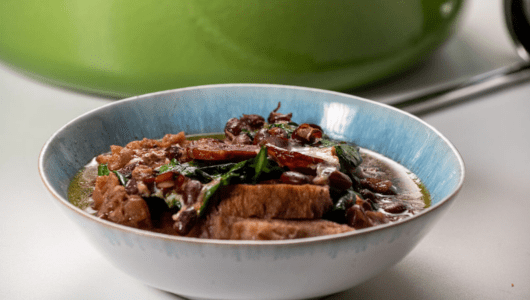
Photo by 24Kitchen
Sopa antiga de Alcains comes from the Beira Interior, the central inland part of Portugal known for its cold winters, and a long tradition of making food that had to last. It is also known as sopa da matação (in Portuguese, slaughtering), as it’s typically prepared with ingredients available during the time of the pig’s slaughter.
Sopa antiga de Alcains is prepared with red beans, stale bread, cured cuts such as chouriço, eggs, greens, Portuguese olive oil, onions and cumin. Everything is cooked together in a pot but then it goes into the oven for a finishing touch, before it is served not just as an appetizer soup, but as an actual main meal, as it’s that filling.
This soup has some clear similarities with sopa da pedra, but sopa de Alcains makes use of bread to thicken the stock, in a way, at least back in the day, “stretching” the meal. Both have in common that they could be served more as a main than as a “simple” starting soup.
Unfortunately, you’ll rarely find sopa antiga de Alcains on menus in Lisbon. And Alcains, just north of Castelo Branco, is about two and a half hours’ drive from Lisbon, so you’d have to be very curious about this soup to travel there just to experience a warm bowl. So, we’d love to challenge you to make it at home, following these simple steps:
Ingredients to serve 4:
– 300g cooked red beans, plus about 300 ml of their cooking liquid
– 1 medium onion, finely chopped
– 1 small chouriço, sliced into thin rounds
– 50g fresh spinach
– 60ml olive oil, plus 2 tablespoons extra
– 1 bay leaf
– 2 eggs, lightly beaten
– 125g stale bread, thinly sliced
– Salt, black pepper and a pinch of ground cumin
Method:
- Heat the olive oil in a saucepan over medium heat. Add the chopped onion, a small pinch of salt, the bayleafand the sliced chouriço. Cook gently until the onion is soft and the fat from the chouriço has started to flavor the oil. Season lightly with black pepper and cumin.
- Pour in the bean cooking liquid and bring to a simmer, allowing the flavors to come together for a few minutes.
- Arrange the sliced bread in an ovenproof dish and ladle the hot broth over it, making sure the bread is well soaked. Scatter over the cooked beans and spinach, then drizzle with the extra olive oil. Add the beaten eggs, gently distributing them across the surface. If the mixture looks too thick, add a little hot water.
- Bake in a preheated oven at 200°C for about 20 minutes, until the soup is set and lightly bubbling. Serve hot and enjoy!
Sopa de feijão verde | Green beans soup
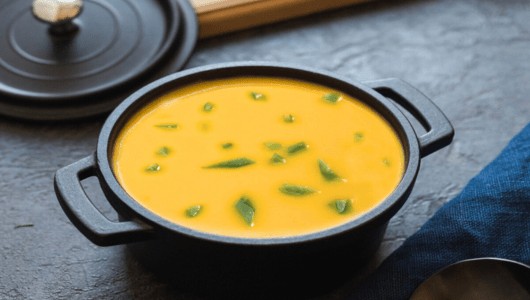
Photo by Horto do Campo Grande
Few things are as ingrained in everyday Portuguese eating habits as a bowl of vegetable soup, served almost automatically at the start of a meal, in homes, cafés, canteens and tascas.
Most Portuguese vegetable soups share a common logic. They begin with a simple base of onion, garlic, olive oil and water, often thickened with potato, carrot or pumpkin. From there, ingredients change with the season, the region, or simply depending on what ingredients are available. Unlike the heavier soups with meats we explored above, these vegetable soups are much lighter and they do not usually replace the main meal, only complement it with a serving of vegetables, often missing from the Portuguese plate, usually dedicated mostly to animal protein and carbs.
Feijão verde refers to green beans, which, despite often being treated as a vegetable, are botanically a type of bean, harvested before the seeds fully develop. This soup consists of thinly sliced green beans added to a lightly thickened vegetable base, flavored with olive oil during the cooking process and, at the table, often poured over it for added taste and nutritional value.
In Lisbon, sopa de feijão verde is easiest to find where Portuguese people actually eat on a daily basis. Lunch spots serving daily specials (pratos do dia), neighbourhood tascas, and traditional restaurants with rotating soup options will often have it on offer.
Portuguese petiscos and side dishes with beans
Peixinhos da horta | Green bean tempura
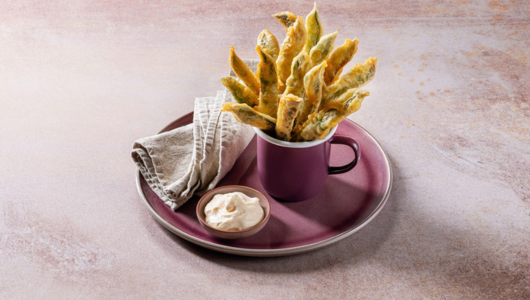
Photo by Fula
Peixinhos da horta have certainly travelled far beyond their place of origin, even if Portugal doesn’t always get the credit for it. This appetizer consists of green beans dipped in batter and fried, being at the origin of Japanese tempura, which is way more well-known worldwide.
The name literally translates as “little fish from the garden”, as once the beans are fried, their appearance resembles deep-fried little fish, also popular. The technique is basically the same and, when fish was scarce, one could simply do a similar recipe with green beans, more widely available and that, once deep-fried, would taste great, as most fried foods do anyway. Peixinhos da horta are indeed delicious, with a crispy exterior thanks to the batter, and a soft green interior, all often highlighted with at least a squeeze of lemon or, like it’s common in contemporary Portuguese taverns today, with fancier dips such as mayonnaise with garlic and/or herbs.
In the mid-16th century, Portuguese traders and missionaries arrived in Japan. Besides trade in firearms and new ingredients, they introduced the cooking technique of lightly battering and frying vegetables and seafood, which the Japanese adapted into what we now know as tempura. While tempura has long since developed its own identity, peixinhos da horta are widely regarded as its culinary precursor, exemplifying how Portuguese culinary influences have shaped global eating practices.
In Lisbon, peixinhos da horta are easy to find, but quality varies, as do the dips. Traditional spots serving petiscos are usually good options to enjoy them as an appetizer. We particularly enjoy them at Faz Frio, at Cantinho do Avillez, where they are served with tartare sauce, and at Graça 77 for a vegan version (normally the batter has eggs), where they even come with a vegan mayo for dipping. You can also enjoy peixinhos da horta as a vegetarian meal served with naughty rice, and the most amazing panoramic views of Lisbon, by reserving a table at Ponto Final, in Cacilhas, just a ten minute boat ride across the Tagus river from Lisbon.
Salada de feijão frade com atum | Black eyed peas and tuna salad
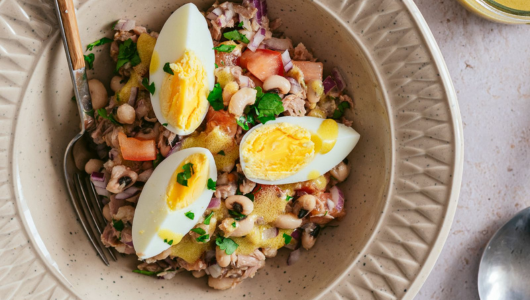
Photo by Continente Feed
Salada de feijão frade is an almost “compulsory” taste of summer here in Portugal. In fact, all year round, we tend to do a lot of quick but satisfying (and actually healthy) meals that make good use of pantry staples, such as jars of cooked beans and canned seafood. At home, black-eyed peas and canned tuna salad is usually enjoyed as a main meal, but you can also find it in restaurants as a petisco, to share with those sitting at the table with you along with other small plates.
The recipe couldn’t be easier, as it consists basically of black-eyed peas, mixed with tuna canned with olive oil or brine, along with finely chopped onion, parsley, and sometimes tomato. Hard-boiled egg is a common addition, and everything is seasoned simply with olive oil, vinegar or lemon juice, salt and pepper. This is not a recipe that comes from times of scarcity or that is associated with a rural setting. On the contrary, this is modern food prepared quickly with things that come pre-cooked, such as the jarred or canned beans and the tinned fish, and that is also a good option for people careful about following healthy eating habits.
In Lisbon, salada de feijão frade com atum is served in traditional restaurants (like Alto Minho or Horta dos Brunos), as well as pastelarias that serve budget friendly daily specials. It is less commonly found as a permanent part of the menu, but it does show up here and there, particularly during the summer, when people favor lighter food options.
Migas de feijão frade | Mashed fried bread with black eyed peas
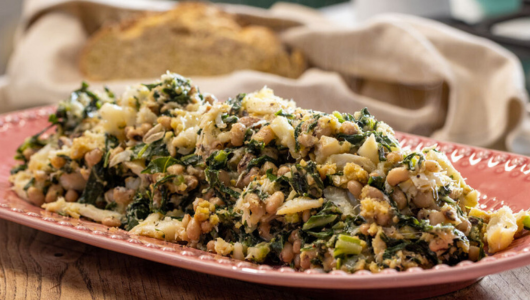
Photo by 24Kitchen
Migas are a way of dealing with stale bread, a staple that was never meant to be wasted. Before zero waste cooking was trending, necessity dictated that old bread would be soaked in water or broth, broken into small pieces, and brought back to life in the pan, through a dish that has virtually infinite potential for variations.
Thinking of moist bread may not sound appealing at first but if you cook it and season it right, migas are perhaps one of Portugal’s most surprising dishes. The recipe varies depending on the cook, and also depending on the region, particularly in Alentejo and Ribatejo, where they are most common.
Migas de feijão frade are one of the most common versions, with black-eyed peas, which add protein to the dish. They are usually combined with garlic, olive oil and very often with greens such as cabbage or turnip greens. But because migas are extremely versatile, some cooks take the basic plant-based version and add salted cod or cured meats, such as sautéed bacon or chorizo, for added flavor. In the region of Beiras, it’s also common to prepare migas with feijoca, a larger and much meatier white bean variety, replacing the black eyed peas.
Most home cooks don’t even have a recipe for migas with beans, as you normally follow your instincts and end up using what you have. This could mean using wheat bread or cornbread (broa), opening a jar of kidney beans or using some leftover beans you had from a previous recipe, as well as greens if you have some in hand, and adding animal protein or not, depending on what you like best. In restaurants, especially those focusing on Alentejo cuisine, you are much more likely to come across simpler migas, without the added beans. At Infame in Lisbon, they have migas de broa (with cornbread), Portuguese cabbage and kidney beans, which may be served with salted cod or as a vegetarian option.
Arroz de feijão | Kidney bean rice
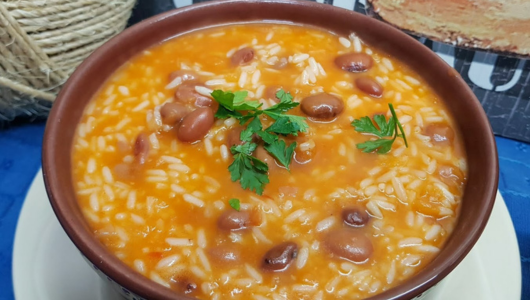
Photo by Ruralea
Arroz de feijão is one of Portugal’s best rice dishes, and it just so happens that it is also one of Portugal’s best bean dishes – it’s just that good! This is one of those Portuguese dishes that probably every person in the country has not only tried, but that probably ends up eating on a more or less frequent basis. Rice and beans in Portugal is not as common as in other countries, such as for example Brazil or parts of Latin America, and it’s also not cooked the same way. Here we don’t prepare the rice and the beans separately, and mix them on the plate later. They are cooked together, in a saucy way that we do eat with a fork but that, honestly, would not be crazy to enjoy with a spoon.
To prepare arroz de feijão, the rice is cooked in a broth enriched with beans and their cooking liquid. Red kidney beans are the most common choice, though other varieties may appear depending on region and habit. Onion, garlic, olive oil and bay leaf form the base, sometimes joined by a small amount of cured meat or sausage for flavor, even though most versions of arroz de feijão are fully vegetarian by default. The final result is usually loose and moist, never dry, and the right texture is best achieved using the Portuguese rice variety Carolino.
Arroz de feijão is most commonly served as a side dish, particularly served with fried fish, but it could also be served to complement meat. That said, despite often being listed as a side, arroz de feijão delivers both carbohydrates and plant protein thanks to the beans so, when combined with vegetables, whether sautéed greens or a salad, it can also become a complete meal, no animal protein required.
In Lisbon, arroz de feijão is very common in traditional Portuguese restaurants, particularly at lunchtime as part of the daily specials. Our favorite arroz de feijão has, for many years, been the one cooked by chef Paula at A Merendinha do Arco in Baixa, in an area where Portuguese tascas are nowadays a rarity, and where eating salt cod pataniscas with arroz de feijão feels like such a treat.
Bean main dishes from Portugal
Feijoada à transmontana | Trás-os-Montes style beans and meats stew
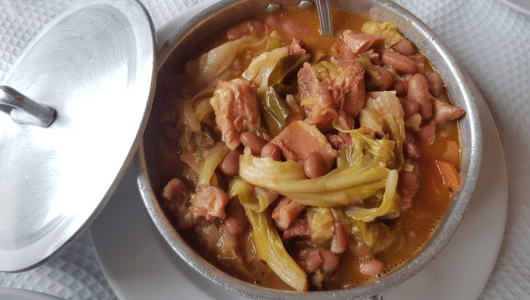
Photo by Rotas Gastronomicas
In Portugal, feijoada isn’t cooked following a single recipe, as there are many variations and the word “feijoada” basically means bean stew, which can be adapted according to taste and availability of ingredients. But, in general, feijoada à transmontana, coming from the northern mountainous region of Trás-os-Montes, is Portugal’s most famous variety of feijoada. It is usually cooked with kidney beans and a wide range of smoked and cured pork products (enchidos), many of them produced locally after the annual pig’s slaughter (matança do porco). White beans could also be used but, regardless of the color of the beans, they are always slowly simmered with cuts such as ear, foot, ribs, and an assortment of sausages. Cabbage or other greens are usually added towards the end, to balance the richness of the meat. Feijoada is usually served with white steamed rice.
Feijoada was taken by the Portuguese to Brazil, where it is today considered the national dish. Unlike the Portuguese version, feijoada à brasileira is cooked with black beans and there is no cabbage added to the pot. They like to serve the beans stew with sautéed greens on the side, along with vinagrete (a zesty salsa dressed with lime) and sprinkled with farofa (toasted cassava), also with white rice. Overall, Brazilian feijoada seems more festive than the Portuguese version, which is more rustic and enjoyed during everyday life.
In Lisbon, it is thankfully easy to find feijoada à transmontana, and it is particularly good at restaurants dedicated to northern Portuguese cuisine. O Nobre, by chef Justa Nobre from Trás-os-Montes, dedicates thursdays’ daily special to feijoada from her birthplace, pictured here. Other great restaurants to enjoy feijoada in Lisbon include O Cartaxinho, Imperial de Campo de Ourique (in the lovely neighborhood of Campo de Ourique, which is a true gem for Portuguese food), and O Coradinho, in Pontinha. But do check before you head there on purpose to try this dish, as it is usually only offered once a week, and rarely stays permanently on the menu.
Feijoada de choco and feijoada de marisco | White bean stew with cuttlefish or seafood
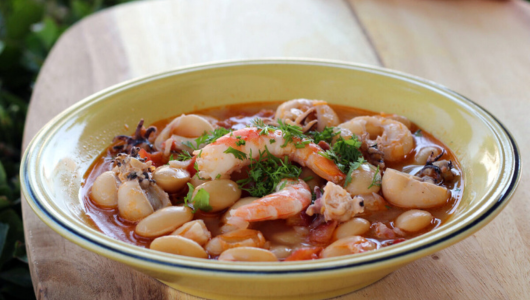
Photo by Ruralea
Feijoada à transmontana represents the cooking from the interior of Portugal, where meat-heavy recipes are usually the norm these days. But, heading to coastal areas of Portugal, cuttlefish and seafood feijoadas are wonderful options. This just goes to show how versatile the concept of feijoada really is.
Feijoada de choco is most closely associated with the coastal Alentejo, particularly around Setúbal and the Sado estuary, where cuttlefish is one of the most iconic ingredients. Instead of smoked meats, the stew is built around tender pieces of choco, cooked with onion, garlic, olive oil, tomato and white wine. White beans are usually the legume of choice, as they are milder than red beans and allow for the seafood to stand out. Feijoada de choco is usually lighter than the pork base feijoada, but they are both equally flavorful and comforting.
Feijoada de marisco follows a similar logic, but it’s more flexible in terms of the ingredients that end up landing on the pot. It may include shrimp, clams, mussels or even crab, simmered briefly to avoid overcooking. Both feijoada de choco and feijoada de marisco are usually finished with chopped coriander or parsley and served with white rice, which helps to soak up the sauce. They can be eaten all year round but they are particularly popular in warmer months, best enjoyed with a chilled bottle of white wine in traditional seafood restaurants and marisqueiras.
If you take a day trip to Setúbal during summer, this is one of the best things you could order. In Lisbon itself, you can taste cuttlefish feijoada at a Sant’Avó, or a full-on seafood feijoada at the popular seafood restaurant Pinóquio.
Guisado de feijoca | Feijoca stew
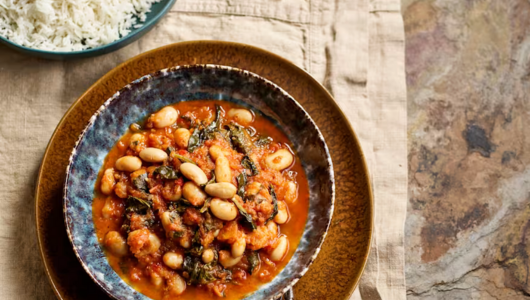
Photo by Cookidoo
It’s such a shame that feijocas aren’t more widely consumed across Portugal. Larger and fleshier than most common beans, feijoca is especially associated with Beira Interior, where colder winters and an inland climate favoured hearty legumes that could be dried, stored and cooked slowly. In this part of the country, beans are still very widely consumed and feijoada is, quite possibly, the queen of all beans.
Guisado de feijoca (also known as feijoca serrana) is the umbrella term for a family of stews built around this bean. They all follow the same basic structure, involving the feijoca cooked until tender, then simmered with onion, garlic, olive oil and whatever other ingredients may be available. Pork cuts are usually involved, particularly salted meats, which add depth of flavor to the recipes. These stews are usually very thick and filling, and a great representation of Portuguese home-style cooking, Beiras style.
Feijoca à moda de Manteigas is one of the best-known versions of this stew and gives the dish a more precise geographic identity. Manteigas, perched in the Serra da Estrela, is a place where food has always had to answer to altitude and cold. Here, the stew tends to be particularly robust, often including a generous selection of pork cuts and sometimes cabbage or other greens added towards the end. Variations exist from village to village nearby, but they are all the heavy, nap inducing kind of food one can expect while reading the description above.
Like many inland bean stews, guisado de feijoca is not easy to find in Lisbon on a regular basis. It appears occasionally in traditional restaurants that focus on Beiras cuisine or as a special during colder months, but it is not common at all. To experience it properly, travelling to Beira Interior, and to towns like Manteigas, still makes the most sense. But if you are curious to purchase some dry feijocas to take home and try your own hand at making a similar stew, we recommend heading to Mercearia Pérola do Arsenal, which is one of the most iconic traditional grocery stores in Lisbon.
Dobrada | Tripe and beans stew
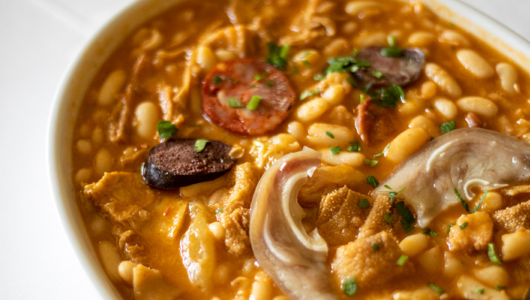
Photo by Revista de Vinhos
Dobrada is an old-fashioned Portuguese recipe consisting of stewed beans and tripe, coming from the times where no edible part of the animal was discarded if it could be turned into nourishment with a little creativity in the kitchen. In Porto, the dish is known as tripas à moda do Porto, where it has been the most iconic local dish way before the more contemporary francesinha, which was only introduced in the 70s, came about.
The story most often told dates back to the 15th century, during the preparations for the Portuguese voyages of exploration overseas. According to local tradition, the people of Porto (today colloquially known as tripeiros, or tripe eaters) gave the best cuts of meat to supply the ships, keeping only the offal for themselves. From that necessity came a dish built around tripe, slowly cooked with white beans, vegetables and cured meats. Some versions debate if this story is all that accurate, but there’s no denying that, whether you call it dobrada or tripas à moda do Porto, this long simmered stew has been around for centuries.
Beans make the bulk of the recipe, and the tripe provides texture. Pork products such as chouriço, ham or bacon enrich the broth, which is also flavored with carrots, onions and garlic. The gelatin released by the tripe also contributes to making the stew thicker, but it’s still best enjoyed with white rice to help scoop up the juices.
In Porto, it’s extremely easy to find tripas à moda do Porto in traditional restaurants, even those in very touristic areas, catering to curious travelers. Here in Lisbon, you are more likely to find the dish under the name dobrada. Go old-school Portuguese and warm yourself with a serving of beans and tripe stew at Tasca do Gordo, A Tasca do Tretas (usually only available on Monday, but we recommend checking in advance), or Dom Feijão, where dobrada à moda do Porto is served as a special on Thursdays.
Massa à lavrador | Farmer style pasta
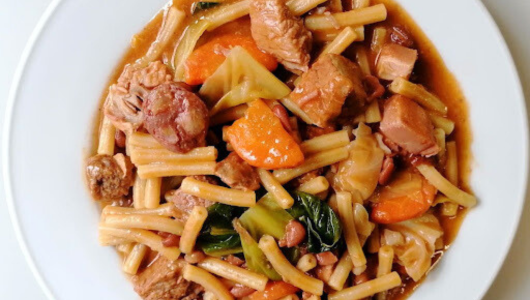
Photo by Multirest
In Portuguese, lavrador translates to farm worker, so that clearly shows us that this dish is the type of food built for people who spent long days outdoors and needed something substantial. It’s a one-pot meal which you can make with leftovers, and that generally is very flexible in terms of ingredients used.
To make massa à lavrador you cook pasta directly in a rich broth alongside beans, usually white or red, vegetables and a variety of meats, most often pork. Chouriço, bacon or ribs are common additions, and the exact combination depends entirely on what was available. Everything simmers together until the pasta absorbs the flavors of the stew, becoming soft but not necessarily soupy. This is not pasta in the traditional Italian sense, as it more closely resembles a feijoada with pasta, than a pasta with some beans.
If you like massa à lavrador, we would also encourage you to look for dishes such as northern Portuguese rancho, with pasta, chickpeas, vegetables and meats cooked together in a thick preparation. These are all comfort foods that came about from the need of feeding many people from a single pot, not just because of scarcity of ingredients back in the day, but also because a lot of the cooking was done over a single fire source.
What distinguishes massa à lavrador from other massadas, particularly sea inspired dishes like massada de peixe, is the base ingredients, and mostly the texture. Massada de peixe has pasta and fish, but an almost soupy consistency, meant to highlight the taste and texture of the fresh fish and seafood. It is lighter and more aromatic. While massa à lavrador, on the other hand, tends to be denser, with its broth absorbed by the pasta and beans, rather than being spooned from the plate.
In Lisbon, massa à lavrador appears very sporadically on menus so, if you see it pop up, most likely as a dish of the day, go for it and let us know on Instagram how you liked it.
Favas guisadas à Portuguesa | Portuguese style fava bean stew
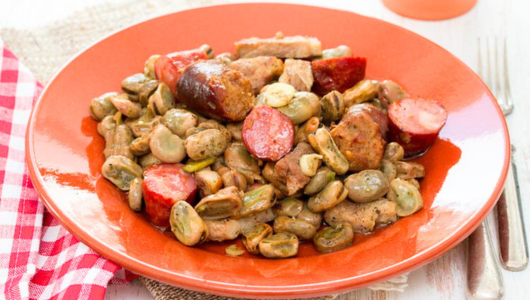
Photo by NCultura
Fava beans have been a part of Portuguese cooking for many centuries, before other bean varieties arrived from the Americas. They are among the oldest cultivated legumes in the Iberian Peninsula, eaten in Portugal since at least Roman times and likely even earlier.
Favas guisadas à portuguesa consist of a fava bean stew, usually prepared with a variety of pork cuts. The favas are usually simmered with onion, garlic, olive oil and aromatics, slowly enriched with meat. From there, variations multiply so we find dishes like favas com entrecosto, that use ribs to add depth and gelatin to the broth, as well as favas com chouriço, with a more smoky flavor thanks to the paprika seasoned cured sausage. Favas com enchidos refers to a broader category, in which the favas are stewed with a variety of pork products, much like favas à portuguesa.
This is Portuguese winter food at its best, even though favas are a product of spring. When they arrive fresh in markets during that time of the year, it’s also not uncommon to prepare room temperature fava bean salads, with smoked cuts, but during the rest of the year it is most usual to use dry favas, which similarly to beans have to be hydrated before cooking.
If you’d like to try any of these fava dishes while in Lisbon, head to places which are well-known for their old-school kitchens. Good options include O Cardoso da Estrela D’Ouro and Pomar de Alvalade (in the neighborhood of Alvalade, where many of our favorite Portuguese restaurants in Lisbon are located), but as with many of the dishes we have explored above, we’d say it’s best to check before heading to a given place to eat favas, as they are often a part of the rotating daily menu.
Portuguese dessert with beans
Pastel de feijão | Sweet bean cake

Photo by TasteAtlas
If you grew up in Portugal, pastel de feijão was probably always there, as it’s the most common cake to find in a typical Portuguese pastelaria, along with pastel de nata. If you didn’t know the recipe includes beans, you’d probably never guess.
Pastel de feijão is one of the most successful examples of how Portuguese pastries, particularly those that are a part of the repertoire of sweets developed inside convents, have learnt to make very good use of ingredients available locally. Cooked and puréed, white beans give structure and moisture to fillings, mixed with egg yolks, sugar and almonds to create the wonders that are sweet bean cakes. Some bakeries prepare pastel de feijão with puff pastry, which is flaky, while others go for a firmer crust, sometimes even topped with a small pastry cap.
In Portugal, you can find pastel de feijão everywhere, including pastelarias and even supermarkets, something that makes them different and somewhat more democratic than most other convent pastries (which is a category that, by the way, also includes pastel de nata). But pastel de feijão is most closely associated with central Portugal, particularly the Beiras (where you can also find pastel de feijoca) and the Ribatejo. The town of Torres Vedras has embraced pastel de feijão as its “official” confection, where they claim that a lady called Joaquina Rodrigues developed the original recipe towards the end of the 19th century.
If you visit Torres Vedras, an easy day trip from Lisbon, we have plenty of food recommendations for you, including where to sample authentic pastel de feijão. Here in the capital, you can simply go to the best pastelarias in Lisbon, and they’ll for sure have a wonderful version of it available too.
Beans may not be regarded as the most glamorous ingredient in Portuguese cuisine today. But we believe that they are a wonderful ingredient and that, if you know what to try, you can end up discovering how rich Portuguese cooking is through them. For more food related recommendations in Lisbon, subscribe to Taste of Lisboa’s newsletter.
Feed your curiosity on Portuguese food culture:
How the global journey of feijoada began in Portugal
Portugal’s best rice dishes (and where to eat them in Lisbon)
Portugal’s best corn dishes (and where to eat them in Lisbon)
How the Portuguese changed the way the world eats
Real people, real food. Come with us to where the locals go.
Signup for our natively curated food & cultural experiences.
Follow us for more at Instagram, Twitter e Youtube