
Caldas da Rainha travel guide for food lovers
Caldas da Rainha is famous for its colorful ceramics, but this town in Portugal’s Oeste region is also worth visiting because of its thermal waters, markets and food culture. It’s close enough to Lisbon to be an easy getaway, and we recommend coming to visit curious and hungry.
By bus, you leave from Sete Rios and arrive straight into Caldas in about 1 hour and 10 minutes, with Rede Expressos running frequent direct services throughout the day. Driving from Lisbon is also very simple, as you join the A8 northbound and stay on it almost the whole way, exiting near Caldas da Rainha. In normal traffic, you’re there in about an hour and, if you have a car, it’s worth it for the extra flexibility to detour to the Óbidos lagoon, the beach at Foz do Arelho, or nearby Óbidos either on the way there or on the way back.
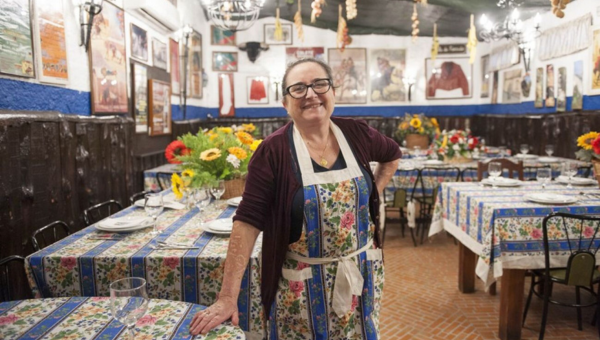
Feat. photo by Jornal de Leiria
The birth of Caldas da Rainha has a lot to do with the hot spring. It is believed that Queen Leonor, wife of King João II, ordered a hospital to be built in the 15th century after seeing locals bathing their wounds in sulfurous waters that seemed to actually work. The thermal hospital that followed turned Caldas da Rainha into one of Europe’s earliest spa towns, and the city still has that slightly old-world energy. It is most felt around Parque D. Carlos I, a romantic garden around the former thermal complex, and the José Malhoa museum which is tucked inside the greenery.
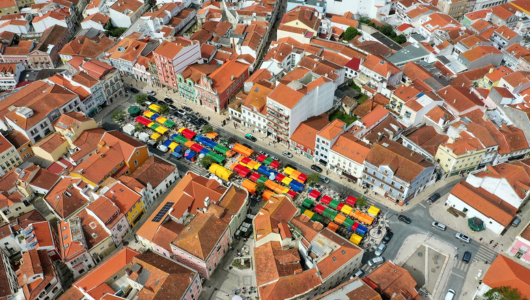
Photo by Portugal The Simple Life on Facebook
Once you’re in town, you can explore most of the center on foot, and the best place to start is Praça da Fruta, the daily open-air market set in Praça da República. Every morning, stalls are set up on the cobblestone until early afternoon, making this the only market of its kind in Portugal that still happens outdoors, every day of the week. Here you see what the Oeste region actually produces, including Rocha pears and apples, seasonal stone fruit, big cabbages and bunches of other greens, dried beans, eggs, local bread, honey, homemade cookies, sometimes even cured meats and dried fish. If you want to feel the city come to life, we recommend visiting in the early morning, which is the best time to do some people watching and the interaction between regulars and vendors, in all cases noting that by lunchtime the market starts to close down.
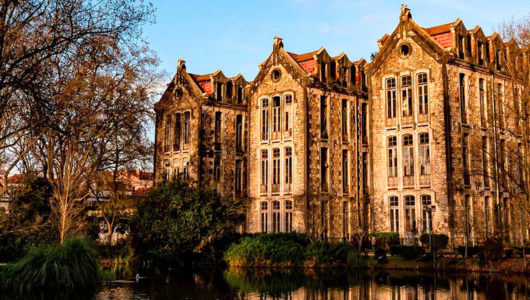
Photo by NCultura
From the market, it’s a short walk to the Queen Leonor Thermal Hospital complex, which is the reason Caldas da Rainha exists in the first place (Largo Rainha D. Leonor). The Hospital Termal Rainha D. Leonor is considered the oldest thermal hospital in the world still in operation, founded in 1485 around sulphur-rich waters that emerge at around 35ºC and were historically prescribed for rheumatism, arthritis and respiratory conditions. Today, the historic buildings form a cluster, including the thermal hospital itself, the small church of Nossa Senhora do Pópulo, the pavilions from different eras, and the Museu do Hospital e das Caldas, installed in the former royal residence where Queen Leonor stayed. Inside the museum you’ll find objects and medical equipment that trace centuries of spa medicine, plus the famous old pool where the queen is said to have bathed. Guided visits are usually available in the warmer months, and it’s worth checking current schedules at the tourist office or online in advance.
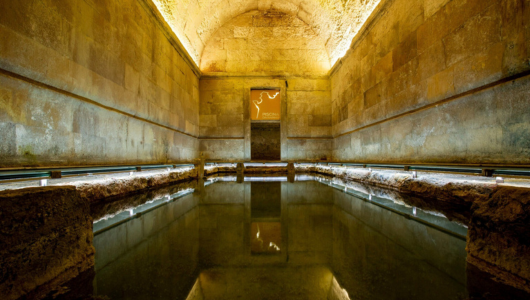
Photo by 19 Tile Ceramic Concept
If you’d like to actually enjoy the thermal waters instead of just reading about them, look for the modern spa facilities branded as Termas das Caldas da Rainha, which operate under the same umbrella. The contemporary thermal baths offer doctor-prescribed treatments during the season between March and December, and also more relaxed wellness programs which include pools with mineral water, Vichy and jet showers, inhalation therapies, plus massages and spa rituals that don’t require you to be a rheumatology patient.
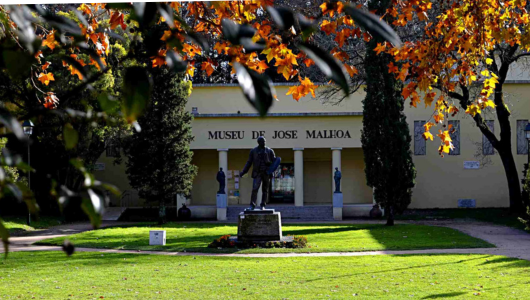
Photo by W360
Even if you are not interested in the spa, you can still visit Parque D. Carlos I (Rua de Camões 37), the park laid out around the thermal complex. This is where you can see local families take walks on weekends, and it’s also where you’ll find the Museu José Malhoa, housed in a pavilion within the park. The museum focuses on the work of José Malhoa, one of Portugal’s major naturalist painters, and his contemporaries, with paintings, sculpture and some ceramics, mostly from the 19th and early 20th centuries.
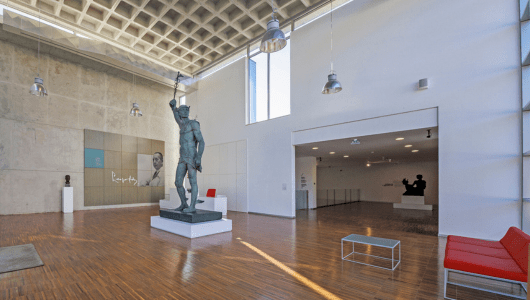
Photo by rede portuguesa de arte contemporânea
A little further out, but still walkable from the center, the Centro de Artes (Rua Dr. Ilídio Amado) brings things into the 20th and 21st centuries. This multi-building arts complex hosts museums dedicated to sculptors António Duarte, João Fragoso and Barata Feyo, as well as studios and exhibition spaces for contemporary artists. It’s a good stop if you’d like to see how a town’s artistic tradition evolved from classical sculpture to more experimental work, and the outdoor pieces scattered around the grounds show how Caldas’ creative identity is not just about ceramics.
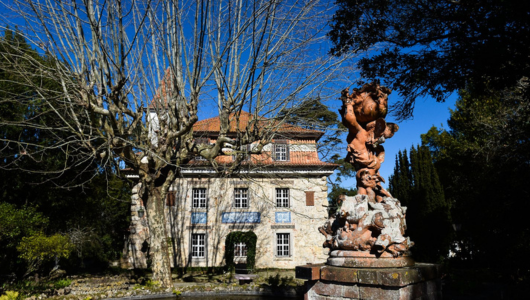
Photo by Cultura Portugal
That being said, you can’t really talk about Caldas da Rainha without talking about clay. The city is part of the UNESCO Creative Cities Network for crafts and folk art, and ceramics are where that heritage shows most clearly. A dedicated visit to the Museu da Cerâmica (Rua Dr. Ilídio Amado) helps to get some proper context. The museum is housed in a late 19th century romantic villa built by the Visconde de Sacavém, a collector and patron of local ceramists, surrounded by gardens decorated with tiles and sculptures. Inside, the collection covers several centuries and centers, from traditional faience from Caldas, pieces from the Real Fábrica do Rato in Lisbon, anthropomorphic work by Maria dos Cacos, and naturalist pieces by Manuel Mafra, who imported Bernard Palissy’s style into local production. One of the highlights is the strong nucleus of works by Rafael Bordallo Pinheiro, documenting the output of the Fábrica de Faianças das Caldas da Rainha between the late 19th and early 20th century, alongside contemporary ceramics by Portuguese and international artists. This is where you’ll get to learn the story behind all the famous cabbage plates you’ll see in many ceramics and souvenirs stores around Portugal.
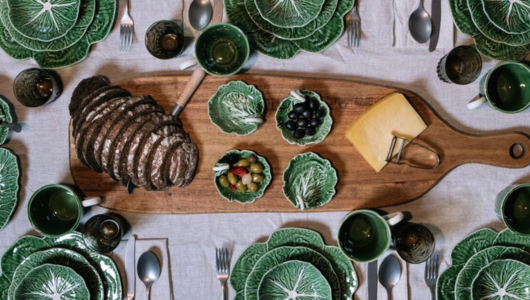
Photo by Vista Alegre
From the museum, you’re not far from the current Bordallo Pinheiro factory and shop (Fábrica Bordallo Pinheiro, Rua Rafael Bordalo Pinheiro 53), where the city’s most famous brand of ceramics is still produced. Founded in 1884 by artist, caricaturist and social satirist Rafael Bordallo Pinheiro, the factory blended traditional techniques with a wildly imaginative, naturalist style that translated into platters with cabbage leaves, plates crawling with crabs and lobsters, snails, frogs, birds, and fruits, as well as humorous figurines. You can tour the factory spaces on certain days, see the molds and glazing processes, and then, of course, open your wallet at the on-site shop.
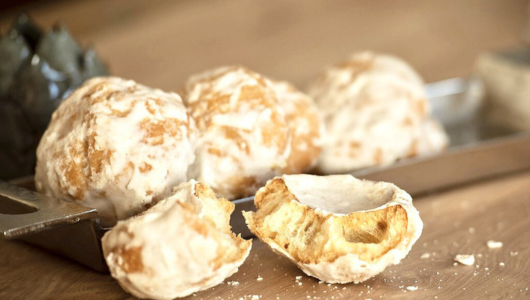
Photo by SAPO
Food in Caldas da Rainha is a materialization of the town’s surroundings, namely the orchards and the Óbidos lagoon. The proximity to the lagoon translates into traditional dishes like eel stew simmered with potatoes and peppers, fried or stewed eels, comforting fish soups and simpler seafood plates with that characteristic flavor that comes from the waters that mix river and sea. Many of these dishes are seasonal specialities, though. On the sweet side of things, and all year long, besides the local fruits you’ll see Praça da Fruta, Caldas da Rainha has a strong tradition of egg yolk heavy convent sweets. In local pastelarias you’ll find cavacas (pictured here), which are airy cakes with a hard sugar glaze; trouxas de ovos, little bundles of egg threads wrapped around a soft, almost custardy egg yolk center; bite-sized beijinhos, dense coconut and egg sweets rolled in sugar; and, around Christmas time, lampreias de ovos, which are rich egg-and-sugar desserts molded and decorated to look like the lamprey fish.

Photo by annakina_ on Instagram
To wash it all down, you’re in the middle of one of Portugal’s most interesting wine regions, in this case with a peculiar cool-climate. The Óbidos CDO (Controlled Designation of Origin) stretches across Bombarral, Cadaval, Óbidos and Caldas da Rainha, known especially for fresh whites, high-acid base wines for sparkling, and blends built on grapes like Arinto and Fernão Pires. Several estates along the local wine routes welcome visitors for tastings, so if you’re in the mood for some enotourism activities, we’d recommend checking out Cortém Organic Wines (and make sure not to miss their orange wines), or Humus Wines by Encosta da Quinta, which are also natural, organic and vegan-friendly.
If you want to taste the Oeste region of Portugal, we recommend visiting:
The best Portuguese restaurants in Caldas da Rainha
Ti’Ascenção
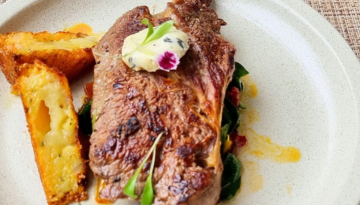 Ti’Ascenção is where you go when you want Portuguese flavors that feel familiar, but are plated by someone who has clearly been paying attention to contemporary kitchens. The menu is built around comfort dishes with a “chef-y twist”. One of the house signatures is braised pork cheeks, served with mashed potatoes, caramelized onions and house pickles (bochecha à Ti’Ascenção). There are also crisp little fritters made with chopped octopus, served on creamy spinach rice with a light garlic foam (pataniscas de polvo), and a very delicate take on battered cod, done in a light tempura style over sweet potato purée with sautéed greens (tempura de bacalhau). If you prefer meat, try the slow-cooked duck breast (peito de pato a baixa temperatura) with gratin potatoes scented with lemongrass and seasonal vegetables. Vegetarians aren’t left out here and can enjoy a proper mushroom risotto made with local cheese and sage butter (risoto de cogumelos), and tempura oyster mushrooms over a risotto with lemon and thyme, finished with a goat cheese sauce (cogumelos pleurotos em tempura). Desserts breathe in more international influences, including a few Portuguese classics too, but with upgraded details. You might end up with a warm brownie de chocolate topped with pistachio cream, salted caramel and cardamom yogurt, a light pavlova with red fruits and lemon mousse, a créme brulée perfumed with basil and lemon, or a panna cotta of lemongrass with coconut crunch and berries. You will want to save room for a sweet dish!
📍Rua Dom João II 41, 2500-852 Caldas da Rainha
www.instagram.com/tiascencao
Photo by The Fork
Restaurante e Bar Maria dos Cacos
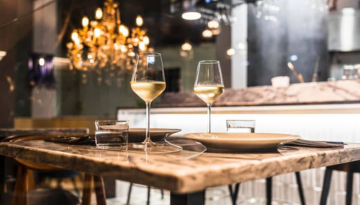 Maria dos Cacos is tucked inside the 19 Tile boutique hotel in the center of town, and it was named after the ceramist and entrepreneur Maria dos Cacos from the 19th century, who was one of the figures who helped Caldas da Rainha gain its ceramics fame. The space is appropriately decorated with contemporary pieces, tiled surfaces and clay textures. It’s a rather contemporary space, more like a modern wine bar and bistro, which is a good contrast with Caldas da Rainha’s more popular restaurants in the outskirts. The kitchen prepares petiscos, so this is a perfect place to open a bottle of wine, savor away and let time go by. We’d recommend sampling the sardine tempura, the black tiger shrimp in a garlicky sauce with chili and ginger, or the perfectly cooked rib eye. Besides a changing mix of seafood and meat dishes, there are usually a few vegetarian options too, which is not a given in the region. Desserts are more thought-out than the usual, but also may be less typically Portuguese, with things like a Basque cheesecake with raspberry sorbet, or a walnut cake with pumpkin cream and cheese mousse. If you’d like to end on a sweet note with something a little more local, go for the chocolate mousse finished with olive oil from Penamacor and honey toffee, which goes beautifully with an espresso. If you came to Caldas da Rainha specially because of its ceramics, having a meal here can be a good option to stay within the theme.
📍Rua Gen. Queirós 48, 2500-211 Caldas da Rainha
https://19tile.pt/pt/maria-dos-cacos-restaurante
Photo by Maria dos Cacos on Facebook
A Capelinha do Monte
 Right off Praça 5 de Outubro, A Capelinha do Monte is certainly not reinventing the wheel of Portuguese cooking, but they also know very well what they are doing, so no wonder they have seen generations of regulars come through the door. If there’s one dish that built its reputation, it’s the garlicky steak (bife com molho de alho), the kind of old-school Portuguese steak served in a pan with a generous sauce, home-cut fries and a fried egg on top. Locals also love the cozido à portuguesa when it’s on, a full boiled dinner of assorted meats, sausages, cabbage and root vegetables, which we honestly believe is Portugal’s most representative dish. If you prefer something lighter, there’s lovely grilled or oven-baked monkfish (tamboril) and bacalhau à lagareiro, with the cod roasted in olive oil and garlic over potatoes. Food might take a little while to arrive, so we’d recommend ordering a grazing board while you wait, to sample some regional Portuguese cheeses and cured meats (enchidos). If by the end of it all you still have space, enjoy their homemade sweets plus a coffee, just like most Portuguese people would.
📍Praça 5 de Outubro 22, Caldas da Rainha
www.facebook.com/capelinhadomonte
Photo by mickerehn on TripAdvisor
Casa Antero
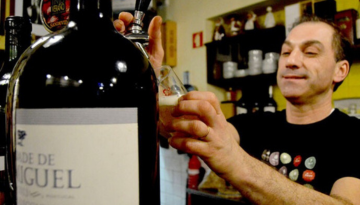 Casa Antero started back in the 1950s as a straightforward tavern (that is, a casa de pasto) and it still feels like that in essence. It’s a neighborhood place where there’s always something on the stove and people drop in to eat but also to catch up with the staff and other locals. The atmosphere is simple and relaxed, with tightly packed tables and a small terrace that fills up on warm days. It’s more like a week-day place rather than a spot for special occasions, and we mean that in the best possible way. They have daily specials (pratos do dia) and petiscos to share, and all of them keep on changing. You might find cuttlefish and bean stew (feijoada de chocos), tiny fried sardines with a garlicky bread mash (petingas fritas com açorda), roast suckling pig belly (barriga de leitão no forno), or braised rabbit with rice (coelho guisado com arroz), alongside simpler grills. It’s honest, home-style Portuguese food served in big portions, so you might want to split a couple of dishes between two or three people. There’s a house red and white by the glass or jug, plus a short list of Portuguese bottles that usually includes a few references from the Oeste region, all at prices that make it easy to add a decent drink to the table.
📍Beco do Forno 9, 2500-073 Caldas da Rainha
www.instagram.com/casaantero
Photo by GoCaldas
Solar dos Amigos
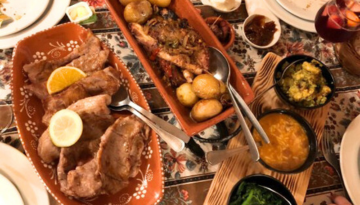 A few kilometers outside the center, in the small village of Guisado, Solar dos Amigos looks like a big country house from the road, but inside it’s a proper maze of dining rooms with wooden tables and walls packed with old horse and bullfighting posters. It started decades ago as a simple tavern and grew into the kind of place locals book for family celebrations and long noisy lunches. The kitchen focuses on hearty Portuguese cooking and is famous for their huge portions. They are best at grilling, so we recommend trying dishes like Iberian black pork cuts (secretos de porco preto) and lamb chops arriving smoky and generous, usually accompanied by sides like migas de couve, rice with beans, and fries. Weekend regulars come for dishes such as cozido à portuguesa or roasted kid, or the specialty bacalhau à campino, which is basically salt cod with the usual sides of boiled potatoes and greens, here served inside a whole round loaf of bread that you tear apart at the table. Sweet options are mostly classic Portuguese desserts, always best enjoyed with a small glass of local liqueur.
📍Rua Principal 49, Guisado, 2500-633 Caldas da Rainha
www.instagram.com/solar_dos_amigos
Photo by mickerehn on TripAdvisor
Adega do Albertino
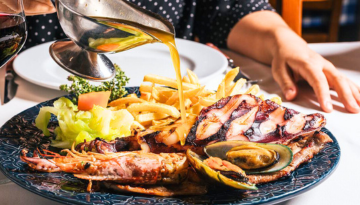 Also just outside Caldas da Rainha, in the village of Imaginário, Adega do Albertino has been open since 1989. It started as a family project by Albertino Catarino and his wife Fátima and grew into a regional reference for old-school Portuguese cooking. We’re talking about traditional dishes with a few house signatures, including a cozido à portuguesa in generous Oeste style, slow stews like goat chanfana and roasted kid, and a list of mains from both land and sea. It’s also worth checking out their take on octopus, polvo à Adega, and the ribs with a sweet and savory sauce of honey and almonds (entrecosto com mel e amêndoas), and perhaps even more so the comforting massinha de bacalhau com camarão created from Albertino’s childhood memories. From the desserts menu we wouldn’t miss the pudim Abade de Priscos, the torched crème brûlée (creme queimado), or the chocolate mousse. This place is just a short drive from Caldas da Rainha’s center and, even if you don’t travel here with a car, it may just be worth the cab fare.
📍Rua Júlio Sousa 7, 2500-312 Caldas da Rainha
https://adegadoalbertino.pt
Photo by Adega do Albertino
Paraíso do Coto
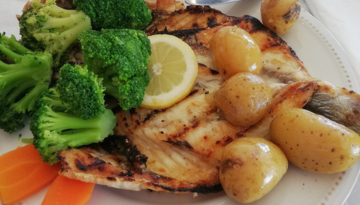 Paraíso do Coto is all about plentiful, traditional Portuguese food, such as big platters of mixed grilled meats and fish, codfish baked with potatoes and cornbread (bacalhau com broa), rich lamb stew over thick slices of bread (ensopado de borrego) and soft pork cheeks in the oven (queixadas de porco). They are not experimental, in the sense that they serve Portuguese recipes in the way many of us have come to expect them, but they are masters at that, and the house specialty of roasted suckling pig in the Bairrada style (leitão assado à Bairrada), is a delicious proof of that. The portions are generous but the prices are still reasonable, so you should come when you’ve worked up an appetite from exploring Caldas da Rainha. They have a decent wine list, but the house wine (vinho da casa) does the job perfectly without having to spend much. You’ll find Paraíso do Coto in the village of Coto, just a short drive from the center.
📍Rua dos Outeiros 30, 2500-303 Caldas da Rainha
www.instagram.com/paraisodocoto
Photo by miguelrib on TripAdvisor
Restaurante Real Balcão 5
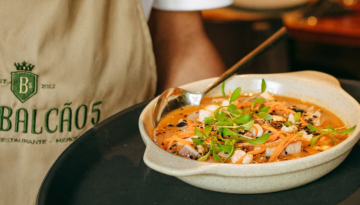 If you like modern Portuguese taverns, while in Caldas da Rainha we suggest visiting Real Balcão 5. The long counter inside announces that this is a place for food, but also for informal drinks, snacks and small dishes. Here you can enjoy Portuguese and Mediterranean flavors, with plenty of seafood and grilled meat options. We love their house steak, which comes served in a pan with plenty of garlicky sauce and proper fries (bife à balcão), and their generous shrimp rice with seafood (arroz de camarão). During the week they also have a “daily suggestion”, which is basically a fish and a meat special of the day, which is more refined than in most restaurants which usually serve pratos do dia. Options may include braised rabbit with fries (coelho estufado com batata frita), fried rayfish with loose tomato rice (raia frita com arroz de tomate), or crispy suckling pig belly. If you’re in the mood for fresh seafood, they have a good array of options, including oysters, lobster, goosebarnacles, spider crab, grilled tiger prawns and boiled shrimp that go wonderful with a cold beer. You’re a short walk from the church of Nossa Senhora do Pópulo and the thermal complex, so it’s an easy place to head to after wandering around town if you don’t have a car to go any further.
📍Largo dos Heróis de Naulila 5, 2500-107 Caldas da Rainha
www.instagram.com/realbalcao5
Photo by Real Balcão 5 on Instagram
Café Sedas
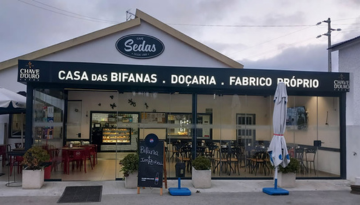 Having a bifana at Café Sedas, still affectionately known by many as Quim Sedas, is one of the most down-to-earth yet delicious things you can do at Caldas da Rainha. We’re talking about one of Portugal’s most beloved meat sandwiches, featuring thin slices of pork simmered in a garlicky sauce with a touch of spice, stuffed into soft bread that soaks everything up nicely. Prices are low, which helps explain why the place has become a minor institution for anyone chasing a classic Portuguese bifana in the Oeste which, by the way, many visitors treat as a snack but we often enjoy as a proper meal. The rest of the offer is very “working day” like, with soups, simple plates, fries if you want them, and a long counter of homemade sweets. Sedas takes its cakes seriously, with whole rolls options by the slice (like orange, coconut or chocolate tortes), chocolate salami, almond tart and other temptations inspired by conventual pastries, as well as the usual pastelaria cakes we’d normally enjoy for breakfast or in the middle of the afternoon with a coffee. They open early, so you can start the day with a proper milky coffee (galão) and something sweet, or come back at lunch for a bifana menu. Café Sedas is set on the national road just outside the center, with parking right out front and quick service, making it an ideal option if you’re continuing your road-trip in the Oeste region.
📍Estrada Nacional 114/1, 93, 2500-287 Caldas da Rainha
https://sedascafe.com
Photo by Sedas
Tradição Bistro
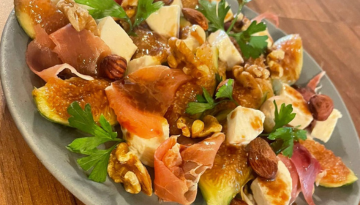 A short walk from Parque D. Carlos I, Tradição Bistro feels like a contemporary Portuguese tavern, with a small and inviting dining room, and a terrace for sunny days, where it’s lovely to enjoy a glass of wine at the end of the day during the warmer months of year. At a place that has the word “tradition” as part of its name, you can indeed expect traditional plates and some petiscos, with enough variety for most tastes. Even vegetarians might find something here, such as green bean tempura (peixinhos da horta), or stuffed eggplant either filled with vegetables and cheese (beringela recheada com legumes). If you enjoy animal protein, we’d recommend their eggplant stuffed with tuna (beringela recheada com atum) instead, served with proper fries and a simple Mediterranean salad. On the fish side of things, there are prawns sizzled with olive oil and garlic (gambas à guilho), clams in white wine, crisp codfish fritters with kidney bean rice (pataniscas de bacalhau com arroz de feijão), and fried cuttlefish (choco frito), plus a proper fish pasta stew (massada de peixe). Meat eaters get the usual Portuguese comfort classics, like bitoque steak with egg and fries, pork versions of the same (bitoque de porco), grilled alheira with egg and fries, tripe and beans stew (dobradinha com feijão), or a gelatinous but delicious stew of cow’s foot and chickpeas (mão de vaca com grão), we’d certainly recommend if you aren’t suspicious of Portuguese foods sometimes seen as bizarre. The wine list is very standard for a mid-range Portuguese restaurant, featuring easy to drink reds such as Monte Velho, Periquita, JP or Porta da Ravessa, crisp whites like Reguengos and Mundus, classic vinho verde labels like Muralhas and Casal Garcia, plus the inevitable Mateus rosé. There’s house wine by the glass or bottle, cold beer, and the usual soft drinks, so you can keep it simple or open a bottle and stretch the fun for a little longer.
📍Rua do Parque 5, 2500-181 Caldas da Rainha
www.instagram.com/tradicao.bistro
Photo by Tradição Bistro on Facebook
Taskinha Do B3co
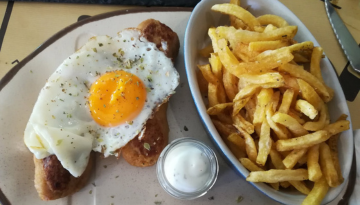 If you are a vegetarian visiting Caldas da Rainha, Taskinha Do B3co is probably one of the best places to grab a meal. They have a great veggie francesinha, the normally meat-heavy Porto sandwich reimagined here so that non-meat eaters can also indulge. This place is a hybrid between a restaurant and a bar, with good value house red and white, a short list of wines by the bottle, sangria, and other options to sip as you wait for your meal. Don’t really come here for one big main though, but probably to graze and sample a variety of things, always prepared to order. Their range of small dishes breathes in Mediterranean and Spanish influences, including things like shrimp, small meat dishes, salads, rice plates and the inevitable fries. The options are simple but they hit the spot. There’s usually at least one more composed option too, like a proper steak with egg and fries (bitoque, pictured here), which is in most cases a safe bet when you’re eating out in Portugal. If you’re meeting friends for drinks in Caldas da Rainha, or you simply want to grab a bite and a few snacks, without necessarily committing to a more elaborate meal, Taskinha Do B3co is a great option.
📍Beco de João D`Almeida Cabaco 1, 2500-090 Caldas da Rainha
www.instagram.com/taskinhadobeco
Photo by Ines Filipa on TripAdvisor
Restaurante Zé Povinho
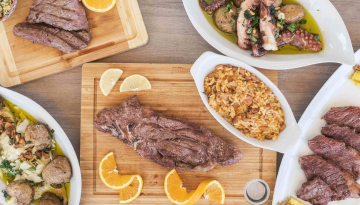 Zé Povinho is the kind of roadside restaurant many would wish to have in their own town, with easy parking out front, a big terrace, a couple of dining rooms, and a buzz of people who come here every week. It sits just outside the center on the national road, so it works whether you’re driving back to Lisbon or just circling between Caldas and the lagoon. What matters most is the food, of course, which is solid Portuguese comfort food, featuring specialities from the land and the sea. From the grill come serious Mirandesa beef cuts (posta mirandesa), charred on the outside but very juicy on the inside, served with fries, bean rice and migas; but also slices of beef picanha from the same northern region (picanha mirandesa), finished with pineapple on the side. The seafood side of the menu includes many of Portugal’s most beloved dishes, such as octopus roasted in olive oil and garlic with smashed potatoes and bread mash (polvo à lagareiro), crispy fried cuttlefish strips (tiras de choco frito), rice cooked “malandrinho” style with monkfish or prawns (arroz de tamboril, arroz de gambas), clams in white wine and cilantro (amêijoas à Bulhão Pato), and prawn and bread casserole (açorda). If you’re just after a quick bite, there are also sandwiches like steak (prego) or bifana in soft bolo do caco bread, that come with fries and make a very acceptable lunch. If you care for a zero-waste approach to food in Portugal, you’ll be happy to know that Zé Povinho is on the app Too Good To Go, selling surprise bags at the end of the day instead of throwing food out, thus fighting waste in a sustainable and delicious way.
📍Estrada Nacional 114 1 N 85, Cruz, 2500-287 Caldas da Rainha
www.facebook.com/zepovinhorestaurante
Photo by Uber Eats
Restaurante Tulipa
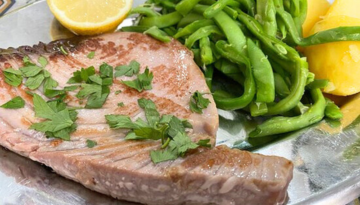
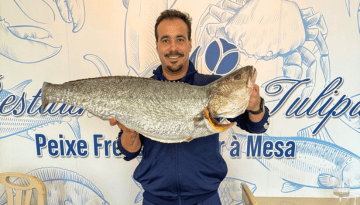 Fish lovers rejoice at Tulipa, as this is a restaurant that focuses on fresh fish straight from the sea and traditional recipes done the house way. That usually means a short list of the catch of the day, which could often be whole sea bream or sea bass on the grill (dourada and robalo), sometimes monkfish or cuttlefish (tamboril or choco), usually simple but well seasoned with olive oil, garlic and a touch of lemon which you can squeeze to taste directly on your plate. If you are visiting with a meat lover, be rest assured that they’ll also be happy at Tulipa, as their menu also includes grilled steaks, pork or chicken dishes. For dessert, try their unique lime mousse with salted caramel, or one of their homemade cakes, which keep rotating. It sits just by the La Vie shopping center, so it’s easy to reach, and it’s a popular stop with office workers who come here to take advantage of the lunchtime set menu which offers great value for money. For a straightforward Portuguese meal in Caldas da Rainha, which is quick, convenient and affordable, we’d definitely recommend Restaurante Tulipa.
📍Rua Belchior de Matos 1, 2500-324 Caldas da Rainha
www.instagram.com/restaurante.tulipa
Photo by Tulipa on Facebook
Taberna do Manelvina
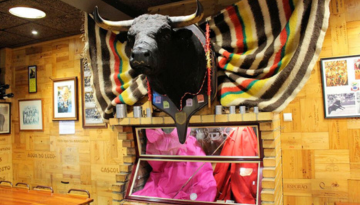 At Taberna do Manelvina you come for one thing above all, and that is the charcoal grill, which they have mastered, attracting meat lovers from Caldas da Rainha and around. Taberna do Manelvina sits out in Cruzes, in the parish of Salir de Matos, a short drive from the center of Caldas da Rainha, and it’s worth booking before making your way there. If you manage to get a table, you’ll be amongst Oeste residents who love grilled meat, thin fries and loud conversations. Meals tend to start with a round of traditional sausages coming off the heat one by one, including slices of chouriço, morcela, alheira and farinheira. They are followed by platters of thin-cut pork belly (entremeada) and other black pork cuts (porco preto) that are all about crisp edges and smoke. Regulars also go for the bull steak (bife de touro) and veal steak when they’re on, plus whatever seasonal specials are running. From October to May there’s a rich mixed stew of wild meats (cozido de carnes selvagens), while in summer it’s common to see charcoal-grilled sardines (sardinhas assadas) on the menu, as you’d also get to enjoy in Portuguese street festivals during the warmer months. This is a proper Portuguese village tavern where bullfighting posters, photos and objects tied to the festa brava cover the walls, but if you don’t care for this kind of imagery, do keep in mind that you may be dining with a bull head perched on the wall right beside you.
📍Rua Principal 21, 2500-632 Salir de Matos, Caldas da Rainha
https://tabernadomanelvina.com
Photo by Taberna do Manelvina
Good bakeries and pastelarias in Caldas da Rainha
Fábrica de Cavacas das Caldas
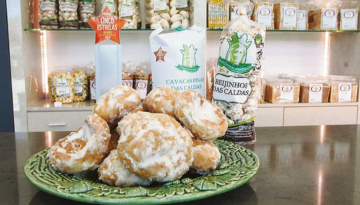 Cavaca is the sweet that probably represents Caldas da Rainha the best, and there is arguably no better place to taste this speciality than at Fábrica de Cavacas das Caldas. They started back in the 1980s with a small production of the famous local cavacas, sold only at Praça da Fruta and at a store downtown. Fast-forward a few decades and they’re the big name behind most of the packets you see in pastelarias, supermarkets and even airport shops, featuring the green image of Queen Leonor that the city officially granted them in 2010. Cavacas are airy round cakes that are baked until they slightly dry, before they are covered with sugar. They do it in different formats, from classic bags of cavacas das Caldas and thinner cavacas finas to larger single cavaca saloia and even filled versions where the sugar shell hides a soft center. Right next to them you’ll spot beijinhos das Caldas, small crunchy biscuits that are dipped in a lemon sugar syrup so they dry with a shiny, tangy coat. They also produce meringues in several sizes, as well as the more convent-style trouxas de ovos, which are little rolls of egg threads and yolk syrup for those not afraid of a sugar rush. This isn’t a sit-down café as such, but more a place you come to grab your goodies and get going. If you’d like to properly understand the sweet traditions of Caldas da Rainha, there is perhaps no better place than Fábrica de Cavacas das Caldas.
📍N114-1 nº 201, Casal de Santa Cecília, 2500-626 Caldas da Rainha
https://cavacasdascaldas.pt
Photo by Gazeta das Caldas
Pastelaria Dona Leonor
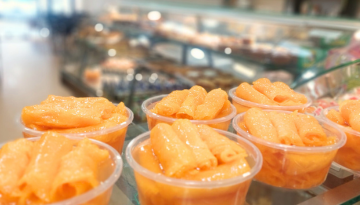 Neighborhood pastelarias are such an integral part of Portuguese food culture and, in Caldas da Rainha, Dona Leonor does exactly what’s expected from this type of establishment, serving good sweets, savory snacks, and strong coffee. On Rua de Camões, just a short stroll from Parque D. Carlos I, mornings at Pastelaria Dona Leonor start with espressos and milky coffees by the counter, with tables filling again around lunchtime with people grabbing a quick plate or a toastie. During the weekend, you’ll see locals stepping out with boxes filled with pastries or celebratory cakes. Whether you’d like to start your day with a Portuguese style breakfast, enjoy a convenient café-style lunch, or need a hit of caffeine with something sugary on the side, Pastelaria Dona Leonor has got you covered. The specialty here is the trouxas de ovos (pictured here), which are classic convent sweets consisting of thin sheets of egg “crepe” wrapped around an intensely rich yolk cream, rolled into neat little logs and brushed with syrup so they stay glossy. Another house specialty are the bolinhos de fráguas, drier cakes typical from the Beiras region, which they also prepare in a gluten-free version. To these you can add the usual suspects of a typical Portuguese pastelaria, and you’ll have plenty of variety to choose from.
📍Rua de Camões 23, 2500-174 Caldas da Rainha
www.facebook.com/pastelariadonaleonorcaldasdarainha
Photo by Pastelaria Dona Leonor on Facebook
MEXIA padaria artesanal
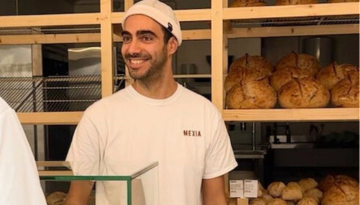 In what used to be a neighborhood butcher on Rua do Jardim, there’s now a tiny bakery that bread lovers rave about. MEXIA works on a simple premise, that those into natural bread know well and appreciate. We’re talking about long, slow fermentation with natural sourdough starter and stone-milled flours. Doughs ferment for around 24 hours, which means loaves with serious crust, proper flavor, and a structure that’s easier to digest than faster supermarket style bread. Production happens in the back but in full view of the counter, so when you walk in during the morning window you’re likely to see the baker shaping or pulling trays from the oven. Apart from sourdough loaves, they also prepare a small rotation of sweet bakes, including soft brioches, little rolls and chocolate biscuits. Coffee is available, so you can turn your bread run into a very simple breakfast, but this is still more of a bakery where you come grab your stuff to take-away. MEXIA only bakes from Wednesday to Saturday, roughly between 8:00 and 13:00, or until everything is gone, which often happens, with some even calling it “the best bread in the Oeste”.
📍Rua Alexandre Herculano 88, 2500-123 Caldas da Rainha
www.instagram.com/mexia.padaria
Photo by Oeste Portugal
Browse our blog, where we regularly share travel guides for other towns that work beautifully as day trips from Lisbon, or subscribe to the Taste of Lisboa newsletter to receive upcoming guides straight in your inbox.
Feed your curiosity on Portuguese food culture:
The women behind Lisbon’s food
The history of salt in Portugal
Alcobaça travel guide for food lovers
Real people, real food. Come with us to where the locals go.
Signup for our natively curated food & cultural experiences.
Follow us for more at Instagram, Twitter e Youtube