
Best Portuguese desserts with olive oil
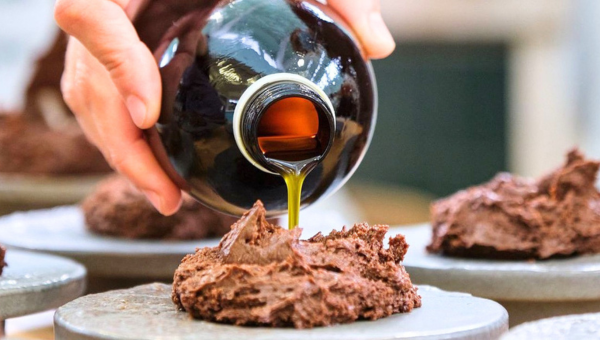
Olive oil is omnipresent in Portuguese cooking. Most savory dishes in the country start with a refogado of onions and garlic sweated in olive oil. We toss our greens in the pan with it, we use it over boiled potatoes, grilled fish, to dress salads or on bread, as well as drizzled over a bowl of soup for an extra luscious touch. If you want the full story of olive oil in Portugal, from regions and varieties to how to taste and buy it, we have a full guide dedicated to that here. What you may be more surprised about though, is the Portuguese habit of putting olive oil in sweets.
Feat photo by Esporão
And by sweets, we do not mean only desserts and puddings you eat with a spoon at the end of a meal. Portuguese sweet recipes with olive oil also include biscuits that are eaten with coffee or tea, festive pastries made at Christmas or Easter, and regional breads made to last for a while in the cupboard, that is, if people at home resist them. Some of these specialties are still easy to find, even in Lisbon, whether it is at specialty food stores or even regular supermarkets. Others, though, are slowly retreating to regional bakeries and may occasionally appear on local fairs during specific times of the year.
In many parts of Portugal, especially in regions where olive trees have traditionally been part of the landscape, olive oil was simply the fat people had access to. Alentejo, Beiras and Trás-os-Montes are obvious examples, but olive oil has been part of Portuguese food history for centuries, with records of olive cultivation and olive oil production going back deep into the country’s past, as far as the Bronze Age. Butter, on the other hand, was not always the default Portuguese baking fat and lard was scarce, as people couldn’t afford to slaughter pigs for meat or fat that often. Especially in poorer rural contexts, sweets were made with what was local, affordable and already in the pantry. The use of olive oil instead of butter is actually common to all Southern Europe, in contrast with the north of the continent, where butter and dairy have historically been more common. Margarine and industrial vegetable oils came much later, but many older Portuguese recipes had already been built around azeite and so we keep preparing them that way, at least within traditional contexts.
When it comes to technique, in baking, olive oil behaves differently from butter. It gives cakes a moist crumb, it helps biscuits keep their texture, and brings a discreet fruity or even peppery note that works beautifully with other ingredients such as citrus, spices, and nuts. A good olive oil can make a simple cake taste deeper but not necessarily heavy. Nowadays, in fine dining contexts, it is not unusual to come across desserts using olive oil, whether in the main preparation or as a finishing touch. In a way, this has given a new prestige to something Portuguese home cooks have been doing for centuries, turning what was once seen as humble necessity into a marker of quality and good taste.
If you are curious to taste Portuguese sweets with olive oil, we recommend trying:
Bolo de azeite | olive oil cake
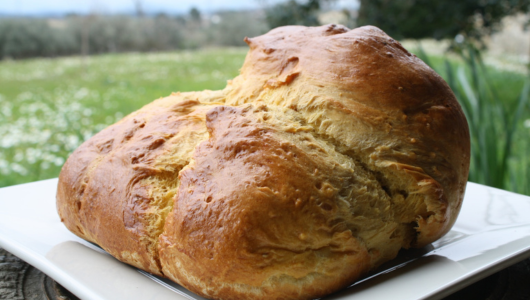
Photo by Sabores e Saberes da Beira Baixa
Bolo de azeite sounds simple, but it is not one single cake. It is more of a family of Portuguese cakes where olive oil takes the place that butter would have in more widespread recipes worldwide. Depending on the region and the occasion, it can be plain, enriched with honey, scented with orange or lemon, spiced with cinnamon or fennel, or made closer to a festive bread than to what most people would actually call a cake.
The Portuguese region of Beiras is well known for its olive oil cake. Here, old recipes often combine eggs, sugar, flour, olive oil, citrus zest and spices, sometimes with honey too. The result is usually a cake with a moist but not heavy crumb, built to last a few days and to be eaten in slices with coffee, tea, a glass of milk, or even a small glass of aguardente, a Portuguese spirit with almost 50% alcohol, if the afternoon is going in that direction.
Also from the Beiras, bolo de azeite do Fundão, pictured above, is indeed called a cake but its appearance is closer to a large rustic bread or enriched dough than to a typical soft sponge cake. In fact, it is a cake that does not contain sugar, showcasing how the word bolo can be quite flexible when it comes to Portuguese regional baking.
Bolo de azeite e mel, another Beira Baixa-style variation, is a different form of olive oil cake, with honey giving the cake more aroma, depth and even longer shelf life. This version often includes cinnamon, citrus zest and sometimes even nuts.
In Lisbon, bolo de azeite is not something you will usually find in neighborhood pastelarias, but it does sometimes show up in supermarkets, old-school grocery stores and occasional food fairs, especially when the products come from Beiras, Alentejo or Trás-os-Montes. You could also purchase it online at this online store dedicated to products from Fundão. It keeps well and does not need refrigeration, so it could be a good edible souvenir from Portugal that you might want to consider taking back home with you. For a more dessert-like version of olive oil cake in the Portuguese capital, we would recommend the Alentejo inspired bolo de azeite com doce de ovos served at the restaurant Chico Esperto (Av. de Roma 46B).
Biscoitos de azeite | olive oil biscuits
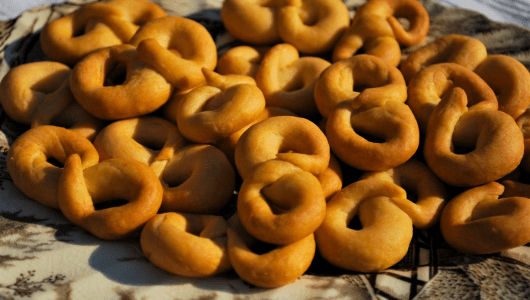
Photo by Soure Acontece
Biscoitos de azeite are probably the most everyday example of Portuguese sweets made with olive oil. They are simple, sturdy biscuits, the kind people keep at home to eat with coffee, serve with a cup of tea when someone drops by, or reach for in the middle of the afternoon when craving something sweet. These firm, fragrant biscuits are made to last and, back in the day, they were common as well because they travel well.
There are regional variations, but most of them are made with a base of flour, eggs, sugar, olive oil, sometimes aguardente, and often the kind of aromatics Portuguese bakers tend to trust, such as cinnamon, fennel, lemon or orange zest. In the Beiras, some versions are brushed with egg white and sprinkled with sugar and, in Fundão, they are usually ring-shaped. A bit like pasta in Italy, the dough remains mostly the same and what tends to vary the most is the shape, which could be a ring, a twist, a horseshoe, or whatever the imagination of the baker might create on a given day.
In Alentejo, olive oil biscuits are more commonly known as bolinhos de azeite, and they tend to be perfumed with cinnamon, fennel and lemon zest. Even in a region famous for its olive oil, the flavor of the oil in the biscuits is not supposed to stand out as such. The olive oil gives the biscuit body, but the sweet aromas one would normally associate with bolinhos de azeite would be more the fennel or the lemon.
Texture is the main difference between biscoitos de azeite and butter biscuits. These are firmer, drier, less crumbly and usually less sweet. They are also not meant to be eaten warm out of the oven, and you’re supposed to let them cool down, firm up and taste them at room temperature. Because they are not butter and soft, they work so well with coffee, tea or milk. Often, they are also enjoyed with some jam or a slice of quince paste and cheese, similarly as if they were a piece of bread.
You will not have a hard time finding biscoitos de azeite across Portugal. Supermarkets often sell packaged versions, especially from regional brands, but the better ones tend to come from traditional bakeries. In Lisbon, besides regular supermarket chains, you may want to ask about them in older neighborhood bakeries that still sell olive oil biscuits alongside the usual cakes you’d normally find at a Portuguese pastelaria.
Pudim de azeite | olive oil pudding
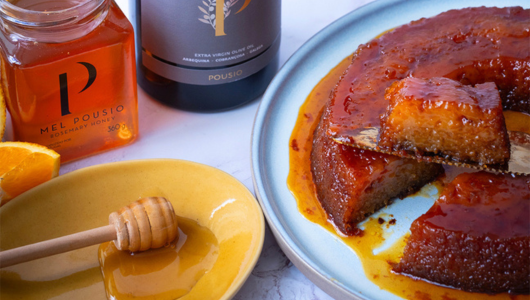
Photo by Pousio HMR
At first glance, pudim de azeite can seem like a contemporary chef’s idea, but it is actually a much older Portuguese tradition, back in the day prepared during special occasions such as Christmas.
The best-known version is pudim de azeite de Mirandela, from Trás-os-Montes. Mirandela is often introduced to visitors through the sausage alheira, but olive oil is just as important to the food identity of the area. The city is part of a region where olive groves, mills and DOP Trás-os-Montes olive oil are very relevant to the local economy and the regional food repertoire, and it’s within this context that olive oil pudding came about.
The Mirandela version follows the broader Portuguese tradition of egg-based puddings prepared in a mould lined with caramel, usually baked in a water bath (banho-maria). What changes is the presence of extra virgin olive oil, often joined by orange zest and sometimes Port wine or, in more contemporary versions, condensed milk. The result could be compared with the more familiar Portuguese caramel pudding (pudim de ovos), but usually featuring a slightly denser texture.
There are related versions elsewhere in Portugal, especially pudim de azeite e mel, with olive oil paired with honey, citrus and sometimes cinnamon, as pictured above. The Algarve also has its own version, known as pudim de mel à algarvia. Honey is the headline ingredient, but olive oil often appears in the mixture, along with eggs, sugar, cinnamon and lemon.
In Lisbon, pudim de azeite is not something you can count on finding in a regular pastry shop, but it may appear in restaurant dessert menus. At fado restaurant O Faia (Rua da Barroca 54), for example, they serve an exquisite olive oil pudding with honey, green tomatoes, almonds and orange. At É Um Restaurante (Rua São José 56), a social-impact project by Associação Crescer that uses restaurant work as a path towards training, employment and social inclusion for people who have experienced homelessness, the menu includes a pudim de azeite e mel with home-made tangerine sorbet.
Bolo podre | Portuguese “rotten” cake
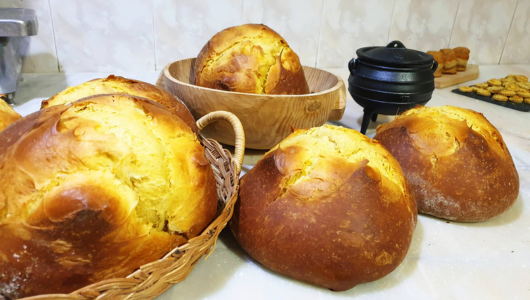
Photo by Visit Castro Daire on Facebook
Bolo podre is one of the great badly named cakes of Portuguese baking. The name means “rotten cake”, which is not exactly stellar branding, but the cake itself is anything but spoiled. It is dense, aromatic, and traditionally made with delicious ingredients like olive oil, honey, eggs, flour, sugar, cinnamon, citrus peel and, in some versions, aguardente or clove. As it is quite dense and moist, besides being delicious, it also has the advantage of keeping well for a long period.
Although there are versions in different parts of the country, bolo podre is strongly associated with Alentejo, especially around Beja, where it is considered a traditional Christmas sweet. Because it keeps well, it was usually prepared in advance and meant to be enjoyed during family gatherings and religious celebrations, surviving well without refrigeration or modern packaging. Honey and olive oil both help with this, as, besides obvious aroma, they also give moisture and structure to the cake.
There are also versions from the Beiras, often referred to as bolo de mel e azeite da Beira Baixa or simply another regional form of bolo podre. In this part of Portugal, bolo podre is not only connected with Christmas but, more prominently, with Easter, similarly to folar, as we will see below. While the Alentejo version tends to be denser, in the Beiras bolo podre is usually softer and closer to a sponge cake. There is also a very specific bolo podre de Castro Daire (pictured above), in the Viseu district, and this one is closer to a sweet bread, closer to the olive oil cake from Fundão we saw above.
The names and recipes of these olive oil sweets can be confusing if you did not grow up with them. But that confusion says a lot about Portuguese cooking traditions, with many of these sweets having a humble domestic background, rather than being developed in professional settings, and simply passed down orally from one generation to the next. Because of that, there is often no single definitive version and no one can really claim to be making the “real” one. This is quite different from many conventual sweets, whose recipes were historically developed in convents and became more formally established over time.
In Lisbon, bolo podre is not impossible to find, but it’s more likely to show up around Christmas and Easter than all year round. Some supermarket chains occasionally stock Alentejo versions, including bolo podre Textura Alentejana at Continente and bolo de mel podre by Pastelinhos de Safara at Auchan. For the Castro Daire version, go straight to the source if you can. During Easter celebrations, the municipality has been known to produce oversized celebratory versions of up to 500 kilos. For a regular sized version in Castro Daire, we would recommend bakery Forno da Serra.
Broas de azeite | rustic olive oil biscuits
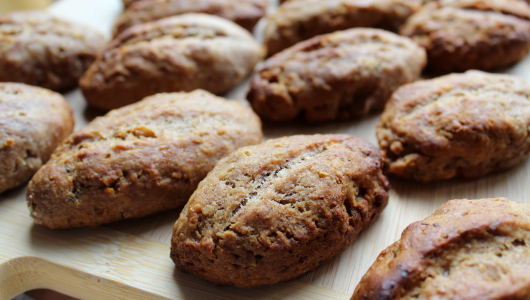
Photo by Iguaria
Before talking about broas de azeite, it is worth clearing up something that can easily lead to confusion. Broa, in the singular, usually refers to the dense Portuguese cornbread made with maize flour, especially common in the north and center of Portugal. Broas, in the plural, means small rustic cakes, biscuits or dense sweet breads, usually shaped by hand and baked until firm.
Broas are a broad category of baked goods, mostly connected with the colder seasons. They are closely linked with seasonal traditions such as All Saints’ Day, when broas dos Santos or bolinhos dos Santinhos are offered to children during Pão por Deus, the older Portuguese custom of going door to door on November 1 asking for small treats. In some places, the offerings used to be bread, dried figs or nuts while, in others, little broas became part of the ritual.
Broas de azeite are the versions prepared with olive oil, and they are usually dense, aromatic and not overly sweet, with a flavor built around olive oil, cinnamon and fennel (erva-doce). Abrantes has one of the most interesting versions. Broas de azeite de Abrantes, pictured here, also known in some contexts as broas de mel or broas de Todos os Santos, are traditionally made by boiling water, olive oil, sugar, cinnamon, fennel and salt, then adding flour and working the dough while still hot. Some recipes include walnuts, almonds, pine nuts, honey or even coffee.
Another version is broas de mel, yet again with the wonderful pairing of honey and olive oil, that results in a darker and more aromatic broa. The recipe for broas and even broas de mel is very adaptable. We also have broas de Almeirim, one of Ribatejo’s best-known versions, traditionally associated with Almeirim, in the Santarém district. These are made with olive oil, honey, wheat flour, corn flour, rye flour, cinnamon, fennel, pine nuts and almonds. The use of different flours gives them a rustic structure, while honey and olive oil bring moisture and depth.
Alentejo also has its own broas de azeite, but they are usually simpler, featuring the ingredient list you would expect from an Alentejo sweet, including wheat flour, sugar, eggs, olive oil and fennel. Via their online store, Mercado Alentejano, for example, sells broas de azeite from Forno do Monte in Sousel.
Supermarkets in the Portuguese capital often carry packaged broas de azeite from various regions of Portugal. These are also likely to show up during Christmas markets, but they should not be mistaken with broas castelares, made with sweet potato, which are much more widespread. If you want to taste them closer to their roots, Abrantes and Almeirim are both great day trips from Lisbon, and the search is much more enjoyable when it comes with a proper Ribatejo travel schedule, including a regional lunch.
Escarpiada de Condeixa | olive oil pastry from Condeixa-a-Nova
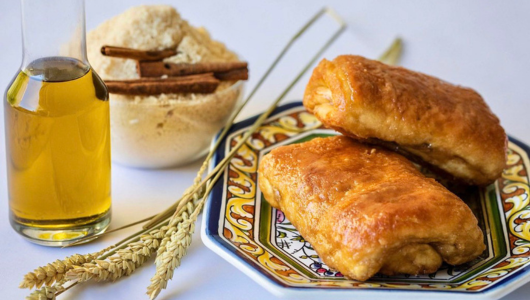
Photo by The Travelight World on SAPO
Escarpiada de Condeixa is a traditional sweet from Condeixa-a-Nova, in the Coimbra district, made with bread dough, brown sugar, olive oil and cinnamon. The recipe for escarpiada begins with massa de pão, the same basic dough used for bread, which is then stretched, filled, folded and baked. Condeixa-a-Nova sits close to the Roman ruins of Conímbriga, in the limestone landscape of the Serra de Sicó, and escarpiada is strongly tied to this local territory. The exact origin of this recipe is not fully documented but we know that it has been passed down orally through generations. The name of escarpiada is connected with the word escarpa, which in Portuguese means a steep slope or rocky cliff, possibly because the folded and uneven appearance of the sweet recalls the limestone formations around Condeixa and the Serra de Sicó.
The preparation involves letting the bread dough rise, then stretching it out and covering it with olive oil, brown sugar and cinnamon. The dough is then folded, creating layers where the sugar melts into the olive oil as it bakes, resembling what is done with dough and butter to create the laminations of puff pastry, like featured on the outside of a pastel de nata. The finished escarpiada is usually golden, irregular in shape, crispier at the edges and softer inside, with a flavor that also depends on the quality of the olive oil used to make it.
Escarpiada was once sold in larger portions, while from the second half of the twentieth century local bakers began making individual servings, adapting the format to more modern eating habits. But, unfortunately, you will not come across escarpiada de Condeixa in Lisbon. This is a very specific regional sweet, and the best place to try it is Condeixa-a-Nova itself. If you are travelling between Lisbon and Coimbra, visiting Conímbriga, or exploring the Centro region, Condeixa makes an excellent food stop because of specialties like this. Look for it in local bakeries and pastelarias rather than in generic cafés. Padaria Século XXI and Pastelaria Alidoce, both in Condeixa, are known locally for delicious traditional escarpiadas.
Económicos | olive oil cakes from Trás-os-Montes
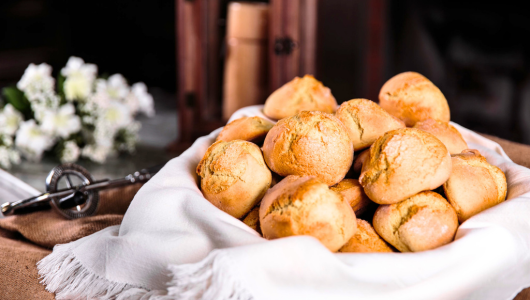
Photo by Panificadora Moutinho
Económicos are small, simple cakes closely associated with Trás-os-Montes. They belong to a very different tradition from conventual sweets, as they don’t rely on egg yolks or elaborate fillings. On the contrary, these have been made for generations using accessible ingredients, making them an everyday cake many people would keep at home.
Económicos are literally “economical” cakes, made with everyday ingredients such as eggs, sugar, milk, flour, a little olive oil, aguardente and baking powder or bicarbonate. They are also known by other regional names, including pobrezinhos, matrafões, desgovernados and bolos de romaria. As it often happens, the names shift from place to place, and the recipes change slightly from family to family. Compared with biscoitos de azeite, económicos are usually softer and more cake-like. They can be eaten plain, or cut open and filled with jam, similar to a scone.
They are a good excuse to look at Trás-os-Montes baking more broadly. The region’s food has long been shaped by distance, harsh climate and self-sufficiency. Winters are cold, villages were historically isolated, and kitchens relied heavily on what could be produced and stored locally. In savory food, that meant smoked meats (such as those featured in feijoada transmontana), rye bread, potatoes, legumes, olive oil and chestnuts. In sweets, the same logic shows up through sturdy cakes that were made to last, to travel, to be shared.
In Lisbon, económicos are not especially common in ordinary pastelarias. But, if you travel to the Trás-os-Montes region, you’ll come across them in almost every bakery. To enjoy them without taking the trip to northeastern Portugal, you can buy económicos by Pão de Gimonde at hypermarket Continente itself, knowing that you’ll be purchasing the version that comes from the bakery in Trás-os-Montes run by Elisabete Ferreira, who became popular in 2024 after receiving the award of “best baker in the world”, given by the International Union of Bakers and Confectioners.
Popias de azeite | Alentejo’s olive oil and lard biscuits
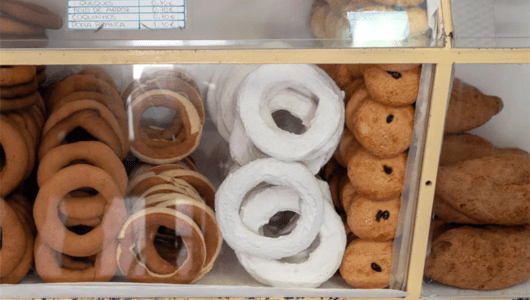
Photo by Andarilho
Popias are traditional ring-shaped biscuits from Alentejo, especially associated with rural areas. They are firm, lightly sweet, usually scented with cinnamon, fennel, or lemon, and made with olive oil and lard, two fats that often come together in Alentejo kitchens. Sometimes, they may just be prepared with lard, but if the name is written as popia de azeite instead of just popia, then you’d know for sure that olive oil is involved in their making, as per the more traditional recipes.
In Alentejo, olive oil has historically been a part of the everyday kitchen, but pork fat (banha de porco) also had an important place in home cooking, especially after the yearly pig slaughter, when every part of the animal had to be used wisely. A biscuit made with olive oil and lard is not a contradiction, as both fats play complementary roles in the recipe. While the olive oil brings aroma and structure, the lard gives tenderness and a more crumbly bite. Together, they create the kind of biscuit that can be preserved well inside a tin for several days.
The name popia is usually used for a small ring or doughnut-shaped biscuit, although the exact shape and recipe can vary from place to place and from baker to baker. Some versions are more compact and pale, others slightly darker and more aromatic, depending on the amount of cinnamon or fennel in the dough. They were made to go with coffee or a glass of milk, or something stronger after lunch, for a sweet ending when there is no plated dessert.
In Alentejo, local bakeries may sell several types side by side, as we see in the photo above: popias de azeite, popias de canela (with cinnamon), popias de erva-doce (with fennel), popias brancas and popias de espécie. The popias brancas, also called popias caiadas in some places, are the white ones “painted” or coated with a white sugar glaze. In Ferreira do Alentejo, these white popias have also been associated with wedding celebrations, where they could appear decorated and displayed during the reception. Popias de espécie, also known as alconcoras, tend to have a yellowish exterior and a darker, more granular interior, with a stronger spiced taste.
In Lisbon, popias alentejanas are not as easy to find as broas or ordinary packaged biscuits, but they do appear in some traditional groceries that sell sweets from the south. Supermarkets may occasionally stock packaged versions from regional producers, but for better ones, look for Alentejo bakeries and small producers, especially around Évora, Beja, Portalegre, Reguengos de Monsaraz or smaller towns where these dry biscuits still belong to everyday snacking habits.
Borrachões | drunk cakes from Idanha
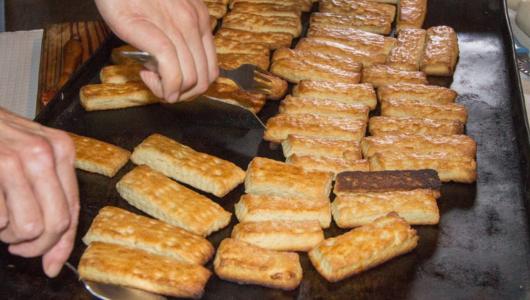
Photo by Aldeias Históricas de Portugal
Borrachões are traditional biscuits from the village of Idanha-a-Velha and the wider Idanha-a-Nova area, in Beira Baixa, close to the Spanish border. The name gives away the joke, as borracho means drunk, and these sweets usually include white wine and aguardente in the dough. They are not “drunk cakes” in the soft, syrupy sense. They are firm, golden biscuits, baked rather than soaked, with olive oil giving body and the alcohol adding aroma and extra character.
Idanha-a-Velha is one of Portugal’s Historical Villages, a tiny place where you can still feel influences from Roman, Visigothic, Islamic and medieval times. Traditionally, borrachões are especially associated with Easter, a time when sweets in inland Portugal often come in the shape of sweet breads and folares. After Lent, the table becomes richer again, and ingredients such as eggs, sugar, olive oil and spirits return with purpose. In Idanha, borrachões are part of that celebration but, thankfully, today, they are not limited to Easter anymore. In local hotels, restaurants and bakeries, they may appear at breakfast or as a snack.
In Lisbon, you would very rarely come across borrachões, unless you are at a themed event where products from the Beiras are showcased. The better way to understand them is to go east, towards Idanha-a-Nova, Idanha-a-Velha and Monsanto, which has seen its popularity increased in recent years because of being featured as a location in the popular TV show House of the Dragon. For those not travelling there anytime soon, if you follow our tip above and consider ordering bolo de azeite do Fundão online from the shop dedicated to products from Fundão and Beira Baixa, check as they usually also have borrachões da Beira Baixa.
Filhós | soft Christmas fritters
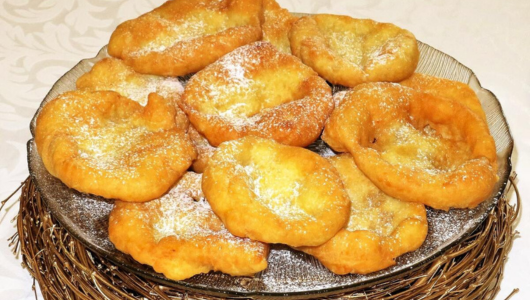
Photo by VortexMag
Filhós are one of Portugal’s most important Christmas sweets, and also one of the hardest to define because the recipe, the shape and even their name depend on where you are. In some regions, filhós are soft, fluffy fritters made from a leavened dough. Elsewhere, they are flatter, thinner, crispier or stretched by hand until almost translucent before frying. Some include pumpkin, orange juice, aguardente or olive oil in the dough. Others are made from flour, eggs and yeast alone, then fried and finished with sugar and cinnamon. What they have in common is that they’re basically made with dough which is fried and covered in something intensely sweet, like syrup or granulated sugar.
Olive oil is usually part of the traditional recipe of filhós, adding richness and elasticity to the dough. Before cheaper neutral oils became more common, filhós could also be fried in olive oil.
Like many Portuguese Christmas sweets, filhós, filhoses or velhoses, are traditionally prepared in batches, served over several days, and offered to guests with coffee, a glass of Port, or another festive drink. They are best fresh, of course, when the outside is still slightly crisp and the inside soft, but many families continue eating them for days because, during Christmas in Portugal, it is common to have a table of desserts laid out during several days, for the family to keep snacking on.
In Beira Interior and Serra da Estrela, particularly around Guarda and Covilhã, filhós de joelho are a curious variation. The dough is stretched over the knee (joelho, in Portuguese) before frying, which gives them their name and their wide, thin, irregular shape. These are not the soft pumpkiny fritters some people may know from other regions, being larger and flatter, often served dusted with sugar and cinnamon or drizzled with syrup. In Alentejo, filhós are usually fluffier, made with leavened dough, olive oil and often orange juice as well.
Even though pastelarias and even supermarkets with a fresh pastry section will stock filhós during December, they are mostly something families enjoy at home, and not something you’ll usually see restaurants serving. Also at Christmas markets in Lisbon you’ll see them for sale alongside sonhos, rabanadas, azevias and coscorões.
Coscorões | crunchy Christmas fritters
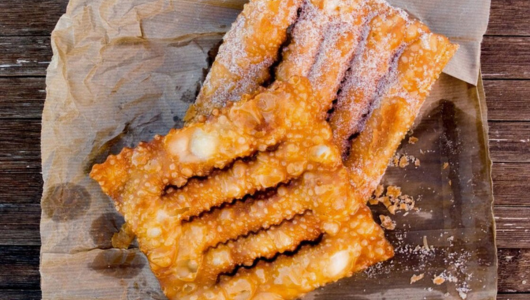
Photo by Ruralea
Instead of the soft, puffy texture of most filhós, coscorões are crispy because they are rolled thin, cut into rectangles or diamonds, sometimes slashed in the middle, fried until golden and finished with sugar and cinnamon. A good coscorão should snap when you bite it.
Their exact origin is difficult to pin down, but they are often linked to very old Mediterranean and Iberian traditions of fried dough. They are often associated with the Moorish influence in Portuguese food, having later circulated through Europe during the Middle Ages. They were practical for long journeys because they kept better than softer cakes and could be eaten plain, with honey, or even in savory contexts. This keeping quality helps explain why coscorões became so well suited to Christmas tables. They could be made in advance, stacked in large bowls or tins, and served throughout the festive period. As most Christmas desserts in Portugal they were and still are prepared in batches.
Just like it happens with the dough for filhós, the dough of coscorões includes olive oil to give it elasticity, even though more recent versions may also include butter or margarine. Olive oil definitely yields a more traditional flavor, although today the frying does end up happening in more neutral vegetable oil.
In Lisbon, you will find coscorões around December, in traditional bakeries and supermarkets that sell them alongside Portugal’s take on French toast (rabanadas), filhós, Portuguese Christmas doughnuts (sonhos) and sweet chickpea turnovers (azevias). If you are spending Christmas in the Portuguese capital and aren’t counting calories, we recommend visiting the best Portuguese pastry shops in Lisbon, which will usually have many sugar and cinnamon coated temptations we hope you get to sample.
Folar | Easter sweet bread
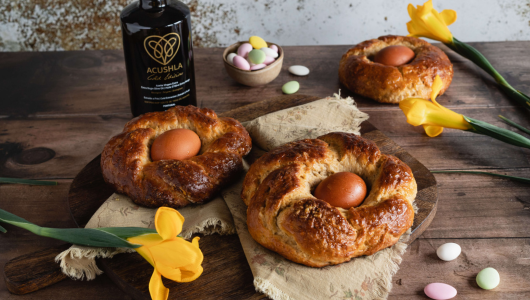
Photo by Acushla
Folar is one of the most typical Easter foods in Portugal, and there are variations of sweet and savory folar, the latter being stuffed with Portuguese cured meats (enchidos), known as folar de carnes, especially in the region of Trás-os-Montes. Here we are focusing on the sweet version, folar doce.
Folar is usually associated with Easter Sunday and with the end of Lent when, according to Catholic tradition, eggs, sugar, fat and richer breads return to the table with enthusiasm. Folar is usually a round or oval enriched bread, often scented with cinnamon, fennel, lemon or orange zest, and sometimes decorated with one or more whole boiled eggs still in their shell. The eggs symbolize the ideas of rebirth, fertility and celebration, making total sense during Easter.
Like many Portuguese Easter sweets, folar doce sits somewhere between bread and cake. Some versions are soft and brioche-like, made with milk, eggs, sugar and butter. Others are more rustic, denser and closer to traditional bread dough enriched with sugar, olive oil and spices, particularly fennel, which is the unofficial scent of Easter in Portugal. These olive oil versions are definitely more traditional and tell of a recent past before butter or margarine became common everywhere and olive oil was the default fat already available in many households, particularly in the inland and southern regions.
Tradition dictates that, at Easter, godparents give a folar to their godchildren, while godchildren may offer flowers, almonds or other small gifts in return. This kind of exchange is unusual in urban centers these days but, fortunately, eating folar isn’t. Around Easter you’ll easily be able to purchase it from bakeries and supermarkets in Lisbon as well as most parts of Portugal.
Mousse de chocolate com azeite e flor de sal | chocolate mousse with olive oil and fleur de sel
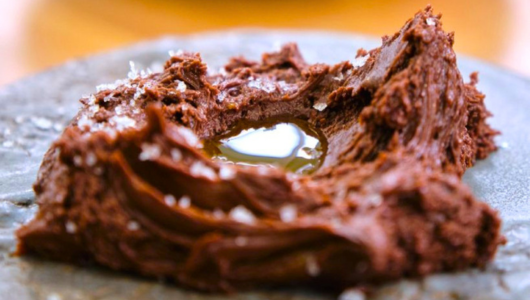
Photo by Esporão
Compared with the other sweets we have explored above, mousse de chocolate com azeite e flor de sal is clearly a contemporary take on one of Portugal’s most beloved desserts. It belongs to the more recent wave of Portuguese contemporary restaurants that started looking again at familiar ingredients, such as olive oil, and playing with them beyond their more common uses.
It is difficult to credit one single person with inventing this combination, but the truth is that the idea spread because it works beautifully. Dark chocolate has bitterness and fat, while the olive oil brings fruitiness, shine and a gentle peppery edge, especially if the oil is good and not too aggressive. A sprinkle of flor de sal sharpens the chocolate and stops the mousse from tasting overly sweet. It is actually the same principle behind salted caramel. A mousse made with olive oil can also feel lighter than a version with butter, while still tasting rich enough to be considered indulgent. Not only is the olive oil used in the actual mousse, after the dessert is plated, it is also drizzled over it for extra richness and a more pronounced olive oil flavor.
In Lisbon, one of the best-known examples is at Oficina do Duque (Calçada do Duque 43A), in Chiado, where the dessert appears on the menu as “Chocolate, Azeite e Sal”. It has been part of the restaurant’s identity for years, already considered a house classic back in 2018. You can also find a decadent version at Tágide Wine & Gastrobar (Largo da Academia Nacional de Belas Artes 20), where it is made with São Tomé 98% chocolate, Trás-os-Montes olive oil and flor de sal.
Can you ask for this at any regular restaurant that serves chocolate mousse? Not really. Many Portuguese restaurants serve chocolate mousse, but most will serve the classic version plain, sometimes homemade, sometimes less proudly so. But you could always ask for some olive oil and salt and upgrade your regular chocolate mousse and, while this is not common per se, as it would be to drizzle the mousse with a spirit of choice or even some espresso, no one will look at you weirdly either if you decide to try doing this.
Gelado de azeite | olive oil ice cream
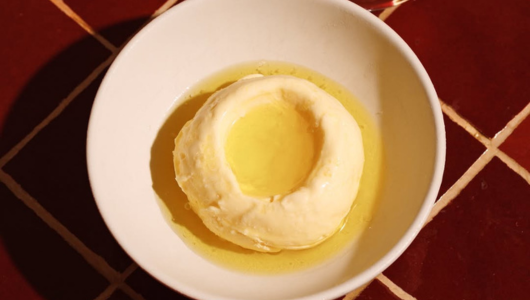
Photo by Santa Marta on Instagram
Gelado de azeite is one of the clearest signs that Portuguese olive oil is no longer being treated only as something to pour over cod or boiled potatoes. In contemporary kitchens, it has moved into desserts with more confidence, and ice cream is one of the best formats for showing what a good extra virgin olive oil can actually taste like when it is not competing with garlic, onions or vinegar.
Unlike traditional olive oil cakes and biscuits, this is not a sweet born in rural areas. It belongs to a more recent way of thinking about Portuguese ingredients, often connected with restaurants, olive oil tastings, producer-led recipes and artisan ice cream shops. The goal is not simply to add fat to the dessert but to use the olive oil almost like a flavor extract, to bring fruitiness and a soft peppery finish to the ice cream, delivering all the richness one expects when enjoying this type of dessert.
The quality and style of the olive oil matter, as a very bitter or aggressively pungent oil can overpower the dessert, while a more balanced extra virgin olive oil can bring notes of green fruit, fresh herbs or almond, depending on the cultivar and region.
Gelado de azeite is still not an everyday flavor like strawberry, vanilla or chocolate. It tends to appear as a limited edition or, in most cases, as part of a plated dessert in contemporary restaurants. The plant-based gelato brand Geladaria Mully brings their iconic Kitty Oliveira, a soy based ice cream with olive oil and fleur de sel to events and markets such as the Lisbon Vegan Market, but it is often also available at their café Casa da Mully (Rua Dr. Gama Barros 17 A/B), in the neighborhood of Alvalade. Lisbon-based Gato Gelados (Rua de São Lázaro 120), for example, has featured an olive oil flavor in partnership with the Portuguese olive oil brand Aquarela, even though it isn’t always available. What you can ask for, though, is something simpler which is also common internationally, and that is ordering a scoop of vanilla ice cream finished with extra virgin olive oil and salt. To enjoy gelado de azeite after a sit-down meal in Lisbon, we would suggest booking a table at Mediterranean restaurant Santa Marta (Rua de Santa Marta 61), pictured here.
To learn more about Portuguese food culture and dishes that most travelers end up skipping when visiting Lisbon, do not miss the tips we regularly share on Instagram.
Feed your curiosity on Portuguese food culture:
Foraging in Portugal: wild ingredients used in the Portuguese kitchen
The women behind Lisbon’s food
The ultimate guide to olive oil in Portugal
Real people, real food. Come with us to where the locals go.
Sign up for our natively curated food & cultural experiences.
Follow us for more at Instagram, Twitter e Youtube