
Traditional Portuguese dishes made with wine – recipe inside
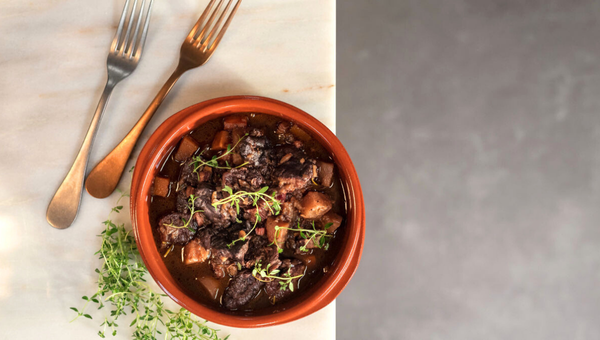
In Portugal, wine is part of daily life in ways that go beyond drinking it. We do not need a special occasion to open a bottle of wine, as it’s common to uncork one during family gatherings, but also during lunch or dinner during weekdays. In the Portuguese kitchen, wine is often used, mostly to marinate meat and to build the base of savory dishes, but it also appears in some dessert recipes too.
Feat photo by 24Kitchen
This makes sense as, historically speaking, wine was produced locally across much of the country and was widely available, especially in rural areas. In some periods, in terms of hygiene and safety, it was even more reliable than water. Cooking with wine wasn’t seen as a luxury per se, but as a straightforward way to add acidity to dishes, which helped tenderise meat and balance richer flavors. In the times before refrigeration became common, wine also played a role in preservation, particularly in marinades that allowed meat to be stored longer without spoiling. Marinades like vinha de alhos, which later gave origin to vindaloo in India, are a good example of that, first being made for practical purposes and, eventually because it became tradition and people actually started loving the flavors (just like it happened with salt cod, which is eaten cured until today, even though we could have access to the fish fresh).
This practical approach to cooking with wine also crossed into the sweet side of Portuguese cuisine. We have several desserts made with wine, particularly Portuguese fortified wines, used to give a different type of sweetness and complexity to the sweet dishes, but that also contributed to their stability, particularly when the recipes include fruits, which when cooked or soaked in wine last longer. Cakes and puddings made with wine were often also linked with festive moments and celebrations, when the list of ingredients used became more generous.
Most Portuguese dishes made with wine are fairly rustic, and are a part of the repertoire of Portuguese comfort foods. These are the best traditional Portuguese dishes made with wine:
Savory Portuguese dishes with wine
Chanfana | Old goat stew
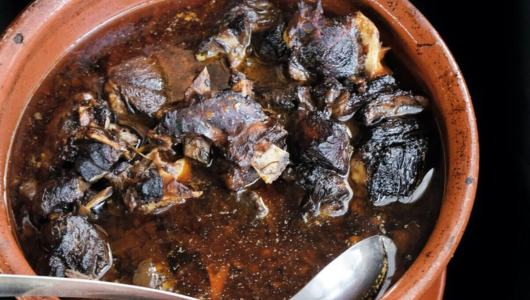
Photo by Ruralea
Chanfana is one of the clearest examples of how wine functions as a structural ingredient in Portuguese cooking. Originating in the central region of Portugal, particularly around Coimbra and the Beiras, this dish is built almost entirely around red wine and time. It is traditionally made with older goat, an animal that would have been too tough for quick cooking and therefore required long and slow braising to become edible.
The origins of chanfana have a lot to do with rural life. Back in the day, goats were valuable animals, kept primarily for milk, and were usually only slaughtered when they were no longer productive. The meat was lean, fibrous and strong in flavor, so cooking it required a certain level of technique and wine turned out to help with that. Large quantities of red wine were used to marinate and then slowly cook the meat, breaking down its fibres while creating a rich flavorful sauce.
Traditionally, chanfana is cooked in black clay pots, sealed and placed in a wood-fired oven, sometimes using the residual heat after bread baking. This method allowed the dish to cook slowly for hours, often even overnight. The wine is not diluted with water so, after plenty of time cooking, it reduces into a thick sauce flavored with the other ingredients used, namely onions, garlic, bay leaves and, sometimes, cloves or peppercorns. It is served simply, often with boiled potatoes, corn bread (broa de milho) or plain white rice.
As it is not a simple everyday dish, chanfana used to be prepared for communal occasions, such as gatherings and religious festivities. Even today, it is not a weekday meal, and it mostly appears in local festivals and traditional restaurants. Here in Lisbon, for example, you can have a wonderful chanfana at Imperial de Campo de Ourique (Rua Correia Teles 67), a traditional restaurant in the neighborhood of Campo de Ourique, but check before you head there for the sake of it, as they only serve it on specific days of the week.
Carne de vinha d’alhos | Pork marinated with wine and garlic
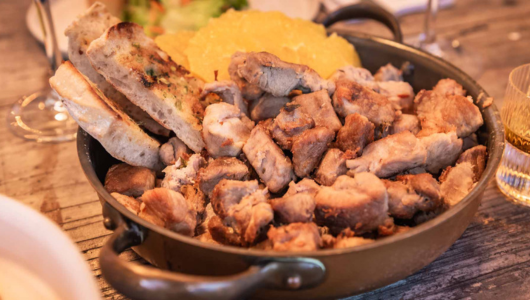
Photo by Visit Madeira
More than being seen as an actual recipe, vinha d’alhos is a technique. Marinating meat in wine (vinho), garlic (alho) and aromatics is something that appears across Portuguese cooking, applied to pork, poultry and even game, depending on the region and the context. What makes carne de vinha d’alhos stand apart is that, in Madeira, this technique became a proper dish, with a very strong identity in Madeiran cuisine.
In Madeira, carne de vinha d’alhos is inseparable from Christmas and, traditionally, it is prepared several days before Christmas Eve. When a pig was slaughtered for the festive season, not all the meat could be cooked or eaten at once, so marinating pork in wine and garlic helped preserve it, but also allowed flavors to deepen over time. The longer the meat rested in the marinade, the better it tasted. This method of cooking was of course more necessary before everyone had a fridge at home but, still today, it makes sense if not for preservation sake, for developing those flavors and meat texture that have become so liked in the meantime.
The marinade is quite simple, involving dry white wine, crushed garlic, bay leaves, salt, pepper, and sometimes herbs such as summer savory (segurelha). The pork sits in this mixture for several days, absorbing flavor and softening gradually. When it’s time to cook, the meat is slowly simmered in its own marinade until the sauce reduces and concentrates, and the cooked pork is super tender.
While the method exists elsewhere in Portugal, Madeira is where vinha d’alhos became more significant. This is also one of the clearest examples of Portuguese cooking techniques travelling beyond Portugal. Through the Portuguese presence in India, vinha d’alhos crossed continents, adapted to new ingredients and climates, and eventually evolved into vindaloo, where wine was replaced by vinegar, and local spices were integrated into the original more basic recipe.
Carne de vinha d’alhos is extremely versatile and can be served on a plate with side dishes like boiled or fried potatoes, but also in the format of a sandwich, with the meat tucked inside Madeira’s wheat and sweet potato bread bolo do caco. In this format, it resembles a bifana (also pork meat marinated with white wine), even though in the case of carne de vinha d’alhos the wine flavor is much more pronounced because of the longer marinade.
To try carne de vinha d’alhos in Lisbon, we recommend visiting restaurants specializing in Madeiran cuisine, such as Restaurante Típico Ilha da Madeira (Rua Campo de Ourique 33), or O Madeirense (Amoreiras Shopping Center store 3027). If you prefer to sample this specialty tucked inside a bun, ask for a sandes de carne de vinha d’alhos at Madeira Pura (Rua do Terreiro do Trigo 72), in Alfama.
Rojões | Portuguese style pork chunks
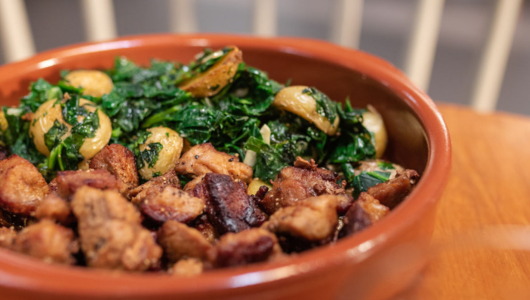
Photo by 24Kitchen
Rojões are one of the many pork dishes that Portugal loves. These flavorful and tender chunks of pork are particularly eaten in northern Portugal, especially in Minho and the Porto area.
Historically, rojões are tied to the matança do porco, the traditional pig slaughter that took place in rural households during the colder months. This was a moment of collective work and collective eating, when different cuts of pork were assigned specific uses, many of which ended up being used for cured and smoked charcuterie, aka enchidos. Rojões were a way of cooking larger, tougher pieces of meat that benefited from slow cooking and generous seasoning. Wine was part of that logic, as it helped soften the meat and balance the fat.
From the Minho region, rojões à minhota are perhaps the most popular version across the country. Here, pork is marinated in wine, garlic and aromatics before being cooked, something that is often done with pork lard (banha), as this was originally a dish to make the most of everything that the animal provided us with. As you can easily imagine, this is a meaty dish perfect for a cold winter day.
Rojões are usually served with potatoes and sautéed greens and, in more traditional settings, they could even land on the table alongside blood-based preparations such as sarrabulho (see more on this recipe below). Unlike some iconic Portuguese dishes that became famous through restaurants, rojões are a great example of domestic regional cooking.
Enjoy rojões in Lisbon at restaurants specializing in Minho’s regional cuisine, such as Adega Solar Minhoto (Av. Rio de Janeiro 29F), Restaurante Chu-Chu (Rua de Santa Marta 31 D E), or O Luís (Rua José Duro 29), where they serve rojões with papas de sarrabulho, an old-school porridge made with the pork’s blood and corn flour.
Coelho à caçador | Hunter style rabbit
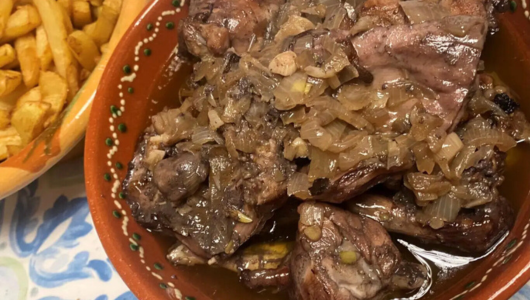
Photo by Grafe & Faca
Rabbit is a lean and muscular meat which, unlike pork and goat, doesn’t come with built-in fat and, unlike chicken, doesn’t soften easily. In large parts of inland Portugal, where rabbit hunting was common and farmed meat less accessible, cooking rabbit became common, but it required knowing how to go about it properly, in order to accomplish good taste and, most of all, a pleasant texture.
Coelho à caçador is mostly associated with inland regions, from Ribatejo to the Beiras and parts of the Alentejo, areas where hunting complemented agriculture and where rabbit was a regular presence on the table. Unlike festive dishes linked to specific feast days or celebrations, this dish was more common on ordinary days.
The name “à caçador” points directly to the fact that this is hunter’s food, cooked close to where the animal was hunted, using ingredients that were readily available, like onions, garlic, herbs, wine and, in some versions, tomatoes. In most traditional versions of coelho à caçador, the rabbit is first broken down into small pieces and marinated in wine, garlic and bay leaves. This step helps build flavor, but just as important, it tames the meat. The marinade is often reused as the base of the stew, which means nothing is wasted. Cooking is done slowly until the sauce thickens and the meat loosens from the bone. At the table, coelho à caçador can be eaten with boiled or roasted potatoes, and some bread to mop up the sauce. As there are a lot of bones, at least at home, it’s not unusual to get your hands involved.
In Lisbon you can sample coelho à caçador with a fork and knife (and bread) at establishments like A Valencina (Rua Marquês de Fronteira 157), even though this restaurant is more popular because of its excellent peri-peri chicken, Rio Coura (Rua Augusto Rosa 30), and Jugo do Lavrador (Rua da Venezuela 29D), in the neighborhood of Benfica.
Ensopado de borrego | Lamb stew over bread
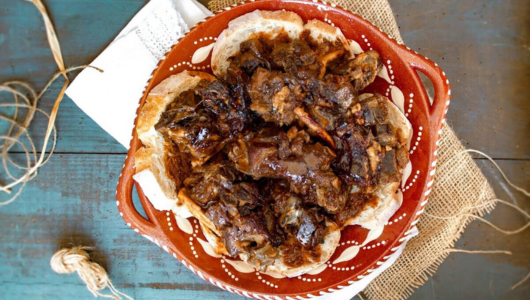
Photo by Ruralea
If you ever find yourself in the Alentejo and someone invites you over for ensopado de borrego, do yourself a favor and don’t fill up on bread before the main dish arrives. We’re saying this because bread is actually the foundation of this beloved typical recipe of Alentejo cuisine. The dish pops up across the southern plains, but it’s especially beloved in districts like Évora, Portalegre and Beja, where traditionally locals kept sheep and enjoyed ensopado at Easter or when families gather to mark the end of the sheep shearing season.
To make ensopado you gather chunks of lamb, sometimes almost as much bone as meat, in one pot together with white wine, garlic, bay leaves and a good dose of olive oil. The meat isn’t always from prime cuts, but as you cook it slowly, with the help of wine, great flavors and texture are achieved. This saucy meat is served over thick slices of bread (preferably pão alentejano), usually yesterday’s or even the day before’s, used to soak all of the brothy goodness. The bread you find at the bottom is like the cherry on top, you get to enjoy after munching on most of the meat on top. It’s soggy, for sure, but in the best possible way.
In some parts of Alentejo, cooks add a handful of fresh mint right at the end, giving the broth a touch of freshness. Elsewhere, you might find the dish spiked with a dash of vinegar, depending on family taste.
Thankfully, it is not difficult to find a good ensopado de borrego in Lisbon, as the Portuguese capital has many high quality Alentejano restaurants. Some of our favorites include O Magano (Rua Tomás da Anunciação 54A) and Casa do Alentejo (Rua das Portas de Santo Antão 58).
Arroz de sarrabulho | Pork blood rice
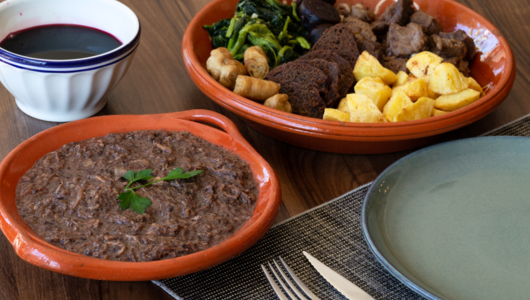
Photo by Digitools
Arroz de sarrabulho is another dish born directly from the matança do porco, the traditional pig slaughter that once was responsible for much of the protein consumed during winter across northern Portugal, particularly in Minho. Unlike many pork dishes that focus on meat or fat, sarrabulho starts with blood. Fresh pig’s blood is collected at slaughter, seasoned and set aside, because it has a short window of usefulness.
Wine enters early in the cooking process, when the blood is mixed with wine and vinegar, not only for flavor, but to stabilise it and prevent coagulation. The acidity keeps the blood workable while also balances what could otherwise be an overwhelmingly metallic flavor.
The rice is cooked separately, usually in a rich pork broth made from the very same animal. Afterwards, all the elements are put together, including the rice, blood mixture, finely chopped cuts of pork, often including liver and heart, and a seasoning of garlic, bay leaves and plenty of cumin. Wine is also added here once again to make the flavor even stronger.
Even though it could be a main dish, arroz de sarrabulho is rarely served on its own. In Minho, it traditionally comes as part of a larger spread, alongside rojões (see above), boiled meats, sausages and greens. There is also papas de sarrabulho, a version without rice, resembling a porridge most commonly prepared with corn flour, eaten as a starter before the full pork meal arrives.
Nobody cooks arroz de sarrabulho at home on a regular day. This is one of those dishes that is more commonly prepared during celebrations and, usually, in large quantities. It’s a beautiful example of zero waste food culture and, to experience it, you may want to travel north during winter. Here in Lisbon, you might get lucky at O Luís, a restaurant which we mentioned above while talking about rojões. If you do end up traveling to northern Portugal, we would recommend trying the arroz de sarrabulho at Restaurante O Sarrabulho, in Leça da Palmeira, very close to Porto.
Frango na púcara | Clay pot chicken
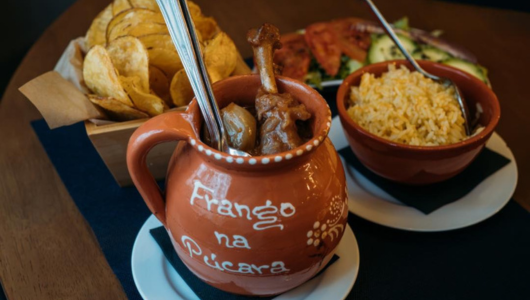
Photo by O Reencontro Restaurante on Facebook
Hailing from the city of Alcobaça, but found all over the Oeste, frango na púcara consists of chicken stewed in a clay pot, literally the púcara. Legend has it the dish started as a tavern favorite, made by cooks with a knack for turning tough old birds into something worth eating, making the vessel the secret of the dish. That clay pot doesn’t just look good, as it actually brings out flavors you just don’t get from stainless steel or non-stick. Some locals may even argue that, to make this recipe in an authentic way, you need a proper púcara from Alcobaça.
As for the chicken, you’d simply use a whole bird cut into pieces, leaving the skin on for extra richness. Into the pot go sliced onions, plenty of garlic, bay leaves, a splash of brandy, tomatoes and smoked bacon or a little cured sausage for extra flavor. But the ingredient that brings everything together is white wine, lots of it, which cooks down into a sauce best enjoyed soaked up with some rustic bread.
And if you ask locals where to try the best one, prepare for a debate. In Alcobaça, everyone’s grandmother makes it better than the next, and if you want the real deal, just hope you’re invited over. If you travel to Lisbon, we would truly recommend doing a day trip to Alcobaça, and eat frango na púcara at local restaurants like the acclaimed António Padeiro, Café Restaurante Trindade, or O Reencontro Restaurante. Alcobaça even has its own Confraria do Frango na Púcara, a brotherhood founded by locals to defend and promote the recipe and the wider food and wine heritage of the region. They organize tastings, cultural walks, events at the local wine museum and public celebrations of the dish, making sure frango na púcara isn’t just something you order once and forget, but a living piece of local identity that the town is determined to preserve.
Bife à Portuguesa | Portuguese style steak
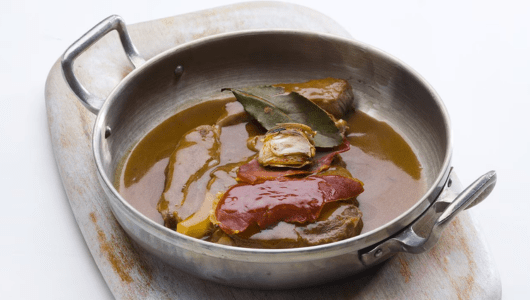
Photo by Unilever Food Solutions
Most places that eat beef have their own signature steak, and bife à Portuguesa is it for Portugal. It’s basically a not too thick piece of beef, usually pan-fried with garlic and bay leaf, a slice or two of cured ham on top, round crisps around the edge, and a shiny pool of wine-based gravy. A lot of places start by briefly marinating the meat in white wine, garlic and bay, using the same liquid to deglaze the pan later, building a savoury and slightly tangy sauce. Some other cooks may sneak in a bit of butter or mustard at the end, but the main ingredient for the base should always be white wine together with the meat juices.
In Lisbon, you’ll find bife à Portuguesa everywhere from no-frills neighborhood tascas to institutions that have been doing nothing but steak for decades. Café de São Bento (Rua de S. Bento 212) built its reputation on serving “Lisbon’s best steak”, and still serves a classic version with garlic, bay and presunto on the menu alongside their famous bife à café. Cervejarias like Portugália, with several locations across Lisbon, helped cement the whole steak-plus-sauce-plus-fries formula in the city’s collective memory, and plenty of newer spots still mimic that style, even if they dress it up a bit. Wherever you end up going, don’t forget to ask for some bread, as you will not want to leave any of that delicious sauce behind.
So how is bife à Portuguesa different from a bitoque? A bitoque is a thinner and quicker steak usually covered with a fried egg “a cavalo” and sided by fries, white rice and maybe a token salad leaf. It’s working-day fuel, often inspired by Galician and broader European “steak with egg” plates. Bife à Portuguesa is a little more elaborate, featuring a nicer and thicker piece of meat, with more focus on the sauce. It comes with no fried egg by default but, this is something the Portuguese tend to love so much that it’s not out of place to order an extra egg to be served with your bife à Portuguesa.
Arroz de cabidela | Chicken and blood rice
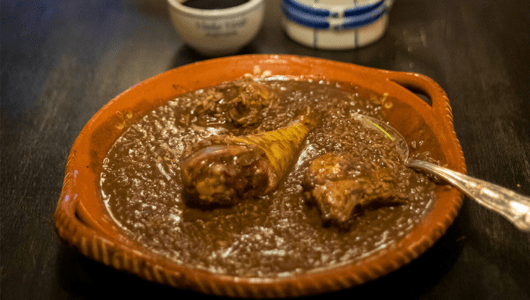
Photo by Revista de Vinhos
This is a dish that usually splits a table in two, as there are people who adore cabidela and others who are repulsed by the simple thought of it. On the plate, when you don’t know the ingredients involved, it looks like a lovely braised chicken rice, similar to a risotto but saucier, with an almost chocolate colored sauce. But once you try it you’ll probably understand that the rice is finished with the animal’s own blood, mixed with vinegar and a good splash of red wine.
Cabidela is a northern Portuguese recipe, cooked especially around Minho, where it’s also known as “arroz de pica no chão”. Traditionally, almost everyone had chickens in their backyard and, when the time of killing them came around, just like it happened with pork and sarrabulho, wasting any part of the animal would have been unthinkable. The meat went into the pot, the giblets followed, and the blood was caught carefully, immediately seasoned with vinegar so it wouldn’t clot.
Depending on the cook, wine can be used twice during the recipe. First, in many versions, the chicken is browned with garlic, laurel and onions, then doused with red or white wine that reduces into the base of the stock. Later, when the rice is nearly done, the reserved blood is loosened with vinegar and sometimes with red wine, then stirred in off the heat. The change is instant as, when you do this, the broth darkens, thickens slightly and picks up that faintly tangy, iron-rich depth that cabidela fans will defend to the end. Texturally, good cabidela rice is what Portuguese cooks call malandrinho, that is, not exactly soupy, but not dry either, just loose enough to move around the plate, with each grain coated in sauce.
Historically, this way of cooking with blood and wine wasn’t unique to Portugal but, since at least the 16th century, via the Portuguese, cabidela travelled along the former colonies, so you still find versions in Cabo Verde, Angola, Brazil, Goa and Macau, often with duck, suckling pig or other meats, but always with that characteristic blood and acid finish.
Families order it for sharing in traditional restaurants around Braga, Barcelos or Guimarães, the kind with granite walls, noisy dining rooms and house red wine that arrives in jugs. In Lisbon you can also find cabidela, particularly in old-school tascas and Minho inspired spots, more often than not as part of the daily specials (pratos do dia) rather than as a permanent item on the menu. If you’re curious but hesitant, ask for a small portion to share, and get a glass of Portuguese red wine to go with it.
Maranho | Sheep stomach sausage
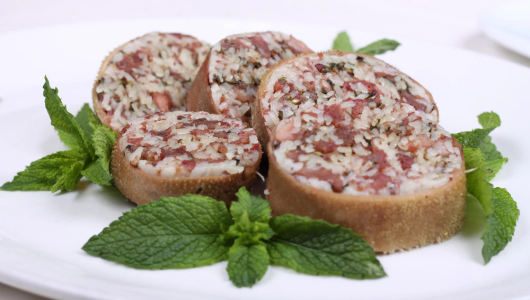
Photo by Andarilho
Maranho is strongly associated with the town of Sertã, in the Beiras region, where it has earned a strong status and even its own PGI (protected geographical indication) seal. Maranho da Sertã was recognised by the EU as a protected geographical indication in 2022, officially tying the name to the area and its producers. Every summer, the town celebrates that fame with a Festival de Gastronomia do Maranho, which includes a competition to crown the best version.
Maranho is one of those dishes that reminds you Portugal does not play around with the concept of “using the whole animal”. On the outside it looks almost discreet, resembling a plump, boiled sausage, beige and unassuming. Slice it and you’ll be surprised with rice with tiny cubes of goat or sheep, pork fat, chouriço and fresh mint, all packed inside a sheep or goat stomach. Of course, there’s white wine in there too, seasoning the filling before it ever sees heat.
Making maranho from scratch is not for the faint of heart, but it’s exactly the kind of thing rural households did for a long time without too much hesitation. The stomach (locally called bandouga) is scrubbed and cleaned thoroughly, sometimes even scalded with lime to remove any trace of smell. It’s then stitched up with needle and thread, leaving just enough of an opening to fill. The stuffing is put inside still raw, and afterwards the stomach is sewn shut and gently simmered until the rice swells and the whole thing firms up.
These days, most people in Beira Baixa don’t sit around sewing stomachs on a weekday either. You buy maranho ready-made from local producers, take it home and just cook it like you would any other fresh sausage, simmering it in water, sometimes finishing it in the oven, sliced and served with potatoes. In Sertã, award-winning butchers like Talho do Armindo are a good reference for those who’d like to buy a maranho to cook at home.
If you want to eat it already cooked for you, you’re better off heading to the source. In Sertã, restaurants like Ponte Velha and Ponte Romana are known to serve proper maranho, often side by side with its close cousin bucho recheado, which is a similar specialty prepared inside the pig’s stomach. Lisbon is trickier if you’re looking for maranho on a restaurant menu, but you can buy it to cook at home. Charcutarias like Manteigaria Silva sell maranho artesanal da Sertã vacuum-packed, and supermarket chains such as El Corte Inglés or Auchan stock maranho from producers like Dom Casel in their fresh charcuterie sections and online shops.
On the plate, maranho is usually sliced thick, served hot, and with simple sides like potatoes. The flavor is surprisingly bright for something that may sound heavy, but the truth is that the mint and the white wine keep it fairly fresh, and the rice keeps it from being too meat dense.
If you’re curious and in Lisbon, buy one, simmer it gently, slice it and pour yourself a glass of the same kind of white wine that went into the filling. If you really want to understand maranho, though, go eat it in Sertã, surrounded by the people who’ve been arguing for years over which version is the best one.
Sweet Portuguese dishes with wine
Pudim Abade de Priscos | Abbot of Priscos pudding

Photo by Braga Cool
Pudim Abade de Priscos looks like a simple caramel flan, but it is, hands down, one of the most decadent typical Portuguese desserts. Under the shiny top you get fifteen egg yolks, a sugar syrup scented with lemon and cinnamon, a glass of Port wine and, the plot twist, pork fat, traditionally toucinho from ham (presunto). The result is, arguably, the silkiest pudding your mouth has ever felt.
The recipe was created in the 19th century by Father Manuel Joaquim Machado Rebelo, parish priest in Priscos, just outside Braga, who basically lived a double life as a high-end chef. He cooked banquets for royalty, bishops and politicians, and this pudding was his signature dessert. Braga still treats it as a point of pride, so you’ll see it in pastry shops and restaurants across the city, and there’s even a small interpretative center dedicated to the Abbot and his culinary legacy.
Like most convent and clerical sweets, it involves copious amounts of egg yolks, which piled up after the whites were used in bulk to clarify wine and starch vestments. Sugar became more accessible with colonial trade, and pork fat was always around in northern kitchens. Add Port from the nearby region Douro, and you get a dessert that tastes like a very specific corner of Portugal in the 1800s. It doesn’t have DOP or IGP status, but it’s an icon of Portuguese dessert making, and it was even a finalist in the national “7 Maravilhas da Gastronomia” contest in 2011, highlighting the culinary marvels of the country.
You can find it in Lisbon, in both traditional and more contemporary versions. Enjoy it in a casual atmosphere, along with a cup of coffee, at conventual sweets specialized store A Casa dos Ovos Moles (Calçada do Sacramento 25), or sample it after a seafood meal at BaixaMar Marisqueira (Rua dos Bacalhoeiros 28C). In these places it comes straight, just caramel and custard. In others, chefs are clearly having fun and you’ll see Abade de Priscos pudding paired with lime or tangerine sorbets, citrus salads, ginger, or spiced crumbles. That contrast of fatty sweet pudding with something cold and sharp has become a bit of a fine-dining cliché, but the truth is that the pairing makes total sense. As if this wasn’t enough, the newly opened ice-cream shop Brera (Rua Áurea 258) in downtown Lisbon, also has Abade de Priscos flavored ice-cream. The nice thing is that the recipe keeps being adapted without ever losing itself.
Bolo de mel da Madeira | Sugarcane molasses cake from Madeira
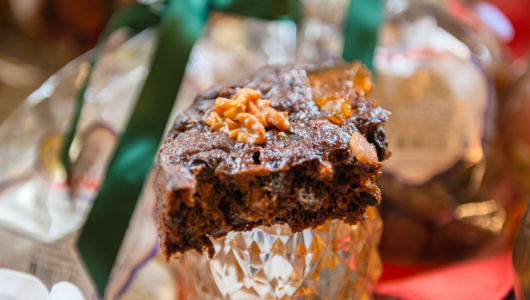
Photo by Visit Madeira
If Madeira had to pick one cake to put on its flag, this would probably be it. Bolo de mel da Madeira is a dense spiced cake, which is synonymous with Madeira and its history. To understand it, we first need to kill the myth and explain that “mel”, which is literally Portuguese for “honey” does not refer to bee honey in this case. The “mel” here is mel de cana, sugarcane molasses, which became abundant in Madeira after the 15th century, when the region was a major sugar producer and a stop on the spice routes. Molasses is the reason why the cake is so dark and so intense.
Into that base go wheat flour, plenty of warm spices like cinnamon, clove, fennel and black pepper, chopped walnuts and almonds, candied citrus peel and, crucial for us here, a good splash of sweet Madeira wine in the dough.
Bolo de mel is considered Madeira’s oldest dessert, with roots in the 15th century and ties to the nuns of the Convento de Santa Clara in Funchal, who were not exactly shy with sugar or flavor. Now officially recognised as a traditional product, bolo de Mel-da-Madeira has its own entry in Portugal’s register of regional specialities and is listed in the IGP (Indicação Geográfica Protegida) universe of products whose identity is tied to place. So, in a way, this is edible heritage.
Traditionally, families make bolo de mel on December 8th, day of Nossa Senhora da Conceição, as the unofficial start of the Christmas season. You bake it once but get to eat it for months as, thanks to the molasses, sugar and Madeira wine, the cake keeps for ages and actually improves with time. There’s another ritual detail that visitors love: you’re not supposed to cut it with a knife but, instead, tear pieces off with your hands (as seen in the photo above), because many Madeirans still say that cutting it with a knife would “cut” the luck and abundance it’s meant to bring.
On Madeira itself, you can find bolo de mel everywhere from supermarkets and souvenir shops. Fábrica Santo António in Funchal has been making it since the 19th century and still sells mountains of it to locals and visitors who swear this is the real one. Fábrica do Ribeiro Sêco and small producers like Elvio Correia are also great options in the island. In Lisbon, find it in big supermarkets like Continente, which sell branded bolo de mel da Madeira (usually by Ilhopan), or even at the airport’s duty free, often right next to bottles of Madeira wine, suggesting the pairing.
Marmelos bêbados | Quince poached in wine
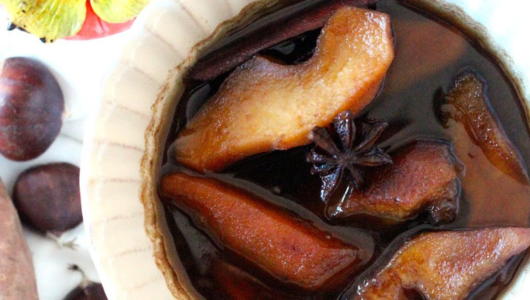
Photo by As Minhas Receitas
Portugal loves the idea of mixing fruit and booze. So much so that, for many locals, a fruit salad is only truly enjoyable when you add a nice splash of Port wine in there.
We also prepare several desserts consisting of “fruta bêbada”, that is, various fruits poached in wine. When Autumn comes around, marmelos bêbados, that is quinces slowly poached in red wine, are a favorite. They consist of chunks or wedges of quince simmered in red wine with sugar, cinnamon and sometimes extras like Port, honey, citrus peel or star anise. The quinces start out pale and hard but, about an hour later, they’re soft, completely stained with wine, and beautifully perfumed. We also do a similar preparation with pears, just like it happens in other parts of the world, and that recipe would be called pêras bêbadas. But quinces are even more connected with Portuguese home cooking, as we also use them to prepare quince cheese (marmelada), and quince jelly (geleia), and many people in rural areas have for a long time had quince trees in their backyard.
Most of the time, this is a home dessert. It’s the sort of thing you throw together when quinces are piling up on the counter and you don’t feel like making another batch of marmelada. You serve the fruit chilled or at room temperature, spooning it into bowls with some of the syrup and, if you’re feeling fancy and decidedly contemporary, you may want to add in a bit of whipped cream or vanilla ice cream. It’s also not unheard of to add Port to the poaching liquid or finish the quinces with honey.
It won’t be easy to find marmelos bêbados in a restaurant’s dessert menu so, if you get hold of some quince, we suggest a simple recipe for you to try this speciality at home:
Quick marmelos bêbados recipe (serves 4)
Ingredients:
– 3 medium quinces (about 800g)
– 500ml red wine
– 150g sugar
– 1 cinnamon stick
– 1 strip of lemon or orange peel
– 1 tbsp lemon juice (to keep the quince from browning)
– Optional: 50ml Port wine
– Optional: 2 tbsp honey
Instructions:
- Peel the quinces, cut them into wedges and remove the cores. As you work, place the pieces in a bowl with water and the lemon juice so they don’t oxidize.
- In a medium saucepan, add the red wine, sugar, cinnamon stick and citrus peel. Bring to a gentle simmer, stirring to dissolve the sugar.
- Drain the quince wedges and add them to the pan. Cover and cook over low heat for about 45 to 60 minutes, turning the pieces occasionally, until the quinces are soft and have taken on a deep reddish color.
- If using, add the Port and honey in the last 5 minutes of cooking and let the syrup reduce slightly.
- Remove from the heat and let the quinces cool in the syrup.
- Serve at room temperature or chilled, with plenty of the wine syrup spooned over the top. If you want to make it extra indulgent, add a scoop of vanilla ice cream or a spoonful of whipped cream just before serving.
Pudim de vinho do Porto | Port wine pudding
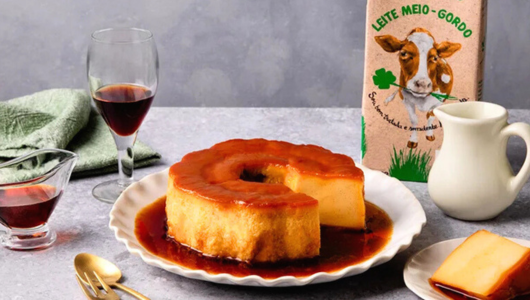
Photo by Agros
Pudim de vinho do Porto is a smooth custard topped with caramel flavored with Port wine. It’s close to a classic pudim de ovos, prepared with whole eggs and extra yolks for added richness, milk, and a generous dose of vinho do Porto, usually tawny or ruby. Sometimes it is cooked first into a light syrup with sugar, lemon peel and cinnamon, while some other times the wine is added straight into the custard mix. Either way, this is a pudding for grown-ups!
Compared to pudim Abade de Priscos, this is the lighter cousin. The Abbot’s pudding is a full-on baroque experience with an almost ridiculous amount of egg yolks, pork fat, heavy sugar syrup and Port. Pudim de vinho do Porto, though, is usually prepared with milk or cream, skips the pork fat and uses fewer yolks, so it feels less dense and way less heavy.
Pudim de vinho do Porto tends to show up around Christmas and New Year, when bottles are already open and there’s no shortage of eggs in the house. A lot of family recipes consist in basically taking your usual pudim de ovos recipe, and swap some of the liquid for Port, and perhaps add a little extra lemon to balance things out.
On restaurant menus, pudim de vinho do Porto appears less often than Abade de Priscos but follows a similar evolution where it does show up. In more classic spots, it’s served as a straight slice on a plate with caramel running down the sides and, in more contemporary kitchens, you’ll see it accompanied with fresh or acidic elements, such as orange segments, tangerine sorbet, berries, even herbs that help cut through the sweetness. Tangerine sorbet is what’s added to the delicious version of pudim de vinho do Porto which is served at Casa Tradição (Tv. do Almargem 4), in the neighborhood of Alfama.
Rabanadas de vinho | French toast with wine
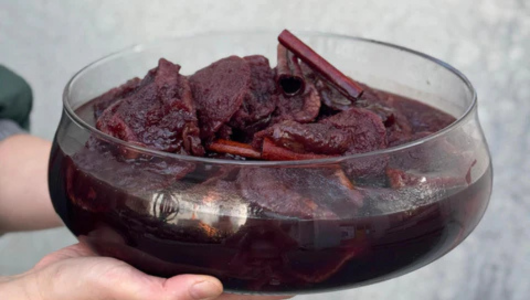
Photo by bbgourmet
If you enjoy French toast, known in Portugal as rabanadas, you may be surprised to know that, in our country, we have a version made with wine instead of milk. The idea of rabanadas de vinho is similar to regular French toast, featuring bread, eggs and frying, but in this case the milk soak gets swapped for wine.
In most of Portugal, rabanadas, also known as fatias douradas or fatias paridas, are an almost mandatory Christmas dessert, prepared with thick slices of stale cacete bread or other firm loaves, soaked in sweetened milk, dipped in egg, fried and finished either in cinnamon sugar or with a syrup that sometimes includes a splash of Port. Rabanadas de vinho are very much a northern thing, particularly in Minho and Trás-os-Montes. Instead of warming milk with sugar, lemon peel and cinnamon, you do the same with red wine, usually a young and smooth vinho tinto, a slightly sweet vinho verde, or even vinho abafado (a sweet fortified wine) in more old-school versions. The bread is dunked in this wine syrup, then dipped in egg and fried as usual. The crumb takes on a faint reddish tint and the flavor jumps from “cozy” to something closer to mulled wine in solid form. Some modern recipes double down and finish with a Port-based syrup, layering wine upon wine, making the end result even more indulgent.
Historically, in colder inland and mountain regions, wine was often easier to come by than milk, especially in larger quantities. As such, using wine to soak bread in winter wasn’t that eccentric a choice, plus wine brings in acidity and aroma, giving this dessert a lot of personality. This approach also applied to sopas de cavalo cansado, which were a rustic mix of bread, sugar and wine eaten as a quick energy boost – think about your morning oat porridge, but in a version from inland Portugal with limited resources.
In Lisbon, you’ll mostly find the classic milk-based rabanadas on sale in December, stacked in metal trays at establishments like Confeitaria Nacional (Praça da Figueira 18B), Versailles (Av. da República 15A), Alcôa (Rua Garrett 37), Califa (Estr. de Benfica 463), Benard (Rua Garrett 104) or other among the best pastelarias in Lisbon. But if you’re really curious about rabanadas de vinho, we have a great recipe right here for you to try at home!
Next time you raise a glass in Portugal, think about what’s going into the pot too and how the Portuguese love to cook with wine. Experience some of these dishes by joining us for a walking food tour in Lisbon.
Feed your curiosity on Portuguese food culture:
How the Portuguese changed the way the world eats
How the global journey of feijoada began in Portugal
Quick introduction to Portuguese wine (and Portugal’s wine regions)
Vinho Verde: a guide to Portugal’s most misunderstood wine
Real people, real food. Come with us to where the locals go.
Signup for our natively curated food & cultural experiences.
Follow us for more at Instagram, Twitter e Youtube