The history of salt in Portugal
Looking at the history of salt is, in a way, looking at the history of civilization itself.
Archaeological evidence suggests that humans were harvesting and trading salt as far back as 6000BC, that is, even before agriculture was fully established in many regions. From ancient China and Mesopotamia, to Egypt and the Mediterranean basin, salt was essential. Long before refrigeration changed the way we eat and store ingredients, salt meant survival, as it was used to preserve food. It allowed communities to preserve meat and fish, travel longer distances, and essentially have access to food during periods of scarcity. Because of that, it has always stood out from the rest of kitchen staples. And, as the old Portuguese saying goes, onde há sal, não há podridão, that is, “where there is salt, there is no rot”.
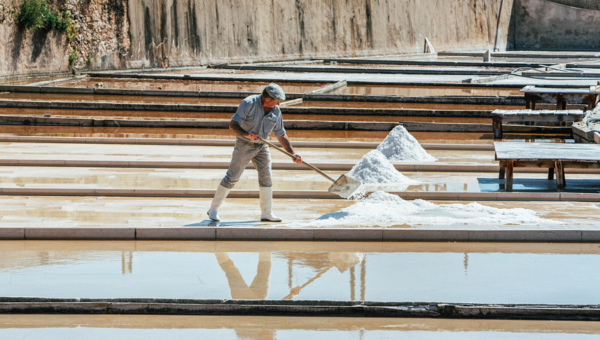
Feat photo by Turismo do Alentejo

Photo by Cambridge University Press
Across history, salt has shaped empires, economies and everyday life. In ancient China (pictured above), it was so valuable that the state tightly controlled its production and taxation for centuries, while the Silk Road saw salt traded alongside silk and spices. In the Roman Empire, salt routes like the Via Salaria connected inland territories such as Rome to the coast (namely the Adriatic Sea), and Roman soldiers even received a salt allowance as part of their pay, a practice that is behind the origin of the word salary, which we still use today. In France, resentment over the salt tax known as the gabelle helped fuel popular revolt, while in India, Gandhi’s Salt March (pictured below) turned this humble mineral into a symbol of resistance, as Indians protested against Britain’s monopoly over the salt mined in India. Salt was used as currency from medieval Europe to parts of Africa and Asia, and its price fluctuations inspired social instability and even revolutions when it became more expensive than desired.

Photo by Yann on Wikipedia

As Portugal has a long Atlantic coastline, generous sun, steady winds and shallow estuaries, it has for a long time been ideal to produce salt in large quantities, with relatively low infrastructure. Way before Portugal was a nation as such, salt already had a major impact on the people who inhabited the area of the country we call home today.
The history of salt in Portugal
Long before salt became a taxable good, communities were already making very good use of it. The western area of the Iberian Peninsula offered a rare combination of natural conditions that made salt production almost inevitable. Wide estuaries where rivers met the Atlantic allowed seawater to be channelled inland, while long and dry summers, stable winds and mild temperatures created the perfect environment for slow evaporation. Unlike regions that relied on mining rock salt, much of what is now Portugal could produce salt by working with the rhythm of the seasons and the tides.
Some of these early salt pans were among the first landscapes shaped by humans in the territories they inhabited. Carefully divided, maintained and repaired year after year, they required deep knowledge of local weather patterns, lunar cycles and water flow. Salt production followed the same logic as other agricultural crops, with specific tasks performed during specific months, usually collectively. Salt harvesting was technologically simple but physically demanding.
Over time, salt production became a bridge between the coast and the interior of Portugal. Geography, of course, dictated where work flourished, namely in places along the coast, like Aveiro, Setúbal, and Castro Marim, which grew up around their salt pans. Inland populations depended on the salt brought over using the ancient salt roads (estradas do sal), connecting marshes to mountain villages, where folks would use salt to cure pork, preserve cheeses and stretch food supplies through winter. Before the Age of Discoveries (more on this below) and the arrival of cod from distant seas, it was salt that preserved the locally caught fish, including sardines, mackerel and others (including river fish), as well as the Portuguese cheeses that kept families fed during tougher months.
The flow of salt gave economic value to estuaries and coastal wetlands that might otherwise have remained marginal. Salt was one of the first resources which highly contributed to structuring everyday life and the economy of what is now Portugal.
Salt in Roman Lusitania (before Portugal was Portugal)
Long before there was a country called Portugal, this region was known as Lusitania, a Roman province stretching across most of what we know today as Portugal and part of western Spain. When Roman legions arrived in the 1st century BC, they focused on roads and architecture, and started exploring the local resources to develop what would be regarded as one of history’s first global food economies. And, of course, salt was a very relevant part of it all.
Archaeological discoveries have uncovered large salting factories along the Lusitanian coast, especially in places like Tróia (pictured below as it is today) near Setúbal, the Algarve, and the Sado and Mira river estuaries. These complexes were industrial scale operations, featuring rows of stone tanks where seawater was channeled in and layered with vast amounts of fish, particularly sardines and mackerel. Workers would alternate layers of fish and coarse sea salt, then let the Atlantic sun (and time) work its preserving magic. In Tróia alone, archaeologists have documented more than 400 individual salting tanks.
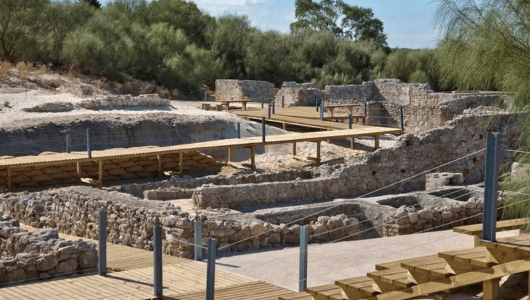
Photo by Press Point
Not far from Tróia, the inland town of Alcácer do Sal, whose name literally means “fortress of salt”, emerged as a crucial hub in this ancient network. Perfectly positioned on the navigable Sado River, Alcácer do Sal connected the rich salt pans of the interior with the coast and the wider Roman world. Here, salt and salted fish products were processed and shipped in amphorae downriver, joining the vast Mediterranean trade that carried Lusitania’s salty flavors to distant corners of the empire. Archaeological finds around Alcácer do Sal reveal layers of Roman, and even pre-Roman, salt production, highlighting the town’s importance for Lusitania’s food economy as far back as two thousand years ago.
Salt also played a starring role in the production of garum, a pungent fermented fish sauce beloved by Romans because it’s full of umami flavor, and traded like liquid gold across the Mediterranean. Garum was used much like we use ketchup or soy sauce nowadays, splashed on everything from roasted meats to vegetables. Lusitania’s coastal towns produced enormous amounts of garum, and amphorae filled with the stuff coming from our part of Iberia have been found as far away as Italy and North Africa.
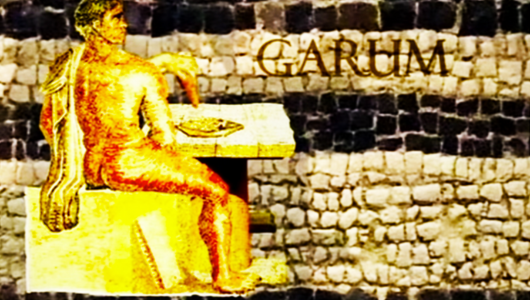
Image by Rogerio Ruschel on In Vino Viajas
Even after the fall of Rome, the expertise in salting and preserving fish survived, evolving and adapting to new tastes, markets, and religious rules. The groundwork laid in Roman times ensured that salt would remain an important part of the region’s economy and cuisine, as it kept happening in Portuguese food culture for many centuries after.
Salt during Medieval times
As the foundations of the Portuguese kingdom were laid during the Middle Ages, salt transformed from a practical resource into a carefully controlled source of power and revenue. The strategic and economic value of salt was impossible for the monarchy to ignore, especially in a country blessed with natural salt pans and an expanding network of maritime trade. As a result, the Crown was quick to assert its authority over salt production and distribution, creating monopolies and setting the rules for who could profit from this “white gold” or, as they would say locally, ouro branco. This meant the presence of royal agents at every step of the process, counting, weighing, and taxing every gram.
Of course, this system provided a steady stream of income for the state, but it also put pressure on those who depended on salt for daily life, in a way that we could argue was unfair. Inland communities, far from the source, sometimes struggled with high prices and shortages, while those harvesting the salt faced increasing regulation and little room for negotiation. Thus, salt smuggling became an almost unavoidable reality, despite those involved risking arrest or, at least, heavy fines. Some towns, especially near the Spanish border, became notorious for their networks of smugglers locally known as contrabandistas, smugglers who, despite being criminals as per the law, were seen as a sort of Robin Hood kind of heroes by the locals who could benefit from their illicit activities.
Eventually, the social impact of salt went beyond economics. The rights to operate the most productive salt pans were tightly controlled, usually managed by influential local families, religious institutions or granted as privileges to those who had earned royal favour. Meanwhile, the physically demanding work of harvesting, carrying and trading salt was left to the lower classes, that is, to the people who spent long days under the sun, scraping salt from pans and carrying it along rough trade routes to reach far away markets. As salt became linked with social hierarchy in Portuguese society, its commerce was often a source of tension.
Salt during the Age of Discoveries
The so-called Age of Discoveries, when Portuguese navigators set sail for Africa, Asia and the Americas, depended on courage and curiosity but, looking at it practically, also a lot of logistics. Salt was an important part of those logistics.
Without salt, there would have been no preserved food fit for long voyages. It was salt that allowed crews to stock up on salted fish, meat, and even dry crackers that would replace bread (ship’s biscuits known in Portuguese as bolachas marinheiras, commercially available today in any given supermarket, though with an improved more delicate texture) in order to feed sailors as they crossed oceans for weeks or months at a time. Portuguese salt, especially from the productive pans around Setúbal, Aveiro and Figueira da Foz, was considered among the best in Europe and became an export good. It was shipped to Northern Europe and traded for cod in England and Newfoundland, something that would eventually cement bacalhau’s place in Portugal’s national food culture.

Photo by NIT
Salt was also central to the booming coastal economies that supported the Age of Discoveries. Salt techniques and traditions from Portugal traveled to Brazil, West Africa, the Azores, and Goa, influencing new cuisines and methods of preservation.
Salt merchants and salt pan owners grew rich supplying the Casa da Índia (back in the day located in nowadays Lisbon’s super central Praça do Comércio), which was the royal trading house that managed the Portuguese Empire’s oceanic adventures. Fishing ports and trading towns flourished around the salt trade, creating jobs and attracting investment. In many ways, salt helped fuel exploration, feeding armies and navies, and generating wealth that helped finance further expeditions.
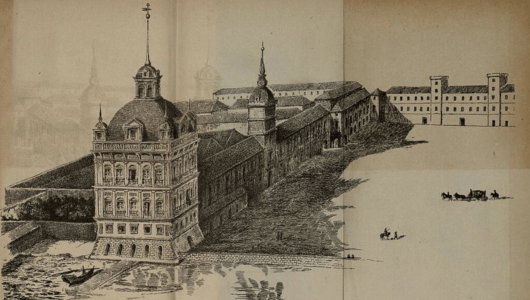
Photo by Marinha de Guerra Portuguesa
Perhaps most importantly, salt’s role during this era helped establish Portugal as a major player in the spice trade, as well as in the everyday business of feeding a growing empire.
How salt contributed to turning bacalhau into a Portuguese staple
If there’s one food that really captures the relation between salt and Portuguese identity, it’s salt cured cod, known in Portuguese as bacalhau. Yet it’s one of Portugal’s great ironies that the most iconic ingredient used in the country, which is known for its abundance of local catch, is a fish that’s never swum in Portuguese waters.
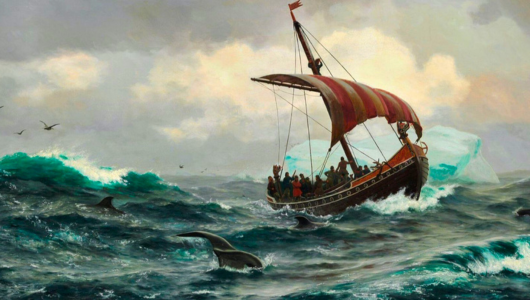
Photo by Riveralves
The story of how dried and salted cod became a national obsession is impossible to detach from the history of salt itself. Back in the 15th century, Portuguese sailors and merchants sailed to the wild banks of Newfoundland and Norway, where they started exchanging fish for salt from mainland Portugal. Meanwhile, they also started transforming the cod, curing it with salt and drying it, preserving it to remain edible for months, lasting the long voyages to different corners of the world and back home.
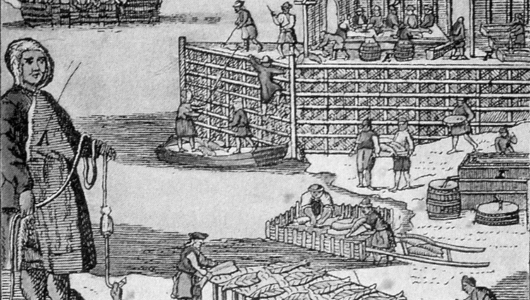
Photo by Monthly Review
Religious tradition played its part too. The Catholic calendar, with its many fasting days (including Lent and the Advent), and meatless Fridays, created a constant demand for preserved fish that could last in cellars throughout the year. Salted cod fit the bill perfectly as it was affordable, nutritious, and could travel vast distances without spoiling. While other salted fish, like sardines and mackerel, were common in earlier centuries, cod’s mild flavor and lean flesh quickly made it a favorite. Over time, bacalhau transformed from a practical solution to a culinary canvas, inspiring the 365 bacalhau recipes Portugal is said to have today, “one for each day of the year”.
During the Estado Novo dictatorship in the 20th Century, bacalhau also became part of national propaganda, which praised the cured fish as a symbol of national resilience and unity, even though northern Portuguese people never fully bit into that. No longer associated with past political connotations, salted bacalhau remains present in the cuisines of Portuguese-speaking communities from Angola to Brazil, as well as in Portuguese-descended communities in the USA, such as those centered in New England.
Today, salt cod still has a very important place at Portugal’s festive tables (such as during Christmas), as well as during everyday meals.
Life and work in the Portuguese salt pans
For all its strategic and economic importance, the story of salt in Portugal has always depended on the hands and know-how of those who worked the salinas, the traditional salt pans. These white landscapes occur in different parts of Portugal, each with their own specificities.
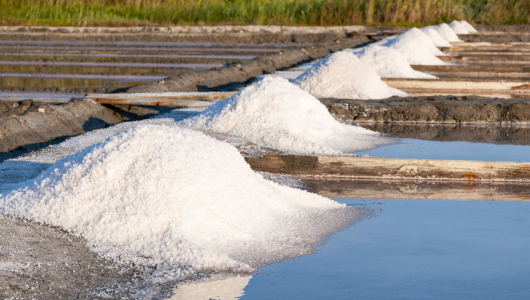
Photo by Grande Rota da Ria de Aveiro
Aveiro, in central Portugal, is perhaps the best known of the country’s salt regions. Its lagoon, just a short drive inland from the Atlantic coast, created a patchwork of shallow pans where seawater could be channeled, left to evaporate under the relentless sun, and raked by hand into neat piles. Generations of local families, known as marnotos, became experts in reading the wind and clouds, working barefoot through the summer to bring in the harvest.
Figueira da Foz, further up the coast in the Coimbra district, was another salt powerhouse. Its proximity to both river and sea made it a hub for exporting salt to northern Europe and supplying inland communities. The salinas here often stretched in tight grids along the Mondego River, with workers enduring long days in the sun in a landscape that is beautiful but difficult to work in.
To the south, Setúbal sits at the mouth of the Sado River, sheltered by the Arrábida hills and blessed with both salty marshes and an abundance of sun. Here, salt pans sprawled across the estuary, providing employment for entire neighbourhoods and supporting the city’s thriving fishing and canning industries. The work was hard, muddy, and usually done as a community, having everyone involved during peak season, including grandparents and kids.
Along the Sado River, Alcácer do Sal’s very name proclaims its legacy. Overlooked by its ancient castle and clustered around the riverbank, Alcácer’s salinas have been a vital link in the salt economy since Phoenician times. Here, salt caravans once set out for the interior, while river boats ferried cargo down to the Atlantic.
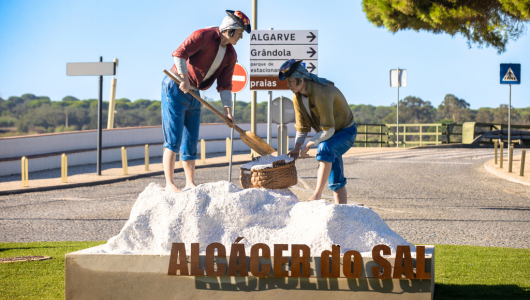
Photo by CM Alcácer do Sal
At Portugal’s southeastern tip, Castro Marim is located near the Spanish border, surrounded by the wide Guadiana River and expansive wetlands. The region’s salt flats are some of the oldest in Portugal, as it’s believed they date back to Phoenician times (around 1000BC to 6th century BC). Here, the salt harvest is so integral to local life that it has inspired annual festivals, artisanal production methods, and even protected designations for the pure white flor de sal that’s still gathered by hand. Literally “flower of salt”, known by English speakers as “fleur de sel”, flor de sal refers to the thin, fragile layer of salt crystals that forms on the surface of evaporation ponds during perfect weather conditions. It’s harvested carefully by hand, and valued for its clean flavour, subtle crunch, and trace minerals that set it apart from regular table salt.
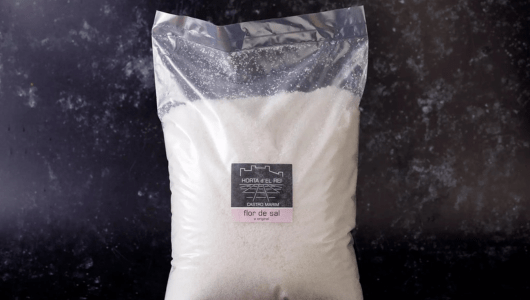
Photo by Terras de Sal
In each of these regions, the life of the salt worker involved some hardship which we must recognize. Days began at dawn and ended only when the last crystals were collected, but the work also fostered a certain sense of belonging and pride, as knowledge would be passed down from parent to child.
As with many traditional ways of life, the culture of the salinas began to decline in the 20th century, because of industrialisation and the appeal of easier work elsewhere. Refrigeration and industrially mined salt reduced the demand for handcrafted sea salt, leading many historic salt pans to shut operations, which is something that has been putting at risk generations of local knowledge. But, in recent years, we have also observed a renewed interest in culinary heritage and traditional methods of production. Artisanal salt, especially the prized flor de sal, is now very valued by chefs and home cooks, keeping the production of salt like they used to do back in the old days, alive, even if at a smaller scale.
Salt tourism in Portugal
Far from disappearing entirely, Portugal’s salt culture has found new ways to endure and even thrive. In recent decades, as chefs and food lovers have rediscovered the unique qualities of traditional sea salt and the delicate flor de sal, several salt pans have shifted focus from bulk production to high quality, artisanal harvesting. These crystals, harvested by hand and shaped by local conditions, are now prized in both home kitchens and fine restaurants, thanks to their purity and delicate crunch.
At the same time, many historic salinas have gained a second life as spaces for education, tourism and environmental protection. Salt tourism in Portugal is an invitation to step into a living landscape shaped by centuries of human activity and creativity. Some of the best places to experience this are in the same regions where salt has always mattered most:
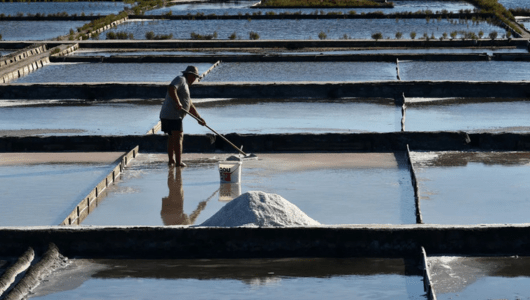
Photo by Andarilho
Aveiro remains the poster child for salt tourism. The Ecomuseu Marinha da Troncalhada lets visitors walk through restored salt pans, watch traditional harvesting methods, and learn from former marnotos who still pass down their skills. The annual Festa do Sal, held each summer, celebrates the harvest with music, food, and hands-on workshops.
Castro Marim, in the Algarve, offers not just spectacular salt flats but also immersive experiences. The Reserva Natural do Sapal de Castro Marim e Vila Real de Santo António combines salt production with birdwatching and ecological tours, and visitors can even book a “salt spa” experience (pictured below), floating in brine rich with minerals, or getting a salt scrub with the salt harvested onsite.
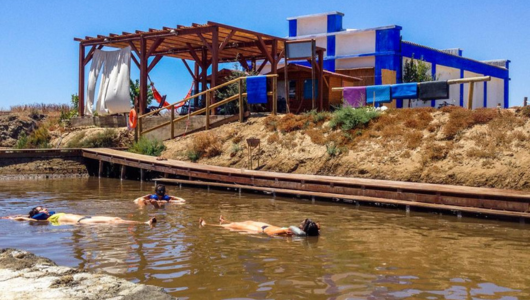
Photo by Sul Informação
Figueira da Foz in central Portugal features the Salina Municipal do Corredor da Cobra, where guided tours walk you through the process from brine to basket, and visitors can often try their hand at collecting flor de sal in the traditional way.
On the way to Lisbon, a stop at the Salina de Rio Maior can be a pleasant detour to observe and learn more about the importance of salt: you will find a small, typical village with wooden walkways overlooking the salt pans, shops selling traditional products and even a restaurant.
Alcochete, even closer to Lisbon, is home to the Reserva Natural do Estuário do Tejo, where traditional salt pans are still maintained. Several local associations offer educational visits focusing on both ecology and salt history, and the nearby town has long links to Lisbon’s own salt supply. At the Salinas do Samouco (pictured above), guided tours are available during the summer harvest, where you can walk the salt flats, learn about traditional methods, and spot flamingos and other wildlife that inhabit in this unique ecosystem.
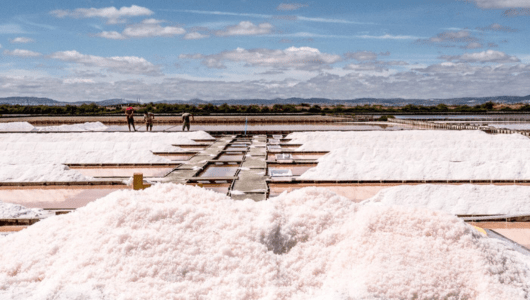
Photo by Salinas do Samouco
Setúbal, just a short drive south of Lisbon, is one of the most accessible places to dive into Portugal’s salt heritage from Lisbon. You can head to Salinas da Mourisca, inside the Sado Estuary Nature Reserve, where you’ll find a visitor centre, birdwatching, and seasonal workshops dedicated to salt harvesting. Some tours even let you try raking salt yourself, giving you a feel for the work that contributed to shaping the region.
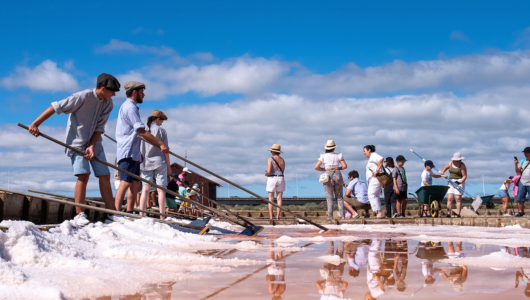
Photo by NIT
Alcácer do Sal is less than an hour from Lisbon and perched along the scenic Sado River. While guided tours are less frequent than in other salt rich places like those mentioned above, you can still climb up to the medieval castle that once watched over the salt trade.
Other salinas near Lisbon are sometimes open for visits or nature walks, such as the Salinas da Barroca d’Alva (near Alcochete and Samouco), which can be explored via birdwatching tours or cycling routes in the Tagus Estuary area. Many of these smaller salt pans are not tourist attractions in the classic sense, but with a little advance planning (and sometimes local guidance), you can still experience them.
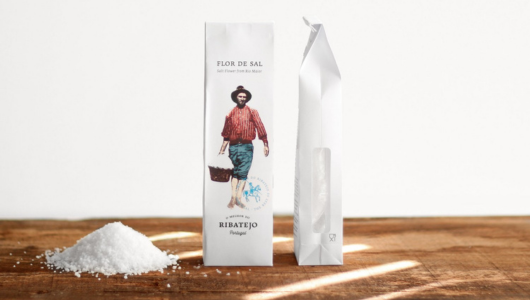
Photo by Alma Lusa
If you’re tempted to bring a bit of this heritage home, keep an eye out for local flor de sal or traditional sea salt (sal marinho tradicional), both of which are often available at some supermarkets and specialty food shops in Lisbon. Look for salt that names its region of origin on the label, such as Aveiro, Setúbal, Castro Marim ou Tavira, as each area’s climate and mineral content bring subtle differences in flavour and texture. Flor de sal is prized for its delicate, flaky crystals and is best used as a finishing touch on salads, grilled vegetables, fish or even chocolate desserts. The coarser, greyish traditional sea salt, harvested by raking and sun-drying, is ideal for cooking, curing, or seasoning dishes more robustly.
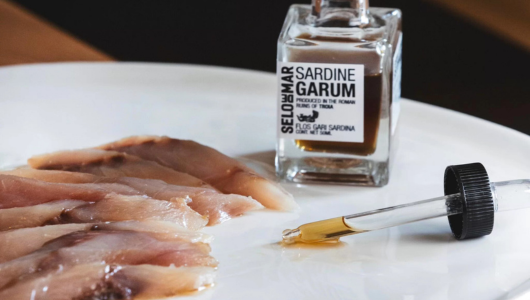
Photo by Selo de Mar
For those intrigued by the flavours of Roman Lusitania, Lisbon is also one of the few places where you can now buy artisanal garum, the fermented fish sauce once considered “liquid gold” – an expression we now use to refer to olive oil – by the Romans. Modern versions, based on ancient recipes, are available from producers like Garum Lusitano. We believe this savoury elixir is one of the best edible souvenirs you can buy in Lisbon, and a perfect gift for culinary adventurers.
The next time you sit down for a meal in Portugal, pause for a moment and try to be mindful, and really taste the salt. You’ll savor how it connects you to the land, the sea, and the local people. And, for more stories about Portugal’s food culture, you can subscribe to Taste of Lisboa’s newsletter and follow us on Instagram.
Feed your curiosity on Portuguese food culture:
How the Portuguese changed the way the world eats
For the love of cod: a historical look behind Portugal’s obsession with bacalhau
How to eat vegan the traditional Portuguese way
Real people, real food. Come with us to where the locals go.
Signup for our natively curated food & cultural experiences.
Follow us for more at Instagram, Twitter e Youtube