
The history of Fado and how to experience it live in Lisbon
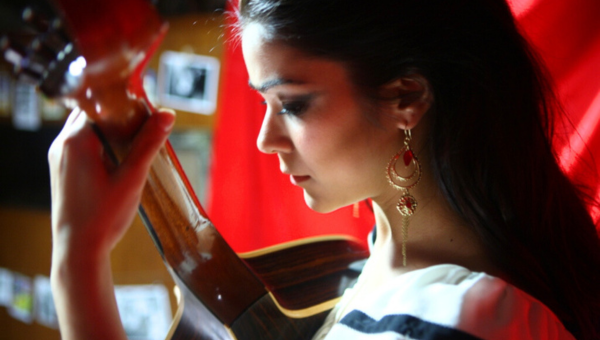
Fado is Lisbon’s most iconic sound. Recognized by UNESCO as Intangible Cultural Heritage, this music genre was born in the city’s oldest neighborhoods and has grown into a symbol of Portuguese identity. It’s often linked with saudade, a very Portuguese feeling that is somewhat a mix of longing and nostalgia. But saying that Fado is literally about sadness is certainly reductive. More than anything else, Fado is about storytelling. It gives voice to everyday lives, through tales of sailors and lost loves, but also reflections on the struggles and resilience of Lisbon’s working class communities.
There are, in fact, two distinct main traditions of Fado in Portugal. Coimbra has its own style, Fado de Coimbra, tied to the city’s university life, performed almost exclusively by men, with different guitar tunings and a more academic repertoire, a more operatic style and similar to a serenade. But it is Lisbon’s version that has come to define Fado internationally and that has become synonymous with Portuguese culture. That is the Fado we’ll focus on here.
Feat photo by Isabel Pinto on Wikimedia

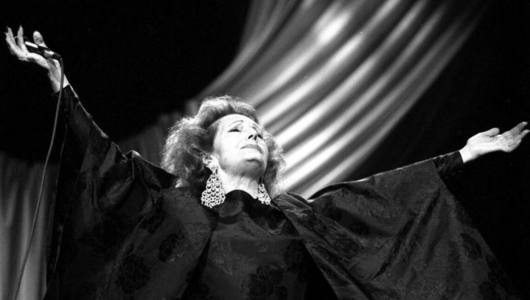 Photo by CM Oeiras
What began in taverns and backstreets in the 19th century later reached concert halls and international stages, thanks to figures like Amália Rodrigues (1920-1999, pictured above). Today, Fado lives in two worlds at once. It simultaneously stays true to tradition in Alfama and Mouraria, while also reinventing itself through contemporary artists like Mariza (pictured below), who bring more modern influences without losing the essence of the genre.
 Photo by VT News
For travelers, Fado is one of the most immersive cultural experiences Lisbon has to offer. You could hear the music whether it’s here or abroad but, in our city, there’s the whole ritual that surrounds it. Nights of Fado often come with wine and food, a set menu at a traditional casa de fado, or a simple drink in a neighborhood tavern. Wherever you hear it, one rule always applies: when the singing starts, one has to keep silent. As we say here in Portugal “silêncio, que se vai cantar o fado”…
The origins of Fado
Fado took shape in Lisbon during the first half of the 19th century, in a city teeming with sailors, dockworkers, migrants from rural Portugal, and people in transit within the Portuguese empire. The first reliable mentions of Fado date back to the 1830s and 1840s, particularly in the neighborhoods of Mouraria and Alfama. Back then, it wasn’t performed in theaters but in everyday places like taverns, small gatherings, and other spots related to Lisbon’s street life.
Initially, Fado was more like a hybrid style of singing. The strongest consensus today situates its birth in a multicultural mix of Afro-Brazilian sung dance traditions such as lundum, the salon song style modinha that circulated between Portugal and Brazil, strands of Iberian narrative song, rural Portuguese repertoires brought to the capital by internal migrants, and the cosmopolitan urban song fashions of the early 1800s. In short, Lisbon’s multiculturality made Fado possible.
Fado happened spontaneously in convivial contexts, indoors and outdoors, across gardens, roadside inns and leisure spots, bullfighting circuits, alleys, taverns, cafés, and casas de meia-porta (“half-door houses” associated with prostitution). These were popular, mixed social environments where music, dance, and conversation were plentiful. The music evolved within working class leisure spaces, which shaped the repertoire.
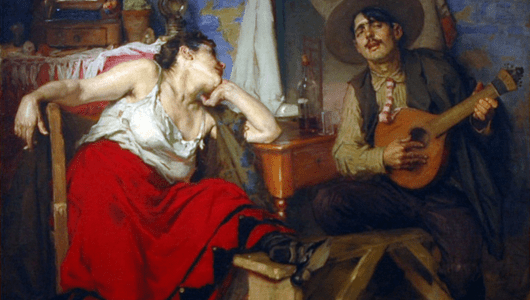 Photo by José Malhoa on Wikipedia

Personalities quickly entered the Fado’s mythology. Maria Severa Onofriana (1820-1846), known simply as Severa, became the iconic early fadista associated with Mouraria’s nightlife and prostitution circuits. Her short life and poor girl meets rich guy romance cemented a public image of Fado as a vehicle for stories of love and misfortune, and they anchored the genre to particular Lisbon streets and social worlds. Severa’s legend is part history, part myth, but it attests to Fado’s roots in bohemian and rather marginal circuits, more than in elite salons.
Alongside the music, an aesthetic began to emerge. Early fadistas often wore simple, dark clothing, which later evolved into the black shawl draped around a woman’s shoulders, a look that still defines the image of the female fado performer today. Men, meanwhile, performed in suits, standing upright with a serious expression, reinforcing the sense of dignity and drama that Fado demands.
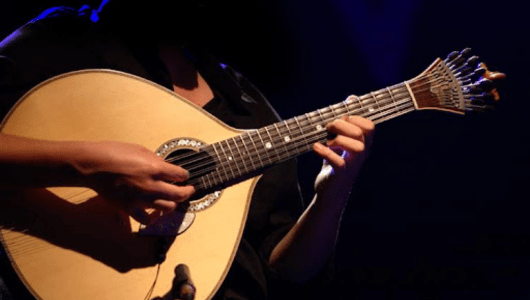 Photo by Musicália de Torres Vedras
Instrumentation has become increasingly specific over time. Early Fado could be sung unaccompanied or with a guitar. By mid-century the pairing that defines the style today, a singer with classical guitar (viola) and Portuguese guitar (guitarra portuguesa – pictured above), was standard in Lisbon. The Portuguese guitar descends from earlier European instruments like the cittern and the 18th century English guitar, later adapted in Portugal with distinct Lisbon and Coimbra tunings. Its bright, metallic sound and intricate ornamentation became the defining sound of Fado.
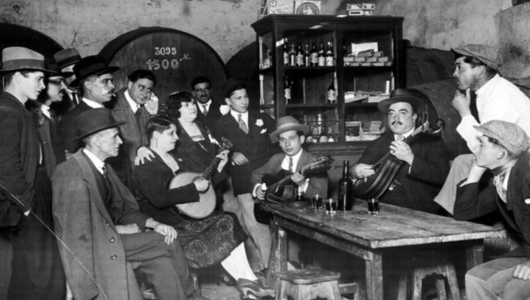 Photo by Bem Vindo a Lisboa
Historians can’t agree on a clear story about the origins of Fado. Earlier narratives often leaned on single sided explanations, whether it was purely Moorish, purely related with sailors, or purely rural. More recent historiography argues for a more layered emergence, with a city in flux, fed by Atlantic traffic and internal migration, where Afro-Luso-Brazilian exchanges, popular dance-song practices, and new urban entertainment cultures blended into something distinctly Portuguese.
Fado’s connection to Lisbon’s neighborhoods
If Fado is Lisbon’s music, we could say that each key typical neighborhood of the city contributed something different to the genre, leaving a mark that is still felt until today.
Alfama is often referred to as the cradle of Fado, and with good reason. This riverside quarter, shaped by steep alleys and the constant presence of the Tagus River, was once home to dockworkers, sailors, and laundry women. The comings and goings of men at sea, the separations and reunions, became inspiration for the songs of longing and saudade that define Fado’s lyrics. In the 19th century, the music wasn’t confined to a stage and neighbors would gather in courtyards, and singing rose from taverns where voices carried naturally through the maze of cobblestones. Alfama still nurtures this tradition today as this is where you’ll find some of Lisbon’s most respected casas de fado (check out our Lisbon Fado places suggestions below). And every June, when the festivities of Santo António take over the neighborhood, the sound of Fado still mingles with the smoke of sardines grilling in the street.
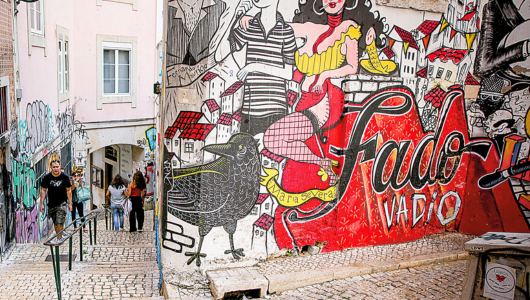 Photo by Time Out Lisboa
Mouraria holds perhaps the most romantic place in Fado’s mythology. This is where Maria Severa lived, the courtesan-turned-singer whose short life in the 1840s became legendary. She embodied the raw spirit of early Fado, singing of love and loss in the taverns of Rua do Capelão, where even today we still take our traveler guests for a tasting stop during our Lisbon Roots – Food & Cultural Walk. Her affair with the Count of Vimioso created the archetype of the doomed fadista, who was passionate, marginalized, and simply unforgettable. Mouraria has always been a crossroads itself. In medieval times, it was the Moorish quarter; later it became home to immigrants from Africa, Asia, and rural Portugal, a diversity that fed Fado’s hybrid roots. Today, the neighborhood maintains this identity visible. On Rua do Capelão, Camilla Watson’s Retratos de Fado photo series honors the great fadistas of past generations, from Severa to contemporary voices, and a stone sculpture of the Portuguese guitar stands as a monument, greeting anyone who enters the neighborhood. Mouraria has also embraced smaller taverns and bars where Fado is still sung in its most informal form, by residents and neighbors, keeping alive the atmosphere of the backstreet gatherings where it all began.
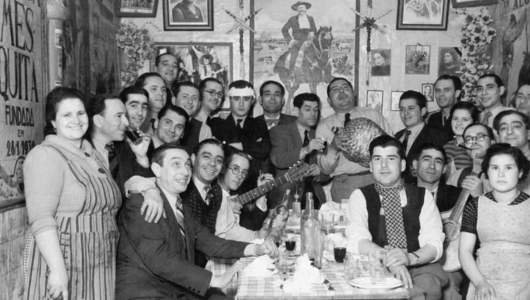 Photo by Restos de Colecção
Bairro Alto represents another side of Fado’s journey, when it finally stepped into broader public life. By the late 19th and early 20th centuries, this bohemian neighborhood, teeming with print shops, taverns, and later nightclubs, had become the stage for a more professionalized Fado. Writers, artists, and journalists flocked here, fascinated by the music they once dismissed as vulgar. Casas de Fado began to emerge, structured venues where singers performed for paying audiences and where the etiquette of silence and staged sets started to take shape. Some of Lisbon’s most famous casas, like Adega Machado or O Faia, are still here, carrying forward that polished style. Today, Bairro Alto remains a paradox, being one of Lisbon’s liveliest nightlife districts, with bars spilling onto the streets, but also home to some of the city’s most serious Fado houses. Step inside one of them, and the raucous noise outside disappears as the lights dim and the first chords of the Portuguese guitar silence the room.
The evolution of Fado until the present day
From taverns to the stage
By the turn of the 20th century, Fado was no longer just the sound of Lisbon’s taverns and backstreets, as it was becoming an actual profession. Singers known as fadistas started performing in cafés, theaters, and the emerging casas de fado, moving the genre from informal gatherings into more structured venues. This shift gave Fado a new visibility, and what had once been neighborhood entertainment began to take on the shape of a cultural institution.
It was also around this time that the Fado ensemble became standardized. A typical performance featured a singer accompanied by the guitarra portuguesa (Portuguese guitar) and the viola (classical guitar). Sometimes a bass guitar (viola baixo) was added for depth. This trio, simple but powerful, created the framework that remains the heart of Fado to this day.
Unlike many other music traditions, Fado is rarely about a single performer writing and singing their own songs. Instead, the music often comes from fados tradicionais, that is, established melodies or chord progressions, which serve as frameworks that countless singers can interpret. Over these familiar structures, poets and lyricists contribute new verses, and musicians sometimes compose additional melodies. This means that the same Fado can exist in multiple versions.
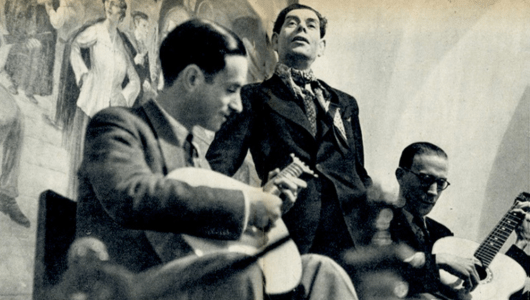 Photo by Eventualmente Lisboa e o Tejo
Among the early stars who defined this era was Alfredo Marceneiro (1891-1982, pictured above), often called the master of Lisbon Fado. Known for his unique phrasing and for singing with subtlety rather than power, Marceneiro gave the genre a kind of quiet dignity that influenced generations. His contribution was so important that some Fado forms are now known as fado marceneiro.
Instrumentalists also rose to fame. The Portuguese guitar, with its metallic resonance and ornate sound, became a star in its own right thanks to players like Armando Augusto Freire (1891-1946), aka Armandinho (see video below), who set technical and expressive standards for the instrument in the early 20th century. His work, alongside other virtuosos, established the guitarra portuguesa not just as accompaniment but as a voice equal to the singer.
Fado under the Estado Novo’s dictatorship
The decades of António de Oliveira Salazar’s Estado Novo dictatorship (1933-1974) were decisive for Fado. The regime quickly recognized its potential as a cultural emblem and folded it into the “Three Fs” – Fado, Football, and Fátima – which it promoted as safe pillars of Portuguese identity. Under this strategy, Fado was elevated to a national symbol, but it was also tightly controlled.
Lyrics were subject to censorship. Songs that touched on politics, poverty, or social injustice were rarely approved, while those that emphasized destiny, resignation, family values, and the romantic notion of saudade were encouraged. For critics on the left, this made Fado the music of the regime, a soundtrack for submission. Yet within this climate of control, many fadistas used allegory and double meanings to slip past censors. What on the surface seemed like a love song could be read as a veiled critique of oppression, being proof that Fado was never entirely co-opted.
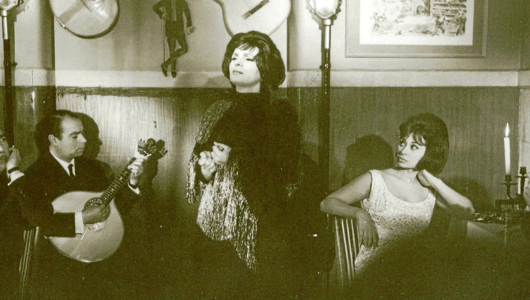 Photo by La Razón
It was also in this period that some of Fado’s greatest names emerged. Amália Rodrigues (aka The Voice of Portugal), who began her career in the 1940s, became the face of the genre both at home and abroad. With her powerful contralto voice and dramatic stage presence, she expanded Fado’s reach beyond Lisbon’s taverns to the world’s great stages. Amália introduced poetry into Fado, collaborating with writers like David Mourão-Ferreira and Alexandre O’Neill, and wasn’t afraid to experiment with orchestral arrangements or influences from flamenco and Latin America. Her global tours in the 1950s and 1960s made her an ambassador of Portugal, despite her continued controversy at home due to her association with a regime that many opposed.
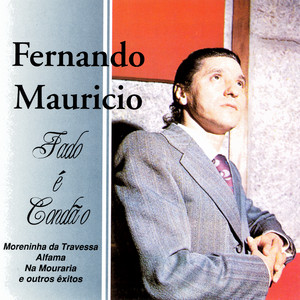 Photo from Spotify
But Amália was not alone. Male fadistas like Fernando Maurício (1933-2003), often called The King of Fado, embodied the raw, emotional style of Lisbon’s neighborhoods, particularly Mouraria, where he was born and lived all how life. Lucília do Carmo (1919-1998), a major female voice of the era, carried a more traditional torch, and her son Carlos do Carmo (1939-2021) would later become one of the most influential figures of modern Fado.
The instrumental side also thrived. Guitarists like Jaime Santos (1909-1982) and José Nunes (1899-1931) elevated the Portuguese guitar to new technical heights, as the guitarra portuguesa was no longer just for background music.
But the Estado Novo years left a complicated legacy. On the one hand, Fado gained national prominence and international exposure. On the other, its association with censorship and propaganda cast a shadow that would linger long after the dictatorship ended.
Fado in cinema and media
While casas de fado and theaters gave the genre its stages, it was cinema and radio that carried Fado into everyday Portuguese life. The 1930s and 40s were the golden age of so-called filmes de fado, that is, popular melodramas where singers played characters who lived, loved, and suffered to the sound of the Portuguese guitar.
 Photo by CineCartaz
The first Portuguese sound film, A Severa (1931), set the tone – and you can watch it entirely for free on Youtube. It dramatized the tragic life of Maria Severa, cementing her image as Fado’s founding heroine and its first greatest diva, and Mouraria as the neighborhood of myth. From there, the formula proved irresistible, and Alfama’s staircases and taverns, Mouraria’s alleys, and Bairro Alto’s bohemian corners became the backdrop for stories of love and loss, with Fado as the emotional centerpiece.
Even films not strictly about Fado, like the classic A Canção de Lisboa (1933 – see video above), couldn’t resist including it. Set in Mouraria, the movie featured tavern scenes where characters break into song, underlining how inseparable Fado was from Lisbon’s popular imagination.
 Photo by RTP
By the 1940s and 50s, Amália Rodrigues starred in several films that turned her into both a cinematic and musical icon. Movies like Capas Negras (1947) or Fado, História d’uma Cantadeira (1947) blended plot with performance, ensuring that millions associated Lisbon’s image with her voice. These films, while often sentimental and stylized, certainly contributed to spreading Fado’s sound far beyond the casas de fado in the city.
Radio amplified this effect. With the rise of national broadcasts, fadistas became household names, and guitarists’ solos could be recognized across the country. For many families, tuning in to weekly Fado programs was as common as attending mass. Later, television would continue this tradition, cementing figures like Amália, Fernando Maurício, and Alfredo Marceneiro in the collective memory. And so, by mid-century, Fado was Portugal’s strongest cultural symbol.
After the Carnation Revolution
The Carnation Revolution of April 25, 1974, which ended the Estado Novo dictatorship, was a turning point for Fado, and not an easy one. Overnight, the genre’s close association with the regime became a burden. Many revolutionaries and younger Portuguese dismissed Fado as “Salazar’s music”, and felt that the music was too steeped in fatalism and resignation to speak to the energy of a country reinventing itself. In the years immediately after the revolution, protest songs (canções de intervenção), folk, and rock dominated the airwaves, while Fado was sidelined as a relic of the past.
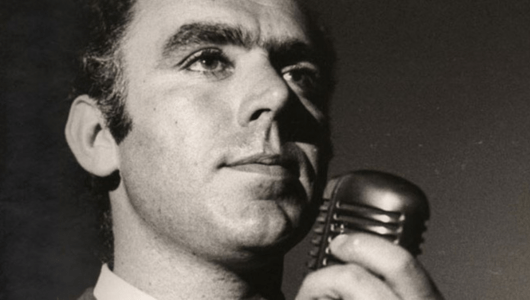 Photo by Renascença
But Fado never disappeared. The casas de fado continued to operate, especially in Alfama and Bairro Alto, sustained by dedicated performers and loyal audiences. In this period, new voices helped to keep the tradition alive while also steering it in fresh directions. Carlos do Carmo (pictured above), the son of Lucília do Carmo, emerged as one of the central figures of post-revolution Fado. With his refined voice and openness to experimentation, he introduced new arrangements, worked with contemporary poets, and helped bridge Fado to modern audiences. His efforts were recognized decades later when he won Portugal’s first Grammy in 2004, a Lifetime Achievement Award that underlined his role in the genre’s renewal.
Other names also marked this transitional era. Beatriz da Conceição (1939-2015) and Teresa Tarouca brought intensity and elegance to the female repertoire, while António Chainho rose as a virtuoso of the Portuguese guitar, carrying the instrument into international collaborations and proving that it could stand on its own outside the shadow of the singers.
Culturally, Fado was finding new ground too. Films and television productions began to reinterpret it for a post-dictatorship audience. Rather than being tied to propaganda, Fado was reframed as a vital piece of popular heritage, linked less to the former dictatorship regime and more to Lisbon itself.
The late 1970s and early 1980s were thus a moment of survival and quiet reinvention. While the spotlight shifted elsewhere, Fado endured in Lisbon’s neighborhoods, waiting for the revival that would come a decade later.
The modern revival of Fado
By the 1980s and 1990s, Fado began to shake off the stigma of dictatorship and reclaim its place in Portuguese culture. A new generation of singers and musicians stepped into the spotlight, treating Fado not as a fossil from the past but as a living tradition that could evolve without losing its essence.
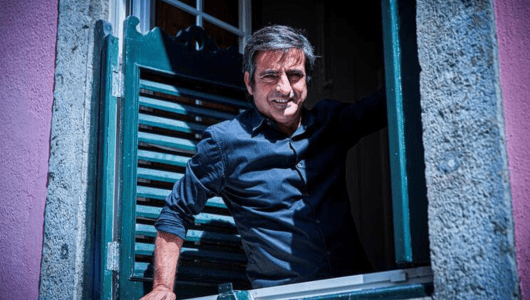 Photo by Camoes Radio
One of the key figures of this revival was Camané (pictured above), often described as the greatest male fadista of his generation. With his meticulous phrasing and emotional depth, he reasserted the power of male voices in a genre that had long been dominated internationally by female stars like Amália. Alongside him, Mísia (1955-2024) broke with convention by introducing avant-garde aesthetics, including black gloves and dramatic staging, and by incorporating lyrics from contemporary Portuguese poets into her repertoire. Her bold style expanded the audience for Fado, particularly abroad.
 Photo by Locomotiva Azul
Other important names included Aldina Duarte, known for her theatrical delivery and unusual lyric choices, and Cristina Branco (pictured above), who brought a lighter, jazz-influenced sensibility. Together, they helped show that Fado was not just a memory but a flexible art form capable of renewal.
The revival was also institutional. The founding of the Museu do Fado in 1998 provided the genre with a dedicated home in Alfama, celebrating its history through archives, exhibitions, and live events. This recognition at a national level was matched internationally when, in 2011, UNESCO inscribed Fado on its list of Intangible Cultural Heritage of Humanity. The inscription acknowledged not only the music but also the entire cultural practice surrounding it, including poetry, performance, instruments, and community rituals.
 Photo by Casa do Comum
Meanwhile, guitarists continued to push the boundaries of the Portuguese guitar. António Chainho (pictured above), already a renowned figure, collaborated with artists from India, Africa, and Latin America, expanding the instrument’s reach beyond traditional Fado. His work showed how the guitarra portuguesa could be both a guardian of tradition and a bridge to new worlds.
By the turn of the millennium, Fado had regained its pride of place in Portuguese identity. What once risked being dismissed as outdated had become both a respected tradition and a platform for innovation, ready to step into the 21st century.
Fado today
In the 21st century, Fado has evolved to be both deeply traditional and boldly global. The core remains unchanged: a singer, a Portuguese guitar, a classical guitar, and sometimes a bass guitar. The repertoire still draws on the shared library of fados tradicionais, where many singers interpret the same melodies with different lyrics, often penned by poets rather than the performers themselves. But around this structure, Fado today stretches in multiple directions.
At the forefront are three women who have become international ambassadors: Mariza, Ana Moura, and Carminho.
Mariza, with her striking stage presence and dramatic voice, has performed at Carnegie Hall and the Sydney Opera House, bringing Fado to audiences that may never have set foot in Mouraria or Alfama Lisbon neighborhoods. Born in Mozambique in 1973 to a Portuguese father and Mozambican mother, she moved to Lisbon as a child and grew up in the Mouraria neighbourhood, deeply steeped in Fado’s tradition. When she burst onto the scene in the early 2000s, few young people were recording it, and the image of Fado was still tied strongly to older, more traditional standards. Mariza changed that with her debut album Fado em Mim (2002), which was initially rejected by Portuguese labels and had to be released via a Dutch label. But, ultimately, it sold very well and helped revive commercial and critical interest in modern Fado.
Ana Moura bridges tradition with pop and rock, having collaborated with the Rolling Stones (watch it in the video clip above) and Prince. But her recent career shows that her ambition goes far beyond these ventures. In Casa Guilhermina (2022), an album dedicated to her mother, she explores sounds that range from funk and soul to Angolan semba and even rhythms connected to Mozambique, all while never losing the Fado roots that define her identity. By incorporating these African influences into her work, Ana Moura not only innovates but also rekindles the historical ties between Fado and the Portuguese-speaking world, which have long been in dialogue with Portuguese music.
Carminho, meanwhile, has become one of the most prominent contemporary names of the genre, combining fidelity to Fado’s essence with a clear international reach. Beyond her celebrated albums and concerts, she has carried Fado to global stages with a confidence that feels incredibly modern. In 2024, she was featured in the Academy Award-winning film Poor Things, performing as part of the movie’s soundtrack, an appearance that introduced her voice to a worldwide audience beyond traditional Fado circles. Carminho also embraces Fado’s Afro-Brazilian roots, weaving influences from Brazil into her interpretations, symbolically closing the circle of the genre’s transatlantic birth.
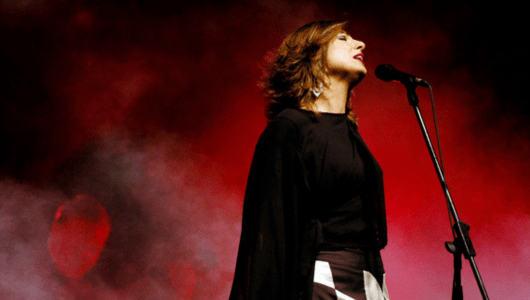 Photo by Museu do Fado
They are joined by a new wave of artists who expand Fado’s possibilities. Gisela João, Raquel Tavares, Ricardo Ribeiro, and Katia Guerreiro (pictured above) stay close to tradition while reaching younger listeners. Others experiment with fusion, blending Fado with jazz, electronic music, or even hip hop, proving that the genre can evolve without losing its identity.
Another important figure in today’s scene is Marta Pereira da Costa, one of the very few women to dedicate herself professionally to the Portuguese guitar. Traditionally played almost exclusively by men, the instrument gains a new voice through her hands. With her fresh approach, Marta bridges respect for classic Fado with explorations that take the guitarra portuguesa onto international stages far beyond Lisbon, including a great performance on NPR’s Tiny Desk Concerts. Her presence not only challenges long-standing gender norms within Fado but also proves how the instrument continues to reinvent itself for new audiences.
One of the most notable examples of reinvention is Fado Bicha, a duo that openly embraces queer and activist perspectives within the genre. Their performances rework traditional Fado themes through the lens of LGBTQ+ experiences, queering both the lyrics and the staging, and in doing so, they reclaim the music as a platform for new kinds of storytelling.
In 2021, their work was the subject of the documentary As Fado Bicha, which captured both their performances and the conversations they sparked about tradition, identity, and inclusion. For some, the project is provocative while, for others, it’s a powerful reminder that Fado has always been about giving voice to those on the margins.
Today, Fado is as much about tradition as it is a cosmopolitan art form, embraced even by audiences who may not speak Portuguese but recognize in its sound the universal language of emotion.
Experiencing Fado in Lisbon
There are two main ways to experience Fado in Lisbon, including the casual, often spontaneous settings, or in professional casas de fado. The first is known as fado vadio, which translates loosely as “wandering” or “amateur” Fado. Here, anyone can step up and sing, usually in a tavern or bar, with guitarists accompanying. These nights feel informal, almost like an open mic, and often reflect the spirit of Fado’s early days.
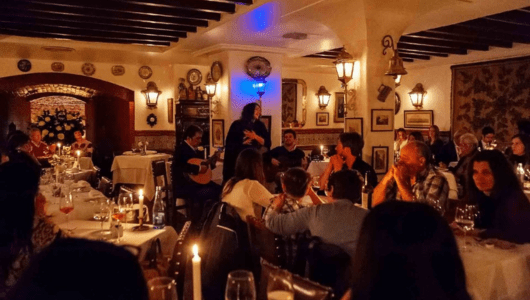 Photo by Lojas Com História
On the other side are the casas de fado, the professional venues where Fado is performed by established singers and musicians. These places are carefully choreographed and, when lights dim, the room falls silent, and the singer steps into the spotlight. Sets are typically short, with three or four songs, and alternated with dinner service. When the music starts, the clinking of cutlery stops and waiters pause service. Conversations are also supposed to stop and silence is polite and expected, almost as if it was a part of the performance itself.
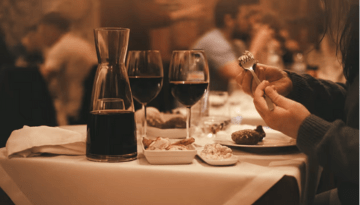
Food and drink are integral to the experience in casas de fado. Most operate with a fixed or semi-fixed menu, often built around traditional Portuguese dishes. Caldo verde, grilled sardines, bacalhau à brás, roasted octopus, and platters of cheese and cured meats are common features. Wine, of course, plays a central role, whether it’s a carafe of house red or a more expensive bottle.
The vibe shifts depending on the neighborhood. In Alfama, many casas de fado still feel family-run, with intimate rooms that might host only a handful of tables. It’s here you’ll often find older singers carrying on traditions passed down through generations. Mouraria offers a mix of small taverns and informal gatherings, where fado vadio is sometimes still alive. Bairro Alto, meanwhile, hosts larger, more polished venues, with professional singers catering to a blend of locals and mostly visitors, and a livelier nightlife atmosphere just outside the door.
Etiquette is crucial, and you should always keep in mind the most important rule: silence during the singing. Whispering, clapping along, or pulling out your phone mid-song won’t attract positive looks towards you. Applause comes at the end, and never in the middle. And while you can enjoy your meal between sets, expect waiters to stop serving once the performance begins.
The performance itself follows a ritual. Fadistas usually dress in black, women often with a shawl draped over their shoulders, a visual echo of mourning and saudade. The singer stands close to the musicians, rarely moving, with one hand often on the hip or clutching the shawl. The Portuguese guitar player sits slightly forward, carrying the musical dialogue, while the classical guitar provides rhythm. This minimal staging means the emotion rests entirely on the voice and the silence in the room, which together create the intensity that defines a live Fado performance.
Where to listen to live Fado in Lisbon
Museu do Fado
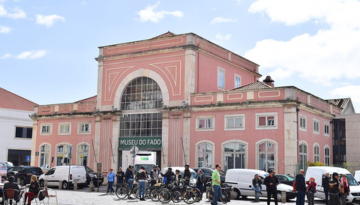 You don’t have to sit in a tavern at midnight to begin understanding Fado, as you can start at the source. The Museu do Fado, in Alfama, is the city’s best place for anyone curious about the history behind the music. Permanent exhibitions trace Fado’s journey from 19th century backstreets to UNESCO heritage status, with rare recordings, instruments, and personal objects from legends like Amália Rodrigues. Temporary shows often focus on contemporary artists or forgotten strands of the genre, so even repeat visitors find something new. The museum’s auditorium also keeps the music alive with concerts, workshops, and conferences that feature everyone from veterans to emerging fadistas. While you won’t come here for dinner, you can absolutely catch live performances, and entry is affordable compared with the price of a night out in a casa de fado.
📍Largo do Chafariz de Dentro 1, 1100-139 Lisbon
www.museudofado.pt
Photo by AntoineJoub on Wikipedia

Mesa de Frades
 Few Fado venues in Lisbon can rival the setting of Mesa de Frades. Housed in a former 18th century chapel in Alfama, typical azulejos and arched ceilings give the space an almost sacred atmosphere. The room is tiny, and that intimacy, combined with the chapel’s acoustics, makes the performances here feel incredibly immersive. The food is part of the package, though it often plays a second role to the setting and the music. Expect classic Portuguese dishes, including codfish, sausages and hearty stews, served in a multi-course format. Prices are mid-to-high, reflecting both the quality of the performers and the unique venue. The show here is the main draw, and you may even find well-known fadistas dropping in unannounced, as the night goes on, a tradition that adds to its reputation among locals and insiders.
📍Rua dos Remédios 139A, 1100-445 Lisbon
www.mesadefrades.pt
Photo by Mesa de Frades
Maria da Mouraria
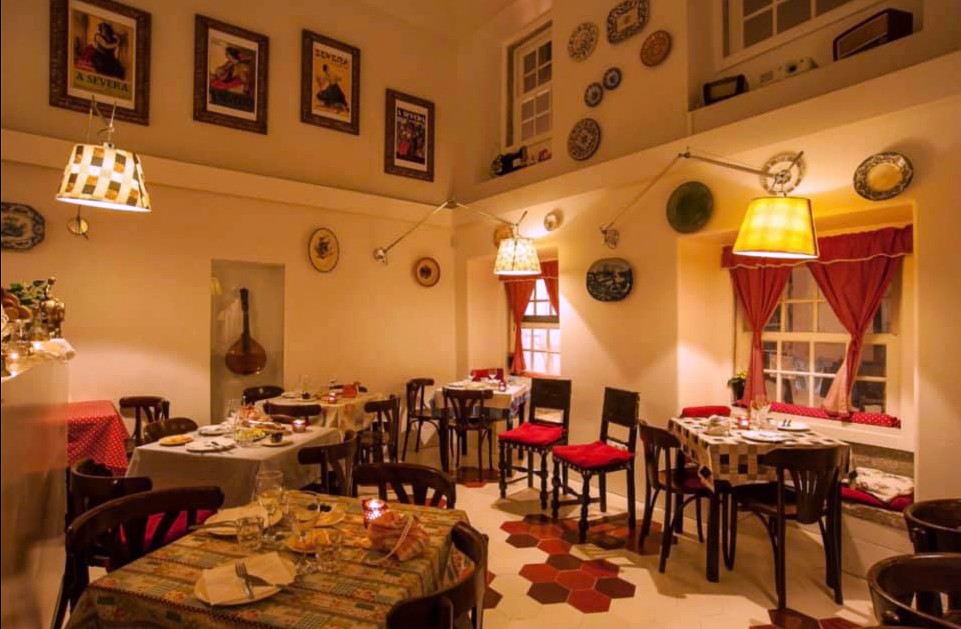 Maria da Mouraria – Casa de Fados pays homage to Maria Severa Onofriana, the 19th century singer and courtesan often regarded as the first great fadista. The atmosphere at Maria da Mouraria is cozy and traditional, making the music feel close. Unlike some establishments that lean heavily on polished formality, Maria da Mouraria’s Fado strikes a balance, yet still including professional singers and musicians that excel at performing. The menu here isn’t overly ambitious, but it delivers what most people expect from a Fado night, and that is a full meal that complements, rather than overshadows, the music. Pricing is mid-range for casas de Fado, approachable compared to the more luxurious options, but still offering a well curated program.
📍Largo da Severa 1-2, 1100-588 Lisbon
www.mariadamouraria.com
Photo by A Maria da Mouraria
Adega Machado
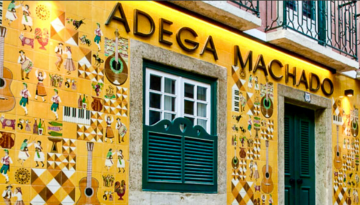 Adega Machado has been hosting Fado nights since last century, making it one of the oldest casas de fado still active in Lisbon. Located in Bairro Alto, it offers a more theatrical and polished take on the genre, with a program that often includes some of the city’s best known fadistas. Over the decades, names such as Amália Rodrigues and Fernando Maurício have sung here, helping cement Bairro Alto as a hub for Fado nightlife. The venue spreads across multiple floors, giving it a slightly larger, livelier feel compared to the intimate taverns of Alfama. The evening unfolds around food, with multi-course menus that highlight Portuguese classics, often with a slightly modernized touch. This is not the cheapest way to hear Fado, but it’s designed as a full night out, not just a concert. For those who prefer a structured evening, Adega Machado delivers, but please note that reservations are essential.
📍Rua do Norte 91, 1200-284 Lisbon
www.adegamachado.pt
Photo by The Best of Bairro Alto on Facebook
Clube de Fado
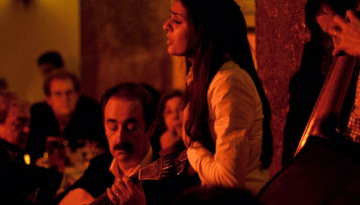 Just around the corner from Lisbon’s Sé Cathedral, Clube de Fado is one of the city’s best known casas de fado. It was founded by guitarist Mário Pacheco, who played alongside Amália Rodrigues and remains one of the most respected interpreters of the Portuguese guitar. That pedigree is felt in the programming, with consistently strong performances by established fadistas paired with some of the city’s finest musicians. This is very much the formal side of the Fado experience, where you’ll be seated for dinner, with a set or à la carte menu that focuses on Portuguese gastronomic classics. Price-wise, Clube de Fado is on the higher end compared to taverns or bars, but the polished setting and quality of the performers make it one of the safest bets if you’re seeking a “first Fado” that feels quintessentially Lisbon.
📍Rua de São João da Praça 92, 1100-521 Lisbon
www.clube-de-fado.com
Photo by Clube de Fado on TripAdvisor
Parreirinha de Alfama
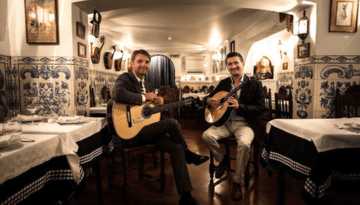 Tucked into one of Alfama’s winding backstreets, Parreirinha de Alfama is a neighborhood institution. Prices are more moderate compared to the higher-end fado houses, making it an accessible choice for travelers who want authenticity without a luxury price tag. Parreirinha de Alfama was founded by Argentina Santos (1926-2019), who was one of Lisbon’s great fadistas of the 20th century. The atmosphere is intimate, no-frills, and entirely focused on the music. For decades, Argentina herself performed here, turning the venue into a pilgrimage spot for Fado lovers from around the world. The dining room is small, with stone walls that make the performances feel close and powerful, as though you’re part of the family circle rather than an audience. The food prepared here is quite traditional, often including the almost inevitable but undoubtedly comforting caldo verde.
📍Beco do Espírito Santo 1, 1100-222 Lisbon
www.facebook.com/ParreirinhaDeAlfama
Photo by Restos de Colecção
Sr. Vinho
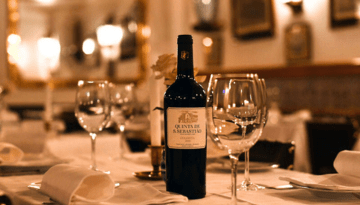 Sr. Vinho is one of Lisbon’s most renowned casas de fado, with a reputation for sophistication and top-tier performances. Opened in the 1970s by singer Maria da Fé and guitarist Francisco Carvalhinho, it quickly became a gathering spot for Lisbon’s Fado elite. Many of today’s stars, including Ana Moura, who began her career here, and Camané, considered the greatest male fadista of his generation, have performed within its walls, making Sr. Vinho a sort of talent incubator. The restaurant sits in Lapa, away from the busy tourist districts, and combines a refined atmosphere with a serious music program. Dinner here is central to the evening, with a menu rooted in traditional Portuguese gastronomy, including seafood and cod dishes, lamb and veal options, and indulgent desserts. The service is well orchestrated around the sets, with conversation and dining between performances, silence and focus once the music begins. When it comes to price, Sr. Vinho falls on the formal and more expensive side, best suited for travelers who want the full casa de fado experience done with elegance.
📍Rua do Meio à Lapa 18, 1200-723 Lisbon
https://srvinho.com
Photo by Sr. Vinho
O Faia
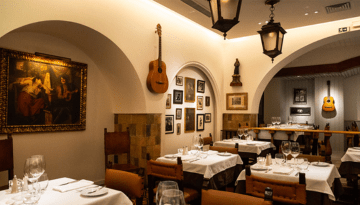 If you’re looking for prestige, O Faia in Bairro Alto is one of the surest bets. Founded in the 1940s by Lucília do Carmo (the legendary fadista, mother of Carlos do Carmo), this casa de fado has always been associated with high artistic standards. Generations of respected singers have performed here, making it one of Lisbon’s most prestigious venues. Inside, the experience is decidedly formal. You can expect white tablecloths, attentive service, and a structured dinner menu with several courses. Dishes are essentially elevated local cuisine, including cod prepared in multiple ways, seafood cataplana, and elegant Portuguese desserts. The wine list is extensive, including labels from many of the best wine regions across Portugal. If price point is not a consideration during your travels in our country, we suggest coming to O Faia to feel like part of Lisbon’s Fado royalty.
📍Rua da Barroca 54-56, 1200-050 Lisbon
https://ofaia.com
Photo by O Faia
Casa de Linhares
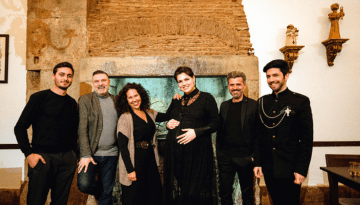 Casa de Linhares combines Fado with one of the most atmospheric dining rooms in Alfama. Set in a vaulted space that once formed part of a noble residence, the restaurant’s thick stone walls and high arches create natural acoustics that give the music a deep, resonant quality. It sits in the mid-to-high price range for casas de fado. It’s not the cheapest option in Lisbon, but the combination of history, food, and music feels worth the investment for travelers who want an immersive night out. The performances are curated and professional, often featuring respected fadistas who balance classic repertoires with more contemporary interpretations. Casa de Linhares’ menu draws inspiration from Portuguese tradition but isn’t afraid of refinement, pairing food options with a strong wine list.
📍Beco dos Armazéns do Linho 2, 1100-037 Lisbon
www.casadelinhares.com
Photo by Casa de Linhares
Tasca do Chico
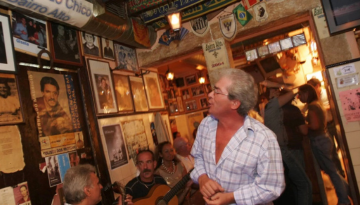 If casas de Fado are the polished, sit-down restaurants of the genre, Tasca do Chico is its smoky, backstreet bar cousin. This tiny tavern, with locations in Bairro Alto and Alfama, is one of the best-known spots for Fado Vadio, the more spontaneous version of the music where anyone brave enough can stand up and sing. In its venue at Bairro Alto, there’s no need to order a full meal. A glass of wine, a beer, a codfhish cake or a plate of chorizo grilled at the table over a clay pot is enough to secure your spot in the cramped room. Performances are unpredictable, so seasoned voices might share the floor with first-timers, and that rawness is exactly what makes the experience memorable. The crowd is a mix of native locals and travelers, packed shoulder to shoulder, united by the hush that falls as soon as someone begins to sing.
📍Rua Diário de Notícias 39, 1200-141 Lisbon
www.facebook.com/tascadochico
Photo by Time Out Lisboa
Tasca do Jaime
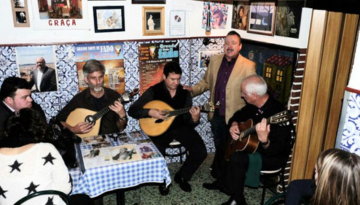 Weekends in Graça often come with a soundtrack, and Tasca do Jaime is where locals head for Fado sessions that are honestly unpretentious and very heartfelt. The setup is simple, with wooden tables, cold beer, house wine, and plates of petiscos. Food isn’t the main reason to come, but these casual appetizers help set the scene for the music, which is the star of the show. Prices here are affordable, and the mood is informal. Families sometimes stop by, though space is tight, and the focus on music means kids who get restless might not fit the vibe.
📍Rua da Graça 91, 1170-165 Lisbon
www.facebook.com/tasca.dojaime
Photo by NIT
Fado in Chiado
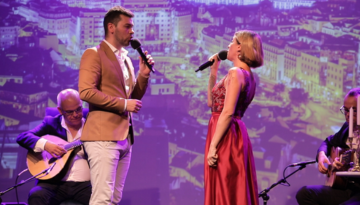 Not every Fado experience in Lisbon has to be a late night dinner affair. Fado in Chiado offers something different, and that is a daily, ticketed show in a theater setting, right in the heart of Chiado. Performances are held in the early evening, making it a convenient option for those who want to experience Fado without committing to a long night or a full meal. The show includes around an hour of music performed by professional singers, accompanied by Portuguese guitar and classical guitar. There’s no food service involved, just the music itself, presented in a more concert like environment. That makes it especially appealing for families with children, travelers on tighter schedules, or anyone who wants an introduction to Fado before going into a more traditional casa de fado.
📍Rua da Misericórdia 14, 1200-273 Lisbon
www.fadoinchiado.com
Photo by Fado in Chiado
Real Fado
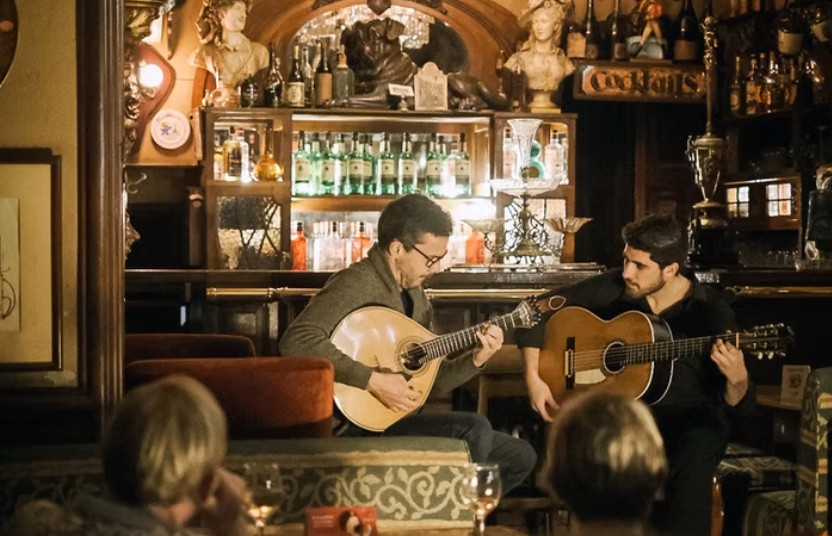 Another Fado experience in Lisbon that doesn’t require dinner, and is perfect even as a pre-dinner activity, is the Real Fado. This project brings together traditional and authentic Fado concerts in historic, iconic and unique Lisbon venues, such as the Patriarchal Reservoir, Embaixada gallery-palace, and the iconic Pavilhão Chinês bar. It honors Fado as Portugal’s national song and UNESCO Intangible Cultural Heritage of Humanity, seeking to connect Lisbon residents and international travelers with the soul of traditional Portuguese music in settings enhanced by Lisbon’s impressive heritage where the concerts take place. Real Fado offers a more informal and intimate alternative to traditional Fado houses, with limited capacity for a more exclusive and personal atmosphere. It’s ideal as a pre-dinner experience, with late-afternoon shows lasting only one hour, between 7 and 8 pm, and without the need to stay for a meal.
📍Principe Real, Lisbon
www.realfadoconcerts.com
Imagem cortesia de Real Fado
Want more insider tips on where to eat, drink, and dive into Lisbon’s culture? Subscribe to the Taste of Lisboa newsletter and get our best stories delivered straight to your inbox.
Feed your curiosity on Portuguese food culture:
How to make a Portuguese Fado dinner at home
A brief guide on how to order fish in Portugal
What Portuguese people usually have in their pantry
Where to eat Portuguese food in Lisbon for less than 10 euros
Real people, real food. Come with us to where the locals go.
Signup for our natively curated food & cultural experiences.
Follow us for more at Instagram, Twitter e Youtube