
How to identify an authentic Portuguese Tasca
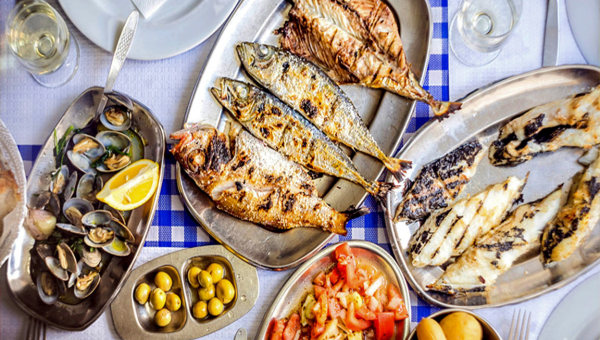
If you really want to know how Portugal eats, you don’t start with Michelin stars, with eateries in tourist areas, or even with the most famous pastel de nata bakeries. You start by visiting a tasca, a modest local spot where you’re most likely to experience home-style Portuguese food.
Unlike “concept restaurants”, tascas are not built around branding or design ideas, and they don’t tend to come in all shapes and forms. Of course, there are contemporary tascas nowadays, particularly in urban centers, but the traditional neighborhood tasca is usually a family-run business. It’s common to find several generations running the place, with older family members in the kitchen, and the younger ones out front, taking care of the customers.
Feat photo by Ubereats
Generally speaking, tascas focus on typical Portuguese dishes at fair prices, along with affordable wine, often highlighting the house wine (vinho da casa), which usually comes in simple glass or ceramic jugs.
Historically, tascas evolved from modest taverns and wine houses (casas de pasto) that multiplied in Portuguese cities between the late 19th and early 20th centuries, particularly in working-class neighborhoods of Porto and Lisbon. Many were opened by migrants from the north of Portugal and by Galician immigrants, who often started out running small shops and then began pouring wine and serving simple plates to supplement their income. Early tascas were half-grocery, half-tavern, basically places where workers could warm up the food they brought from home in exchange for buying wine or a coffee, especially once espresso machines started spreading through Lisbon in the early 1900s and Portuguese coffee culture started developing.
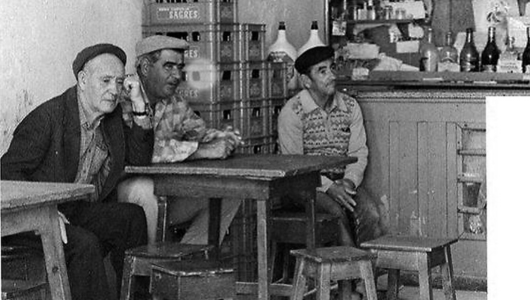
Photo by Jornal O Almeirense
When you walk into a tasca at lunchtime today, you can still feel that these are the perfect restaurants to feed the working class. Of course anyone is welcome, but they still cater particularly well to those who want a comforting, home-style meal without spending too much money or time. Daily dishes during lunch keep changing throughout the week, and you are very likely to choose from a handwritten menu, often written on a paper tablecloth and displayed by the window shop. The vibe of a good tasca is what visitors who travel to Portugal often describe as “authentic”.
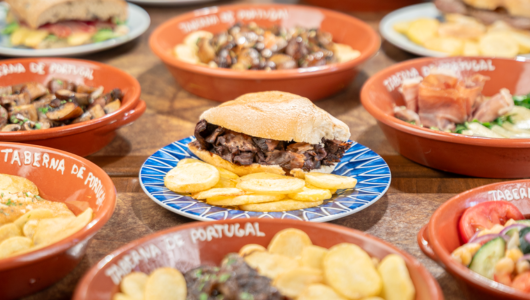
Photo by Taberna de Portugal
Tascas are also where you can partake in the habit of petiscar, most common at dinner time rather than during lunch hours. Foreigners love to call petiscos “Portuguese tapas”, but the spirit of it here in Portugal is a little different than in neighboring Spain. In Spain, tapear often involves going from bar to bar, enjoying a tapa here and there. But, here in Portugal, you’d usually have an entire meal made out of small plates, all in the same place, your tasca of choice. You order a couple of small plates, then a couple more, then another jug of house wine, and suddenly two hours have gone by.
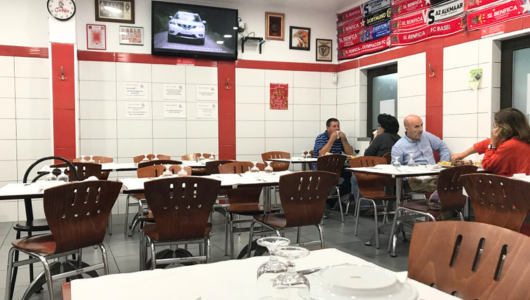
Photo by Tasca do Gordo on TripAdvisor
Lisbon still has plenty of old-school tascas, some of them with three or four decades of history behind the counter. There are places that have been feeding regulars since the early 80s, like Tasca do Gordo in Belém (Rua dos Cordoeiros a Pedrouços 33 – pictured above), open since 1982, or classics that held on for over a century, such as Casa Cid by the Mercado da Ribeira in Cais do Sodré, which operated from 1913 until it was finally pushed out to make way for a new hotel development. Some of these establishments are a part of the city’s collective memory and, as such, are protected under the Lojas com História program of the city’s municipality, which highlights businesses that have contributed to the city’s commercial and cultural DNA. But gentrification has been hitting tascas hard. In downtown areas like Baixa, Chiado and Cais do Sodré, rising rents, real estate speculation and the pressure of tourism have already closed many long-running tascas, and others are constantly at risk.
That’s why choosing where you eat actually matters. Every time you sit down at a genuinely family-run tasca, you’re helping keep typical tascas alive. This is exactly what we focus on during our food walks with Taste of Lisboa so, when you sign up for our tours, you know your money is going straight into local, independent businesses instead of anonymous restaurant groups. And if you feel like exploring on your own, we’d really encourage you to look beyond the touristy center and wander into more residential neighborhoods, where the tasca culture is still very much alive. Areas like Benfica, Carnide, Alvalade or Lumiar are still full of straightforward, family places cooking according to local taste and, equally important, for the local budget.
If you are planning to sit down and order a daily special (prato do dia), it helps to know how to recognise a real tasca when you see one:
1 – Prices are still made for locals
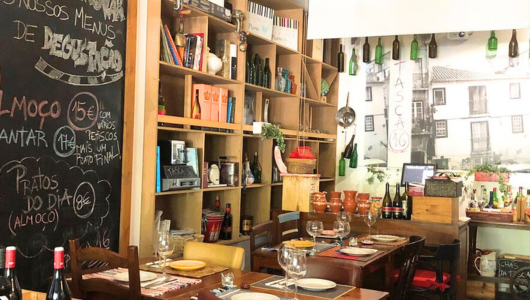
Photo by Rita A on TripAdvisor
In a proper tasca, the prices are still aimed at people who eat out several times per week, not because of indulgence, but simply because they are out and about for work and need to eat. During lunch times, most orders revolve around the prato do dia, that is, the dish of the day. There may be several options of fish and meat, but they usually change daily, come out fast, and they are always cheaper than the rest of the menu. In many Lisbon neighborhood tascas, a prato do dia on its own will cost roughly 10 euros, even though you have some spots where you could pay 8 euros or even less. There’s also the more complete menu do dia, which might include a soup, the main dish, a drink and sometimes coffee or dessert, costing a few euros more than the dish alone, but always depending on what’s on the plate and, very importantly too, the area of town. In more central or gentrified areas you can see it going closer to 15 euros, but if you’re paying tasting-menu prices, be aware that you’re not in a tasca anymore.
Alongside the daily special, there is almost always a small à la carte section with a few staple dishes such as grilled fish, a couple of bacalhau recipes, and maybe a steak or a stew, which are also meant to be affordable. At lunch, locals often choose whatever makes more sense that day, like the cheaper daily dish if they’re watching their wallet, or an à la carte favorite if they’re craving something specific. But at dinnertime, things change slightly, with the focus shifting towards à la carte mains and petiscos to share.
2 – The portions are generous
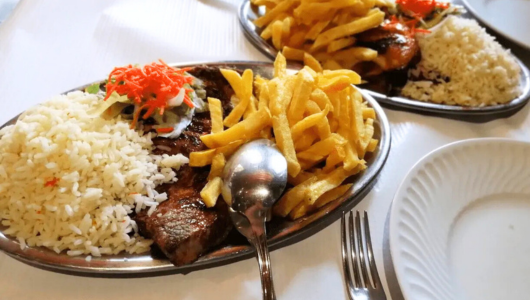
Photo by We Braga
At a tasca you’re supposed to leave full, not just satisfied. This generous spirit when it comes to serving clearly comes from the working-class roots of tascas, mostly meant to feed people who used to do physical jobs and needed real fuel. Not only are the portions usually big, the food itself tends to be quite hearty. A single prato do dia will often come with protein, carbs such as rice and potatoes, maybe a bit of salad on the side, and if you started with soup and let them put bread on the table (do note that this is usually charged separately), you’re looking at a very complete meal already.
In many tascas, one main dish plus soup, and maybe coffee or dessert afterwards, is more than enough for one person. If several things tempt you, it’s worth asking whether they serve meia dose (half portion) or if a full dose is enough for two, which is very common with stews, rice dishes and oven baked dishes. We recommend looking around and seeing what local clients are ordering and checking out how big the plates coming out of the kitchen may be before placing your order.
3 – The staff is… charismatic
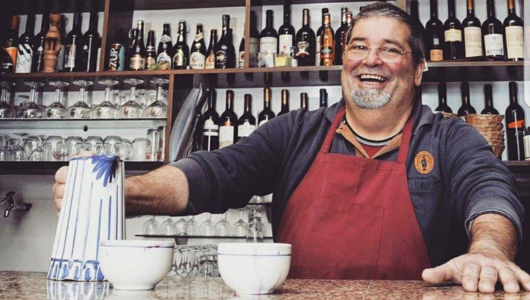
Photo by Tasca do Necas
If there’s one thing you should never expect at a proper tasca, it’s neutral service. The people running the show are rarely anonymous waiters in matching uniforms. More often than not, they’re the owners themselves, family members, or older folks who have been carrying plates through that dining room longer than many of us have even been alive. Also, many of them come with a certain personality.
You’ll usually meet two main archetypes. The first is the talkative one, always ready with a quick joke, occasionally borderline inappropriate, often trying to convince you that yes, you do have room for dessert and definitely another glass of wine. This is the person who calls regulars by their nickname, comments on the soccer score as they take your order, and somehow might even remember who hates coriander. Bonus points if there is a moustache, a proudly displayed belly and, if we’re truly going old-school, perhaps even a tea towel permanently thrown over one shoulder.
The second classic type is the famously grumpy waiter. This is the person who appears to be mildly annoyed by the very concept of customers. They sigh, they roll their eyes at politicians on TV, they mutter about traffic and prices. If you’re not used to this style of service, it can feel a bit harsh at first. But stick around, be polite, order normally, and you may notice the small signs that you’re being taken care of, such as clear recommendations like “this one is better today” when you hesitate while ordering, or anticipating another round of drinks before you even ordered. If you manage to get a half smile or a joke out of the grumpy type, you may consider yourself a tasca pro.
The thing is that, one way or another, tasca staff are rarely fake. What they say to customers is not scripted, they are not there working for tips and, for better or worse, they may treat the dining room almost as if they were at home. In most tascas, there’s no polished hospitality, but it’s usually familiar and warm.
4 – There are colorful regulars around
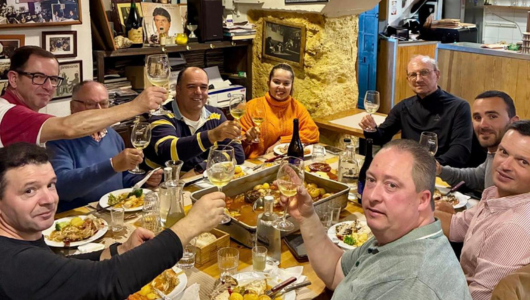
Photo by A Muralha
A real tasca is a good place to see Portuguese clichés come to life. There’s usually a table of retired men who clearly have a permanent booking near the TV, half watching the news, half offering their own commentary louder than the presenter. Someone is always explaining football tactics with a fork in the air. Another is complaining about politicians, electricity prices or the weather, in no particular order.
You’ll often spot workers still in their uniforms, sitting down for a fast but proper meal before going back to whatever they were doing outside. They don’t need menus, they ask what’s available on the day (“o que é que há hoje?”) and decide in three seconds. There might be a solo diner with a newspaper or, these days, a phone propped against the salt shaker, eating quietly but exchanging a nod with the owner on the way in and out. Some tascas are family territory too, with a couple with kids who clearly come here once a week, or a grandmother treating her grandson, while someone pops in quickly for just a soup and a bifana at the counter, because they are in a rush.
What you still rarely see, in a proper tasca, is a room full of people taking photos of their plates. Influencers and tourists are welcome, of course, but the atmosphere is set by the regulars, those who know which day they should come for cozido. If you walk into a place that looks like a tasca but every table is speaking English or French, and no one seems to have any history with the room, you might be in a restaurant that dresses like a tasca for visitors, but that is not a real tasca.
One of the best things you can do, if you’re curious and respectful, is to simply pay attention to these characters, including the way they order and interact with the staff. These people are the living proof that a tasca is not just about cheap food, and it’s also about a certain sense of community.
5 – They have paper tablecloths
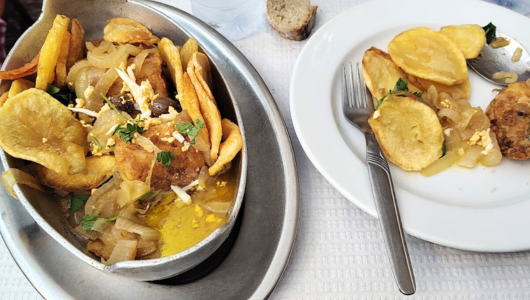
Photo by Mindtrip
If you sit down and the table is covered with a sheet of paper instead of a perfectly ironed cloth, take it as a good sign. In a tasca, disposable paper tablecloths make sense, because they can be replaced quickly and are affordable.
Very often there is a fabric tablecloth underneath, usually patterned and older than most of the customers, protected by a white paper sheet on top. The paper absorbs olive oil, catches crumbs and deals with coffee and red wine rings so the staff doesn’t have to spend their lives doing laundry. Paper tablecloths can also double as notebooks, especially in more old-school establishments, where waiters may scribble directly on the table, if not your order, at least the sum when they’re papering your bill at the end of the meal.
It’s also common to see a piece of the same paper tablecloth taped to the window, handwritten with the day’s specials. You’ll usually find things divided into soups, with at least one sopa do dia but often more, and then a short list of fish and meat dishes, each with its price clearly announced.
6 – The daily dishes are handwritten somewhere, not printed on a menu
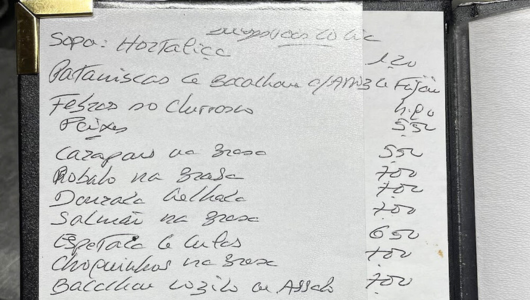
Photo by O Cantinho do Alfredo
In a real tasca, the options aren’t usually shared with customers on a printed menu. As it tends to change every day, there is no time to print a new one all the time, as the focus is put on quality food and affordability, not so much on presentation and clearly not refinement.
Those handwritten lists tend to be organized in short, clear sections, with soup, fish and meat, and prices right next to each dish, aimed at people who need to decide quickly and know what things cost. You’ll rarely see long descriptions. Sometimes you don’t even get a full dish name and, for example, under fish you might just read grilled sea bass (robalo grelhado) or grilled seabream (dourada grelhada), and that’s it, with no mention of side dishes. The assumption is that everyone understands what the dish will be like, as certain pairings here in Portugal, and especially at tascas, are almost automatic. Grilled fish, for example, usually comes with boiled potatoes and steamed vegetables. A piece of meat will most likely be served with fries and/or rice and a bit of salad. But if you’re not used to this kind of minimalistic menu, don’t be shy about asking before placing your order.
If you walk into a place that calls itself a tasca and all you see is a glossy, multi-page, multilingual menu with photos of everything and no sign of a daily list anywhere, there’s a good chance the kitchen is working more like a standard restaurant. That doesn’t mean the food will be bad, but it’s a different universe than in a traditional tasca, where well-known straightforward options are part of the charm.
7 – There’s a TV in the corner and soccer on the walls
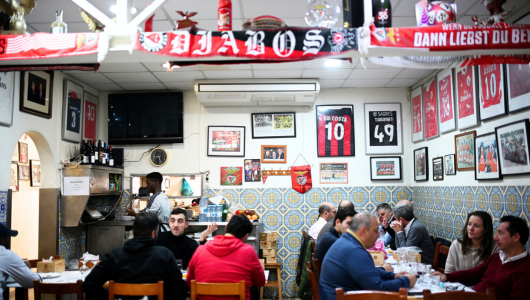
Photo by Time Out Lisboa
If you walk into a tasca and there’s no TV, no scarf, no soccer shirt, no framed black-and-white team photo from 1983… you might just be in a restaurant pretending to be a tasca. In a real one, there is almost always a TV somewhere, usually slightly too high and slightly too loud. At lunchtime it’s often tuned to the news, giving customers a perfect excuse to discuss politics and football. In the evenings or on match days, it’s all about the game, while people follow half with their eyes, half with their ears as they keep enjoying their food.
On the walls you’ll often see club scarves, posters of national team victories, maybe a faded photo of a local team that once won some neighborhood tournament and has been hanging proudly ever since. Sometimes the decoration clearly reveals the owner’s heart, most likely devoted to either Sporting, Benfica or Porto. Tascas do not have a quiet environment by default, so all of these elements make sense and help break the ice and spark conversations, once again proving that tascas help people belong and, even if you come eat by yourself, you’re not supposed to feel lonely.
8 – They serve petiscos, not tapas
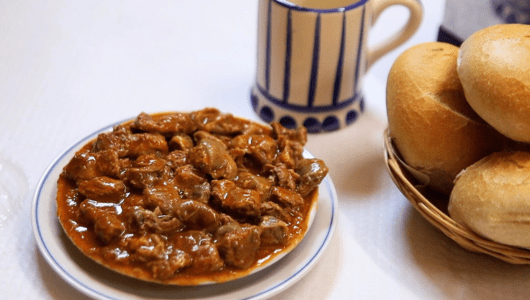
Photo by Alto Minho TV
If you see the word tapas printed all over the menu of a so-called tasca, be suspicious. Even though Portuguese and Spanish cuisines have a lot in common but, here in Portugal, we don’t go out for tapas, we go out for petiscos. Foreigners often call them “Portuguese tapas” and, sure, that helps paint a quick picture, but they are indeed a little different.
In Spain, tapas culture is built around movement and, like we mentioned above, eating tapas often involves having a drink and a small bite in each place. At a tasca, you sit down and stay put, building an entire meal out of small plates in the same room, as that jug of vinho da casa you ordered keeps going down.
On the menu, petiscos might have their own section or be listed on a blackboard, separate from the main dishes. Portions tend to be more generous than Spanish tapas too, closer to what in Spain is called raciones. Options like octopus salad, codfish fritters, chicken gizzards (moelas – pictured above) or green bean tempura (peixinhos da horta) are meant to be shared by two or more people, especially because you are supposed to order several things and, more often than not, accompany those petiscos with a basket of Portuguese bread. The basic idea is that you put a few plates in the middle and everyone digs in.
It’s also worth separating petiscos from the little things that land on your table at the beginning of the meal. Bread, olives, cheese, and even things like sardine pâté are often what we refer to as couvert, they are not petiscos. You’re expected to pay for what you touch, and that’s perfectly normal here. Petiscos, on the other hand, are ordered on purpose, like any other dish, and they’re very much the main event, especially at dinner time.
9 – There is always a sopa do dia
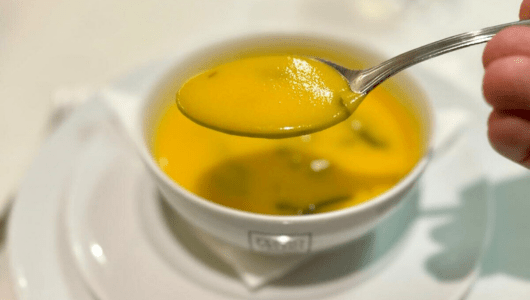
Photo by Ferro Velho Restaurante
In Portugal, most meals include a bowl of soup and this is something all tascas, and even most pastelarias, have available every day. Most of the time, that soup is a simple vegetable soup, the kind every Portuguese person has eaten since childhood, with a base of blended carrots, potatoes, zucchini or pumpkin, sometimes with cabbage or other greens stirred in at the end. On other days, you might find caldo verde made with potato purée and thin strips of collard greens, chicken broth with tiny pasta or rice (canja de galinha), or a heartier bean or chickpea soup. Some tascas, especially closer to the river or the sea, also do sopa de peixe when there are good fish trimmings to use up.
Soup in a tasca has the job to warm you up in winter, it can help stretch the meal for anyone eating out on a tight budget, but it also helps sneak in some vegetables before you dig into the main dishes, which are usually protein and carbohydrate heavy. For many folks in Portugal, soups are the main way to eat vegetables, and for those eating plant-based in Portugal, soup can also be a life-saver.
10 – There’s cozido à portuguesa once a week
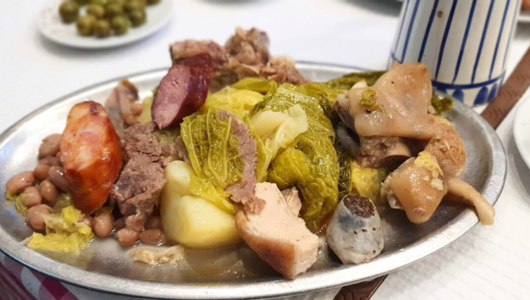
Photo by Mindtrip
Cozido à portuguesa is a slow-cooked mix of meats, cured sausages, vegetables and potatoes which is not only one of our country’s great comfort foods, we truly believe it is Portugal’s national dish. It’s also more labor-intensive than most pratos do dia a tasca would normally serve, involving huge pots, quite some time for the meats to be properly cooked, and also more variety of ingredients than most recipes. As such, it mostly makes sense to prepare cozido à portuguesa when you are going to sell a lot of portions and, that is why most traditional tascas will choose one day of the week for it. We’re not entirely sure who decided this, but a very common choice for the day of cozido is Wednesday.
Cozido also belongs to a wider family of tasca classics that you’ll usually see on specific days, like beans and pork stew (feijoada), or fava beans and pork ribs stew (favas com entrecosto), rarely seen permanently on a menu. If you are craving one of these dishes, check out the menu written on a paper tablecloth and displayed by the window shop of the tasca before you walk in.
11 – The piri-piri sauce is homemade
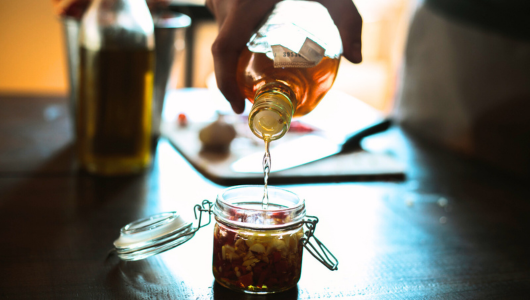
Photo by Tudo Que Bonito
Even people who love Portuguese food sometimes say it can be a little bland when it comes to heat. But this is why one should always keep in mind that piri-piri sauce can come to the rescue. In a good tasca, even if there isn’t a bottle on the table next to the more customary vinegar and olive oil, you can almost always ask for it. If you are a fan of spicy food, “tem picante?” or “tem piri-piri?” is one of the most useful sentences you can learn for eating out in Portugal.
At the very least, they’ll bring you a commercial bottle of hot sauce, even though a proper tasca is much more likely to have its own home-made sauce. The base is olive oil or vegetable oil infused with dried malagueta chillies, sometimes with garlic, bay leaf or peppercorns thrown in for extra flavour. Every so often you’ll find a simpler, water or vinegar-based piri-piri, a little bit stronger, but we find that the oily one is the perfect one for drizzling over grilled chicken (like in the popular dish peri-peri chicken) or adding some extra life into your seafood rice (arroz de marisco).
12 – The house wine (vinho da casa) is poured from jugs

Photo by Euro Dicas
In Portugal, wine at the table is not a thing for special occasions. Not everyone drinks, of course, and plenty of people will have water, a soft drink or a beer with lunch. But in a tasca, it’s completely normal for someone to order a glass of wine in the middle of the week, eat their prato do dia and go back to work like it’s nothing. In Portugal, particularly for older generations, with good food there shall be good wine.
A proper tasca usually keeps things simple, with a few selected labels on the written menu, and more affordable house wine (vinho da casa), in the red and white varieties. The house wine may come from a local cooperative, a bigger producer that supplies many neighborhood restaurants, or even from a family contact who sends barrels down from the countryside. As many tascas in Lisbon are run by families from the north, for example, seeing Vinho Verde as the house wine is also not uncommon. In the old-school places, that bulk wine is stored in the back and then served in jugs, normally of half litre or full litre, for those who’d like to enjoy more than a single glass. You’ll overhear locals ask for “meio de tinto” (half of red) or “um jarro de branco” (a jug of white), depending on what food they have ordered.
These days, it’s also very common for tascas to use bag-in-box wine for the vinho da casa option. It’s practical, it keeps the wine stable, and it still gets poured into jugs or straight into glasses, being sold at cheaper prices than bottled options. Alongside that, most places will still have a short selection of bottled wines, often from classic Portuguese wine regions like Alentejo, Dão, Tejo or Setúbal, plus the occasional meia garrafa (half bottle) for those who don’t want to order a full bottle.
13 – There’s always doce da casa and other classic desserts
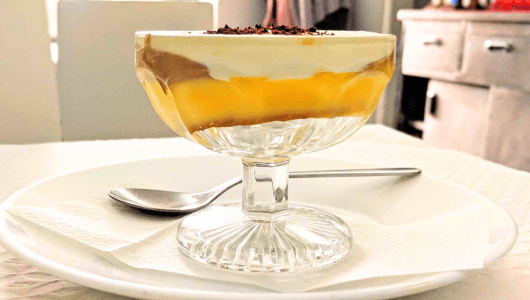
Photo by Portugalist
The name doce da casa literally means “house dessert”, even though every house seems to serve basically the same thing. Doce da casa is usually in layers, featuring crushed biscuits, condensed milk, and whipped cream. This is a good creamy option for those not worried about their diet, nor looking for something with a more ancient Portuguese soul, such as for example conventual sweets.
Beyond doce da casa, there’s a small but solid list of classics that you’ll see over and over again in tascas all over the country. We’re talking about chocolate mousse and silky rice pudding with dusted cinnamon on top (arroz doce), or leite creme, which is the Portuguese cousin of crème brûlée, with burnt sugar that cracks under the spoon. Egg rich pudim flan is served in wobbly slices, drenched in caramel sauce. Sometimes you’ll also find serradura or bolo de bolacha, both built around biscuits and cream and, in more old-school places, you might even find baked apples with cinnamon (maçã assada).
Many tascas keep their desserts in a chilled glass counter near the bar, lined up in small glasses, bowls or metal cups, so you can start planning from the moment you walk in. In others, especially when there are just four to six options, the waiter will bring a selection of glasses on a tray to your table at the end of the meal, so that you feel tempted to select something. If you are not familiar with the names, choosing with your eyes first can be helpful, but we’d still recommend for you to read our article about the best Portuguese desserts, so that next time you know what’s more likely to hit the spot.
14 – Portuguese is the default language of the room (and of the menu)
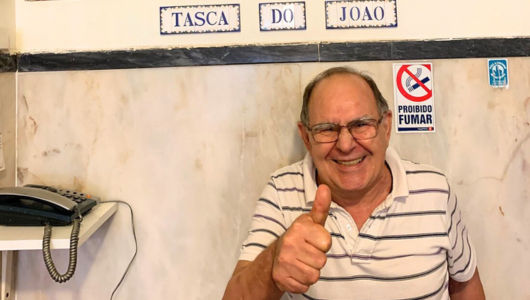
Photo by Jorge R on TripAdvisor
One of the easiest ways to tell who a place really cooks for is to just stop and listen. In a proper tasca, the background noise is almost entirely in Portuguese, with people arguing about football, commenting on the news, or complaining about the government. You might hear the odd table speaking English, French, or Spanish, especially in Lisbon, but the room’s soundtrack is local. It should feel like you’ve walked into a scene of everyday life.
The menu usually follows the same logic and so, in many neighborhood tascas, the real menu is only in Portuguese. Of course in cities such as in Lisbon there will also often be an English translation, but it’s also common for the staff to simply translate verbally when you ask what they have on that day. One thing is for sure, and that is that if every dish has been carefully translated into five languages with little flag icons and glossy photos, you’re probably not in a place that relies on regulars to survive.
None of this means you’re not welcome if you don’t speak Portuguese. It just means the restaurant hasn’t been designed around you, the traveler. The food, the pricing and the atmosphere are aimed at the people who live and work nearby, and you’re being invited to share that space for a while, which if you ask us, is often a better experience than going to a restaurant where everything has been thought out for tourists.
15 – It’s not on the main tourist street
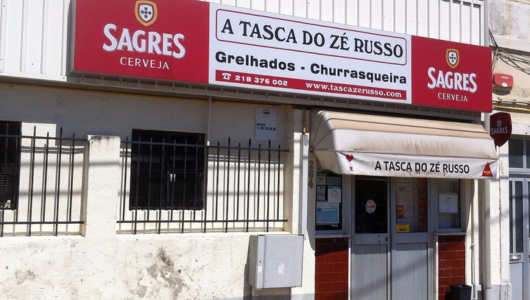
Photo by Carlos P on TripAdvisor
If you’re standing on a wide pedestrian street lined with identical terraces, laminated menus in six languages and someone trying to convince you to sit down, you are almost certainly not in front of a good tasca. Traditional tascas are usually located where people live and work, that is, backstreets, near markets, close to bus stops and metro exits, in those random corners of the city where rent used to be cheaper.
In Portugal in general, that means you’re more likely to find a proper tasca a few streets away from the main town square. The further you move from the historic center, the better your odds get, not just in terms of food, but even more so pricing. In Lisbon in particular, wildly popular arteries like Rua Augusta or the riverfront around Terreiro do Paço may be great for shopping or people watching, but they’re not where you go looking for the kind of everyday places we’re talking about here. The city’s tasca soul lives in more residential areas and mixed neighborhoods, where there’s still a balance between locals and visitors.
If you’re not sure where to start to look for an authentic tasca on your next trip to Lisbon, we suggest browsing the articles on the Taste of Lisboa blog, or hit us up on Instagram, as we’re always happy to point you towards the kind of places where us, Lisbon natives, actually eat at.
Feed your curiosity on Portuguese food culture:
Where to eat Portuguese food in Lisbon for less than 10 euros
How to identify the perfect Portuguese custard tart
The national dish of Portugal (it’s not codfish…)
Real people, real food. Come with us to where the locals go!
Join us in our natively curated food & cultural experiences.
Follow us for more at Instagram, Twitter and Youtube