
Foraging in Portugal: wild ingredients used in the Portuguese kitchen
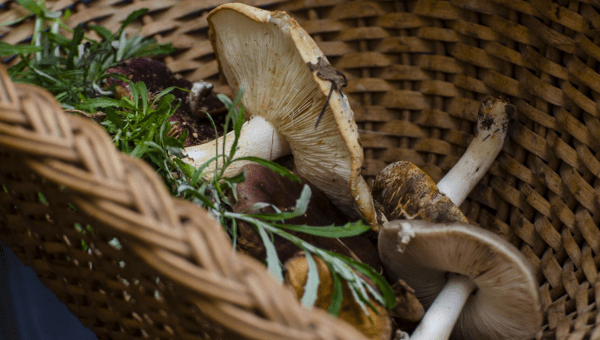
Wild ingredients have long been part of the Portuguese kitchen, even if most people today do not think about them in those terms. Before supermarkets and refrigeration, as well as access to foreign markets, which translated into having access to a variety of vegetables all year round, people relied much more on what was available around them. That included cultivated produce, of course, but also a wide range of ingredients that grew spontaneously in the wild or semi-wild landscapes surrounding villages, farms, forests, riverbanks, and coastal areas.
Feat photo by Aldeias do Xisto
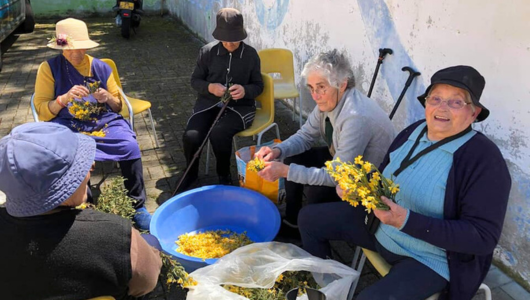
Photo by Liga dos Amigos Aldeia de Santo António
Until not that long ago, maybe a couple of generations back, it was not rare for those doing the cooking and taking care of the household to also regularly gather edible greens, aromatic herbs, mushrooms and other local resources that could be used in herbal infusions, soups, rice dishes, stews and preserves. Just like in most parts of the world, living in a rural area naturally translated into having more ecological and botanical knowledge, which was usually passed down from generation to generation. Today foraging could be seen almost as a “trend”, but back then it was simply part of the lifestyle, and it made total sense not just nutritionally, but also from an economic point of view.
Even though Portugal is a small country in terms of land coverage, it has some interesting diversity in terms of landscapes that offer a great variety of edible plants and fungi. In coastal areas and in the Atlantic archipelagos of Portugal, the Azores and Madeira, seaweed also enters the range of foraged goods that Portugal has traditionally used for cooking. Many of these ingredients were historically associated with frugality and subsistence, but industrialization and changing lifestyles over recent decades made people develop greater dependence on commercially produced food, and thus a lot of the knowledge that is required to collect wild food directly from nature is unfortunately getting lost.
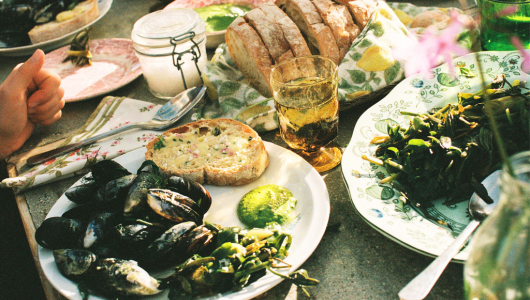
Photo by The Way We Play
Thankfully, these traditions have not vanished entirely, and some of them have in fact remained attached to very specific regional recipes. In recent years, because of curiosity, sustainability concerns, and biodiversity awareness, there has been a new wave of interest in foraging and learning how to eat more directly from the nature around us. For those who didn’t get to learn with their elders, there are now guided walks, workshops and small educational projects that can help them get into foraging. Furthermore, contemporary chefs are increasingly using some foraged elements in their dishes, mostly in fine dining contexts, thus sharpening the curiosity of foodies about these ingredients that were once upon a time relevant in the context of local food habits, but that many people gradually stopped recognizing as food but are now again starting to appreciate for their taste, nutrition and culinary potential.
Today, however, our focus is not on these modern cooks giving wild ingredients a new context, interesting as that may be. Instead, we turn to the traditional recipes that have long incorporated these ingredients into Portuguese cooking. Looking at them now is also a way of preserving culinary knowledge that reflects older ways of eating, regional identities, and a close relationship with the surrounding landscape.
Infusões de ervas | herbal infusions
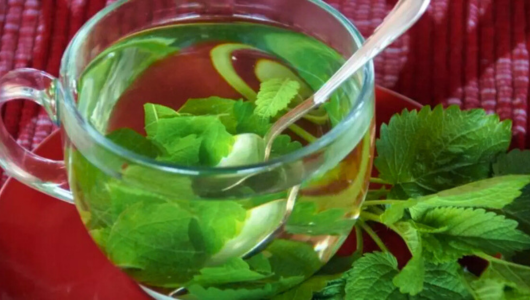
Photo by Pixabay / Porto Alegre 24 horas on Terra
Before we talk about obvious uses of wild ingredients, like soups, we need to acknowledge that, perhaps the biggest use of wild herbs in Portugal, now and historically speaking, has been in the form of herbal infusions. Before you could buy herbal teas in supermarket boxes or at specialized herbalist and health stores, people used to gather some of these plants themselves, drying them at home to use throughout the year.
Some of the best-known examples are still very much part of daily life in Portugal. Chamomile (camomila), lemon balm (cidreira), fennel (funcho), and pennyroyal (poejo) remain among the most familiar herbal infusions, even if today they are more often purchased than gathered. These are the kinds of herbs that many Portuguese people still keep in the pantry, either because they like the flavor, or simply because they grew up with them and now associate them with comfort. In earlier generations, though, these same plants were much more likely to come directly from the surrounding landscape, collected from fields, paths, gardens, or uncultivated corners of the countryside.
It is interesting to note that some of these herbs also became common in cooking. Pennyroyal, for example, belongs not only to the world of infusions but also to the flavor vocabulary of Portuguese food, especially in the Alentejo. Fennel is another plant that moved easily between different uses, depending on what part of it was being used.
There are also some more regional and slightly less obvious infusions, which some may even see as a little old-fashioned, that already begin to feel like they belong to a layer of domestic knowledge that is fading away with newer generations. Examples of this include pterospartum (carqueja), with its bitter edge, but also calendula (calêndula), wild rose (roseira-brava), cleavers (agarra-saias, also known as amor-de-hortelão), and St. John’s wort (erva-de-são-joão). Infusions that have made it more prominently into modern life include chamomile (camomila) and lemon balm (cidreira), but a decreasing number of people actually know how to find them in the wild, when to pick them, or how to dry them properly at home.
Flor do cardo | thistle flower to curdle cheese
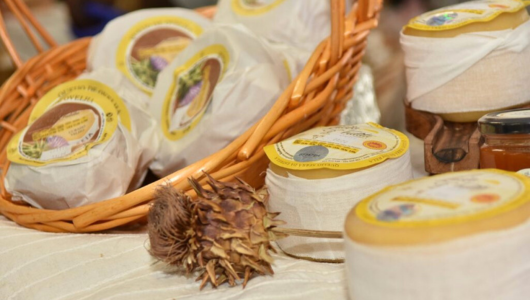
Photo by Notícias de Coimbra
Some wild plants are eaten, while others are used to make other foods. Thistle flower (flor do cardo) is one of the best examples to showcase how deeply foraging has been associated with Portuguese food culture. For centuries, Portuguese cheesemakers have been using the dried flower of wild cardoon, Cynara cardunculus, as a vegetable rennet. This classic vegetable coagulant has defined the process to make some of Portugal’s most traditional cheeses.
The best-known of these is probably Queijo Serra da Estrela, the buttery cheese from the mountains of central Portugal that many locals would put on any shortlist of the country’s greatest cheeses. Its PDO specification states clearly that it is made from raw sheep’s milk using cardoon flower as the rennet, and this vegetable coagulant is one of the reasons for its signature creamy texture and distinctive flavor. The same basic logic appears again further south in Queijo de Azeitão, produced in the Setúbal area, and in Alentejo cheeses such as Serpa, Évora, and Nisa, as well as Castelo Branco in the Beira Baixa.
In standard cheesemaking, milk is curdled using rennet, a set of enzymes that causes the milk proteins to coagulate and separate into curds and whey. Traditionally, that rennet often came from the stomach of young ruminants. With cheeses curdled with thistle, the same function is performed by enzymes found in the pistils of cardoon flowers. These enzymes, known as cardosins, are extracted by soaking or crushing the dried floral parts in water, and that liquid is then added to the milk. But these cardoon enzymes do more than simply clot milk, as they also have a strong proteolytic action, meaning they continue breaking down proteins during ripening in a way that contributes to the cheese’s final texture and flavor. So, compared with animal rennet, cardoon flower coagulant tends to produce cheeses that are softer, creamier, and often more intense in aroma. The coagulation itself is a little less predictable than with industrial rennet, because wild cardoon flowers vary in enzyme composition and strength. But this variability explains why traditional thistle cheeses can have so much character, as they would be harder to standardize.
Sopa de beldroegas | purslane soup
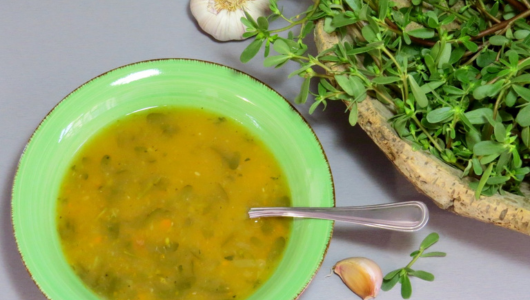
Photo by Dona Clementina Vegan
Purslane, known in Portuguese as beldroegas, is one of the wild plants most closely associated with traditional cooking in the Alentejo. It grows easily in hot weather, often appearing in kitchen gardens, along paths, and near cultivated fields. In Portugal, it is mostly linked with the south, where it is usually used in home cooking during the warmer months, especially from late spring into summer.
The best-known dish made with purslane is sopa de beldroegas, one of the most classic soups in Alentejo cuisine. There is, however, no single definitive version, as with many regional Portuguese recipes, ingredients and proportions vary from house to house. The usual base includes olive oil, garlic, onion, potatoes and purslane, sometimes finished with slices of bread, fresh cheese and eggs. Some versions are lighter and brothier, while others are thicker and more substantial. In some homes, tomato also enters the pan, leading to variations such as sopa de tomate com beldroegas, also known as tomatada com beldroegas.
Even though soups are the most common use for purslane in Portugal, they can also be added to salads or simply sautéed. The leaves and tender stems are fleshy and slightly crisp, with a fresh taste somewhere between spinach and sorrel, with a mild acidic note, making them especially good in dishes where a bit of brightness is welcome. Nutritionally, besides having a good amount of antioxidants, purslane is an unusually rich leafy source of omega-3 fatty acids, especially alpha-linolenic acid. So while older cooks in the Alentejo were not talking about fatty acid profiles, they were cooking with a plant that turns out to be remarkably nutritious, almost like a wild salmon from the land.
Unlike other herbs that require a lot of cleaning or seasoning to mask their bitter flavor, beldroegas are quite easy to cook with and, even with little dressing they taste good. Because of this and because they are also abundant during warmer months, they are still one of the wild plants which are used the most in the Portuguese kitchen today.
Urtigas na sopa e esparregado | stinging nettles in soup and creamed
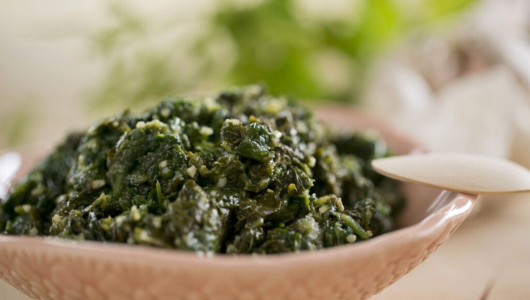
Photo by Simply Flow by Fátima Lopes
Stinging nettles, or urtigas, are not uniquely Portuguese, being more a part of the wider European habit of cooking with whatever useful greens appeared close to home. The main thing holding nettles back, at least in reputation, is obvious enough: they sting. But once blanched, cooked, or crushed, that problem disappears, and what remains is a very usable green with a deep flavor somewhere between spinach and other robust leafy vegetables. That is why nettles have worked so well in peasant cooking across so many places, including Portugal.
In Portugal, the most common culinary use of nettles is in soups. Soup has always been one of the easiest ways to use wild greens, especially in households where ingredients needed to stretch, feed the entire family, and adapt to whatever was available. Nettles can be cooked into a simple vegetable soup, added to a soup with a potato base, or blended into a smoother, greener preparation which ends up being rich in iron.
The other very natural use for nettles in Portugal is esparregado (pictured above), the creamed preparation most associated with spinach but that can actually be cooked with other greens as well, including but not limited to New Zealand spinach (espinafre selvagem or espinafre perpétuo), turnip greens, chard, chicory, radish leaves, beet greens, and more. Like other greens, nettles are very versatile so, in reality, they could be used in place of any other leafy green on a variety of recipes, working particularly well not only in soups, but also stews.
Nettles are at their best when young, before they get too coarse, which is why they are typically associated with spring picking not only here in Portugal, but across the rest of Europe. They do not have the strong regional identity as for instance beldroegas mentioned above have in the Alentejo, but there’s no doubt that stinging nettles have been used in Portuguese cooking for centuries.
Sopa de funcho | fennel soup
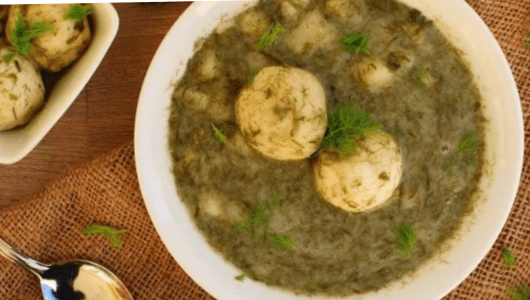
Photo by Cozinha de Sentidos
In the Atlantic islands of the Azores, fennel is an aromatic herb that isn’t just used for infusions, but also to make sopa de funcho, also known as caldo de funcho, which is one of the archipelago’s traditional soups. As tends to happen with many recipes, and perhaps even more so with soups, there are many variations of fennel soups, but one of the most popular is a broth from the island of Graciosa, made with cooked maize, red beans, and finely chopped fennel.
Azorean cuisine is often hearty and practical, historically shaped by what the islands could produce reliably, such as beans, maize, root vegetables, cabbage, pork, local greens, and whatever else could be grown, raised, preserved, or gathered in a place marked by isolation, humidity, and volcanic soils. In this context, fennel grows well, has plenty of flavor, and it can certainly be used to stretch a pot of soup.
To make fennel soup, as the herb is plentiful and you can literally be picky about what you end up using, Azorean people tend to give preference to the fresh fronds and tender stems. They bring an aromatic note that is slightly sweet, lightly aniseed-like, and very distinctive without overpowering the rest of the pot. In a soup that may already contain beans, potatoes, cabbage, and pork, fennel lifts everything and keeps it from turning heavy, giving the dish a strong personality.
When you travel to the Azores, though, you are unlikely to come across sopa de funcho in restaurant menus. Your best bet to try it is to get invited to a local’s home, especially from the older generations, where this soup is still very much on rotation in their kitchens.
Migas de espargos bravos | savory bread pudding with wild asparagus
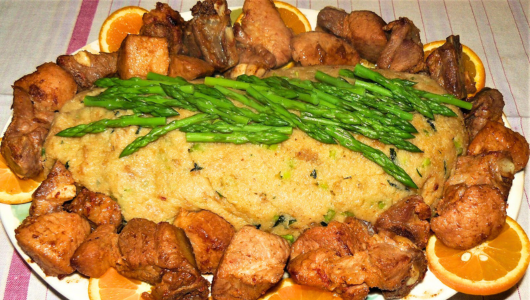
Photo by Outras Comidas
Wild asparagus also has a place in Portuguese cooking, especially in the south, where it still announces the end of winter and the start of spring. In Portugal, the species most commonly associated with foraging is Asparagus acutifolius, a Mediterranean wild asparagus that grows in scrubland, near stone walls, among olive trees and oaks, and in other dry, uncultivated areas.
Compared with cultivated asparagus, wild asparagus is usually thinner, darker, and more intense in flavor. It tends to have more bitterness, more herbal depth, and a firmer bite, while commercial asparagus is generally milder, thicker, and more watery.
Alentejo’s repertoire of traditional cooking includes several recipes prepared with wild asparagus. Migas de espargos is one of the most well-known, consisting of a savory pudding made with stale bread, garlic, olive oil or pork fat, and this seasonal ingredient. The shoots of the asparagus are cooked first, before adding them to the rest of the preparation, which is often served alongside fried pork (as seen in the image above).
Besides being used for migas de espargos selvagens or migas de espargos bravos, wild asparagus have historically shown up in several Portuguese dishes, many of them very simple but very good. The most classic companion is scrambled eggs, in ovos com espargos, which is a petisco you will still very often find in Portuguese restaurants, particularly towards the Alentejo and the south, even though nowadays, in restaurants, it is usually made with cultivated asparagus. At home, those who forage espargos-bravos may also prepare things like omelettes, and other bread-based dishes such as açordas. This last example showcases how the Alentejo region is a master at preparing delicious recipes with stale bread alongside other modest ingredients, resulting in something satisfying and full of taste, which remains faithful to the philosophy of zero waste Portuguese cooking.
Túberas com ovos | eggs with desert truffles
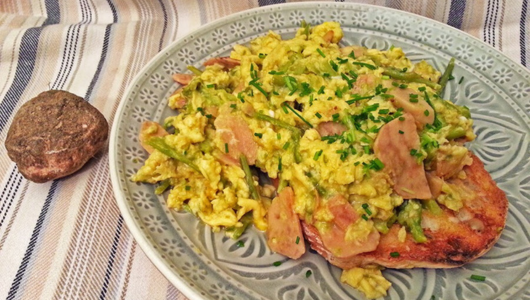
Photo by Deliciosa Paparoca
Túberas, sometimes also called tubras or criadilhas, are often referred to as Portuguese truffles, or more specifically as desert truffles, and while that comparison is useful, it also needs a bit of nuance. These are subterranean fungi from the genus Terfezia, not the same species as the famous black and white truffles of France or Italy. In Portugal, they are most strongly associated with the Alentejo, where they appear in spring and are regarded as a seasonal delicacy.
Túberas appear in spring and they remain underground until their spores mature, usually measuring around 4 to 8 cm across. Just like other more famous truffles, they indeed grow below ground but, culinarily, túberas are quite different from the more prized truffles we normally associate with fine dining. Their aroma is usually gentler and less aggressive than that of classic European truffles, and that is one reason traditional cooking in the Alentejo tends to use them simply. They are not treated like a luxury ingredient and, on the contrary, they are incorporated into straightforward preparations that let their earthy, delicate character come through without too much competition.
The best-known way of cooking them is túberas com ovos, usually made as a loose scramble with sliced túberas. This is the classic pairing and it works well because eggs are rich enough to give the dish substance, but mild enough not to overpower the flavor of the fungus. But before they hit the pan, túberas need a bit of work. Because they grow underground, they usually arrive caked in soil and need to be scrubbed, peeled or scraped, and cleaned carefully. Then they are often cut into thin slices and gently cooked in olive oil or animal fat before the eggs are added.
Besides being cooked with eggs, these Portuguese truffles can also appear in other dishes such as rice recipes, or bean stews. The town of Mértola, in the Alentejo, highlights feijão com túberas, a recipe in which they appear alongside white beans, potatoes, garlic, onion, bay leaf, olive oil, pennyroyal, and bread, as one of their local specialties. This municipality also puts together a festival to celebrate this foraged ingredient, the Festival da Túbera, which is worth attending if you’d like to learn more about túberas and, of course, taste them cooked into multiple preparations.
Tortas de erva do calhau | seaweed fritters from the Azores
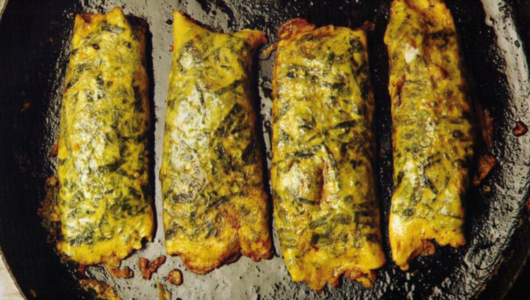
Photo by Saudades do Faial on Facebook
In spite of its long coastline, mainland Portugal never really became a seaweed-eating country in any broad everyday sense, but the Azores are an exception. Across the archipelago, and especially in the western group of islands, seaweed has historically been part of the local food habits. The best-known example is tortas de erva do calhau, also called tortas de erva-patinha, fritters that resemble omelette patties made with edible algae, eggs, and simple seasonings.
The names can be confusing, because in the Azores the same common terms are sometimes used for more than one species. Erva do calhau usually refers to a green alga, often identified as Ulva intestinalis, while erva-patinha can refer either to that same green seaweed or to red algae from the Porphyra/Pyropia group, depending on the island and the context.
People collected these algae from the intertidal zone when in season, cleaned them, and turned them into straightforward home cooking. In the case of the tortas, the seaweed is usually chopped and mixed with beaten eggs, onion, and a few basic seasonings before being fried. Some versions lean closer to a fritter, others more to a flat omelette.
These tortas are especially associated with islands such as Corvo and Flores, where the use of seaweed in food remained more visible than in many other Portuguese contexts. In these small Atlantic islands where the sea is never far away, edible algae aren’t really a novelty ingredient, and they’re simply a convenient food. Besides tortas and omelettes, seaweed is also used in soups, rice dishes and stews, but tortas are indeed the most famous preparation of algae in island cooking.
But it is important to point out that the Azorean repertoire is not limited to one single alga. Other edible seaweeds include sea lettuce (Ulva rigida or alface do mar), spiral wrack (Fucus spiralis or tremoço do mar), pepper dulse (Osmundea pinnatifida or erva-malagueta), as well as various red algae grouped locally under different types of erva-patinha.
Feijão com tengarrinhas | beans with tender wild thistle shoots
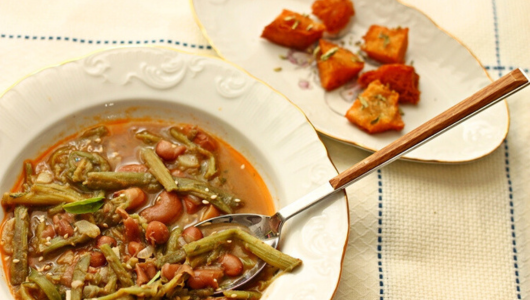
Photo by Arca dos Sabores
In parts of the Alentejo, especially around Alvito and Vila Nova da Baronia, people have long cooked with the tender young shoots of wild thistle-like plants, known locally as tengarrinhas, carrasquinhas, or simply cardos (Scolymus hispanicus). These are not the tough, fully grown thistles most people picture, like the cardoon flowers mentioned above in cheesemaking. What goes into the pot are the young edible stems and shoots, picked before the plant becomes too fibrous and aggressively spiny.
The best-known preparation is feijão com tengarrinhas, a rustic Alentejo dish in which these cleaned and chopped shoots are cooked with beans, often with garlic, onion, herbs, and sometimes pork or cured sausages (enchidos). There are versions which are closer to a soup, with broth poured over pieces of stale bread, while others are closer to a thick bean stew. Around Montemor-o-Novo, for example, the beans are often cooked with the cardos, seasoned with garlic, bay leaf, coriander, pennyroyal, or paprika, while other recipes, such as those traditional in the Baronia area, prepare this wild plant with pork, rice, potatoes, or even served alongside fried horse mackerel. The thistle shoots bring a slight bitter flavor that cuts through the starch and fat, thus balancing these dishes.
In the town of Alvito, in the Alentejo, they sometimes organize seasonal food events focusing on this food but also other local greens, including the initiative As Ervas da Baronia, with local restaurants highlighting dishes based on carrasquinhas, catacuzes (see below), and wild asparagus.
Feijão com catacuzes | beans with dock leaves
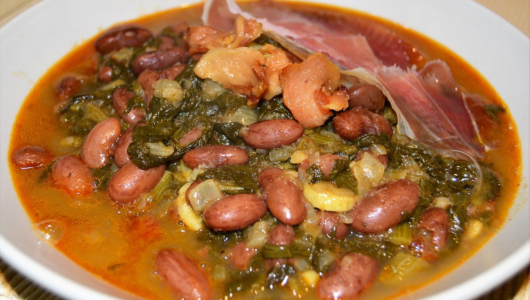
Photo by Outras Comidas
Catacuzes, also known as labaças, are a spontaneous green related to the dock type of plants, Rumex crispus. They are commonly cooked in stews with beans or chickpeas but, unlike cardos above, catacuzes are not about stems and shoots, but about leaves. They taste more sour as well, that is why some people also refer to them in popular language as something close to “sour greens” or “lemon spinach”.
The leaves are usually blanched first to reduce some of their bitterness before being added to the pot. The classic preparation is usually some version of sopa de feijão com catacuzes, though in many homes it may be closer to a stew than an actual soup. The rest of the ingredients are very familiar in the Alentejo kitchen, including beans, olive oil, onion, garlic, herbs, and bread.
Labaças were much more common in Alentejo cooking until the 1950s and 1960s, before rural depopulation and changing lifestyles started eroding this kind of plant knowledge. Today older folks as well as younger people interested in foraging are bringing back this recipe, which can also be tasted during specific food festivals in Alvito, which celebrate these recipes and hopefully contribute to them not joining the growing repertoire of Portuguese dishes that are disappearing.
Poejada | pennyroyal stew
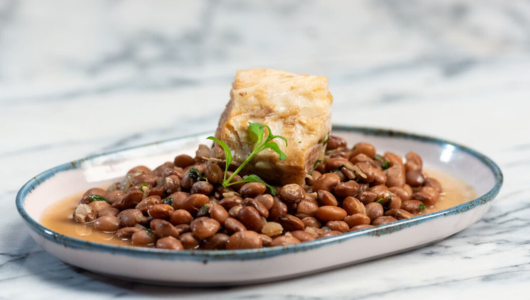
Photo by 24Kitchen
Poejada is a preparation built around pennyroyal (poejo), one of the herbs most strongly associated with Alentejo cooking, along with garlic, olive oil, and often eggs. As we have seen with other soups and stews above, there is not one single recipe for poejada, and it’s more of a concept than an actual recipe, and it has existed in different forms across the region for a long time.
The simplest version of poejada is made with pennyroyal, garlic, olive oil and beans, being a good example of Portuguese cooking that is naturally plant-based. For added protein, some versions include a poached egg and/or fresh cheese (queijo fresco). The same Alentejo tradition also includes açorda à alentejana, made with bread, garlic, olive oil, water, and either coriander or pennyroyal, usually finished with eggs. The herbs are an essential ingredient to make the broth aromatic. Açorda de poejos com ovos is very close in spirit to poejada, and depending on who’s doing the cooking, they may even overlap.
Other more distinct poejadas include those made with bacalhau, where one might assume that the protein is the central part of the preparation, but the flavor profile is actually defined by pennyroyal, thus the name of the dish. Salt cod already works beautifully with strong aromatics, and pennyroyal gives it a fresher touch than the more usual coriander. But if you ever observe a cook from the Alentejo preparing some food with poejos, they’ll probably mention how pennyroyal should be used carefully, as a little can sharpen a whole dish, giving it an unmistakable Alentejo fragrance, but used badly, it can become way too dominant.
Arroz de carqueja | rice perfumed with carqueja
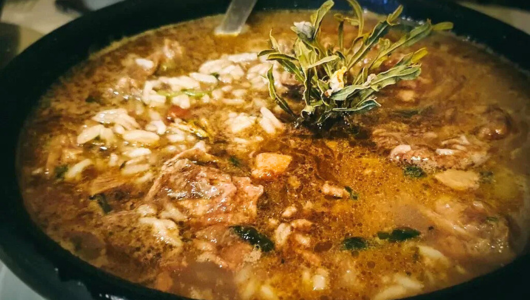
Photo by FotoFood
Carqueja is a plant that many Portuguese would know but associate with infusions (chá de carqueja), but in some regions of our country, it has actual culinary uses. It is a shrubby wild plant found in mountain landscapes, strongly associated with the centre and north of Portugal, especially the Beiras region.
In Beira Alta, a classic preparation is arroz de carqueja, which can be treated as a side dish when the rice is simply cooked with this wild herb, or as a main meal when the rice becomes more elaborate and includes animal protein. Either way, to use carqueja as an aromatic, the usual method involves making an infusion with the stems or flowers and then using that liquid to cook the rice.
Carqueja has a strong and slightly bitter profile, so it has historically been used to season country-style meats, especially chicken, rabbit, or game, because it gives them a deeper, slightly wild flavor. Cooks also prepare rice dishes with the herb and some of these meats or pork, namely ribs. Other more intense versions of traditional forms include cabidela-style chicken rice in which the usual cooking liquid is replaced by a carqueja infusion, but the rest of the recipe, including the pieces of braised chicken and rice, finished with the animal’s blood, remain.
If you are curious to try arroz de carqueja while in Lisbon, we recommend heading to restaurant Recanto Serrano (Calçada da Ajuda 206), in the neighborhood of Ajuda. For a more contemporary approach to this wild herb, you can also try the carqueja rice which is served as the accompaniment to braised beef cheek at Cenário (Avenida 5 de Outubro 197). But, because this is the kind of dish that often rotates in and out of menus due to availability, it is worth checking before going.
Arroz de míscaros | rice with wild mushrooms
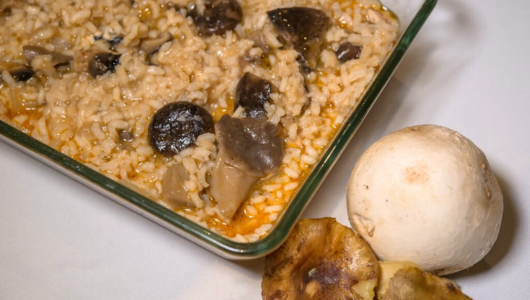
Photo by Município do Fundão on Facebook
While most of the wild plants we have covered above are found during spring and summer, wild mushrooms appear in autumn. Inland central Portugal is where mushroom culture is stronger in our country, and arroz de míscaros is one of the traditional dishes in places like Fundão, the Serra da Gardunha, Sátão, and Góis.
The word míscaros is used in Portugal for several wild mushrooms depending on region, but in culinary contexts it is very often linked to the orange milkcap group, especially Lactarius deliciosus, a mushroom that appears after the first rains of autumn in pinewoods. This is not an ingredient people used to expect all year round. You waited for the rains, you went out with someone who knew what they were doing, and if the conditions had been right, the landscape gave something back.
As for the dish itself, arroz de míscaros is usually straightforward, built with a base of onions, garlic and the actual mushrooms, cooked with olive oil, sometimes tomato or sweet paprika, white wine in some versions, and short-grain rice, usually of the Portuguese Carolino variety. The míscaros add flavor to the rice and also a meaty texture that is very satisfying.
Besides míscaros, and depending on the region, mushroom foragers in Portugal also look for species such as desert truffles (Amanita ponderosa or silarcas), especially in the Alentejo; parasol mushrooms (Macrolepiota procera or tortulhos), which are among the most widely recognized and collected wild mushrooms in Portugal; porcini (Boletus edulis or boletus); and chanterelles (Cantharellus cibarius or cantarelos). And just like it happens with other species we have explored above, these mushrooms aren’t used in just one recipe, but appear in açordas, simple sautés, stews with meat, soups, and preserves.
If you’re up to traveling for the sake of this ingredient, we recommend going to the Míscaros – Festival do Cogumelo in Alcaide, Fundão, which highlights how Serra da Gardunha loves this ingredient, offering mushroom walks, tastings, workshops, talks, and stalls dedicated to different mushroom preparations. Further south, there is Silarca – Festival do Cogumelo in Cabeça Gorda, Beja, dedicated to Amanita ponderosa, one of the Alentejo’s most prized mushrooms. If you’d like to consider an event with a broader autumn and nature angle, Mostra dos Frutos de Outono in Oleiros has in past editions also included mycological walks, mushroom tastings, and themed talks.
Curtume de perrexil-do-mar | pickled sea fennel
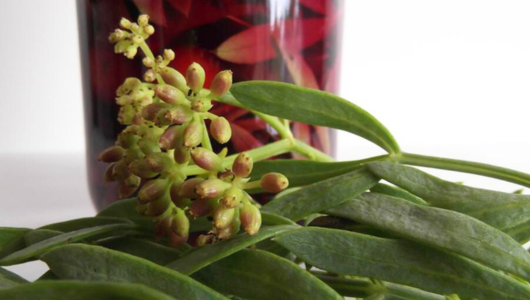
Photo by Food With A Meaning
Sea fennel, Crithmum maritimum, grows on rocky coasts and other salty maritime habitats, and in Portugal it is used in cooking, especially in the Azores. It is traditionally turned into a curtume, that is, a vinegar-based pickle. The ideal harvest time for perrexil-do-mar or funcho-do-mar is in August and September.
Sea fennel has a fleshy, succulent texture and a flavor that sits somewhere between an herb, a coastal succulent, and something lightly resinous and saline. The finished pickle has a distinctive, and dare we say intriguing taste, somewhere between nutmeg and eucalyptus, which gives you an idea of why it works so well in small amounts rather than in huge quantities.
This pickle is usually eaten as a condiment and not on its own, best accompanying fish and meat dishes, used to add a touch of acidity and aroma to rich foods. Sea fennel pickles work well next to grilled fish, boiled meats, roasted pork, and certain types of stews that could benefit from something salty, acidic and bright.
Sea fennel is not only an Azorean thing, even though its use is more widespread there, but the plant also occurs in the islands of Madeira and even the coasts of mainland Portugal. Back in the day, navigators were known to consume this plant more commonly, because it’s rich in vitamin C, so it was even carried (fresh and in pickled form) in long maritime voyages done by the Portuguese centuries ago, to help prevent diseases such as scurvy.
Rebuçados de funcho | Madeira’s fennel sweets
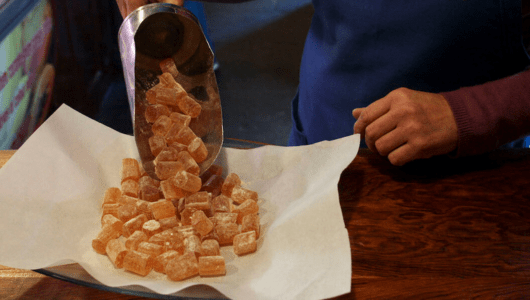
Photo by BOM DIA Suíça
If fennel in the Azores ends up in soup, in Madeira it also ends up in candy. Rebuçados de funcho are one of the island’s most recognizable traditional sweets, consisting of small handmade hard candies, usually yellow to orange, and strongly aromatic with fennel. Fennel was historically abundant on the island, particularly around the bay of Funchal, and this abundance is even tied to the city’s name meaning “place where funcho grows”.
Fennel candies are an old style of confectionery, the kind of sweet that evokes nostalgia to Madeiran people, and that travelers often try out of curiosity. Madeiran producers such as Fábrica Santo António, one of the island’s best-known makers of these traditional sweets, still produce rebuçados de funcho by hand, from rolling to cutting, which is why they normally have a slightly irregular artisanal look.
Flavor-wise, they are not subtle, as fennel gives them a sweet herbal, lightly aniseed profile that can be comforting or a little divisive depending on your preference for that kind of taste. Besides their flavor, they have for generations been appreciated as a soothing sweet for the throat. You can still find rebuçados de funcho in Madeira today in traditional sweet shops, markets, and tourist stores, and they remain one of the island’s most obvious edible souvenirs. In Lisbon, you can find them in specialized stores displaying Madeiran products, such as A Mar a Terra (Rua Marquesa de Alorna 22C), in the neighborhood of Alvalade.
Alcoholic drinks prepared with wild plants
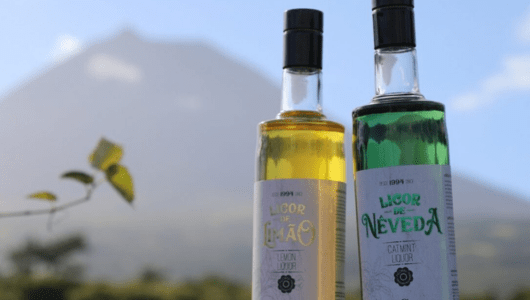
Photo by Adega de Santana
Wild and semi-wild ingredients also have a place in Portuguese drinking culture. As with food, historically, people learned what grew around them, what could be fermented, infused, or distilled.
An example of this is medronho brandy (aguardente de medronho), made from the fruit of the strawberry tree, Arbutus unedo. The official specification for Medronho do Algarve IGP states that it is produced exclusively by the alcoholic fermentation and distillation of the fruits of this species. It remains especially associated with the Algarve hills and with small-scale distillation traditions that long belonged more to mountain communities than commercial circuits. Medronho is usually drunk neat, often after meals, and it is said to aid digestion.
Licor de poejo, made with pennyroyal (Mentha pulegium), is another great example, prepared through the alcoholic distillation of an infusion of dried pennyroyal, resulting in a yellow liqueur.
The islands have their own versions of this habit. On Pico, in the Azores, one example is nêveda liqueur (licor de nêveda), a regional drink built around the local aromatic plant Calamintha nepeta. Another is fennel liqueur (licor de funcho) which showcases the versatility of this plant, used in soups, stews, candy and even drinks.
Finally, there is Licor Beirão, which belongs to a slightly different category, because it is not really a rustic local drink like the ones we mention above. It is a nationally famous commercial liqueur, but it still makes sense here because it is built around a recipe of herbs, spices, and aromatic seeds. The brand describes it as being made from 13 spices, plants, and aromatic seeds, but the actual formula is a closely guarded secret. You can easily order Licor Beirão on any given Portuguese bar, and drink it on its own on the rocks (be aware that it is extremely sweet), or as part of contemporary cocktails such as morangão, blended with strawberries and lemon juice, or caipirão, inspired by caipirinha but here replacing the usual sugarcane cachaça for the Portuguese liqueur.
Where to taste foraged flavors in Lisbon
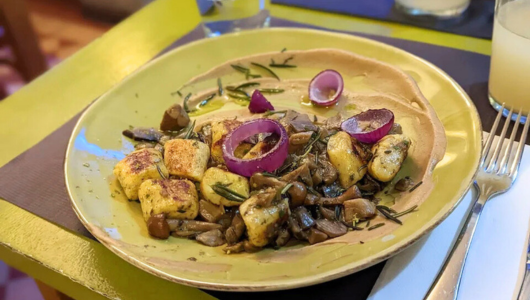
Photo by MindTrip
You do not need to leave Lisbon, and you definitely do not need to go picking plants yourself, to get a sense of this side of Portuguese food culture. What the city offers is not so much the old rural repertoire served exactly as it would be in the Alentejo or the Beiras, but rather a contemporary translation of it, with a growing number of restaurants working with wild herbs, seasonal mushrooms, marine plants, fermentation, and other ingredients that aren’t normally a part of the usual commercial routine.
Ciclo (Largo das Olarias 42), in Mouraria, is a restaurant that presents itself as a small farm-to-table house built around seasonal products and zero-waste cooking, with a menu that changes often according to what is available. That kind of approach makes it one of the better places in Lisbon for anyone interested in lesser-used herbs, mushrooms, and other ingredients that depend on timing, resulting in signature dishes such as white asparagus with lemon, oyster emulsion, and nasturtium flowers.
For mushrooms, the most obvious stop is Santa Clara dos Cogumelos (Mercado de Santa Clara), a restaurant whose entire concept is built around mushrooms. Examples of dishes in the menu include smoky hummus with sea fennel and wild mushrooms (pictured above), slow-cooked cod with dehydrated Amanita caesarea onion, beef medallion with Boletus edulis sauce, duck breast with chestnut purée and wild mushrooms, and even desserts such as ice cream made with Boletus edulis and apricot and almond mousse with chanterelles. For anyone curious about Portugal’s mushroom culture without heading to an autumn festival in the interior, this is the easiest place in Lisbon to begin.
Another address worth knowing is A Mesa do CAM, at the Gulbenkian’s Centro de Arte Moderna (Rua Marquês de Fronteira 2). The restaurant describes itself as a garden-to-table space working with its own production and a network of local suppliers, with a strong focus on seasonality and sustainability. Their permanent menu was developed by chef André Magalhães. Besides that, through collaborations linked to the Gulbenkian’s Eating Between Tides residency, A Mesa do CAM has also been associated with regenerative menus built around algae, halophytic plants, invasive species, and resilient crops from the Tagus estuary. One concrete example was the Boca do Estuário menu, developed with chef Joana Duarte, which worked explicitly with estuarine ingredients. This is definitely not a place to go for countryside dishes like the ones we have talked about above in this article, but for anyone curious about edible sea plants, it is one of the most interesting places in Lisbon today.
If this exploration of Portugal’s wild side made you hungry for more, subscribe to the Taste of Lisboa newsletter and follow us on Instagram. We are always sharing more stories, tips, and lesser-known corners of Portuguese food culture, both in Lisbon and beyond.
Feed your curiosity on Portuguese food culture:
Portugal’s best zero-waste dishes
The women behind Lisbon’s food
The history of salt in Portugal
Real people, real food. Come with us to where the locals go.
Signup for our natively curated food & cultural experiences.
Follow us for more at Instagram, Twitter e Youtube