Fátima travel guide for food lovers

Fátima is Portugal’s most famous pilgrimage destination, but it’s not a place we should reduce to faith alone. There’s no doubt that religion sets the tone around there, but this is also an easy day trip from Lisbon for travelers interested in architecture, public art, the tranquil landscapes of central Portugal, and regional food culture as well.
You can pair a visit to Fátima with a stop in Batalha, whose monastery is one of the country’s great architectural landmarks, making the two together an easy one-day combination from the capital. Fátima is straightforward to reach from Lisbon, whether you take a direct bus from Sete Rios, which usually takes around 1 hour 30 minutes, or drive north on the A1, exiting at Fátima after roughly 1 hour 20 minutes of mostly driving on the highway.
Featured photo by Hotel Fátima
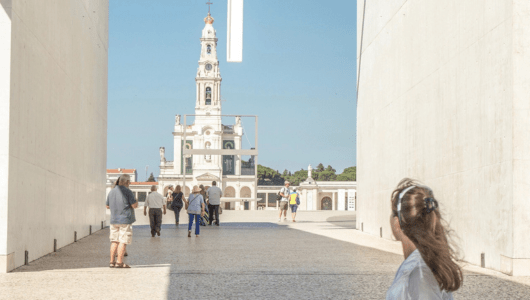
Photo by Center of Portugal
To understand Fátima, you’d have to know that the town became internationally known after the apparitions of the Virgin Mary reported in 1917 by the three shepherd children Lúcia, Francisco, and Jacinta, following earlier reported appearances of the Angel of Peace in 1916.
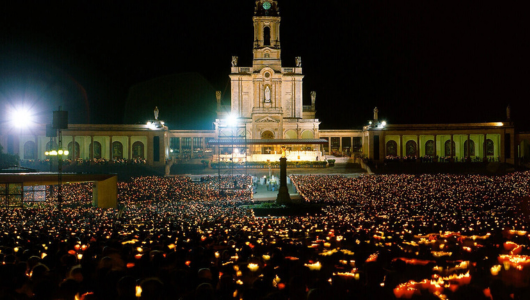
Photo by Center of Portugal
This local story transcended its rural beginnings, and eventually this place became one of the world’s most important Catholic pilgrimage sites. This explains why the Sanctuary of Fátima complex (Cova da Iria) is so heavily visited, including the Chapel of the Apparitions, the Basilica of Our Lady of the Rosary, and the vast, much more contemporary Basilica of the Holy Trinity. It’s quite interesting to note how the sanctuary kept developing over different periods, something that becomes evident as you notice its diverse architecture.
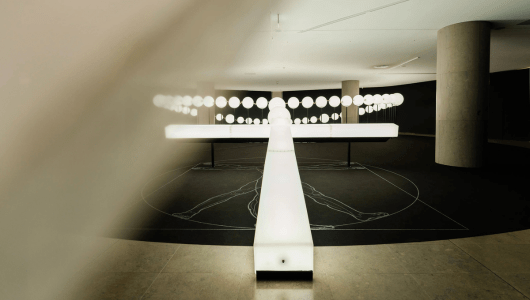
Photo by Center of Portugal
Even for visitors with no interest in religion, the sanctuary is still worth seeing. Its large scale is impressive and it even includes interesting details from contemporary artworks. Joana Vasconcelos, a Portuguese artist known for her large-scale installations, created Suspensão (pictured above), a rosary inspired monument to celebrate the centenary of the apparitions. While architect and visual artist Ana Bonifácio created the installation Psalterium (pictured below), made with rosaries offered by pilgrims.

Photo by Center of Portugal
Those who do want to explore the religious side more fully have no shortage of places to explore. Beyond the main square of the sanctuary, there is the Museum of the Shrine of Fátima (Rua de Santa Isabel 360), which helps interpret the history of the site and the way devotion to Our Lady of Fátima spread internationally. The evening candlelight procession, held from May to October, is also one of the town’s most striking collective rituals, whether you experience it as an act of faith or simply as a powerful community event. A little outside the sanctuary, the Via Sacra leading to Valinhos and the former homes of the visionaries in Aljustrel illustrate the beginnings of the story of Fátima, reminding us of their humble background before Fátima reached global fame.
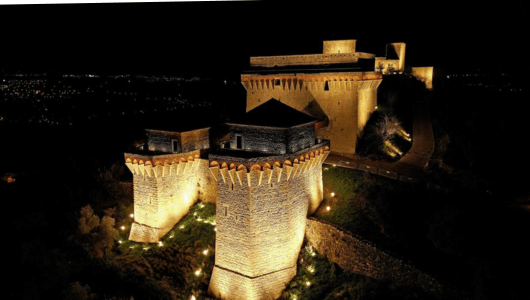
Photo by Rota dos Templários
Still, it would be a mistake to suggest that Fátima only works for pilgrims. One of the best ways to broaden your visit is to look beyond the sanctuary and into the surrounding area. If you have a car, we would recommend driving to the nearby medieval town of Ourém, to enjoy a completely different vibe and, if you have the chance, to taste the rare medieval wine of Ourém, a local specialty whose production preserves methods associated with Cistercian monastic traditions.
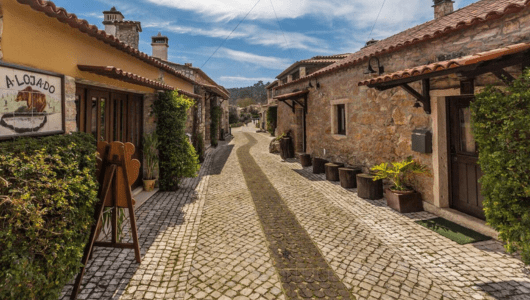
Photo by VortexMag
If you are a nature lover, there are also good options to keep you active in the area around Fátima. The Ecoparque Sensorial da Pia do Urso, not far from the town itself, is one of the most pleasant nearby escapes, especially for travelers who want some greenery and fresh air.
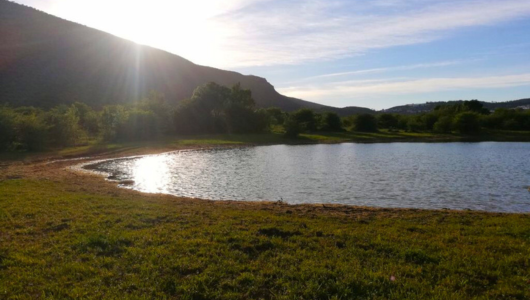
Photo by Mira-Minde
Also relatively near Fátima is the Mira-Minde Polje, a rare karst depression that seasonally floods and transforms into a temporary lake. Even when dry, its dramatic limestone landscape and unusual geology make it a fascinating place to visit, especially for travelers interested in nature.
In the area of Mira de Aire, you could also visit the MIAT, the industrial and artisanal textile museum, which explored the region’s manufacturing history through exhibits on wool processing and weaving.

Photo by Center of Portugal
Besides visiting the restaurants we will explore below, if you are a food lover traveling to Fátima, you may want to check out the Museu do Azeite de Fátima (Rua da Cooperativa 58), dedicated to Portuguese olive oil. The museum does not focus only on olive oil itself, but also on other local products such as honey, cheese and wine, from the overall area of central Portugal. Beyond these products, central Portuguese regional cooking tends to be quite robust, featuring meats like lamb, kid and rabbit, which make particular sense in the inland.
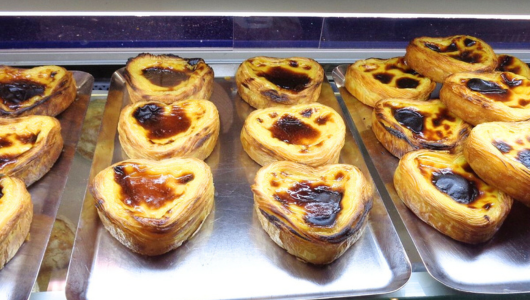
Photo by Lupagnus on TripAdvisor
As for sweets, Fátima is not especially known for its repertoire of conventual pastries, even if the town’s religious identity might lead you to expect otherwise. What it does have is its own local spin on one of Portugal’s best-known classics, the Pastel de Fátima, essentially a pastel de nata reimagined in a heart shape, allegedly with some Catholic symbolism, and which has become in recent years the town’s signature sweet that now many visitors seek out alongside the more familiar classic Portuguese pastries.
–
Best restaurants for Portuguese food in Fátima
Tia Alice
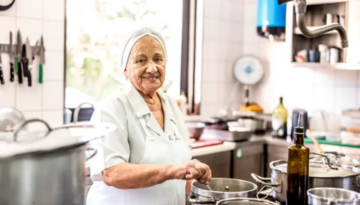 Tia Alice is one of the best-known restaurants to eat in Fátima, and it’s easy to see why. It was opened in 1988 by chef Alice Marto and her family, building a strong reputation for sharing well-executed Portuguese cooking, following tradition and served generously. Not only is it the only restaurant in Fátima currently listed in the Michelin Guide, Tia Alice also held its very own Michelin star between 1993 and 1996, making Maria Alice Marto the first Portuguese woman to ever receive that distinction. Interestingly, she opened the restaurant already in her fifties, after a lifetime of developing her culinary knowledge within the family setting, studying recipes and refining them through practice, until her name became inseparable from a certain idea of Portuguese food done properly. Today, dishes on the menu may include codfish baked in a creamy oven gratin (bacalhau gratinado), bread-based seafood stew with shrimp (açorda de camarão), codfish açorda (açorda de bacalhau), duck rice (arroz de pato), oven-roasted veal, and the traditional slow-cooked goat stew known as chanfana, here prepared in a wood-fired oven. At Tia Alice they do not attempt to modernize Portuguese tradition, instead they prepare these beloved dishes with good ingredients and strong technique. It is also worth saving room for dessert, as you may come across convent-style cake (bolo do convento), walnut cake with sweet egg cream (bolo de noz com ovos moles), a richer convent-inspired crème brûlée-style custard (leite creme conventual), and other classic Portuguese desserts. If you have only one meal in Fátima and have a relatively comfortable budget, we would certainly recommend reserving a table at Tia Alice.
📍Av. Irmã Lúcia de Jesus 152, 2495-557 Fátima
https://restaurantetiaalice.pt
Photo by Viagem e Turismo
A Tasquinha
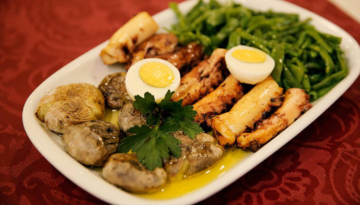 Just a short walk from the sanctuary and close to parking, A Tasquinha is a no-frills restaurant in Fátima that works well for visitors who want convenience without having to sacrifice the opportunity for a good meal. This restaurant has been serving Portuguese food in the center of town for around two decades, preparing the kind of dishes people actually come to Portugal hoping to eat. House codfish (bacalhau à Tasquinha) is the signature, but there is also oven-roasted octopus in olive oil and garlic (polvo à lagareiro), bread-based shrimp stew, grilled black Iberian pork (abanicos de porco preto), veal tenderloin with shrimp (lombinho de vitelinha com camarão), and the old-school pepper steak known as bife à Marrare. Portions are substantial, and several dishes are offered as half or full portions, which is useful if you are traveling as a couple or trying to leave some room for dessert. The list includes doce da casa, a layered “house dessert” found in many Portuguese restaurants, and bolo de bolacha, a beloved biscuit cake made with biscuits soaked in coffee and buttercream. They don’t serve elaborate pastries, but instead focus on the straightforward pleasures that many people are looking for after a table full of hearty savory dishes.
📍Rua dos Monfortinos, Cova da Iria, 2495-446 Fátima
www.tasquinhafatima.com
Photo by InFátima
Mesa Boémia
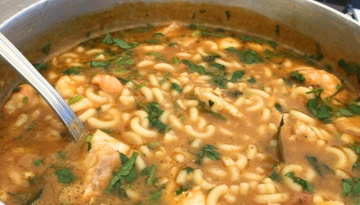 Located between the sanctuary and the area of Valinhos, Mesa Boémia is all about attentive hospitality, fair prices, and food that often exceeds expectations being that Fátima is such a touristy town and travelers sometimes come with low expectations in regards to proper Portuguese dining. Their menu is very solid and it offers delicious dishes such as massada de peixe (pictured here), a comforting, brothy pasta dish somewhere between a soup and a stew, loaded with fish and meant for slow eating; and coentrada de camarão, shrimp in a sauce generously perfumed with coriander. Alongside these, there are also grilled fish, meat dishes, and the kind of starters and petiscos that will make you want to spend some solid time around the table. If you enjoy ending your meal with a good dessert, do not miss their walnut cake which is traditional and so satisfying. Like it often happens around Portugal, a meal here also benefits from a decent bottle of wine, especially if you are ordering several dishes to share and want to take your time. Mesa Boémia’s wine list includes references from the various Portuguese wine regions, which we would encourage you to explore.
📍Av. Irmã Lúcia de Jesus 138, 2495-552 Fátima
www.instagram.com/mesa_boemia
Photo by Leda C on TripAdvisor
O Benfiquista
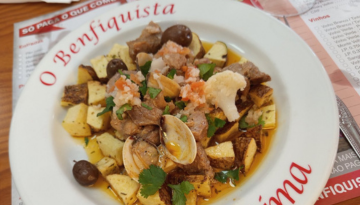 With its football-themed decor dedicated to Portuguese team Benfica, O Benfiquista is clearly not trying to hide its passion. The owner has become such an iconic personality in Fátima that some Portuguese, most likely fellow Benfica supporters, come here not only to eat, but also to take selfies with him. The menu at O Benfiquista keeps changing, but generally they serve good hearty Portuguese cooking. You may come across grilled cod, monkfish, pork dishes, and classics such as carne de porco à Alentejana (pictured here), the much-loved combination of pork and clams which is one of Alentejo’s most typical dishes. They even have dobrada com feijão branco, the old-school tripe and white bean stew that is one of the most iconic dishes from Porto, up north. Do not come here expecting delicate food, but if you’re into abundance and leaving a restaurant more than satisfied and with a delicious taste in your mouth, O Benfiquista will for sure deliver. To wash all of this food down, consider ordering some sangria or house wine, at more than fair prices.
📍Rua Jacinta Marto 3, 2495-450 Fátima
www.instagram.com/benfiquistafatima
Photo by Walter on TripAdvisor
Taberna do Bacalhau
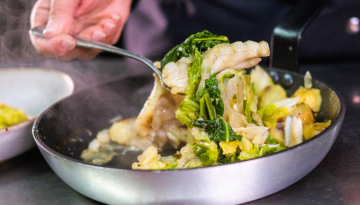 Taberna do Bacalhau makes its priorities clear from the name, dedicating itself to one of Portugal’s most beloved ingredients, salt cod. Open since 2014, the restaurant offers enough variety that anyone interested in tasting Portugal’s most famous codfish dishes will have plenty to choose from. Here you could try cod baked with cream and shrimp (bacalhau com natas e camarão), cod topped with cornbread (bacalhau com broa), grilled cod with migas (bacalhau grelhado com migas), bacalhau à Zé do Pipo, usually topped with mayonnaise and baked in the oven, or the house version, bacalhau à taberna. There are also cod fillets served with açorda, a garlicky preparation based on bread, and stuffed cod for those who want something even more indulgent. The restaurant is clearly devoted to cod but that doesn’t mean diners who are not fans of cured cod are left without options. There is also grilled salmon, polvo à lagareiro, beef steaks and pork cuts, so that everyone at the table gets to enjoy themselves. This is not a formal restaurant and the prices are mid-range, with portions generous enough to suit the appetite of people who have spent the day on the move.
📍Rua Francisco Marto 28, 2495-448 Fátima
https://tabernadobacalhau.pt
Photo by Taberna do Bacalhau
A Cave
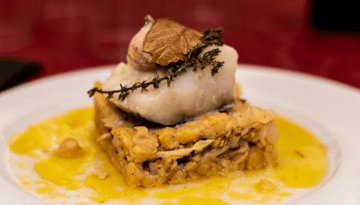 A Cave brings a slightly different mood to the table in Fátima. While many restaurants in town focus on straightforward traditional Portuguese cooking, this one gives itself a bit more room to play, with a menu that mixes Portuguese references with a more contemporary, slightly eclectic style. The name may suggest something rustic, but the kitchen is not stuck in old habits, and the menu clearly shows that. You might begin with scrambled eggs with garlic sausage and asparagus (ovos mexidos com alheira e espargos), mushrooms with asparagus and bacon (cogumelos com espargos e bacon), or a mixed board, then move on to dishes such as tuna loin (lombo de atum), salmon coulibiac (coulibac de salmão), duck magret (magret de pato), or pork tenderloin Wellington-style (lombinho wellington). Those following a plant-based diet also have options at A Cave, even if they do not see anything listed on the menu, as the team lead by co-owners and chefs João Rodrigues and Ângelo Gil is known to accommodate specific dietary requirements.
📍Av. dos Pastorinhos 895, 2495-408 Fátima
www.restauranteacave.pt
Photo by Miguel Ascensao at A Cave
Santa Teresinha
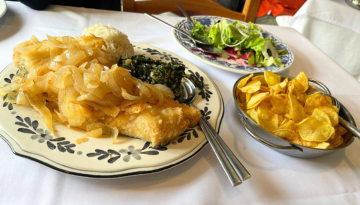 Santa Teresinha is one of those family-run restaurants that helps remind you Fátima can still deliver a proper Portuguese meal even in the middle of a town shaped by day visitors who might actually never return. Open since 2001, it has a fairly classic feel, focusing on traditional Portuguese cooking, served in substantial portions. Sit down for a meal that might include grilled octopus with olive oil and potatoes, fried cod with onion sauce (bacalhau frito com cebolada), premium rump cap (maminha premium), lamb chops (costeletas de borrego), turkey medallions with cream and fresh mushrooms (bifinhos de peru com natas e cogumelos frescos), and pork tenderloin (lombinhos de porco). These are the types of dishes best savored with a nice glass of wine, enjoying everything in no rush. Close your meal not only with a house dessert, but also with an espresso, just like locals would normally do.
📍Av. Beato Nuno 260, Cova da Iria, 2495-401 Fátima
Photo by Bernardo Vieira on TripAdvisor
Restaurante A Fandanguita
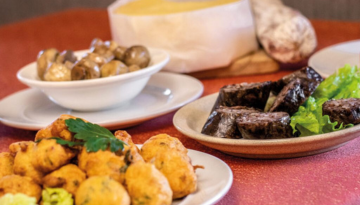 Located on Avenida dos Pastorinhos, along one of the main streets leading toward the sanctuary, A Fandanguita serves unpretentious Portuguese food in a warm familiar atmosphere. Fresh fish is one of the restaurant’s strongest selling points, which gives it a slightly different profile from places that rely more heavily on the usual Portuguese staples. Cod appears in crowd-pleasing recipes such as bacalhau à lagareiro, with olive oil, garlic and potatoes, and pataniscas de bacalhau, which are salt cod fritters that can be either a starter or part of a more complete meal, commonly served with saucy rice (arroz malandrinho) across Portugal, but here actually accompanied by sausage rice. If you happen to visit on a Sunday, know that they reserve some of their most special and elaborate dishes for this day, namely oven roasted duck rice and goatling roast, served with golden roasted potatoes, turnip greens and rice with offal (arroz de miúdos). This is a good place to come when you have time, not rushing in between sights that you still want to visit in Fátima.
📍Av. dos Pastorinhos 635, 2495-662 Fátima
www.instagram.com/afandanguita
Photo by Região de Leiria
O Crispim – Restaurante Típico | Petisqueira
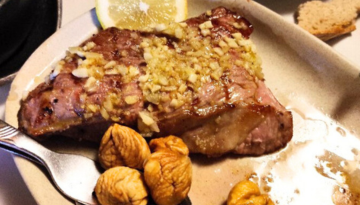 O Crispim was established back in 1968, and it is located a little away from the sanctuary bustle, in the area of Lomba D’Égua. It’s a rustic restaurant that locals love, which means it can get a little noisy at times, but full of great energy. As the name petisqueira suggests, you do not have to order a regular main meal here. A petisqueira is essentially Portugal’s answer to a tapas bar, with small plates meant for sharing, regional Portuguese cheese platters and boards with cured meats (enchidos), and overall the kind of food that asks for good times around the table, sipping yet another glass of wine. They are specialists in wood-fired grilling, so after you are done with some petiscos, you may want to try their smoky fish or meat options too. Their dessert menu is also quite traditional, featuring options like an almond-based sweet (doce de amêndoa), and arroz doce, Portugal’s creamy rice pudding perfumed with cinnamon. If after all of this you are to consider a digestif, try something Portuguese like a small glass of sour cherry liqueur (ginjinha), or an abafadinho, which is a sweet, partially fermented wine, typically served in a small pour at the end of a meal.
📍Rua de São João Eudes 23, Lombo D’Égua, 2495-630 Fátima
www.ocrispim.com
Photo by O Cardapio
Taverna do Merceeiro
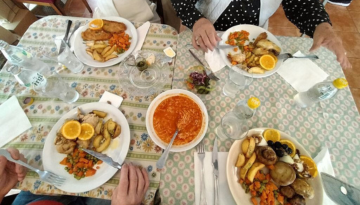 Taverna do Merceeiro is part lunch spot, part old-school Portuguese grocery store. You come in for a meal, but you also end up browsing shelves of vintage products and edible souvenirs from Portugal. You can pick up local honey, olive oil, preserves, as well as soaps, ceramics, and other little curiosities from our country. In the kitchen, the focus is comfort food with regional inspiration, varying throughout the week. Depending on the day, that can mean a rich soup packed with beans and cured meats (sopa da pedra), a Portuguese-style skillet bake typical from nearby Ourém (friginada à Merceeiro), the mixed boiled meats with vegetables which we consider to be Portugal’s national dish (cozido à Portuguesa), Portuguese bean stew (feijoada à Portuguesa), or small fried fish with “runny” rice (jaquinzinhos com arroz malandrinho). This is food that feels like home cooking, so if you’re curious to experience home-style Portuguese dishes, this is a great option in Fátima. It’s also an excellent option if your group includes different dietary needs, because they deliberately include vegan and vegetarian plates in the rotation, like tofu with sauteed onions (tofu de cebolada), and baked mushrooms with fruit and nuts (cogumelos no forno com frutas e nozes).
📍Av. de Dom José Alves Correia da Silva 132, 2495-402 Fátima
www.tavernadomerceeiro.pt
Photo by Mvmpp on Happycow
Casa Plátano
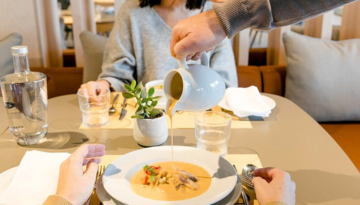 Casa Plátano is a good place to come when you want more than the standard dishes you easily find elsewhere. Their menu is a little more distinctive, including more contemporary options like Iberian pork cheek mille-feuille (bochecha de porco ibérico mil-folhas). The house-style codfish (bacalhau à Plátano) is another standout option, not only because cod is so central to Portuguese dining, but because every serious restaurant needs its own version, and this is theirs. If you are into flavors from the sea, you may also want to consider the roast octopus (polvo assado). If you feel like meat, though, Casa Plátano doesn’t disappoint either, and we’d say that their rack of lamb, here served with a chickpea and vegetable stew (carré de borrego com guisado de grão e legumes), is phenomenal. If you want a burger you’ll also get it here, but it won’t be “just” a burger, as it features high-quality grass-fed Azorean beef (hambúrguer de novilho dos Açores). Vegetarians can enjoy a grilled vegetable risotto (risotto de legumes grelhados). Casa Plátano has been around since 1979 and today combines several functions in one building, with a shop and cafeteria below and the restaurant upstairs. You could also come here just for a drink, as they have good options for wine and craft beer.
📍Av. de Dom José Alves Correia da Silva 218, 2495-402 Fátima
https://www.casaplatano.pt
Photo by Casa Plátano on TripAdvisor
Pregaria da Iria
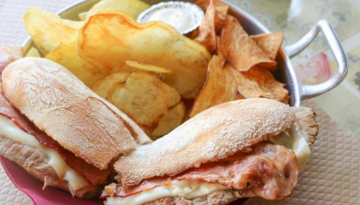 Pregaria da Iria is a good excuse to slow down and give Portuguese sandwiches the attention they deserve. In Portugal, sandwiches like prego and bifana are icons of national comfort food. A prego is a beef sandwich, with the meat usually garlicky and juicy, tucked into bread and often finished with a little mustard. A bifana is all about pork, typically with thinner slices cooked with plenty of seasoning, sauce and, according to tradition, pork lard too. At Pregaria da Iria, these are the stars of the show, alongside turkey sandwiches too, which aren’t as typical, but that doesn’t mean they aren’t worth sampling as well. At Pregaria da Iria you can enjoy any of these meats in bread or on a plate, with artisanal fries on the side. You wouldn’t come here for a long meal, but for a quick, convenient and hit-the-spot lunch, which is not only tasty but also pocket-friendly. A well-made prego can be one of the great pleasures of eating in Portugal, with a crusty bread roll, properly seasoned meat, grease in exactly the right amount, and crisps that many would argue aren’t really optional. The bifana has its own cult following for similar reasons, and the lines outside the door of bifana dedicated establishments in downtown Lisbon clearly showcase that. While in Fátima, make a meal sandwich pilgrimage to Pregaria da Iria.
📍Rua de São João de Deus 11, 2495-456 Fátima
www.instagram.com/pregariadairia
Photo by InFátima
O Leque
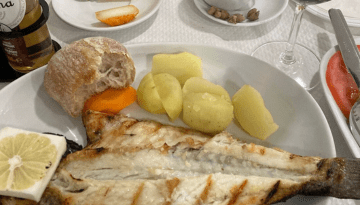 O Leque is very close to the sanctuary, which makes it an easy stop, but the mood is quite classic sit-down restaurant and not that of a quick, convenient stop. It’s not especially cheap but it’s also not overly formal, so if you’d like to sit down to eat Portuguese food prepared with some care, this is a great central option in Fátima. One of the highlights from their menu is bacalhau à Narcisa, a style of baked cod that is one of Portugal’s lesser known bacalhau dishes which we think lovers of this fish should explore. Other central Portuguese recipes include bacalhau à Brás, with shredded cod, onions, matchstick potatoes and egg, and bacalhau gratinado, a comforting oven dish made with cod, potatoes and béchamel. The menu also gives plenty of space for other substantial options, like grilled picanha beef with rice and black beans, duck rice, charcoal-grilled chicken, steak with creamy pepper sauce, and even dobrada à Portuguesa, the slow-cooked tripe, white bean and sausage stew which is one of those dishes Portuguese people either grow up loving or learn to appreciate later. For a sweet ending we would recommend rice pudding, or the house’s pudin de ovos, which is a silky egg pudding that appears on so many traditional restaurant menus for a reason.
📍Rua Francisco Marto 148, 2495-448 Fátima
www.restaurante-oleque.com
Photo by Sue M on TripAdvisor
Restaurante Manhãs
 Just a short walk from the sanctuary, Restaurante Manhãs is a slightly contemporary Portuguese restaurant that takes inspiration from the classic repertoire of recipes from Portugal. A good way to begin your meal would be with one of their starters, such as the fish soup with mint from the riverbanks (sopa de peixe com hortelã da ribeira), crispy baked cheese with honey (queijo no forno crocante e mel), or prawn with torricado, a rustic grilled bread that is excellent at soaking up juices and olive oil. You’re just getting started and, at Manhãs, you are already getting much more than bread, butter and olives. This is also a great place for people who like sharing richer, more substantial plates, especially rice and pasta dishes built for two. The monkfish rice with shrimp (arroz de tamboril com camarão) and cod tongues pasta with poached egg (massa de línguas de bacalhau com ovo escalfado) are particularly good, especially if you’re looking to try something a little different than the more standard Portuguese seafood recipes. On the meat side, the duck breast and the matured Galician beef options stand out. Manhãs is certainly more polished than a casual tasca, yet still recognizably Portuguese in spirit.
📍Ed. Concordata, Av. de Dom José Alves Correia da Silva 112 Fração F, 2495-402 Fátima
www.manhas.pt
Photo by InFátima
Restaurante Bia
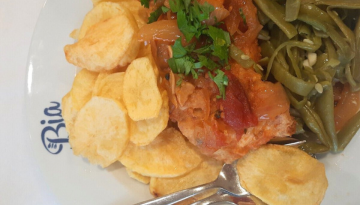 If you are looking for a truly convenient lunch option in Fátima, Restaurante Bia is impossible to ignore, as it is practically next door to the sanctuary, literally less than 100 meters away. That being said, this is no tourist trap and, since 2002, they’ve been serving honest Portuguese food, with an uncomplicated approach. The dining room is spacious, making it a great option for families and groups. They focus on straightforward options like grilled meats, fish (with the standard seabass and sea bream), and some heartier traditional preparations like monkfish rice or seafood cataplana. If you’re unsure what to order, you can never go wrong with a bitoque, which is a very standard dish in this kind of Portuguese restaurant. It consists of a thin beef steak, pan-fried with olive oil and garlic, topped with a fried egg and customarily served with fries, rice and a little salad. This isn’t food that is going to result in a culinary revelation, but it will hit the spot, taste really good and not break the bank while at it.
📍Rua Anjo de Portugal 17, Cova da Iria, 2495-415 Fátima
www.restaurantebia.pt
Photo by Marlene Martins on TripAdvisor
Lanterna do Fado
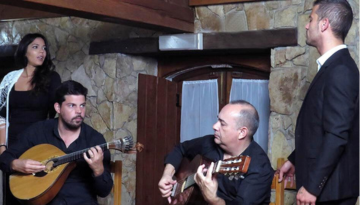 Lanterna do Fado is worth considering not only as a restaurant but as a casa de fado. This is a venue that serves meals but also has performances of live fado music, which is one of the most traditional music genres from Portugal. You’d come here for an atmospheric and distinctly Portuguese night out, which is usually enjoyed even by visitors who do not understand every lyric, as the emotional charge of fado still comes through without translation. This isn’t yet another restaurant to sit down for cod or meat, but a place to connect with Portuguese culture, via its gastronomic heritage as well as its musical patrimony. Since 2011, UNESCO has highlighted fado as an Intangible Cultural Heritage of Humanity. It’s a song tradition associated with longing (saudade), fatalism and memory, and hearing it during a live performance in a dedicated venue carries a very different weight from listening to a playlist over speakers. Lanterna do Fado is in Giesteira, slightly outside the immediate center of Fátima, but it is worth the quick trip to enjoy music while eating a nice meal.
📍Largo da Presa 126A, 2495-591 Fátima
www.instagram.com/lanternadofado
Photo by InFátima
Where to drink coffee and eat a pastry in Fátima
A Casa dos Pastéis de Fátima
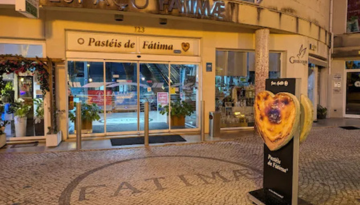 A Casa dos Pastéis de Fátima is in a gallery between the bus station and the shrine, which makes it an easy stop whether you have just arrived in town or are moving back toward the sanctuary area. This is the place to try the town’s namesake sweet because this is where the Pastel de Fátima was created. That pastry is not some radically different cousin of the pastel de nata, but rather a local reinterpretation of it, with custard poured inside a puff pastry shell shaped like a heart, an idea which was developed by João Dias and Elvina. On days with strong religious significance, like the 13th of May, the day of the apparitions of the Virgin to the shepherds, when Fátima is full of devotees, they sell as many as 3000 pastries a day. Try their signature pastry but, if you prefer to eat any other classic pastelaria cake or a savory snack, this is a standard Portuguese café with other options too, always best enjoyed with a cup of coffee.
📍Av. de Dom José Alves Correia da Silva 123 loja 32, 2495-402 Fátima
www.instagram.com/pasteis_de_fatima
Photo by Wanderboat
Flor De Fátima
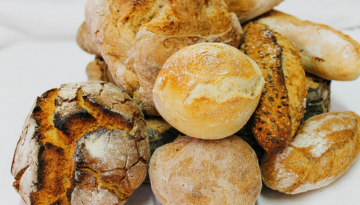 Flor de Fátima is a great stop in Fátima to experience Portuguese pastelaria culture, which goes beyond coffee and something to eat, and also has plenty to do with people-watching and a certain sense of community. This is not only a pastry shop but also a pão quente, meaning a bakery selling a variety of fresh Portuguese breads throughout the day, and that immediately makes it part of daily life for locals living nearby. People stop by in the morning for coffee and bread, come back later for a pastry, pick up loaves to take home, or sit down for a simple Portuguese breakfast. As for what to try, in contrast with A Casa dos Pastéis de Fátima above, the pleasure here seems to lie in variety rather than in one single headliner. During special times of the year, they also sell seasonal cakes such as bolo rei and bolo rainha for Christmas, or folar for Easter.
📍Rua da Lagoa 9 Loja 4, Cova da Iria, 2495-421 Fátima
www.facebook.com/p/Flor-De-F%C3%A1tima-100063689431143
Photo by Flor de Fatima
Diamante
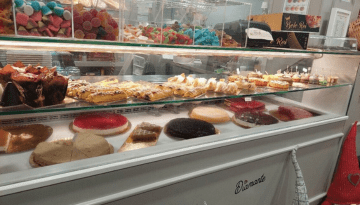 Diamante is a good example of what a typical Portuguese pastelaria can be when it is doing several things at once and doing them well. In Portugal, a place like this is rarely just a pastry shop. It usually combines a pastry shop, coffee shop and quick meal service, which means you can stop by for a coffee and a cake, sit down for a light lunch, or just grab a quick savory snack, depending on your mood or time of the day. Stores like Diamante are not reserved for treats or special occasions and they are very much a part of Portuguese daily life. During lunch hours, it serves daily dishes in straightforward Portuguese style, typically including a soup of the day, a salad of the day, and both meat and fish options. Outside those hours, it continues to work well thanks to the lighter side of the menu, with grilled sandwiches (tostas), savory snacks, sweets and other easy options that tend to work well with travelers on the go as well. For a more leisurely morning, they serve brunch every day until noon, with a mix of Portuguese items and more internationally inspired dishes such as pancakes and eggs made to order.
📍Av. Beato Nuno 274A, Cova da Iria, 2495-401 Fátima
www.instagram.com/diamante.pastelaria
Photo by Diamante on TripAdvisor
Keep browsing our blog for more travel guides to destinations that are easy to visit from Lisbon, and subscribe to the Taste of Lisboa newsletter to receive these stories, along with more insider food and travel inspiration from Portugal, straight to your inbox.
Feed your curiosity on Portuguese food culture:
Óbidos travel guide for food lovers
Day trips from Lisbon that we locals also enjoy
Traditional Portuguese dishes made with wine – recipe inside
Real people, real food. Come with us to where the locals go.
Signup for our natively curated food & cultural experiences.
Follow us for more at Instagram, Twitter e Youtube