
Rabanadas: how Portugal turned French toast into a Christmas classic (with recipe)

At a first glance, Portuguese rabanadas may look simply like French toast. But, here in Portugal, they have a symbolism that is much stronger than anything that would generally be associated with brunch. They are one of the stars of the Portuguese sweets table on Christmas, along with sonhos, filhós, azevias, and other sugary fried treats.
Humble in terms of ingredients and preparation, using stale bread as the base of the recipe, it’s fascinating to look at the history of rabanadas and how they came to have such importance for us Portuguese during the holidays. Nearly every culture with bread has its own version of slices that have been soaked and fried. Some medieval puddings were prepared following this principle, leading to more well-known specialities today like France’s pain perdu and Spain’s Easter torrijas. Portugal, however, took the same simple technique and associated it with the Christmas tradition.
Feat photo by Alma dos Sabores
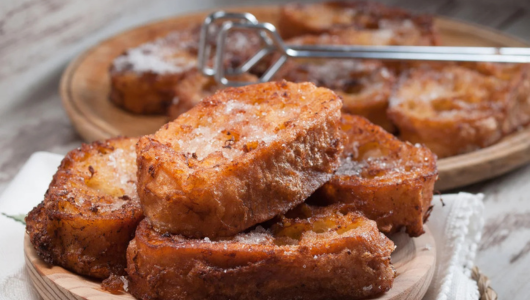
Photo by Receita da Boa
But the ritual of eating rabanadas does not end on Christmas Eve (consoada) itself. Part of the magic of rabanadas is the morning after. Even though they are most commonly eaten cold anyway, some would argue they taste even better the next day, as the syrups have been soaked more deeply by the spongy bread. Unlike the uniformly sliced loaves used for French toast elsewhere, rabanadas usually depend on sturdier Portuguese bread with a tighter crumb. Depending on where you are, that could be cacete, bijou, pão de água or even the more neutral pão de forma, being that each bread variety will of course have an impact on the texture of the final sweet.
The name can also vary, but that has nothing to do with the type of bread used. Depending where you go in Portugal, rabanadas may also appear as fatias douradas (literally, golden slices), or as fatias paridas, referring to them as an ideal nourishment for women who have just given birth. Depending on the household, they may be served “dry”, that is coated in sugar and cinnamon, or moister, brushed with abundant syrup perfumed with lemon and, sometimes, a splash of Port wine too.
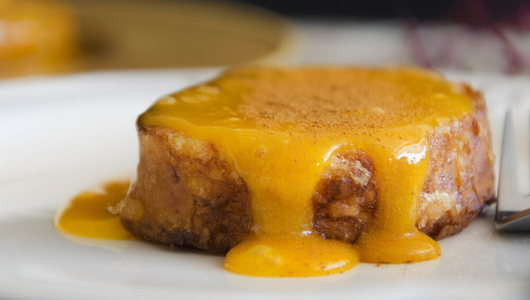
Photo by VortexMag
Beyond these two classic finishes, some families and establishments go even further, topping their rabanadas with egg yolk jam (doce de ovos – as pictured above) or sprinkling them with chopped dried fruits that soften as they swim in the syrup. Contemporary restaurants have taken the idea in new directions too, serving rabanadas with custard, citrus curds, or even a scoop of ice cream, clearly modernizing this old school dessert.

Photo by Trendy Report
But the real Portuguese signature is cultural rather than technical. In France or North America, this would be breakfast, while in Spain, it is eaten as a Lent or Easter indulgence. In Portugal, rabanadas are tied to family gatherings and the ritual of Christmas Eve, thus making this dessert much more relevant from an emotional point of view.
A brief history of rabanadas
Long before anyone in Portugal called them rabanadas, people were already reviving stale bread with milk, eggs and heat. The technique appears in some of the earliest European cookbooks, because bread was the backbone of daily life and wasting it was sacrilege.
We can easily trace something similar to rabanadas and French toast back to the Romans. In the collection of Roman recipes “Apicius’ De re coquinaria”, there’s a recipe for aliter dulcia (pictured below in a modern interpretation), where slices of bread are soaked in milk, fried and drizzled with honey, something which is not that far from the modern day rabanada.
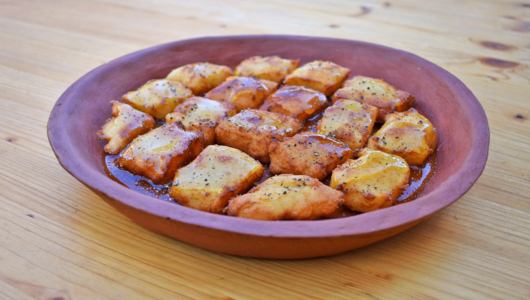
Photo by Historical Italian Cooking

By the Middle Ages, half of Europe was doing some variation of this. In Germany, the dish appears as arme ritter or “poor knights”, a name that reveals its function as a cheap and energising sweet for households that needed calories. In England, it also shows up in manuscripts as “payn purdew”, connected with the French pain perdu, or “lost bread”.
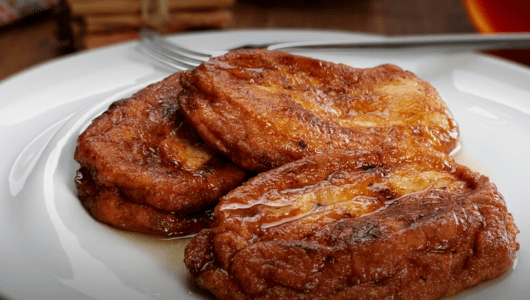
Photo by Spain.info
Religious traditions had a clear impact on eating habits back then, as communities would switch between periods of fasting and indulgence. Across Iberia, this would eventually evolve into distinct culinary identities. Spain leaned towards torrijas (pictured above), often linked to Lent and Holy Week, where the soaking liquid was sometimes wine rather than milk, and the final syrup was thick and perfumed. France kept pain perdu mostly secular, simply as an everyday way to repurpose old loaves of bread. And Portugal, meanwhile, ended up saving rabanadas for the December holidays.
The link between rabanadas and convent pastry making
If there’s a single place where rabanadas truly became Portuguese, it’s inside the kitchens of convents. For centuries, no one cooked with more eggs, sugar or imagination than the nuns who lived behind the walls of religious institutions. As we have explored when talking about the world of Portuguese conventual sweets, the recipes were born from the necessity of using leftover egg yolks. Convents used to receive eggs as donations from farmers, and they used an astonishing number of egg whites for things like starching habits and clarifying wines. That resulted in a huge amount of leftover yolks. Even though earlier recipes were sweetened with honey, as sugar became more widely available on overseas plantations in Madeira and Brazil, convent kitchens became true laboratories for sweets that still define the identity of Portuguese pastry making until today. Rabanadas would eventually fit into that world.
But if convent sweet making traditions have to do with the popularization of rabanadas, so does rural frugality. For most of Portugal’s history, bread wasn’t an everyday supermarket item like it is today, but a hard-won product of labor. Families baked large loaves meant to last the week, and letting bread go stale was never an option. Soups, açordas, migas, and sweet dishes like rabanadas emerged from this economy of respect. So when the convents popularised sweetened versions of fried bread, home cooks across the country already knew the basic technique.
By the time rabanadas took their place on the consoada table, they had absorbed all these forces, including the convent’s sweet traditions, the countryside’s zero-waste logic, and even the church’s cycle of fasting and feasting.
Why rabanadas became a Christmas dessert in Portugal

Photo by VortexMag
Rabanadas didn’t become a Christmas staple simply because they’re sweet and comforting. Their place on the mesa dos doces during the holidays is the result of timing, symbolism and a very old understanding of seasonal abundance. December, especially in rural Portugal, was a moment when households suddenly had ingredients that were scarce during the rest of the year. The annual pig slaughter, the matança do porco, brought fresh lard and rendered fat. Wine barrels were open, sugar supplies replenished after the autumn fairs, and bread ovens were lit to bake loaves meant to last through the cold weeks ahead. If there was ever a month when frying a stack of bread soaked in milk and eggs made practical and emotional sense, it was December.
If we analyze rabanadas carefully, we can also see that they carry a lot of symbolism. Christmas in Portugal has historically been less about luxury and more about a quiet intimate celebration, until not that long ago, still very religious. Rabanadas precisely materialized from not necessarily having that much, but turning what you had into something celebratory and generous enough to share. In this sense, rabanadas seem to fit perfectly into the spirit of the season. Ritual also plays a role, as the consoada on the 24th stretches late into the night, and dessert is almost always served after midnight Mass (in the case of the families that go for it but, back in the day, most did) or, today, the exchange of gifts, when families spend time together in a warm and relaxed way. Rabanadas, whether sugar coated or glossed with syrup, are easy to prepare ahead and keep well, making them a perfect dessert to eat late that night, or even on the morning of Christmas Day for breakfast.
Today, some families follow traditional Christmas menus, while others go for options with some contemporary and even international influences. But, no matter whose house you go to, there’s a very high chance you’ll find a form or another of rabanadas on the table. But if you ask ten Portuguese families how they make rabanadas, you’ll hear twelve answers.
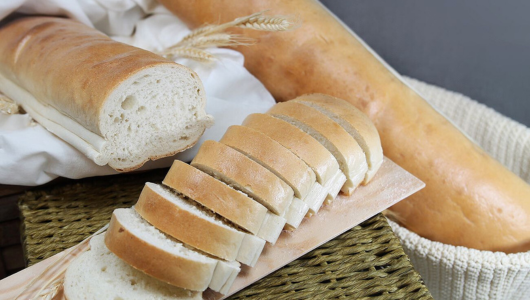
Photo by Luisinha
The recipe is recognisable everywhere, but its personality changes from region to region, and sometimes from grandmother to grandmother. In the north, where the dish is most commonly called rabanadas, slices tend to be thicker and sturdier, often cut from a bread known as cacete (pictured above), similar to a drier baguette, perfect for soaking the milky mixture. Families who like to indulge a little extra, may add Port wine to their syrup. Further south, the name fatias douradas takes over, and the slices are frequently served “dry”, that is, with a very generous coating of sugar and cinnamon that, on the next day, often sweats becoming a sort of syrup on its own. In the regions of Beiras and the Alentejo, the bread used is traditionally more rustic, so the slices absorb the soaking liquid more slowly, resulting in a firmer rabanada.

Photo by Continente
All across Portugal, the slices of bread are soaked in a mix of milk and egg but, particularly up north in Minho and Trás-os-Montes, rabanadas de vinho, that is, soaked with wine for a more adult flavor, are not at all uncommon. In fact, back in the day, particularly in colder mountainous regions, wine was often more abundant than milk, so this made perfect sense. They most commonly used young red or vinho abafado with a touch of sweetness, to add depth of flavor to their rabanadas, even though today we can also find fancier versions with Port wine.
Recipe for classic Portuguese rabanadas
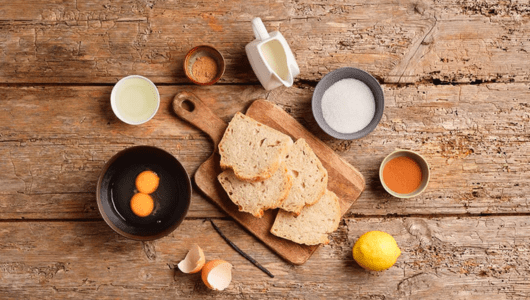
Photo by Fula
Rabanadas are one of those Portuguese Christmas sweets that look fairly impressive but are quite forgiving. If you’ve never made them before, we hope you accept our invitation to try this recipe at home with a few staple ingredients you can probably get your hands on easily no matter where you are in the world.
Ingredients (serves 4)
– 8 thick slices of day-old bread (about 3 cm each)
– 500 ml whole milk
– 100 g sugar (for the milk soak)
– 1 lemon peel (just the yellow part)
– 1 cinnamon stick
– 3 large eggs
– Vegetable oil for frying
For the cinnamon sugar coating:
– 100 g sugar
– 1 to 2 tsp ground cinnamon
For the syrup (optional, instead of the sugar coating above):
– 250 g sugar
– 300 ml water
– 1 cinnamon stick
– 1 strip of lemon peel
– Optional: 2 to 3 tbsp Port wine
Method
- Heat the milk with 100 g sugar, the lemon peel and a cinnamon stick. Bring just to a simmer, stir to dissolve the sugar, then turn off the heat. Let it cool until warm.
2. Beat the eggs in a shallow bowl large enough to hold a slice of bread.
3. Dip each slice in the warm milk mixture until well moistened but not falling apart (about 10-15 seconds per side, depending on bread firmness). Let excess drip off.
4. Dip each soaked slice in the beaten eggs, coating both sides lightly.
5. Heat oil in a wide pan over medium heat. Fry the slices in batches, 2 to 3 minutes per side, until golden. Drain on paper towels. - To Finish your rabanadas, choose one option:
Option A, with sugar and cinnamon:
Mix sugar and cinnamon in a shallow dish. While still warm, roll each slice to coat evenly.
Option B, with a light syrup:
Combine all syrup ingredients in a small pot. Simmer for 8-10 minutes until slightly thickened. Pour the hot syrup over the warm rabanadas in a serving dish, letting them soak as they cool. Add Port wine at the end, off the heat, for an even richer flavor.
Recipe for rabanadas de vinho (wine-soaked rabanadas)
Photo by Teresa activa on Youtube
This northern Portuguese variation is for anyone ready to push rabanadas into grown-up territory. Instead of milk, the bread is soaked in gently sweetened red wine, resulting in a more aromatic rabanada, unlike any French toast you’ve probably ever tasted.
Ingredients (serves 4)
– 8 thick slices of day-old bread (about 3 cm)
– 400 ml smooth young red wine
– 150 g sugar
– 1 cinnamon stick
– 1 lemon peel
– 3 large eggs
– Vegetable oil for frying
For the syrup:
– 200 g sugar
– 250 ml water
– 1 cinnamon stick
– 1 lemon peel
Method
- In a small pot, gently heat the wine with 150 g sugar, lemon peel and a cinnamon stick until the sugar dissolves. Just warm it, do not boil it!
2. Place the beaten eggs in a wide shallow dish.
3. Dip each slice in the warm wine mixture until it absorbs a good amount but stays intact (10-12 seconds per side). Let extra liquid drip off.
4. Dip the wine-soaked slices into the beaten eggs.
5. Fry in medium-hot oil, 2 to 3 minutes per side, until golden. The crumb may take on a reddish tint from the wine, which is completely normal. Drain well.
6. Simmer the water, sugar, lemon peel and cinnamon stick for 8-10 minutes until lightly thickened.
7. Arrange the fried slices in a shallow dish and ladle the hot syrup over them. Let them sit for at least 30 minutes so they soften and absorb the flavor.
Where to try rabanadas in Lisbon
Finding rabanadas in Lisbon outside December is not very common, but it certainly is not impossible. Traditionally, pastelarias and old-school pastry shops only make them in December or, at the most, sometimes starting during November. These are the classic versions, usually served cold, very often stacked in metal trays, dusted lightly with cinnamon sugar or resting in a shallow pool of syrup.
But in recent years, Lisbon has developed a small but growing year-round affection for rabanadas, driven partly by chefs who’ve rediscovered the dish and pushed it into more contemporary territory. This shift has even inspired the creation of the Confraria da Rabanada (which shares some interesting recipes on its Instagram too), a brotherhood devoted to celebrating and preserving the sweet, a sign that rabanadas are no longer confined strictly to Christmas nostalgia. As a result, you may now spot them on restaurant menus at other times of the year, though often in more elevated forms, reimagined as plated desserts in some of the best restaurants to eat contemporary Portuguese food in Lisbon. These fine dining versions can also be delicious, there’s no doubt about that, but they are not the rustic and homely type of rabanada we have dedicated this article to.
Photo by Time Out Lisboa
So if you want the true flavour of Portuguese Christmas, the classic versions are the ones worth looking for. These are some of the best places to eat rabanadas in Lisbon:
Confeitaria Nacional (pictured above)
📍Praça da Figueira 18B, 1100-241 Lisbon
https://confeitarianacional.com
Pastelaria Querubim
📍Alameda Q.ta de Santo António, 1600-675 Lisbon
Pastelaria Alcôa
📍In Baixa-Chiado: Rua Garrett 37, 1200-203 Lisbon
📍Inside El Corte Inglés department store: Av. António Augusto de Aguiar 31, 1069-413 Lisbon
Pastelaria Califa
📍Estr. de Benfica 463, 1500-081 Lisbon
Pastelaria Versailles
📍In Saldanha: Av. da República 15A, 1050-185 Lisbon
📍In Belém: Rua da Junqueira 528, 1300-598 Lisbon
Pastelaria Benard
📍Rua Garrett 104, 1200-205 Lisbon
If you enjoy discovering the stories behind Portuguese food, subscribe to the Taste of Lisboa newsletter and we’ll keep sharing more delicious Lisbon insights with you.
Feed your curiosity on Portuguese food culture:
Where Lisbon locals shop for Christmas food
Traditional Portuguese Christmas desserts – and where to try them in Lisbon
Roasted chestnuts and the celebrations of São Martinho
The world of Portuguese conventual sweets
Real people, real food. Come with us to where the locals go.
Signup for our natively curated food & cultural experiences.
Follow us for more at Instagram, Twitter e Youtube