
A guide to tea culture in Portugal
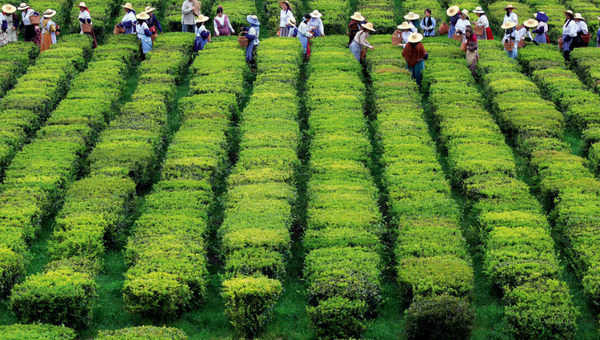
Portugal is a coffee country. Spend some time in Lisbon or any other Portuguese city and you will notice how coffee is so connected with local routines, social behaviors and even language. When we say “let’s go for a coffee”, what we truly mean is “let’s hang out”, even if coffee is not involved, even though it will probably be. Coffee culture in Portugal is undoubtedly strong.
Feat photo by Meer
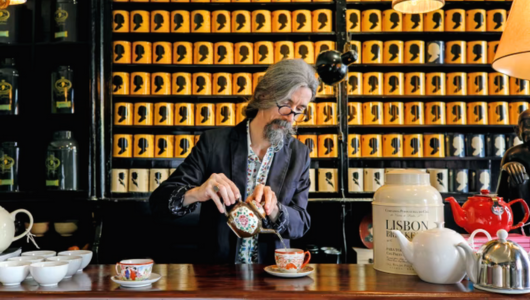
Photo by Financial Times
The same does not apply to tea, though, and visitors rarely associate Portugal with tea. Also, locals do not generally frame tea as a “culture” in the way coffee is discussed, even though tea has always been present in Portuguese drinking habits, something that makes total sense when we explore the history of our country. Portugal’s relationship with tea is connected with its maritime and commercial past, namely with the Portuguese reaching Asia after the 16th century, as we will further explore below.
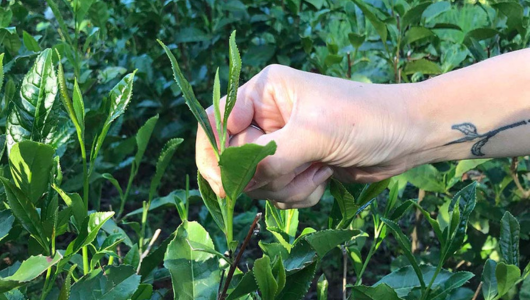
Photo by Chá Camélia
When talking about tea in Portugal, we need to make a distinction. On one hand, there is tea (in Portuguese, literally “chá”) in the strict sense, which is the drink made from the Camellia sinensis plant (pictured above), that is the plant that gives the black and green tea we all generally know today. These plants became more common in Portuguese daily life after the 16th century, after Portugal established long-distance trade routes connecting Europe and Asia.
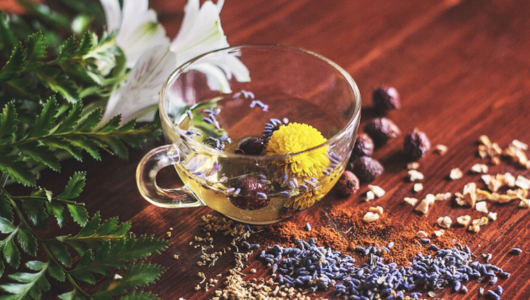
Photo by Natfood Portugal
On the other hand, there is chá as it is used in everyday Portuguese language. In daily life, chá often refers not only to tea leaves, but to a wide range of herbal drinks made from plants such as lemon balm (cidreira), chamomile (camomila), or lemon verbena (lúcia-lima). Technically, these are infusions (infusões), not tea, and most are even naturally caffeine free. Culturally, however, the distinction is often secondary, as the drinks can serve the same function of warmth, aiding digestion and even be used as a remedy during colds or other health and well-being related situations.
Historically, Portugal’s connection to tea, real tea, has a lot to do with the Age of Exploration.
The history of tea in Portugal
Even though, for many centuries, there were long-distance land routes connecting China and Central Asia to the Islamic world and eventually Western Europe, there is no historical evidence that shows us that tea reached the Mediterranean in a meaningful way. Tea is a delicate product, which degrades easily with time and humidity, so it was not a commodity that would work well for commerce made through slow and fragmented land routes, that relied on multiple intermediaries, that focused mostly on spices and other dried medicinal plants.
It was only after the 1500s, with new maritime routes linking Europe to the Indian Ocean and East Asia, that Europeans started to properly discover tea. By 1557, the Portuguese had established trading routes with southern China, namely via a permanent settlement in Macau, which would become a crucial contact point between China and Europe. This is the moment when Europeans, including the Portuguese, encountered tea not as a rare medicinal ingredient, but as a daily beverage extremely common in Chinese society, consumed by all social classes throughout the day.
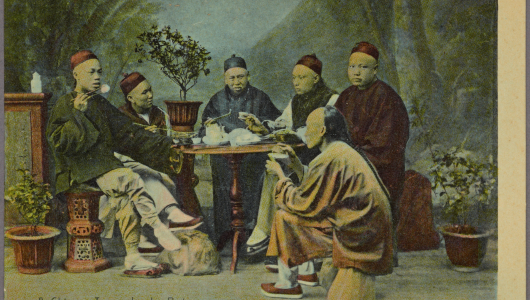
Photo by Freshleaf Teas
From this point forward, tea also started entering Europe. Portuguese merchants, missionaries, and administrators living in Asia were among the first Europeans to experience tea as part of everyday life abroad. In China, tea was not an occasional drink, on the contrary, it was consumed daily for alertness and general wellbeing, often alongside meals. Eventually, tea started circulating through maritime trade networks going to Europe, often alongside porcelain and silk. Even though tea was by now appearing in European markets, of course this didn’t mean that tea was immediately widely consumed in Portugal itself. In fact, domestic consumption remained limited for centuries, largely confined to elite households, courts and medical contexts, contrasting with tea drinking habits in Asia.
It appeared in apothecaries and medical writings as a digestive or restorative drink, fitting into an already existing culture of herbal remedies. Rather than replacing local infusions, tea was included alongside them, perhaps explaining why in Portuguese the word chá became a broad category encompassing both tea made from Camellia sinensis and herbal infusions made from local plants.
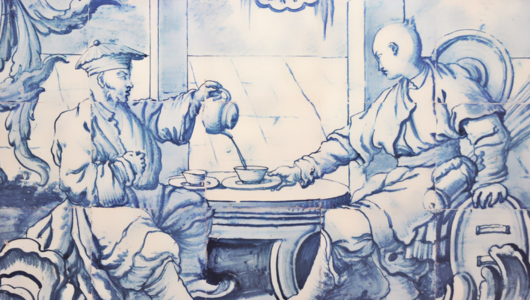
Photo by Portuguese Tiles
At the same time, Portugal’s public drinking culture was moving in a different direction. From the 18th century onwards, coffee gained prominence, thanks to the production coming in from Brazil. Coffee became social and public, while tea was also being consumed, but in a more domestic and somewhat less “visible” way. Wine continued to dominate meals, unlike in China, where tea was commonly consumed while eating.
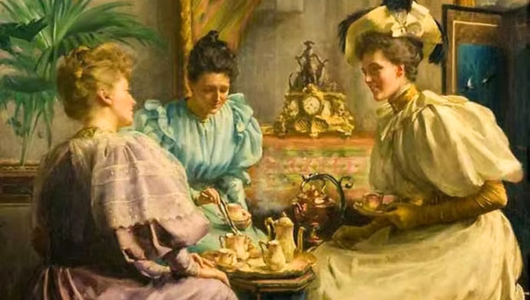
Photo by Chá da Índia
As tea became more abundant and prices gradually dropped, it became increasingly familiar to Portuguese households, even if it never developed into a marker of national identity in the way coffee eventually did. One of the more curious chapters in tea’s European story, however, happened outside Portugal itself. In the seventeenth century, Catarina de Bragança, daughter of King João IV of Portugal, married Charles II of England as part of a diplomatic alliance. Catarina was already accustomed to drinking tea, a habit she brought with her to the English court. Tea was not unknown in England at the time, but her preference helped elevate it from a relatively niche import to a fashionable courtly drink. Over time, this influence contributed to tea’s association with English social life. What is often remembered today as a quintessentially British tradition has, in a way, a Portuguese connection in its very origins.
Portugal’s most distinctive contribution to European tea culture, however, came later. In the 19th century, tea cultivation began in the Azores, particularly on the island of São Miguel. Experiments with tea production were encouraged by the islands’ humid climate and volcanic soil, at a time when Portugal was seeking alternative agricultural products. To this day, Portugal remains the only country in Europe with commercially active tea plantations, a fact that often surprises visitors, and even some Portuguese people too.
Production of tea in Portugal
When people talk about Portuguese tea, they are usually thinking of the Azores. São Miguel island has been growing and processing tea for almost two centuries and still concentrates almost all of the country’s production. But tea is now also grown, in much smaller quantities, on the mainland.
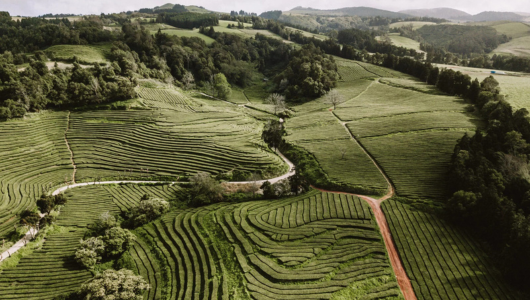
Photo by byAçores
Production of tea in the Azores
When people say Portugal is the only country in Europe that commercially produces tea, they are really talking about one place: São Miguel island, in the Azores, out in the middle of the Atlantic, about 1500 kilometers from mainland Portugal.
The story begins in the early 19th century, but the idea had been brewing for a while. Tea plants were already present in the Azores by the second half of the 18th century, likely brought as botanical curiosities on ships returning from Asia. Actual production, though, only started later. Around 1820, an Azorean-born officer named Jacinto Leite, then the commander of the Royal Guard of the Portuguese king in Brazil, brought Camellia sinensis seeds from Rio de Janeiro to São Miguel and planted them as an experimental crop.
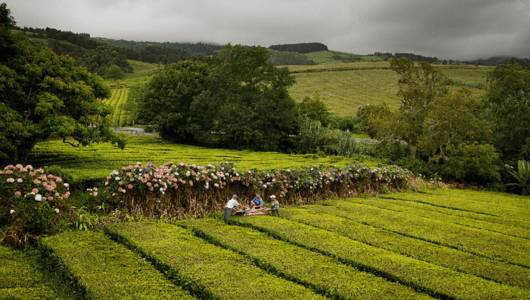
Photo by Gorreana
At the time, the island’s economy was heavily dependent on oranges. For decades, São Miguel exported vast quantities of citrus to northern Europe, particularly Britain. Then disease hit and by the 1860s, orange groves were being devastated by pests, and what had been a reliable source of income was suddenly collapsing. The search for replacement crops became urgent, and so tea emerged as one of the most promising candidates.
Enter José do Canto, a local landowner and member of the Sociedade Promotora da Agricultura Micaelense, who took tea seriously as more than a side experiment. In 1860 he began importing tea plants, and in 1878 the agricultural society invited two tea specialists from Macau, Lau-a-Pan and his interpreter Lau-a-Teng, to São Miguel to teach local farmers how to cultivate and process tea properly.
The conditions turned out to be close to ideal. The north coast of São Miguel offers a rare combination of mild, humid climate with regular rainfall, almost no frost, and acidic clay soils formed by volcanic activity. Tea plants like stability and dislike extremes, and São Miguel, with its misty hills and steady temperatures, had exactly that. The isolation of the islands also meant fewer pests and diseases than in other regions where tea was grown, something that made local producers avoid pesticides much more easily than elsewhere, a situation that thankfully continues to this day.
By the late 19th and early 20th centuries, tea had become an industry, with several plantations and around ten factories operating on the island at the peak of production, with tea cultivated mainly on the northern slopes. Harvests ran from April to September, and much of the labor, especially leaf picking, was done by women and children, in a pattern familiar from other tea regions of the world, just on a smaller scale.
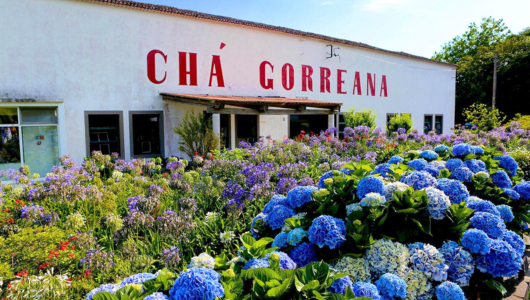
Photo by A Vida Portuguesa
The name most people know today is Gorreana. Founded in 1883, Chá Gorreana is Europe’s oldest surviving tea plantation and one of only two still operating in the Azores. The estate covers about 40 hectares on the north side of São Miguel and produces between 30 and 40 tons of tea per year, mainly black and green, much of it consumed in Portugal but also exported abroad. Production remains relatively traditional, mechanical but low-input, with no pesticides, herbicides, or fungicides used, thanks to the island’s climate and isolation.
A few kilometres away, you find Chá Porto Formoso (pictured below). This factory was founded in the 1920s and operated until the 1980s, supplying both the domestic and export markets. When it closed, it looked like another victim of the same pressures that were squeezing the island’s tea industry in general, including global competition, changing consumer habits, economic instability during the world wars, and migration out of the Azores. In 1998, however, Porto Formoso was restored, this time with a dual purpose, now including a small-scale production and a museum thought for visitors to discover more about Azorean tea plantations. You can visit and walk through the old machinery, watch the different stages of processing, and finish with a cup of tea overlooking the terraces that slope down towards the sea, something which can actually also be done at Gorreana, where most tourists end up going as it is much more advertised.
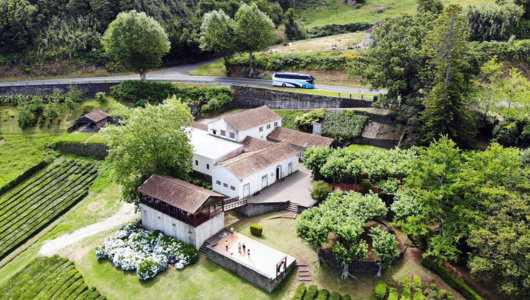
Photo by byAçores
At its peak, around the middle of the 20th century, São Miguel’s tea industry was exporting around 250 tons of tea a year, which are quite significant numbers for a small island in the middle of the Atlantic. Over time, though, the sector shrank, with cheap tea from larger producers, particularly from Mozambique within the Portuguese empire and later from Asia, undercutting Azorean costs. World wars disrupted trade and, as many Azoreans emigrated, this drastically reduced local labor, also shrinking the home market. One by one, factories closed until only Gorreana remained in continuous operation by the late 20th century, with Porto Formoso coming back in a hybrid industrial–museum form later on.
The Azores have a compact but unique tea culture. When it comes to taste, Azorean black teas are generally soft and low in bitterness, more delicate than many strong breakfast blends. The green teas tend to be clean and straightforward rather than more aggressively grassy. This suits Portuguese preferences, as tea is usually drunk plain, sometimes with lemon, rarely with milk, and almost never with the heavy sweetness found in some other tea traditions, such as for example India or Malaysia.
Today, Portugal’s tea sector is small but recognized. The country is listed by the FAO (the Food and Agriculture Organization of the United Nations) as a tea-producing nation, and São Miguel is still the only region in the European Union where tea is grown and processed commercially at this scale, even if there are small experimental plots elsewhere. For travelers, the plantations are an easy detour on a road trip around the island. Visiting Gorreana or Porto Formoso in the island of São Miguel, for a small fee, you can wander the fields, visit the factory floors, and drink a cup of tea in the same place where the leaves were picked and processed.
The Azores don’t suddenly make Portugal a “tea country” in the way visitors might imagine Japan or China. But it is worth recognising that Portugal was part of the early commercial routes that moved tea around the world, and that today the terraces of a volcanic island in the middle of the Atlantic are producing some surprisingly delicate and characterful cups we can all enjoy here in Portugal.
Production of tea in mainland Portugal
For a long time, tea in Portugal either meant imports from abroad or, at most, leaves grown in the Azores. In the 19th century, for example, tea bushes were planted in the Park of Pena in Sintra as part of an experimental garden project, but this never developed into a sustained commercial crop. Only a few dozen of those original plants survive today as a historical curiosity.
The first serious attempt to change that came much later, in the north. In the region around Porto and Vila do Conde, camellias have long been cultivated for their flowers, thanks to a cool, rainy climate and acidic soils that suit the plant. Those same conditions turned out to be ideal for tea. In 2011-2012, journalist Nina Gruntkowski and wine producer Dirk Niepoort planted around 200 Camellia sinensis bushes in the garden of their house in Porto. When the plants thrived, they moved them, in 2014, to their final home at Quinta de Fornelo, near Vila do Conde, and Chá Camélia was born.
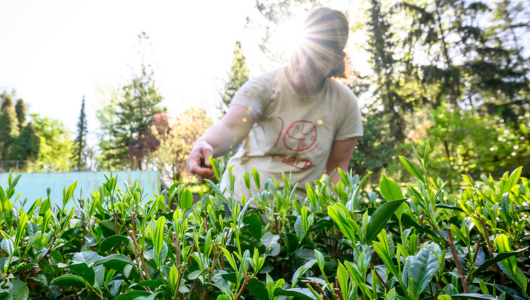
Photo by ECO-SAPO
Today, Chá Camélia is considered the first commercial tea plantation on mainland Portugal and one of the first organic tea producers in mainland Europe. The project has grown to around 12.000 tea plants over roughly two hectares, farmed using organic and biodynamic principles. The flagship product is Nosso Chá, a small batch green tea made in a Japanese-inspired style, where the leaves are harvested by hand from early spring, processed gently, and intended for multiple infusions rather than a single strong brew. They also experiment with using tea flowers (Florchá) and create blends that combine their own tea with herbs or flowers, alongside importing and distributing high quality Japanese teas from small family producers.
In terms of flavor, Chá Camélia’s teas are very different from the Azorean profile. Being green and processed in a Japanese style, they tend to emphasise freshness and a softer vegetal character, which appeals to drinkers who may already be curious about sencha, gyokuro or other East Asian green teas.
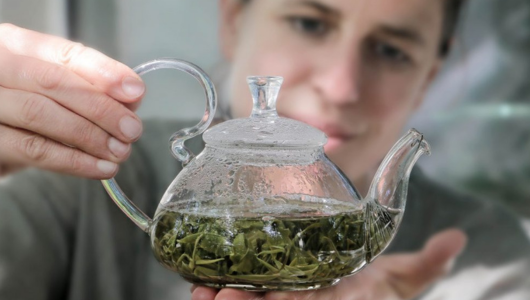
Photo by Chá Camélia
Mainland Portugal does not yet have the scale or history of São Miguel when it comes to tea, but it is nonetheless relevant. Together, Azorean plantations and mainland projects like Chá Camélia show that tea production in Portugal has a lot of potential, and it’s worth exploring it if you are a tea lover visiting Portugal.
How tea is actually drunk in Portugal today
To understand tea culture in Portugal, you have to pay attention to language and to context. As seen above, in everyday Portuguese, chá is a flexible word. It can mean tea made from the Camellia sinensis plant, but it is just as likely to refer to a herbal infusion made from lemon balm, chamomile, mint or any number of local plants. Technically, those are infusões, not tea. But, in practice, most people don’t worry about the distinction.
For generations, herbal infusions have been part of domestic knowledge passed down informally, with common uses like cidreira for nerves and sleep, camomila for digestion, and lúcia-lima after dinner. Here in Portugal, these drinks, just like actual tea, are more often associated with feeling tired, sick or having “a funny stomach”, than to actual alertness. While other countries drink tea because of its caffeine content, for that, generally speaking, we normally would resort to coffee and tea would be something you’d drink mostly when coffee feels a little too heavy, or when you simply want something lighter and warm.
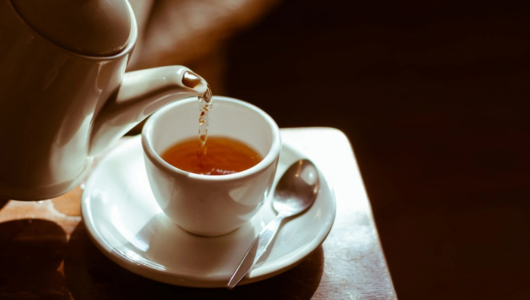
Photo by Pastelaria Careca
In a typical pastelaria, tea is ordered either by the cup (chávena) or by the teapot (bule), usually made with a teabag (saqueta). The teapot is often for sharing, but not necessarily. Black tea, by default, will be brewed fairly weakly, much paler than what you might be used to in Britain or India. It almost never arrives with milk unless you specifically ask for it. Also, if you like your tea dark and strong, as one would normally prefer when drinking it with milk, it’s worth asking for an extra teabag.
Ritual around brewing is minimal. At home and in cafés, tea is most often prepared with teabags, and there is no strong tradition of timing steeps, warming pots or discussing water temperature, like it may happen in other countries with a much stronger tea culture. That said, things have been shifting and, in recent years, interest in tea quality, origins and brewing methods has grown, mirroring what is happening globally. With this increased curiosity, some cafés and pastelarias in Lisbon have started offering better teas, including loose-leaf, Azorean-grown teas and more specific blends where flavor is taken more seriously.
Supermarkets now stock a wider range of teas too, including better blends, loose-leaf options and references from places like Japan, Sri Lanka and, importantly, the Azores. Specialty tea shops, once a rarity, have started appearing in Lisbon and Porto, catering to people who want single-origin teas, artisanal blends and staff who can guide them beyond the usual black or green options. In these spaces you are more likely to find Chinese oolong, Japanese matcha or carefully sourced sencha than the generic black teabags.
Lisbon is also seeing a quiet diversification in how tea is drunk. Alongside the classic hot tea, iced teas are more common on menus, especially in warmer months, sometimes homemade, sometimes not, and bubble tea has arrived as well. These are imported trends which aren’t particularly local, but in urban settings, and especially amongst the younger crowd, they are fairly relevant when talking about how tea is consumed in Portugal. You can also find novelties like “pastel de nata tea”, which is a flavored blend inspired by Lisbon’s iconic custard tarts. It is not a traditional Portuguese tea by any stretch, but it is a good example of how Lisbon keeps absorbing ideas from elsewhere and remixing them for visitors.
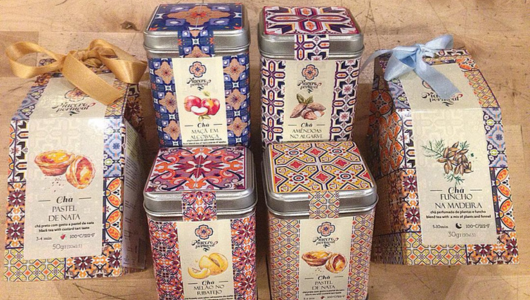
Photo by Portugal dos Meus Amores
Through all of this, one of the strongest contemporary trends is the renewed pride in Azorean tea. Once seen mainly as an agricultural curiosity from São Miguel, teas from Gorreana and Porto Formoso are being rediscovered by a new generation. Chefs, sommeliers and specialty shops highlight them as genuinely local products worth seeking out, sometimes using them in desserts, ice creams or even cocktails. Portuguese tea, whether Azorean or from newer mainland projects, also works particularly well as a Portuguese edible souvenir, as it’s light to carry, easy to pack and full of meaning, particularly now that you have more context.
Where to experience tea culture in Lisbon
If you are curious to experience tea culture in Portugal, Lisbon is perhaps the best place to do so. You may want to buy some Azorean tea to take back home, sit down for a proper afternoon tea or join a more specific experience, such as a tea ceremony.
Specialty tea shops and shops to buy good tea in Lisbon
Companhia Portugueza do Chá
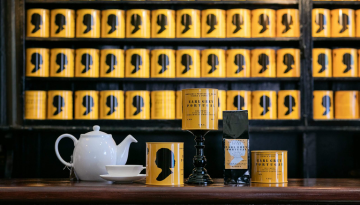
This is a serious tea shop in an old shoemaker’s storefront, lined with tins, scales and teapots. They create their own blends with teas from around the world and give special attention to Portuguese connections, including Azorean teas and collaborations like Chá das Ilhas made with A Vida Portuguesa. You can smell, taste, ask questions, and leave with loose-leaf tea that actually has character.
📍Rua do Poço dos Negros 105, 1200-337 Lisbon
https://companhiaportuguezadocha.com
Photo by Companhia Portugueza do Chá
Pérola do Rossio
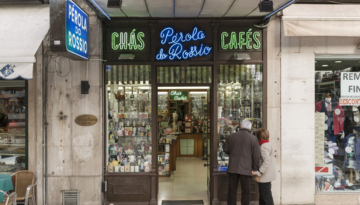
Another Loja com História and a benchmark for traditional tea and coffee shops in downtown Lisbon. Open since 1923 and still in the same family, Pérola do Rossio is located on Praça D. Pedro IV, in the downtown Rossio area. Inside, coffee and tea share the spotlight, with house blends roasted for the shop, beans from Brazil, Timor, São Tomé, Colombia or Guatemala, and a long list of teas sold loose, in tins or packets, including Chinese, Japanese, Indian and Azorean references like Gorreana and Porto Formoso. Around them, the shelves are packed with everything that naturally gravitates towards a good cup, including chocolates, biscuits and jams.
📍Praça Dom Pedro IV 105, 1100-202 Lisbon
Photo by Comércio com História
A Vida Portuguesa
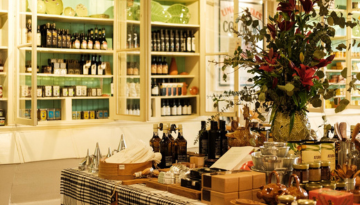
This brand has stores in Chiado, Intendente and inside the popular Time Out Market. Their goal is to showcase Portuguese brands, and that includes Gorreana from São Miguel, as well as tins developed with Companhia Portugueza do Chá, like Chá das Ilhas that blends Azorean and Indian black teas.
📍In Chiado: Rua Nova do Almada 72, 1200-289 Lisbon
📍In Intendente: Largo do Intendente Pina Manique 23, 1100-285 Lisbon
📍Inside Time Out Market: Av. 24 de Julho 49, 1200-109 Lisbon
https://www.avidaportuguesa.com/
Photo by A Vida Portuguesa
Pérola do Chaimite
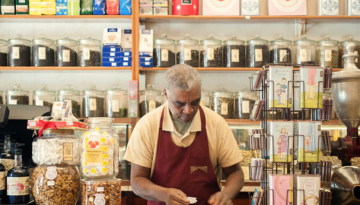 This is one of those Lisbon classics that prove the old tea and coffee shops aren’t completely extinct yet. Open since 1938 and classified as a Loja com História, Pérola do Chaimite specializes in indulgences such as chocolates, biscuits, jams, sweets, liqueurs, coffee, teas, herbal infusions and all the paraphernalia you might need to brew and store them at home. It’s a great family-run shop worth a visit for those who want to see how Lisboners used to buy their teas and coffees before supermarkets took over.
📍Av. Duque de Ávila 38, 1050-083 Lisbon
https://lojascomhistoria.pt/shops/perola-do-chaimite?lang=en
Photo by Lojas Com História
Empório do Chá
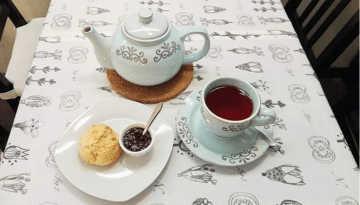 They work with more than 250 varieties of tea and infusions, with leaves coming from places like China, Japan, South Africa and the Azores, and you can taste your way through classics, flavored blends and herbal options. Alongside the tea, they serve proper comfort food, including home-made scones, cakes and quiches. Visit Empório do Chá to enjoy a warm pause or pick up loose-leaf teas, accessories and teaware to take home.
📍Av. de Paris 17A, 1000-191 Lisbon
Photo by mbbl on Happy Cow
Moy – Mercearia Fina
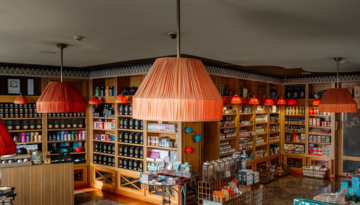 Founded in 1975 in the heart of Príncipe Real, Moy is a fine grocery that treats tea in “haute couture” mode. It’s not a traditional Portuguese tea and coffee shop, but a gourmet store that brings some of the most prestigious tea brands in the world to Lisbon, like Kusmi, Mariage Frères, Dammann Frères or Sirocco. On the shelves you’ll find a wide selection of black, green, white and oolong teas, plus herbal blends, along with coffee, conserves, biscuits, chocolate and other delicatessen items. It’s the place to go if you want to stock your pantry with high-end teas or pick up a beautiful tin as a gift.
📍Rua Dom Pedro V 111, 1250-095 Lisbon
https://themoyshop.com/index.php
Photo by Moy on Facebook
El Corte Inglés
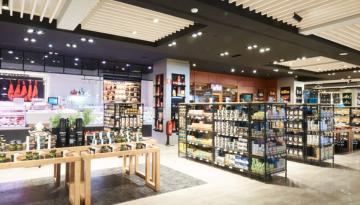 This is one of Lisbon’s most complete department stores. In their supermarket and in the Club del Gourmet area you’ll find several Gorreana references, such as black and green teas in loose-leaf and bags, sometimes alongside tea syrups and other tea-related products. It’s not a tea specialist, but you could come here for some Portuguese wine, regional cheeses and very good Portuguese tea too.
📍Av. António Augusto de Aguiar 31, 1069-413 Lisbon
www.elcorteingles.pt
Photo by El Corte Inglés
Mercearia dos Açores
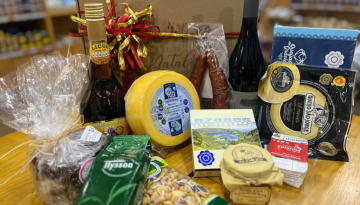 If you’re specifically chasing flavors from the Azores, Mercearia dos Açores acts as a kind of embassy for the islands, displaying cheeses, liqueurs, tinned fish, and Gorreana and Porto Formoso teas on the shelves, so you can stock up on island tea without leaving the mainland.
📍Rua da Madalena 115, 1100-318 Lisbon
https://merceariadosacores.pt
Photo by Mercearia dos Açores on Facebook
Tea Shop Chiado
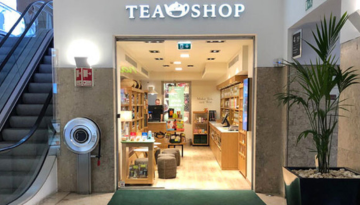 This is a branch of an international tea chain rather than a specifically Portuguese project, but it’s still a good stop if you’re into variety. Inside Armazéns do Chiado, they sell loose-leaf teas and infusions by the scoop, with over a hundred references, even though they focus more on blends and classic origins from around the world rather than on Portuguese producers. So it’s a nice place to explore new tastes, but not the spot if you’re specifically hunting Azorean tea.
📍Armazéns do Chiado, R. do Carmo 2, 1200-094 Lisbon
https://teashop.com
Photo by Shopping Spirit
Where to drink tea in Lisbon
Almada Negreiros Lounge & Bar at the Four Seasons Hotel Ritz Lisbon
 If you’re in the mood for a full-on, polished afternoon tea experience, this lounge at the Four Seasons by Parque Eduardo VII is as classic as it gets in Lisbon. It takes place in a grand space, filled with artwork inspired by modernist painter Almada Negreiros. Tea here is a proper ritual, with a curated selection of quality teas served alongside a multi-tiered stand of finger sandwiches, warm scones and delicate pastries from the hotel’s pastry team, often with seasonal or themed twists. It’s not cheap, but it’s worth it for those curious to experience the luxury hotel version of Lisbon’s tea culture.
📍Rua Rodrigo da Fonseca 88, 1099-039 Lisbon
www.fourseasons.com/lisbon/dining/lounges/almada-negreiros-lounge-and-bar
Photo by Four Seasons
Palacete Tea House at Chafariz D’el Rei
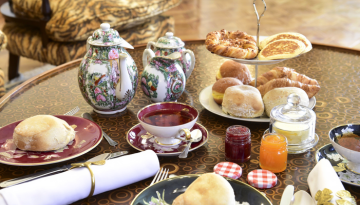 Tucked inside a neo-Moorish little palace overlooking the river in Alfama, Palacete Tea House has only a few tables set among the salons of this 19th century mansion. Their “5 o’clock tea” is a full tray affair, with breads and croissants, scones with homemade jams, charcuterie and cheese, plus pastries like pretzels, Berliners and pastéis de nata, served with a choice of teas or coffee. It’s by reservation only, so if you feel like slowing down over an afternoon pot, while also enjoying river views out to the Tagus, make sure to plan in advance.
📍Tv. Chafariz del Rei, 6 1100-140 Lisbon
https://chafarizdelrei.com/en/home
Photo by Chafariz D’el Rei
EPIC Tea Journey at the EPIC SANA Lisboa Amoreiras
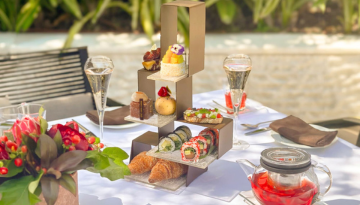 At EPIC SANA Lisboa, in the Amoreiras area, tea time turns into a mini world tour with the “EPIC Tea Journey – Flavours of the World”, served at the hotel’s Scale Bar. Every day from mid-afternoon, they serve a themed afternoon tea where the food is explicitly inspired by different cuisines, such as Portuguese, Oriental, European or African, presented as a series of small, savory and sweet bites. To go with it, there’s a curated selection of Ronnefeldt artisan teas, and you can add rosé sparkling wine if you want an extra indulgence.
📍Av. Eng. Duarte Pacheco 15, 1070-100 Lisbon
https://www.sanahotels.com/pt/restaurantes-bares/cha-da-tarde/
Photo by SANA Hotels
Pastelaria Querubim
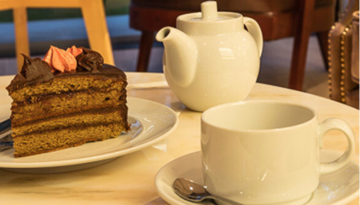 Having tea in Lisbon doesn’t have to mean silver trays and hotel lounges, and Querubim in Telheiras is a good example of that. This neighborhood pastelaria, known locally for its own line of biscuits, also does a very decent English-style tea service, milk included if you want it. They pour straightforward Tetley for anyone who just wants something hot to warm up with, but they also serve a more interesting range from Tea House, an Italian brand with blends like peppermint, herb-and-honey or an “oriental apple” that work well for lingering over a book or a chat. You can pair your pot with thick toast, slices of cake or assorted mini pastries, and the whole setting, far from the tourist circuit, makes it a very real Lisbon way of “going for tea”.
📍Alameda Q.ta de Santo António, 1600-675 Lisbon
Photo by Querubim
Confeitaria Nacional
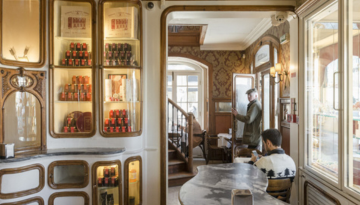 For a very Lisbon take on hora do chá, Confeitaria Nacional in Praça da Figueira is hard to beat. This 19th-century confeitaria serves tea in a decidedly old-school setting right in the Baixa district. You can order a tea for one or a full teapot to share, choosing from a small selection of black, green and herbal teas, but the real point of coming here is what you put on the side. Think slices of sponge cake, delicate biscuits, convent-style pastries and, around Christmas time, their famous bolo rei and other traditional Portuguese pastries. It feels a little grand without being over the top, and it’s one of the few places in downtown Lisbon where “going for tea” still naturally includes proper china and a sense that this is how people have been doing it here for generations.
📍Praça da Figueira 18B, 1100-241 Lisbon
https://confeitarianacional.com
Photo by Lojas Com História
Other tea-related experiences in Lisbon
Teapot – Workshops by Tea Sommelier Margarida Franco
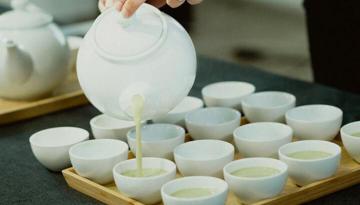 Teapot is first and foremost an online tea store, but it’s also behind some of the most interesting tea workshops happening in Lisbon. Run by tea sommelier Margarida Franco, their program usually takes place in partner spaces like Château Portugal and focuses on themed workshops that dive into specific tea origins, such as China, Japan, India or Ceylon, as well as a Portugal-focused session that highlights Azorean and other Portuguese teas. Each workshop combines a theoretical intro with a guided tasting of several teas, where participants learn to analyze aromas, flavor, texture and brewing variables, often with simple food pairings.
📍Buy and sign-up online:
Photo by Teapot
Feng Shui Tea House Lisbon
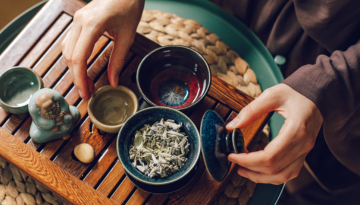 Feng Shui Tea House is a full-on tea experience hosted at home in Lisbon, where everything revolves around ceremony, intention and attention to detail. You book a slot and step into a guided session rather than a café, with ceremonial tea tastings built like an omakase for tea, more formal tea ceremonies where you’re walked through each step of brewing and serving, and even experiences that end with leaf reading. This one is for those who may want to experience a slower and more intimate side of tea culture in Lisbon.
📍Rua Augusto Rosa 14, 1100-532 Lisbon
https://linktr.ee/teahouselisbon
Photo by Feng Shui Tea House on Google
If you’d like to keep exploring Lisbon and Portugal through food and drinks, follow Taste of Lisboa on Instagram and subscribe to our newsletter for more stories like this.
Feed your curiosity on Portuguese food culture:
How the Portuguese changed the way the world eats
Best places in Lisbon for a first date (with food and drinks)
Alcohol-free Portuguese drinks you will love to try
Real people, real food. Come with us to where the locals go.
Signup for our natively curated food & cultural experiences.
Follow us for more at Instagram, Twitter e Youtube